St Nicholas’s Church, Kurjan: A Byzantine Medieval Church in Albania


Site at a Glance
- Rating
- 4.7
- Popularity
- Very Low
- Country
- Albania
- Primary era
- Medieval
- Eras represented
- Medieval, Early Modern
- Civilizations
- Byzantine, Kingdom of Sicily, Norman
- Site type
- Religious
- Remains
- Church
On this page7 sections
History
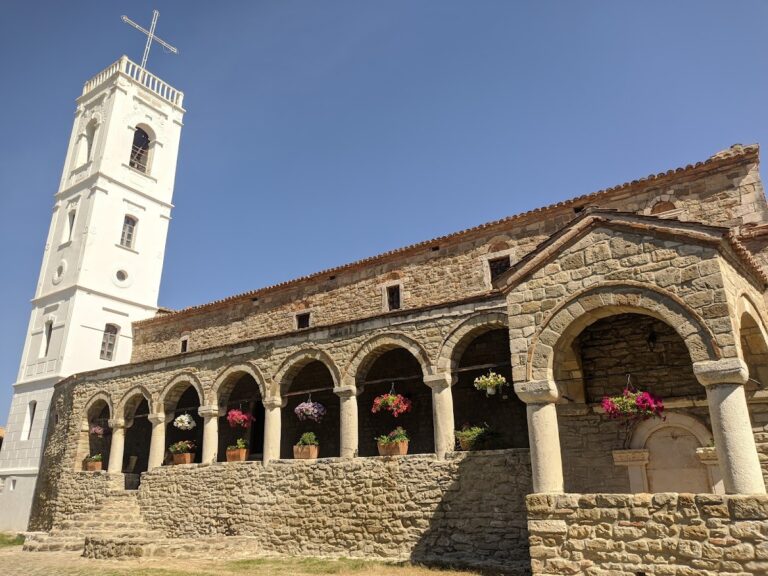
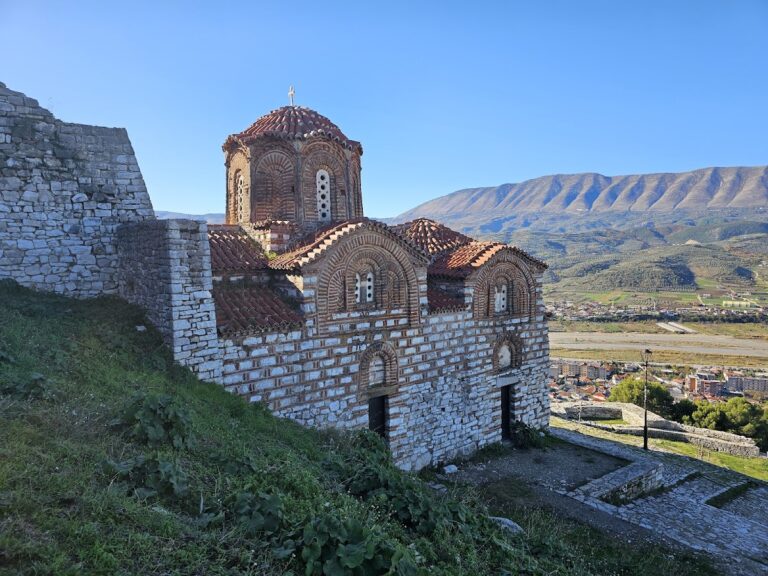
St Nicholas’s Church, Kurjan, is a medieval Christian monument in Albania, built in the thirteenth century under Byzantine rule in the Byzantine architectural tradition. Dedicated to Saint Nicholas, the church reflects the endurance of eastern Christian religious culture in the region and later changes made during periods of western rule.
Byzantine foundation and later western influence
The church was probably repaired or altered during the period of Norman and Sicilian rule in Albania. Norman rulers and military forces supported the maintenance of churches and monasteries in the country. The nearby Church of Our Lady of Apollonia, about 20 kilometres west of Kurjan, provides another example of this patronage. The association with Saint Nicholas also gained wider importance after his relics were transferred from Myra to Bari in 1089.
Saint Nicholas was traditionally a priest in the Roman province of Lycia before becoming bishop of Myra. His cult connected him with the protection of sailors, merchants, travelers, and people in need. His church at Myra had been destroyed in 1034, and in 1089 Bishop Urso of Bari arranged the transfer of the saint’s remains to Bari in the presence of Pope Urban II. Nicholas was reburied there and became the city’s protector, after which a basilica was built in his honor. This wider veneration helps explain the spread of dedications to him in both eastern and western Christianity.
Wall paintings and heritage protection
A research expedition involving the University of Tirana and the Institute of History examined the church in 1956. It identified the wall paintings as works by Nikolla, son of the icon painter Onufri, and his assistant Joan, dating them to the sixteenth century. The discovery prompted further study by the Institute of Cultural Monuments and contributed to the church’s protection as an Albanian cultural monument on 15 January 1963. It remains listed under reference number FR013 and criterion I, with DRKK Fier as its governing body.
Remains
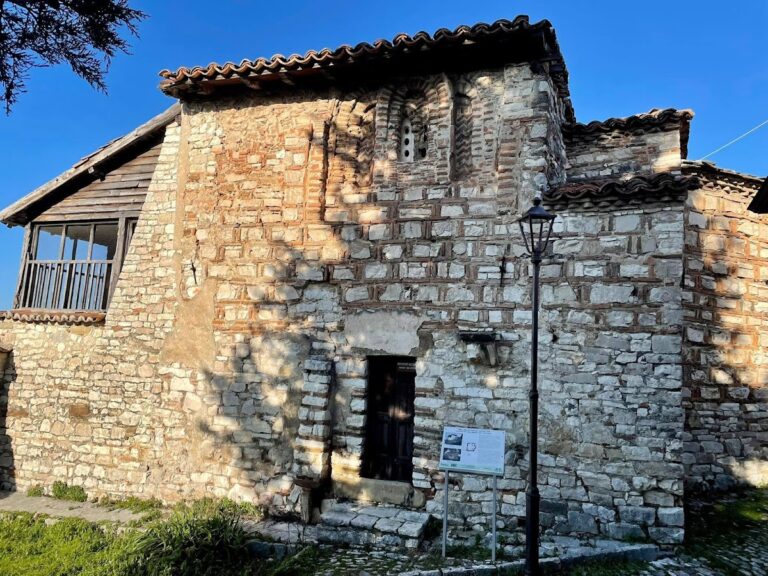
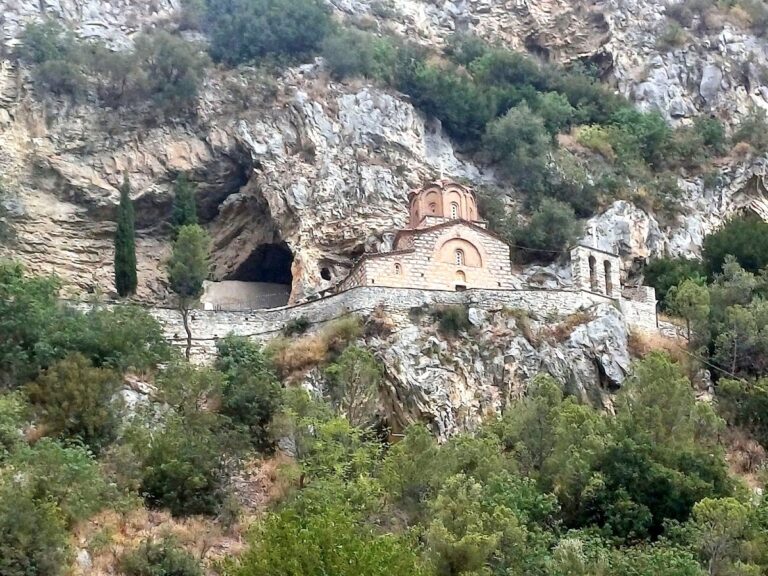
The church stands on an isolated hill on the outskirts of Kurjan. Its red brick masonry has dressed stone at the corners, and the building follows Byzantine principles, including a sacred interior organized around a nave, the main hall of a church, and a narthex, an entrance vestibule. Three apses, semicircular or polygonal recesses used in church design, form part of the plan. The eastern apse is larger than the northern and southern apses. Stone slabs or tiles pave the floor.
Roof and entrances
The interior was formerly covered by a cylindrical barrel vault, a continuous curved ceiling, characteristic of Orthodox churches. After the vault collapsed, it was replaced by a wooden roof covered with tiles. The western side once had a main portico, while the northern and southern entrances to the nave retain the foundations of smaller porticos and several ancient Doric capitals. The arch over the southern doorway shows Romanesque influence, associated with the period of Sicilian and Norman domination.
Reused ancient materials
Ancient materials from Apollonia and other nearby cities were incorporated into the church. These include stones, columns, and inscriptions, giving the medieval building physical elements drawn from the region’s earlier urban centers.
Painted decoration and inscription
The wall paintings are attributed to Nikolla, son of Onufri, and his assistant Joan. Their style is Byzantine while also incorporating elements of local tradition. The decoration includes small-proportioned figures and ornamental motifs, including the blessing of Mary of Egypt by Zosimas of Palestine, a Christian monk and ascetic associated with her traditional story. A Byzantine Greek inscription connected with the paintings contains a prayer asking a priest to remember Joan and Nikolla when raising his hands before God.