Burgstall Scharfenberg: Remains of a High Medieval Spur Castle
Site at a Glance
- Popularity
- Very Low
- Country
- Germany
- Primary era
- Medieval
- Eras represented
- Medieval
- Civilizations
- Duchy of Bavaria, Holy Roman Empire
- Site type
- Military
- Remains
- Castle
History
Burgstall Scharfenberg is the remains of a high-medieval spur castle near Ursensollen in Bavaria, Germany. Probably built around 1200, it served as the ancestral seat of the Scharfenberg family of the Upper Palatinate.
A charter of Ensdorf Monastery from 1144 names Heinrich de Ursensolingen, but whether he belonged to the Scharfenberg family is uncertain. From the 14th century, members of the family added “of Ursensollen” to their names.
In 1217, the Scharfenbergs set fire to Kastl Monastery after its abbot, Gebhard of Rieden, denied them a burial right to which they were entitled. The monastery’s protectors, the margraves of Hohenburg, may then have destroyed the castle. Whether the destruction ended its use is unknown.
By the middle of the 16th century, the castle was ruinous, and its remains were described as old.
Remains
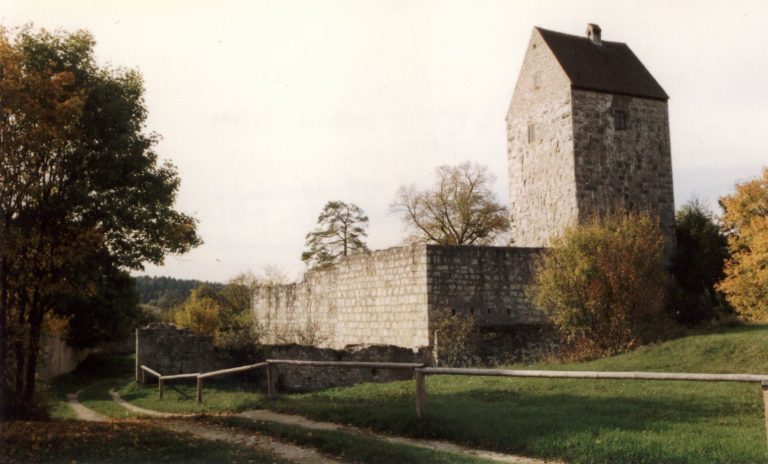
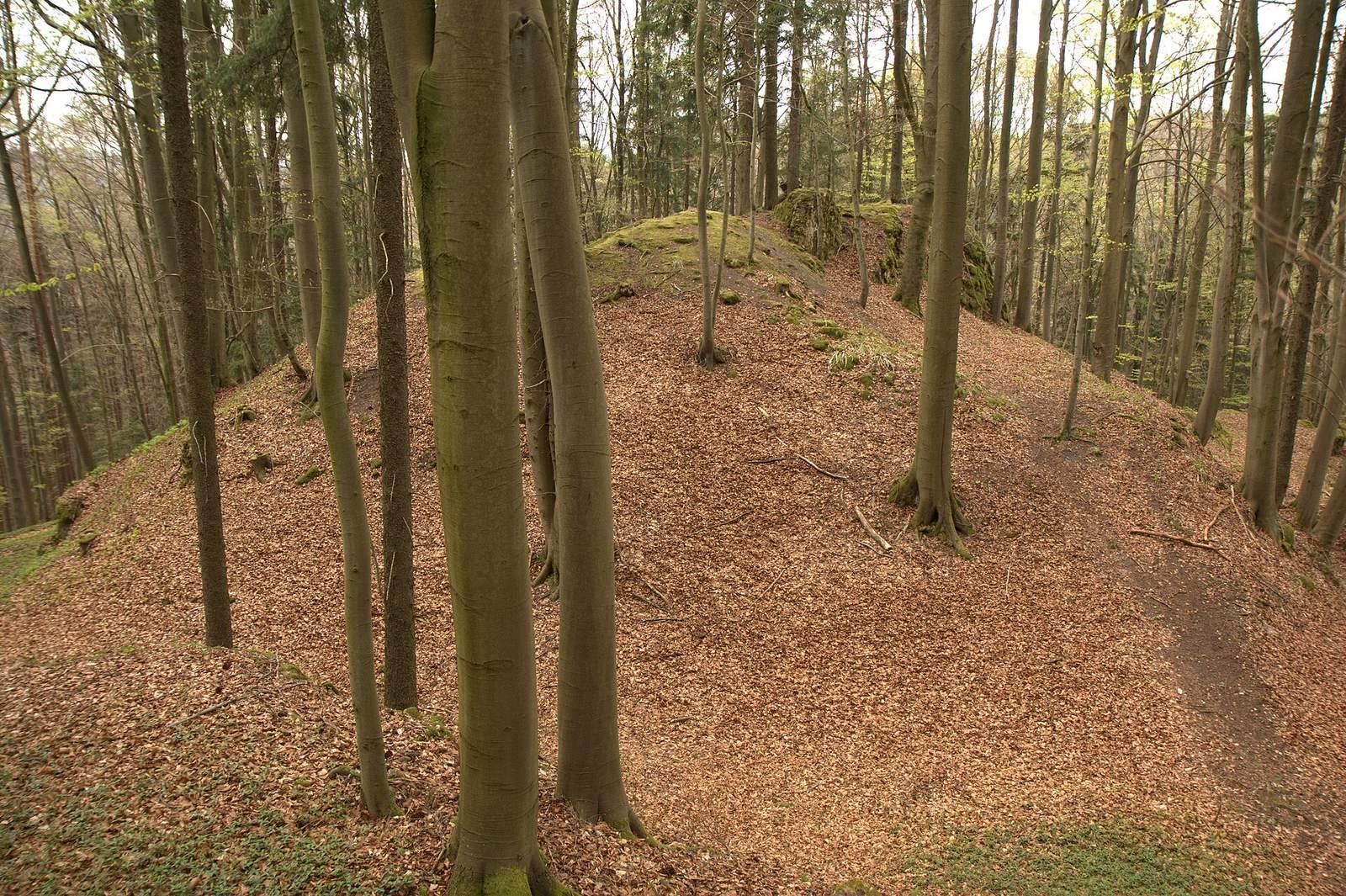
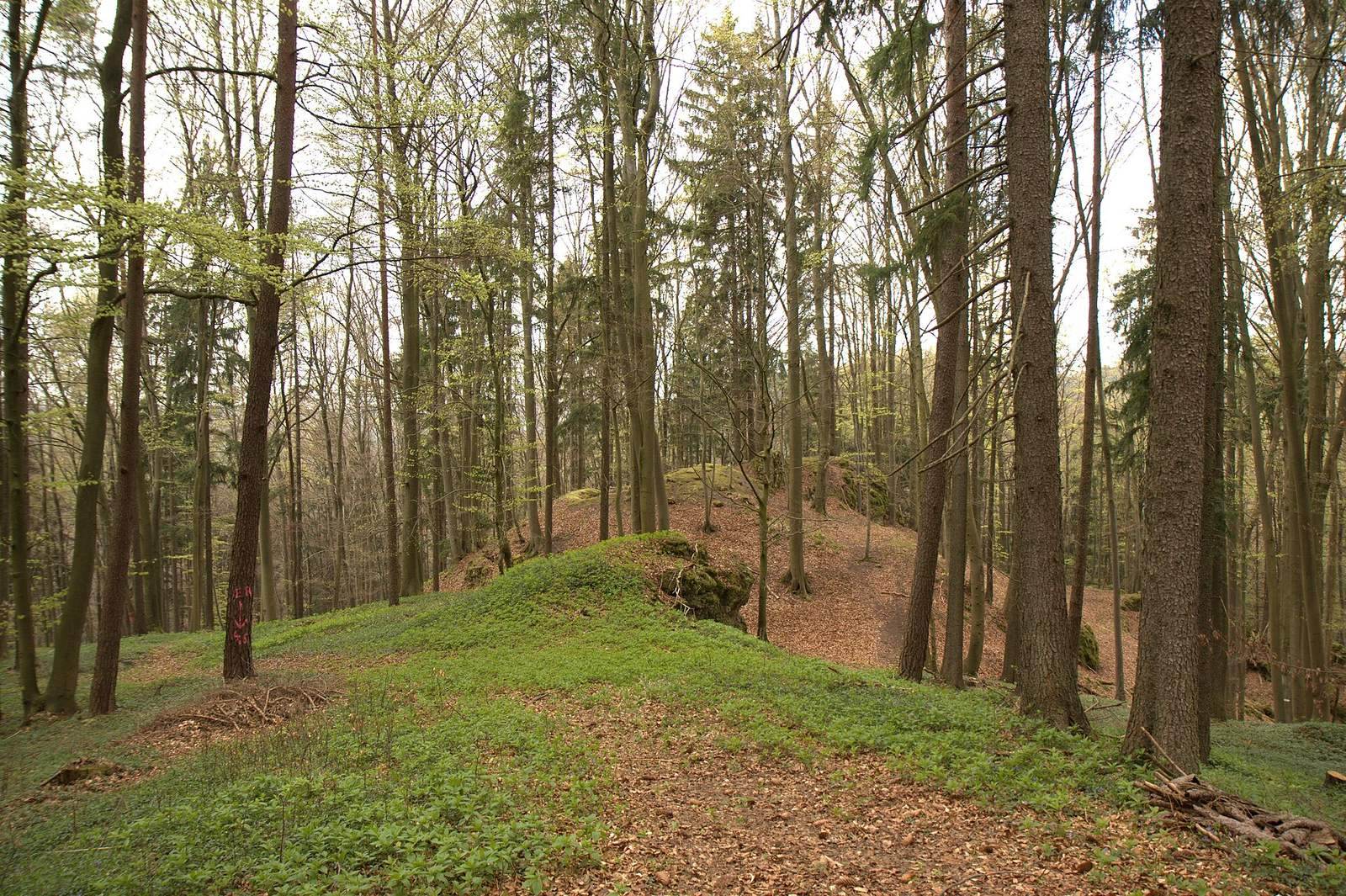
The castle occupied a rocky slope spur projecting northwest from an offshoot of Scharfenberg, at about 520 metres above sea level. It lies in the northwestern part of Hirschwald Nature Park, around 1,600 metres south-southwest of Ursensollen’s Catholic parish church of St Vitus and about 10 kilometres southwest of Amberg. A defensive ditch cut across the spur, separating it from adjoining ground. The surviving remains also include a square defensive tower, whose sides measured 7 metres and whose walls were 2 metres thick.