Klosterburg Kastl: Hilltop Castle and Former Benedictine Monastery in Germany


Site at a Glance
- Rating
- 4.6
- Popularity
- Low
- Country
- Germany
- Primary era
- Medieval
- Eras represented
- Medieval
- Civilizations
- Carolingian, Holy Roman Empire
- Site type
- Religious
- Remains
- Monastery
On this page9 sections
History
Klosterburg Kastl is a historic hilltop castle and former monastery in Germany. Probably founded during the Carolingian period, the site developed from a fortified castle into a Benedictine monastery and later served several religious, judicial, educational, and public institutions.
Castle Origins and Monastic Foundation
The castle may have originated during the Carolingian period, the era of the Carolingian dynasty that ruled much of western and central Europe from the eighth to the tenth century. In 954, Margrave Luitpold of Austria is said to have received Kastl Castle as a fief. That year, he held the Heubischgau, a medieval regional district that included Kastl, Habsberg, Illschwang, and Sulzbach.
By 1098, the castle was jointly owned by Count Berengar of Sulzbach, Friedrich I of Habsberg-Kastl and his son Count Otto of Habsberg-Kastl, and Luitgard of Zähringen, the wife of Margrave Diepold II of Vohburg. Between 1098 and 1102, these owners agreed to convert the castle into a Benedictine monastery. Benedictines belong to the Order of Saint Benedict, a Western Christian monastic order organized around communal religious life and the Rule of Saint Benedict. Pope Paschal II confirmed the foundation on 12 May 1102.
The Benedictine Abbey and the Kastl Reform
The monastery expanded its possessions after its foundation and became one of the most powerful and wealthy monasteries in the realm. At the end of the fourteenth century and the beginning of the fifteenth, Kastl developed into an important center of monastic renewal. Known as the Kastl Reform, this movement influenced numerous Bavarian monasteries.
Later Religious and Secular Uses
Benedictine use ended in 1556, by which time the monastery was already deteriorating. From 1636 to 1773, the complex was the residence of the Jesuits in Kastl. The Jesuits, members of the Society of Jesus, were a Catholic religious order associated with education, missionary work, and the Catholic reform movement.
After the suppression and prohibition of the Jesuits in 1773, the Order of Malta received Kastl Monastery in 1782. This Catholic religious and chivalric order historically administered estates and institutions as well as carrying out charitable work. The monastery was secularized in 1808. It then became the seat of the district court and later housed the Kastl local court until 1930.
Educational and Public Functions
From 1958 to 2007, the complex housed the Hungarian Gymnasium. It was subsequently renovated and remodeled. Since 2023, the Free State of Bavaria has used Klosterburg Kastl as a training site of the Bavarian University of Public Service for police training.
Klosterburg Kastl is protected as an architectural monument. Archaeological remains from the medieval and early modern periods in the area of the former Benedictine abbey are also protected as an archaeological monument.
Remains
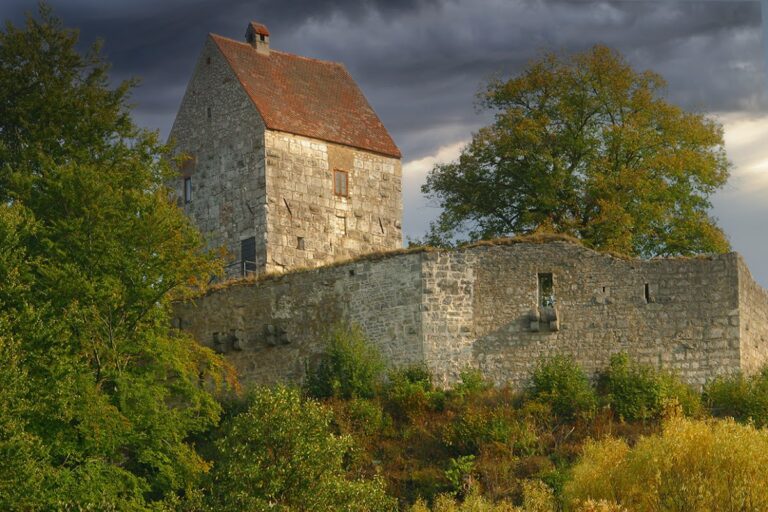
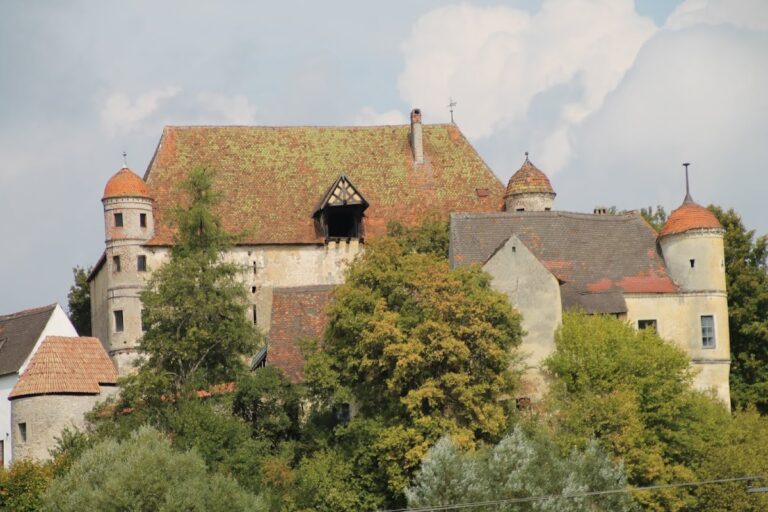
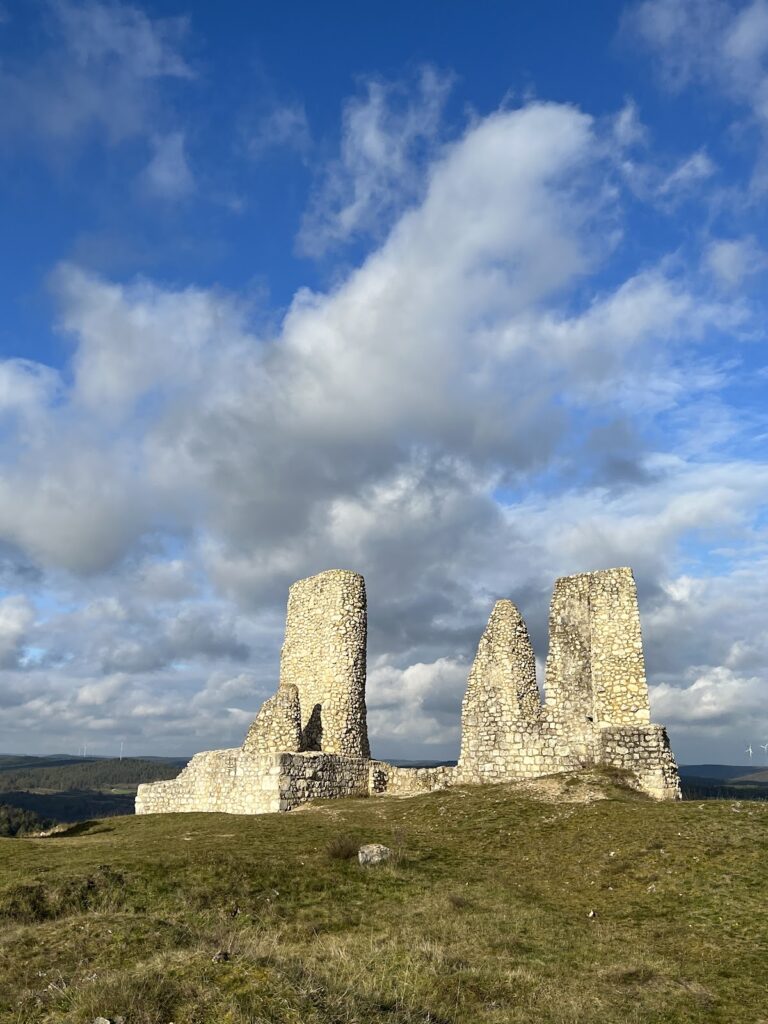
The surviving complex occupies an elongated dolomite summit above the Lauterach valley, high above Kastl in Bavaria. It stands on a projecting spur and combines the remains of a hilltop castle with the later monastery buildings and enclosing wall. The earlier fortification survives only in part, because elements of the original castle were incorporated into later structures and boundary walls.
Fortifications and Castle Structures
Hilltop Castle Remains
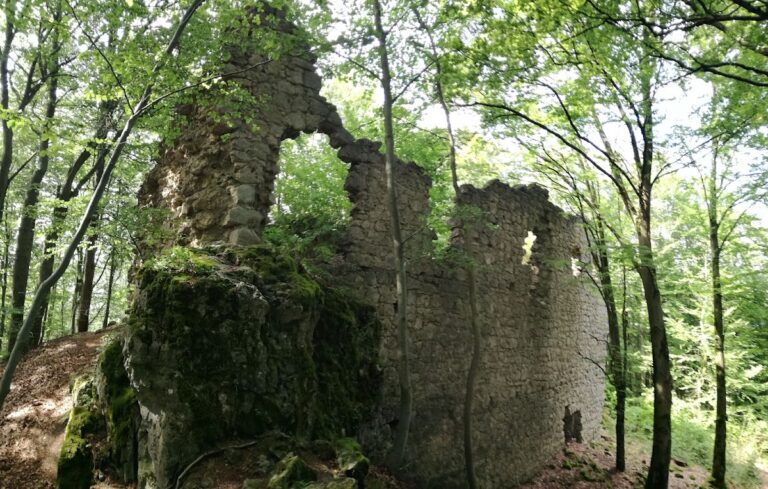
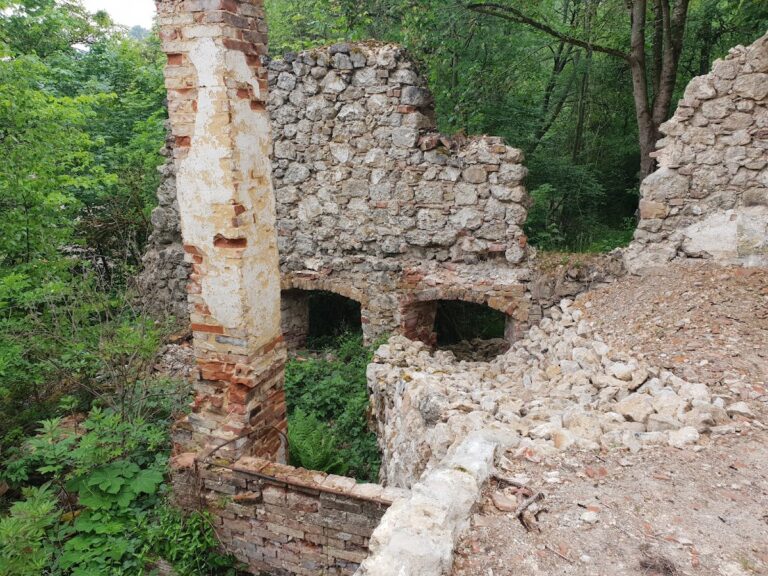
The site preserves fragments of the original hilltop castle within the later complex. These remains are integrated into subsequent buildings and the enclosing wall, showing how the medieval fortification was absorbed into the monastery that replaced it. The castle is therefore preserved only partially as an earlier defensive installation.
Fourteenth-Century Gate Tower
A new gate tower was built in the fourteenth century. It forms part of the surviving fortification history of Klosterburg Kastl, where the castle’s defensive elements continued to be modified as the site developed into a monastic complex.
Nearby sites