Burgruine Zant: A Medieval Hilltop Castle Ruin in Germany


Site at a Glance
- Rating
- 5
- Popularity
- Very Low
- Country
- Germany
- Primary era
- Medieval
- Eras represented
- Medieval
- Civilizations
- Duchy of Bavaria, Holy Roman Empire
- Site type
- Military
- Remains
- Castle
On this page9 sections
History
The Lords of Zant
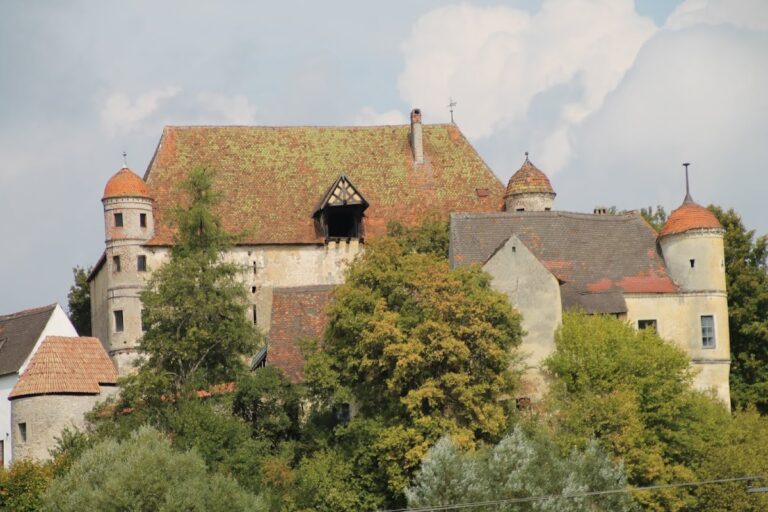
Burgruine Zant is a ruined medieval hilltop castle in Germany, near Zant in the municipality of Ursensollen, Bavaria. Associated with the Lords of Zant, a local noble lineage, it is described as having been built as their ancestral seat at the end of the twelfth century. The castle is recorded as early as 1130, while Luitpold de Zante appears in 1132 in the donation register of Obermünster Abbey, a collegiate religious foundation in Regensburg.
Members of the Zant family remained associated with the castle into the fourteenth century. Otto von Zant appears in records from 1287 and 1319, Ulrich von Zant in 1326, and Wernher Zantner in 1340. After this period, members of the family appear to have moved to one of the castle estates at Rieden.
Later ownership
Heinrich and Ulrich Liebenecker held Zant between 1398 and 1438. The Zant family returned as owners toward the end of the fifteenth century, when Andres Zant was recorded there in 1480. Karl Zanter then held the castle until 1499, and the family continued to own it until 1570.
By 1575 the Zant family was recorded at Münchszell, although it retained the fief of the tithe of Zant until 1598. A tithe was a tenth portion of agricultural produce or income owed as a religious or manorial due. Philipp von Kemnath zu Zant and Hohenkemnath is recorded at Zant in 1579 and 1580, while in 1585 Wilhelm Rummel von Lonnerstadt styled himself after Zant. The Rummel family remained at the site until 1807, when the family of Podewils took over.
Chapel and heritage protection
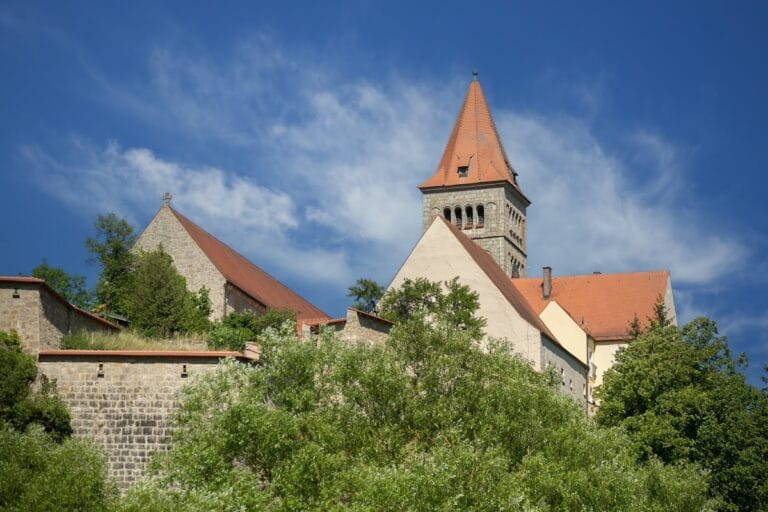
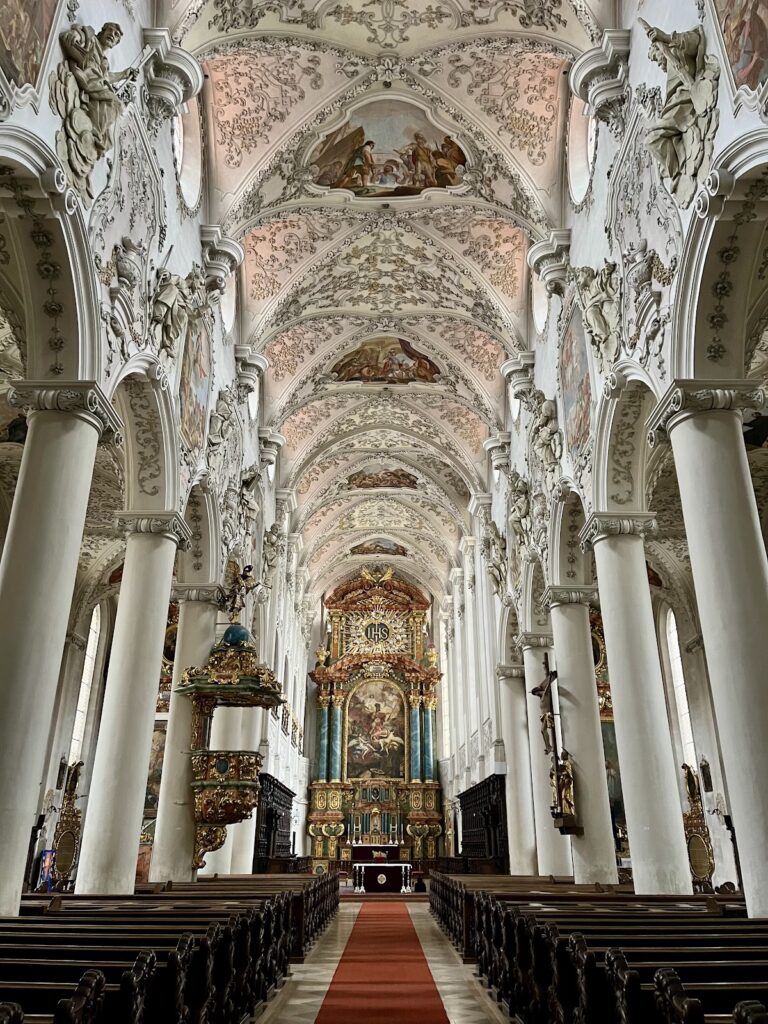
In 1684, Baron Johann Joachim von Rummel converted the castle chapel into the present pilgrimage church of St. Joseph. A pilgrimage church is associated with devotional travel to a sacred place, image, relic, shrine, or religious tradition. The surviving above-ground part of the castle is protected as a listed architectural monument, and the site is also recorded as an archaeological monument as a medieval castle site.
Remains
Hilltop defensive layout
Burgruine Zant occupies the western tip of Schlossberg, a ridge at about 510 metres above sea level north of Zant. The ridge falls steeply on three sides, making the site a spur castle, a fortification built on a projecting ridge and assisted by natural slopes. The former castle was arranged along its perimeter wall, placing the principal buildings against the outer enclosure and leaving an open area within.
Ring wall
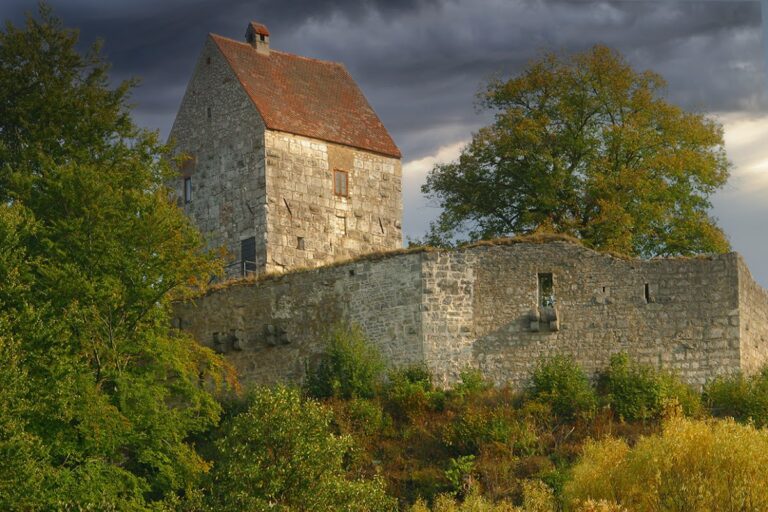
Sections of the castle’s ring wall survive above ground. The wall is about 7 metres high and approximately 1.2 metres thick. A ring-wall fortification relies on a continuous enclosing wall or rampart as its principal defense. About 300 metres north of the ruin lies the site of the former Zant ring-wall fortification.
Keep
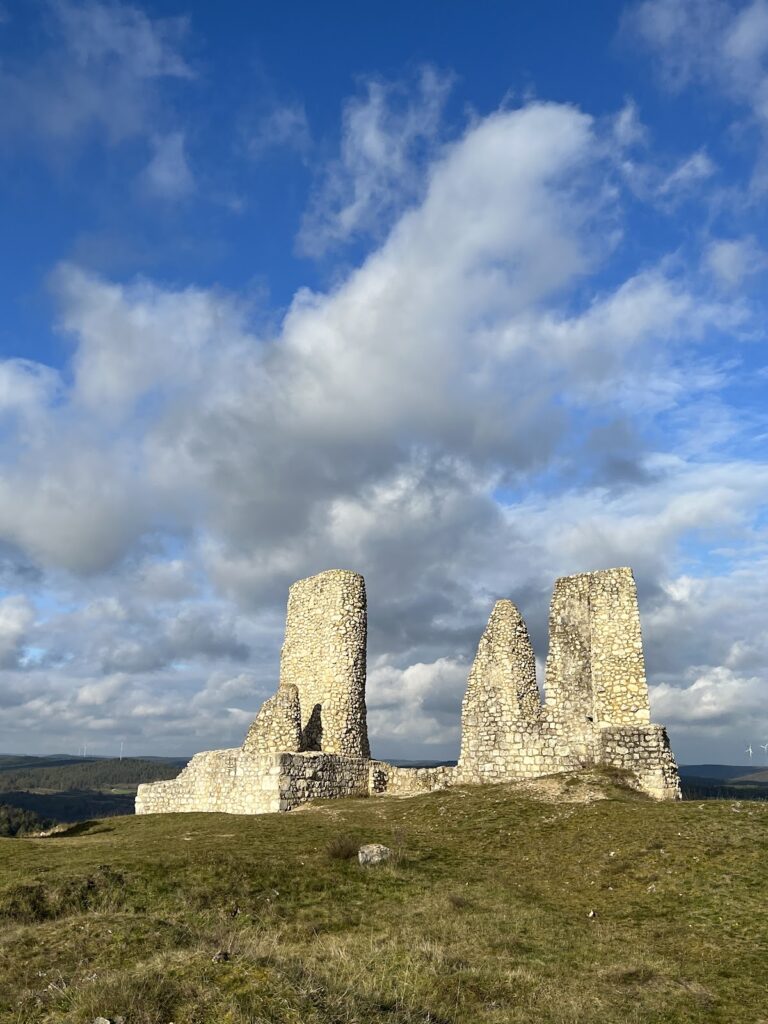
The ruin also retains a 5-metre-high remnant of its keep, the principal fortified tower of a medieval castle. The tower measured approximately 7 by 8 metres, and its walls were about 1.75 metres thick.
Former chapel
The former castle chapel was converted in 1684 into the present pilgrimage church of St. Joseph. This later religious use forms part of the surviving architectural history of the castle complex.
Nearby sites