Schloss Herberstein: A Medieval Castle and Renaissance Residence in Austria
Site at a Glance
- Rating
- 4.7
- Popularity
- Low
- Country
- Austria
- Primary era
- Early Modern
- External website
- Open
- Eras represented
- Medieval, Early Modern
- Civilizations
- Habsburg, Holy Roman Empire
- Site type
- Domestic
- Remains
- Castle
On this page11 sections
History
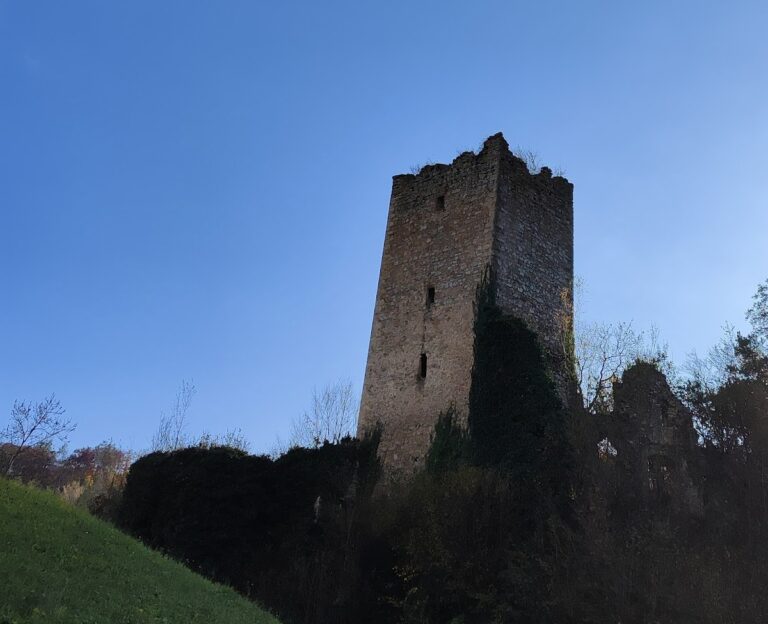
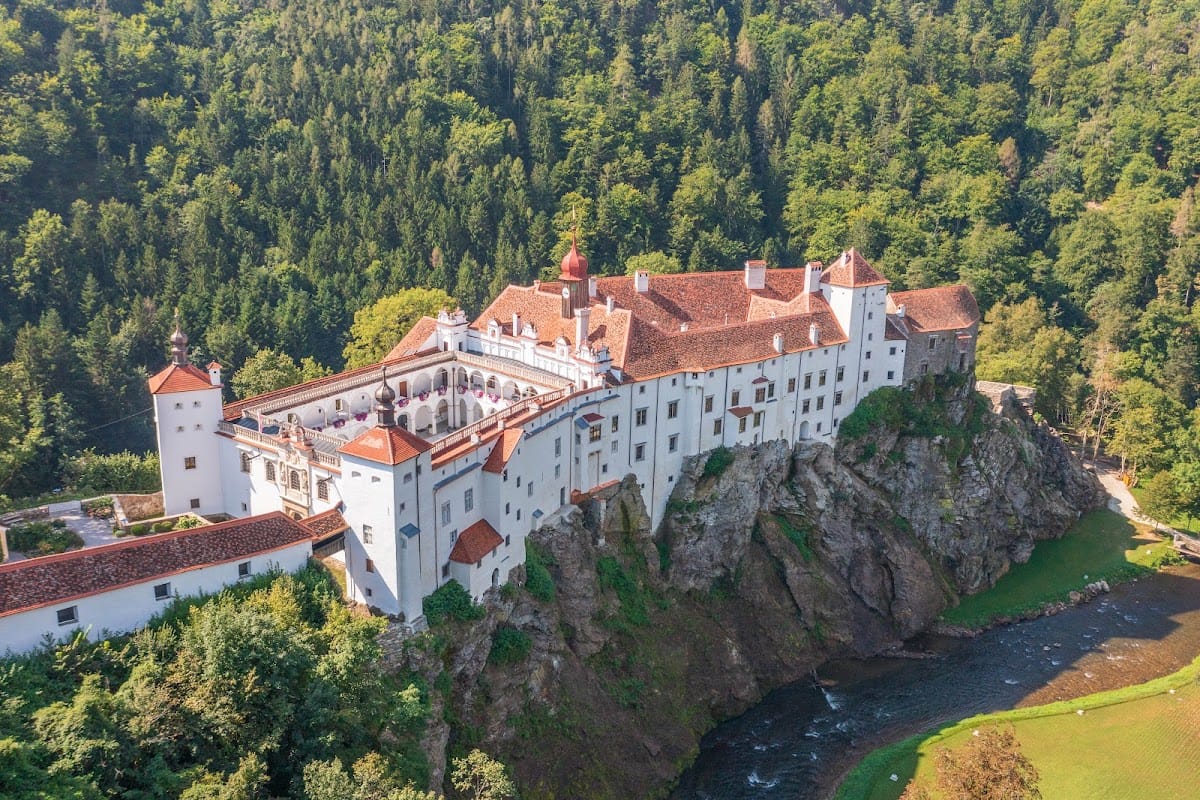
Schloss Herberstein is a castle in Austria, in the municipality of Stubenberg-am-See, whose earliest surviving parts date from the late thirteenth century. Originally known as Herwigstein, it occupies a strategically important position above the Feistritz River valley and later became the ancestral residence of the Herberstein family.
Medieval fortification
The earliest identified defenses belong to the thirteenth century. Around 1400, the castle was enlarged with a substantial forward defensive section, or forework, incorporating the earlier Gothic Chapel of Saint Catherine. Gothic architecture was a medieval style characterized by pointed arches, ribbed vaults, and strong vertical emphasis.
Further expansions took place during the fifteenth century, strengthening and enlarging the complex. These medieval phases established the fortified foundation on which later residential buildings were developed.
Renaissance residence
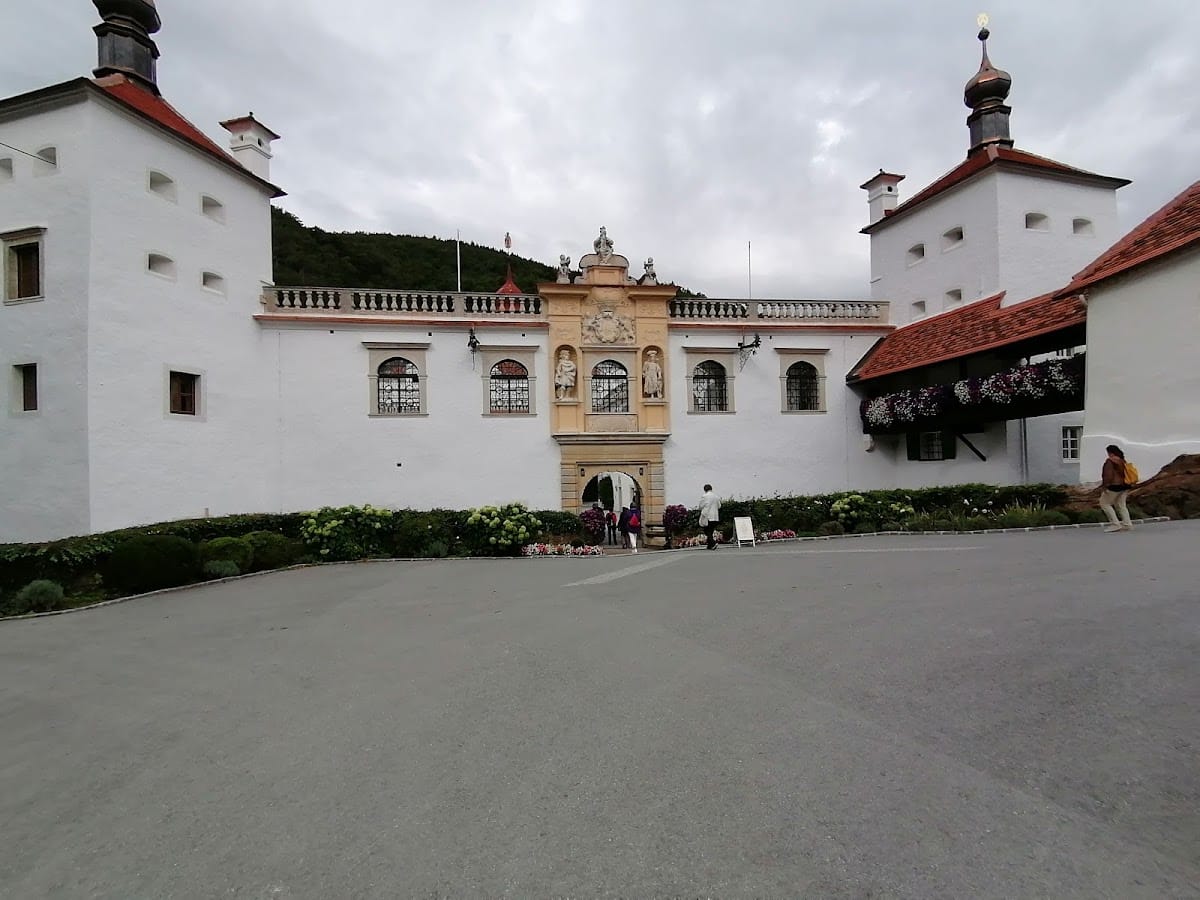
During the mid-sixteenth century, Schloss Herberstein was transformed from a primarily defensive stronghold into a residential building. The reconstruction introduced numerous Renaissance elements, reflecting an architectural style based on classical principles that developed in Europe from the fifteenth century onward. A large Knight’s Hall was created during the same century, and the moat, a defensive ditch around a fortified site, was finally filled in.
Seventeenth-century expansion
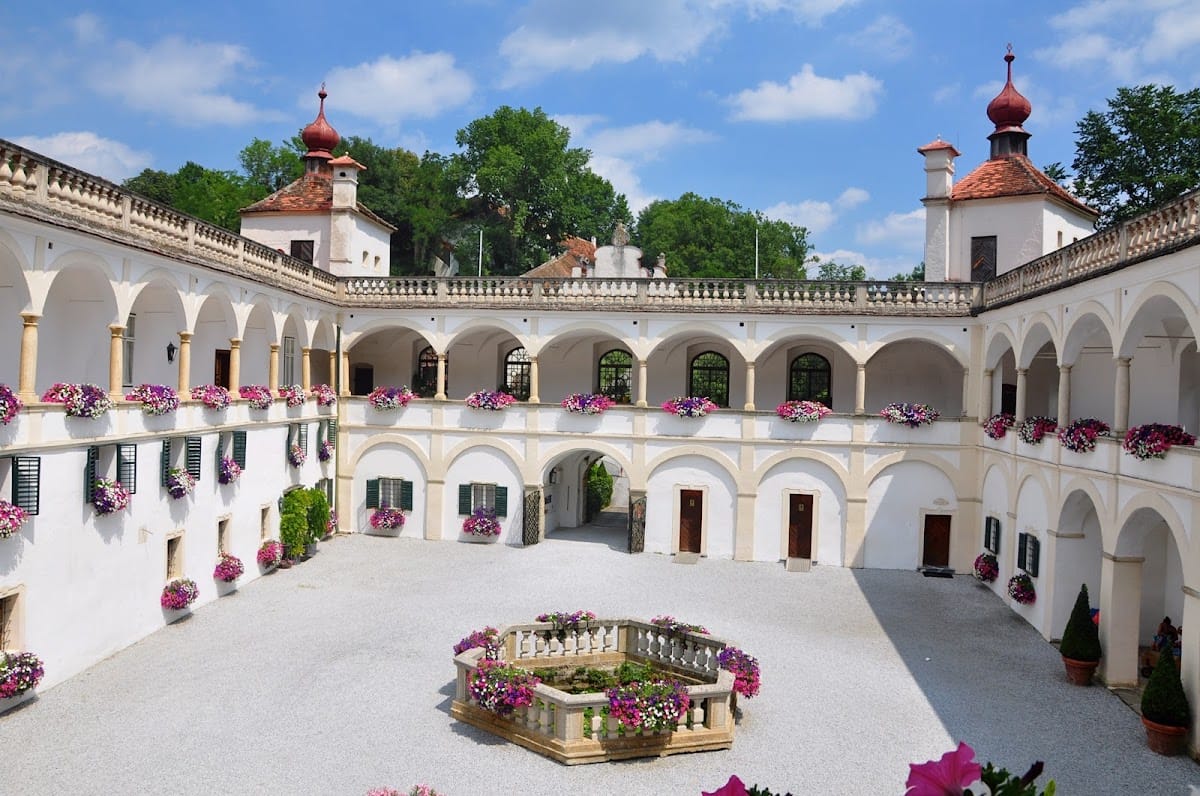
In the mid-seventeenth century, the complex was enlarged with the Florentinerhof, a courtyard designed in the Italian style. Several additional buildings were completed by the end of the century, extending the castle’s residential and administrative character.
Continuing use
The Herberstein family still owns the castle, which serves as a residence and administrative center. Its rooms have also been used for conferences and exhibitions, including temporary displays of classical and contemporary art presented by the Neue Galerie Graz and the Museum of Modern Art in Vienna. Exhibitions included Von Waldmüller bis Schiele in 2002–2003 and Die Welt der stillen Dinge in 2004. Schloss Herberstein is listed as a cultural-heritage monument in Stubenberg-am-See and is recognized as an Austrian architectural-heritage site.
Remains
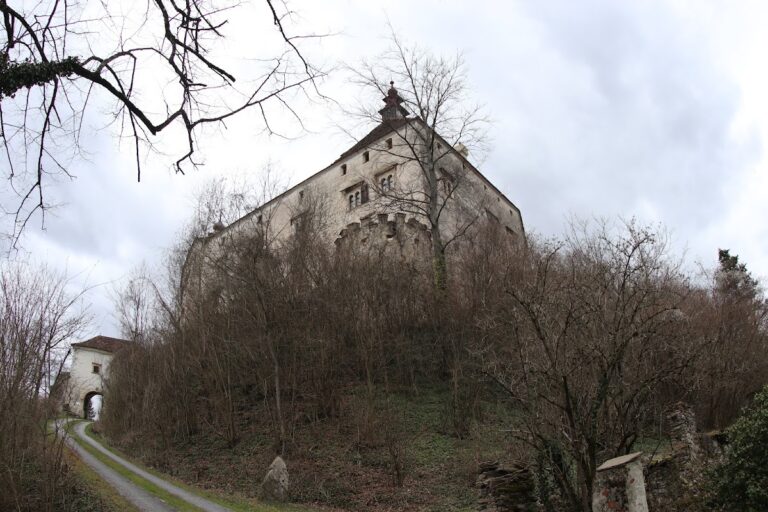
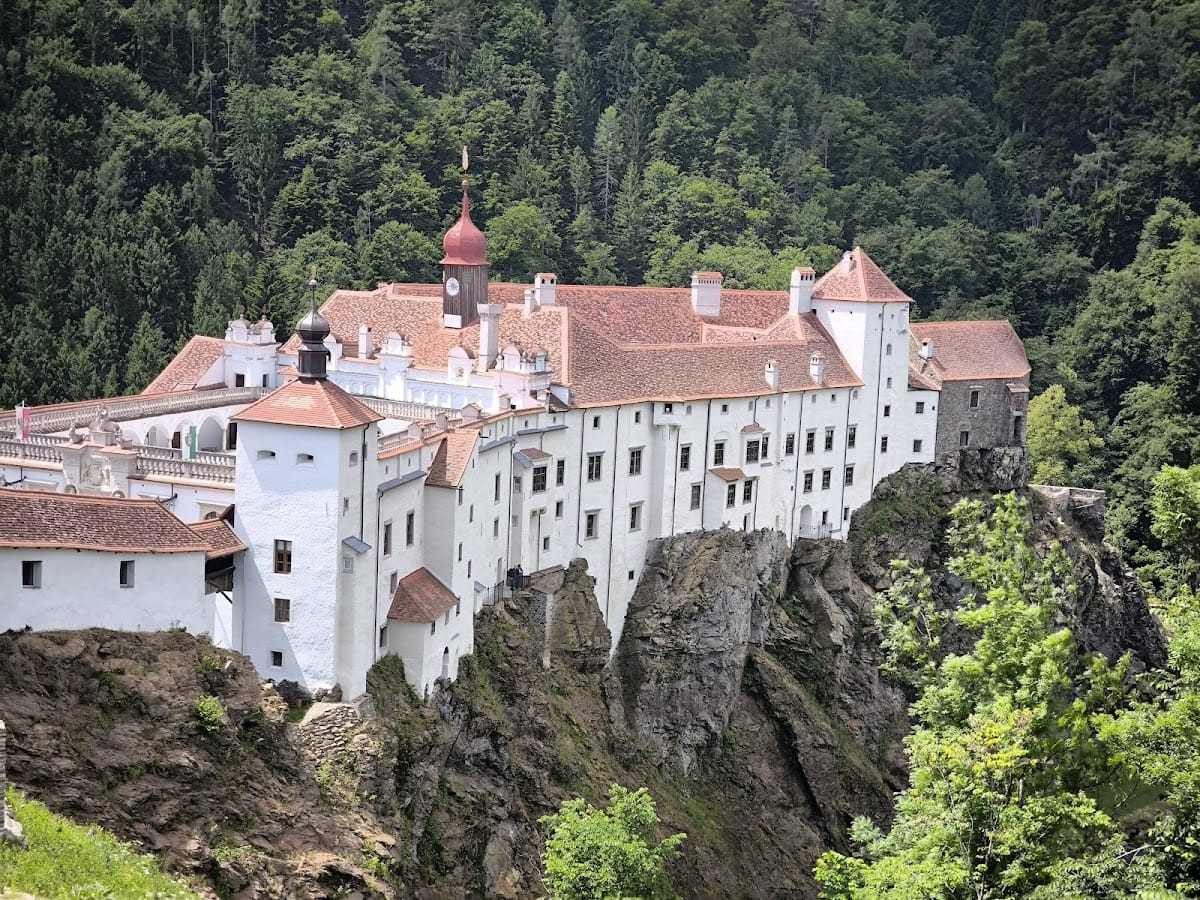
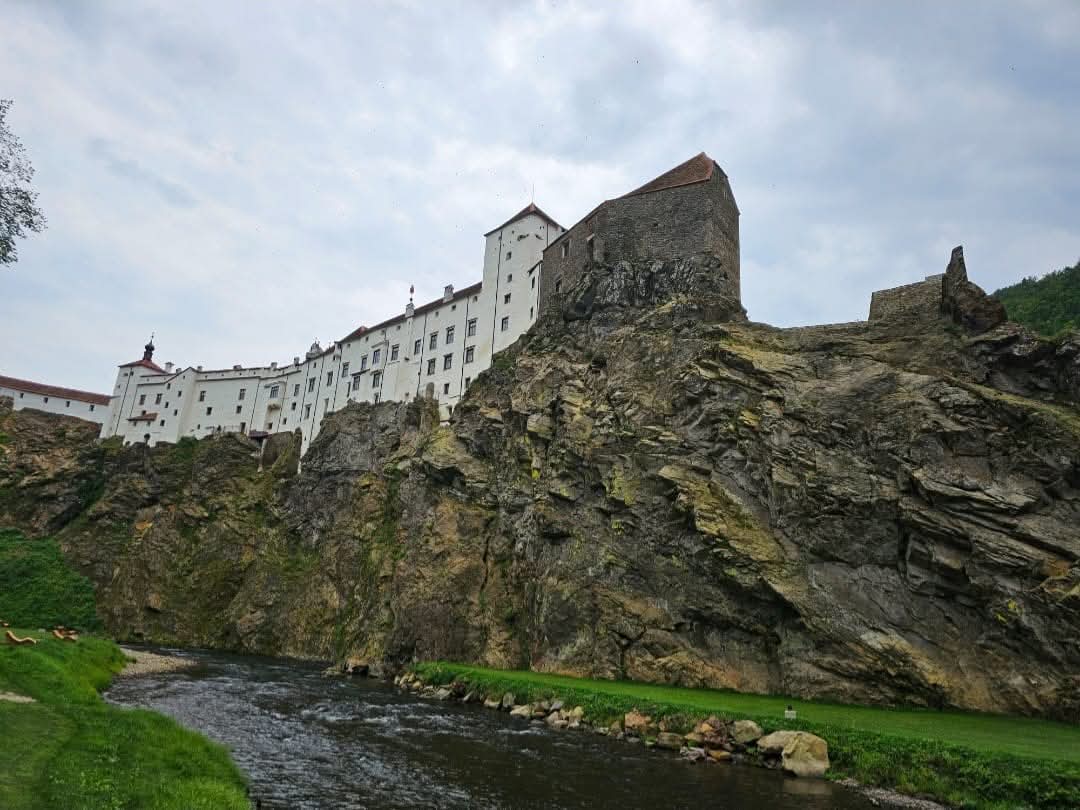
Schloss Herberstein stands high on a rocky slope that falls steeply northward toward the valley of the Feistritz River. The fortification is difficult to see from a distance and occupies a position that was strategically important in the surrounding region. Its surviving fabric combines medieval defensive construction, a Renaissance residential complex, and later courtyard and building additions.
Fortifications and historic buildings
Forework and Chapel of Saint Catherine
The large forework added around 1400 forms a major part of the fortified complex. A forework is an advanced defensive section placed in front of a principal fortification. It incorporates the Gothic Chapel of Saint Catherine, which was built before the forework and remains part of the castle’s medieval architectural group.
Renaissance residential complex
The residential reconstruction of the mid-sixteenth century introduced Renaissance architectural elements throughout the complex. The large Knight’s Hall belongs to this phase, while the former moat was filled during the same period. Together, these changes express the castle’s conversion into a family residence while retaining its earlier fortified setting.
Florentinerhof courtyard
The Florentinerhof is a courtyard built in the Italian style during the mid-seventeenth century. Other buildings added by the end of that century complete the later expansion of the castle complex.
Bruno Gironcoli Museum
A separate building in the castle park houses a museum devoted to Bruno Gironcoli, the sculptor who lived from 1936 to 2010 and directed the sculpture school associated with the Vienna Academy of Fine Arts until 2004. Opened to the public in September 2004, the museum has 2,000 square metres of exhibition space and displays numerous large sculptures resembling futuristic machines. It holds the world’s largest collection of Gironcoli’s works. Part of the collection was later placed on permanent display in Vienna in the Gironcoli Crystal hall within the Donau City complex.
Nearby sites