Burgruine Mödling: A Medieval Hilltop Fortress in Austria
Visitor Information
Google Rating: 4.7
Popularity: Low
Country: Austria
Civilization: Medieval European
Site type: Military
Remains: Castle
History
Burgruine Mödling is situated in the municipality of Mödling, Austria. This hilltop fortress was constructed by medieval European nobility, reflecting the region’s feudal landscape during the 12th century. The site known today as Burgruine Mödling developed from an earlier castle mentioned around the year 1002, although that first structure stood near what is now St. Othmar Church, distinct from the rocky hill where the current ruins lie.
The construction of the castle on the rocky hill overlooking the Mödling valley began no later than 1148. It was built as a widow’s residence for Theodora Komnene, who was married to Henry II, a member of the Babenberg dynasty. Following Henry II’s death in 1177, his son Henry the Elder inherited the surrounding lands and took residence in the partly completed castle. Although the territory was never officially a duchy, Henry the Elder styled himself as Duke of Mödling, highlighting the castle’s importance within the local aristocratic hierarchy.
Throughout the 12th century, Burgruine Mödling ranked among the largest castles in Austria, according to surviving chronicles and archaeological reconstructions. It was primarily a cultural center affiliated with the Babenberg family rather than a strictly military stronghold. Around 1230, the renowned medieval minnesinger Neidhart von Reuental lived at the castle, adding to its reputation as a hub of art and poetry. A tradition suggesting a visit by the famed poet Walther von der Vogelweide in 1219 exists, although this remains unsupported by contemporary documentation.
During the late 15th century, the castle experienced political upheaval and changed hands, notably coming under Hungarian control under King Matthias Corvinus in the years 1477 and 1483. The site faced significant damage over the following centuries. It caught fire during the First Turkish Siege of Vienna in 1529, suffered extensive ruin after a lightning strike in 1556, and underwent further destruction in 1608 at the hands of Hungarian troops.
By the 18th century, the damaged castle ruins were systematically dismantled, and building stones were sold off for reuse elsewhere. In 1808, Prince Johann I of Liechtenstein acquired the property and constructed a new castle on the hill within the boundaries of his landscaped park. This 19th-century structure was not historically accurate in design and was ultimately destroyed during the revolution of 1848. Afterward, ownership of the site passed to the town of Mödling.
Between 1965 and 1970, the Mödling Museum Association conducted archaeological excavations and reinforced the remaining sections of the original 12th to 13th-century Romanesque castle. They stabilized the ruins and prepared the site with explanatory elements that illustrate its medieval form and history.
Remains
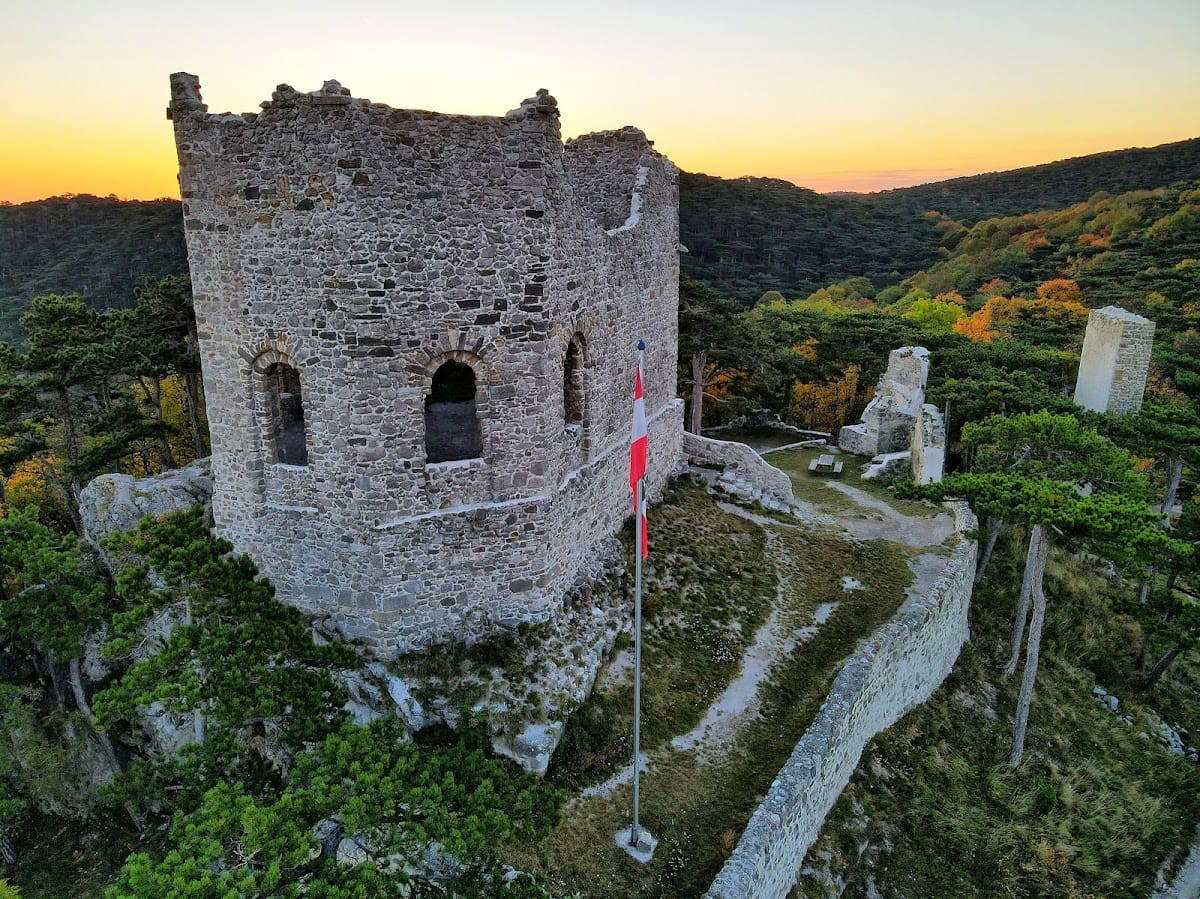
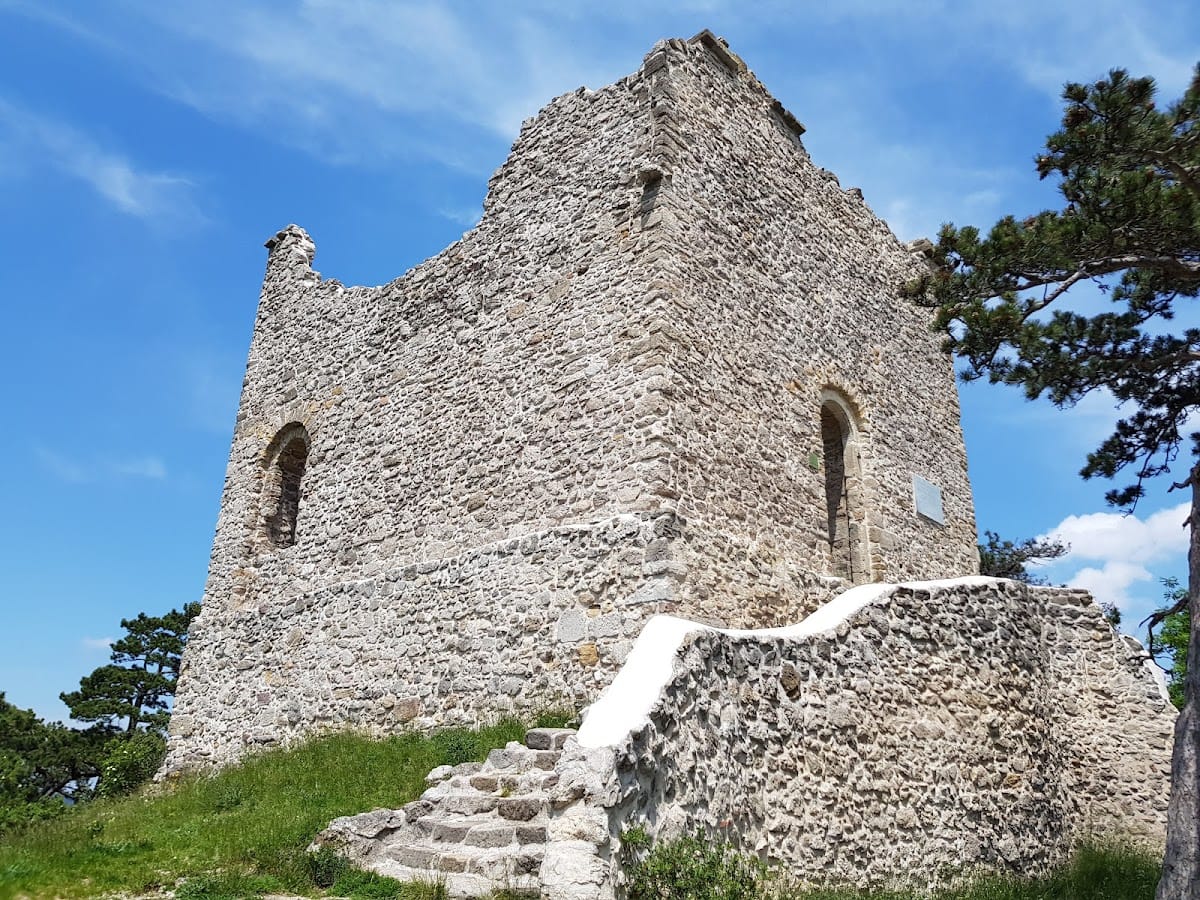
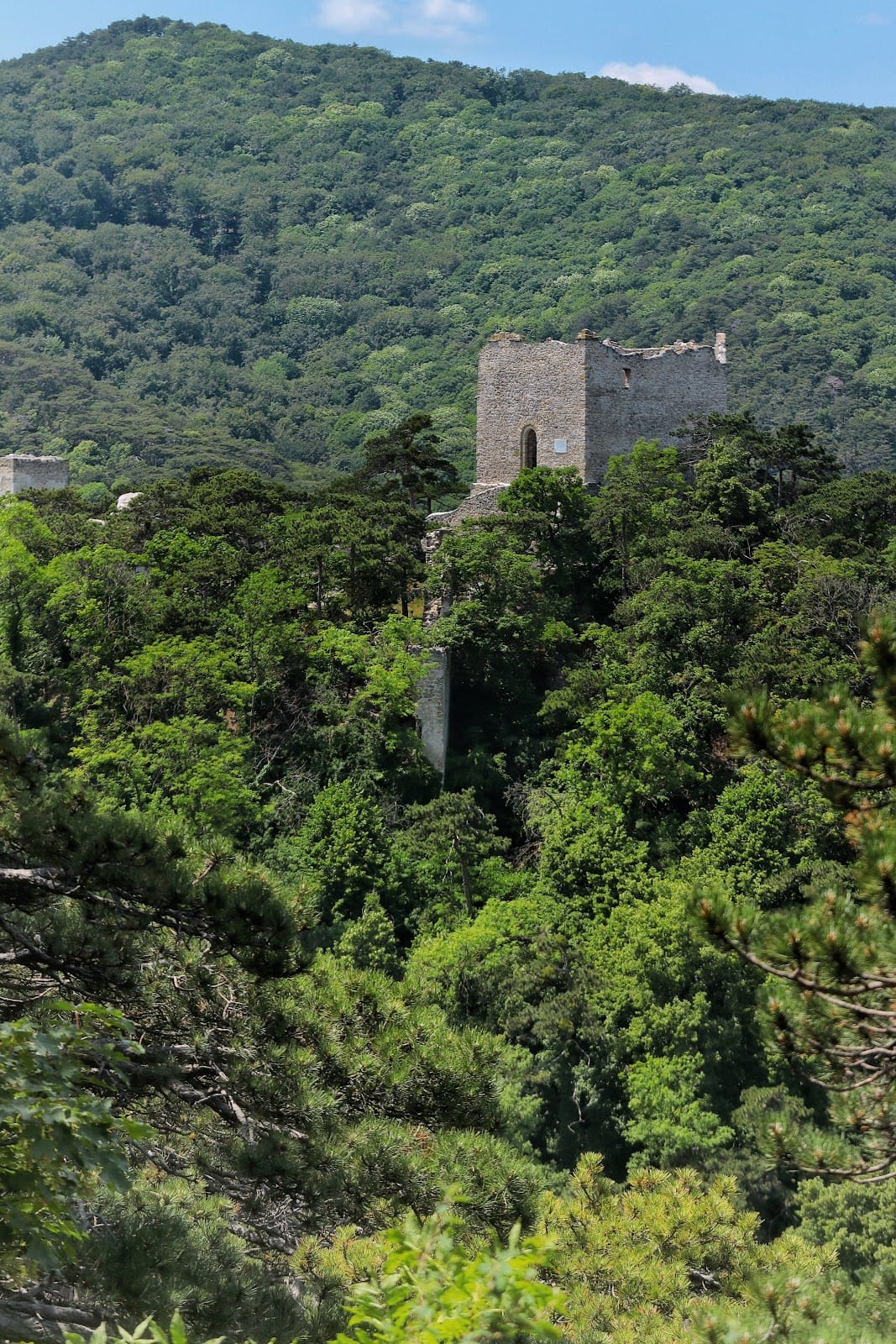
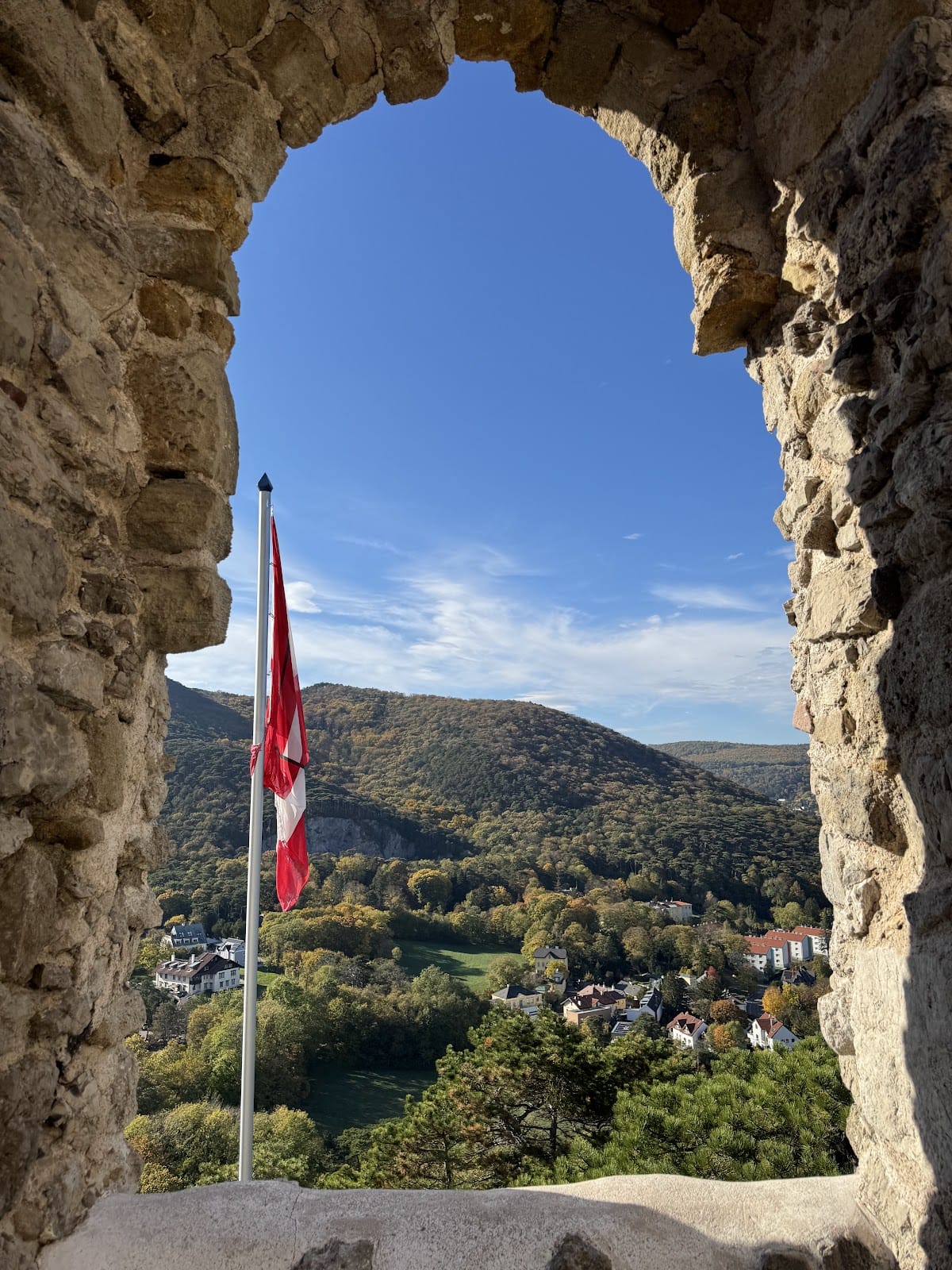
The ruins of Burgruine Mödling occupy a commanding position atop rocky hills approximately one kilometer from the eastern edge of the Vienna Woods, overlooking the Mödling valley and the town below. This elevated location provided strategic views toward the west, including the Husarentempel monument on the Kleine Anninger mountain. The castle’s layout reflects its function as a hilltop fortress, known in German as a Höhenburg, positioned above the valley carved by the Mödlingbach stream. The rocky valley section called Klausen lies roughly 100 meters to the north, while the neighboring district of Vorderbrühl is located to the west.
Among the archaeological features are remnants of observation posts that once allowed early detection of threats approaching from the east. These vantage points took advantage of the site’s natural elevation and rocky terrain to monitor movement in the valley below. The castle also housed a Romanesque chapel dedicated to Saint Pancras, emphasizing its religious character alongside its residential and defensive roles within the Babenberg cultural center.
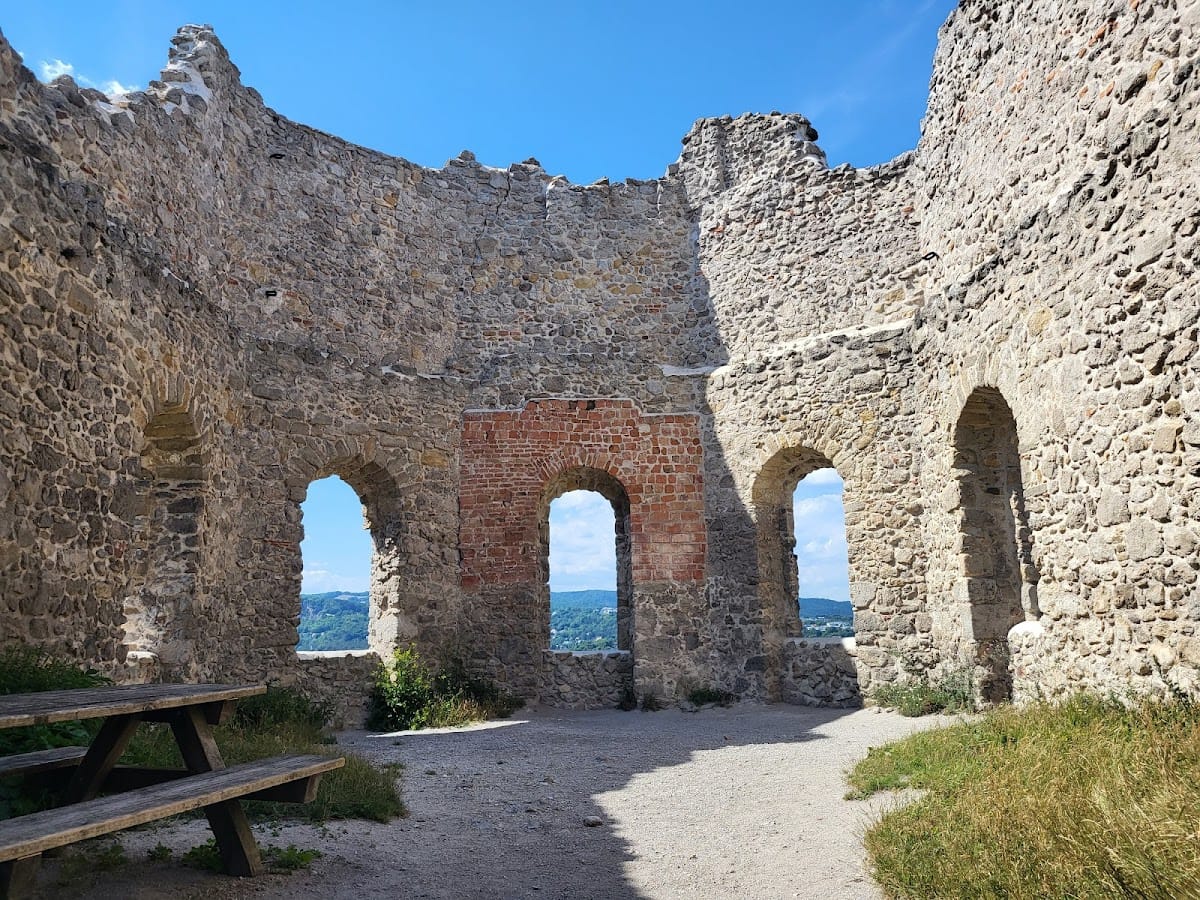
Today, the surviving structures mainly date back to the original construction phases of the 12th and 13th centuries. Following excavation and conservation efforts undertaken in the 1960s, these ruins were reinforced to maintain their stability. A circular walking path now surrounds the remains, with informational panels installed to provide visitors with context, illustrating how the castle once appeared based on archaeological and historical evidence.
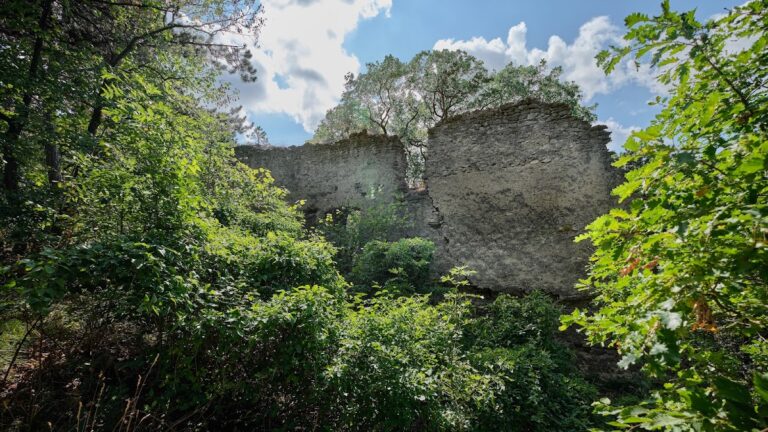
While the ruins no longer form a complete fortress, they offer a tangible glimpse into Romanesque architecture of the high medieval period. The thick stone walls, chapel foundations, and defensive positions reflect construction techniques of the time, built from sturdy local rock and mortar. These preserved fragments continue to mark the site as a significant medieval landmark in the region’s history.
Nearby sites