Burg Ummendorf: A Medieval Border Castle and Renaissance Complex in Germany


Site at a Glance
- Rating
- 4.5
- Popularity
- Low
- Country
- Germany
- Primary era
- Early Modern
- External website
- Open
- Eras represented
- Medieval, Early Modern
- Civilizations
- Holy Roman Empire
- Site type
- Military
- Remains
- Castle
On this page9 sections
History
Burg Ummendorf is a castle in Ummendorf, Germany, whose origins are attributed to Archbishop Friedrich I of Wettin, who built it in 1178 to secure the border toward the area now known as Lower Saxony. Medieval service nobles, known as ministerials, were entrusted with its administration. The castle later developed from an archiepiscopal border stronghold into a noble residence, an administrative estate, and a museum complex.
Archiepiscopal fortress and noble fief
In 1180, the Lords of Ummendorf were recorded as vassals of the Magdeburg archbishopric. By the middle of the fourteenth century, the castle belonged to the knights Hildebrand and Volbrecht von Oebisfelde. On 13 April 1389, Archbishop Albert of Magdeburg acquired the castle and much of the village, placing its administration in the hands of appointed captains.
During the fifteenth century, the von Veltheim family received Burg Ummendorf as a fief, a form of tenure granted in return for service. Under Ludolf von Veltheim, the castle became a base for robber knights. After attacks on citizens traveling from Magdeburg, Magdeburg troops stormed the castle in 1430 and occupied it until a reconciliation was reached.
The von Meyendorff era
In 1463, Burg Ummendorf passed, probably as a fief, to the von Meyendorff family. Johann von Meyendorff purchased it from the Magdeburg archbishop in 1535. Between 1535 and 1581, the family carried out extensive alterations that created the largely preserved Renaissance complex. The Renaissance was an early modern cultural and architectural movement that drew on classical forms and proportions.
Under Andreas von Meyendorff, the castle became a local center for advancing the Reformation, the sixteenth-century religious movement that challenged established Western Christian institutions and led to the formation of Protestant churches. The family retained possession until its extinction, dated to 1650 in one account and to 1667 in another.
War, administration, and museum use
The Thirty Years’ War, a European conflict from 1618 to 1648 that combined religious and political struggles, brought repeated military occupation. Protestant commander Christian of Brunswick occupied and devastated the complex in 1623. Catholic imperial troops under Wallenstein occupied it in 1625, and Colonel Pechmann ordered the valuable library kept at the castle to be transported to Bohemia in nine wagons. A regiment belonging to the Königsmark family was stationed there in 1644.
After the von Meyendorff family died out, Burg Ummendorf returned to the Magdeburg archbishopric and continued as an administrative office and manor estate. During the French occupation and the Kingdom of Westphalia in the early nineteenth century, the complex was given to the French marshal Soult. The Kingdom of Westphalia was a Napoleonic client kingdom in central Germany established in 1807 and dissolved after Napoleon’s defeat.
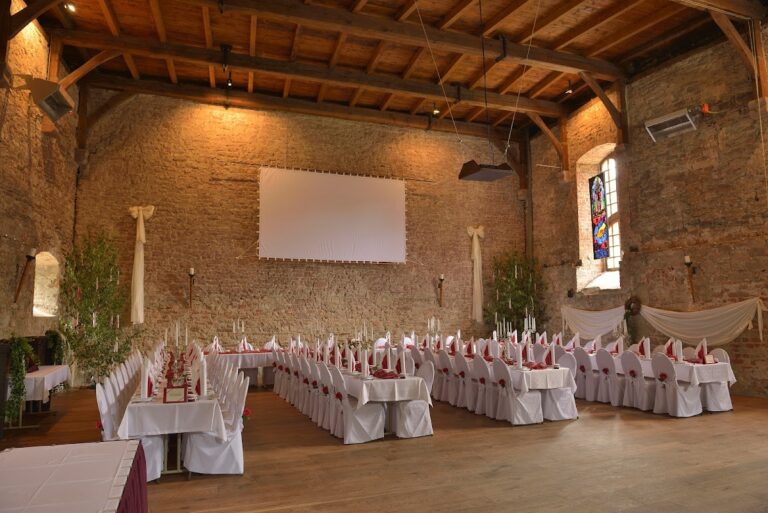
Following Napoleon’s defeat, the complex operated as a Prussian state domain until the municipality of Ummendorf purchased it in 1912. A museum was established there in 1924 and developed into the present Börde Museum. The castle is a protected cultural heritage monument of Saxony-Anhalt. Today, the complex also houses an agricultural-technology exhibition, while a primary school occupies the south wing.
The museum’s associated collection includes 380 books dating from the seventeenth and eighteenth centuries. These include Bibles, other ecclesiastical publications, inventory books, accounts, and population registers. They were transferred in the 1960s from the Oschersleben local-history museum to the Halberstadt Municipal Museum.
Remains
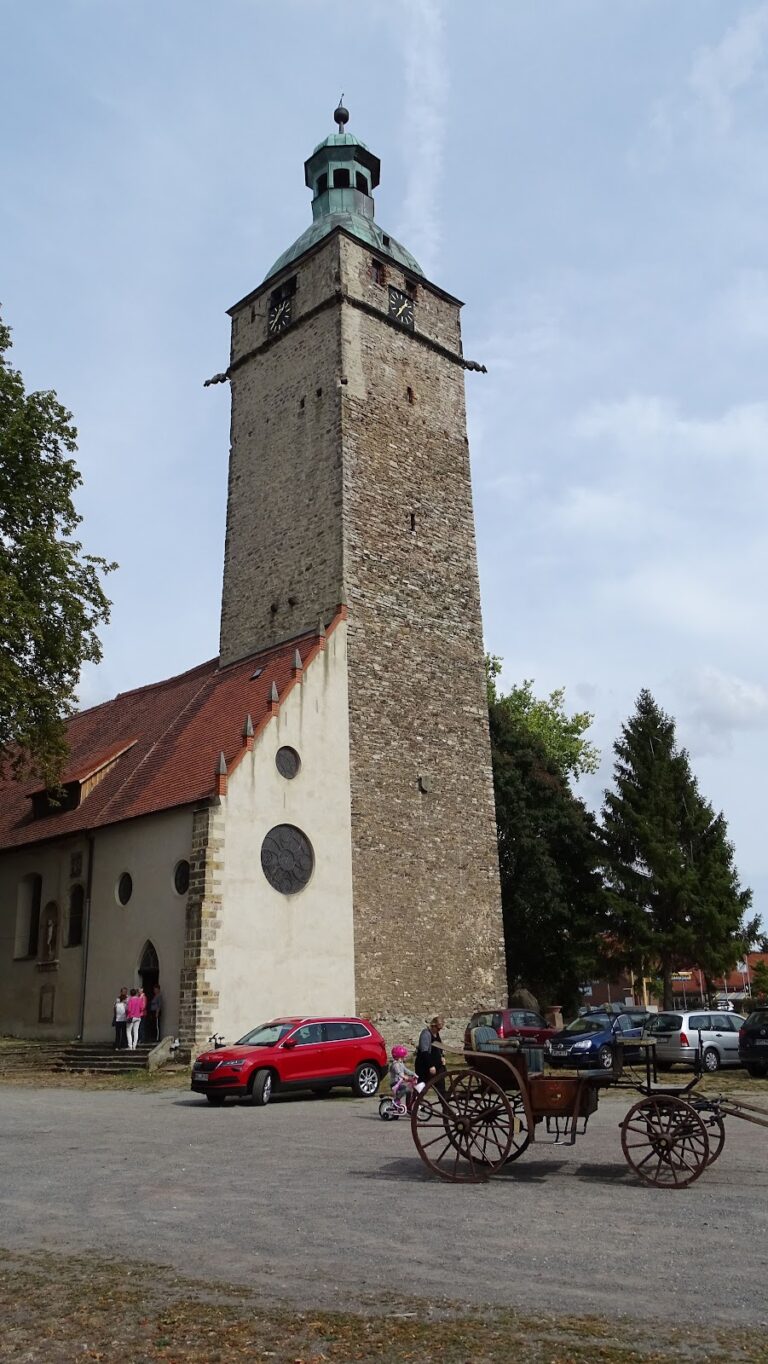
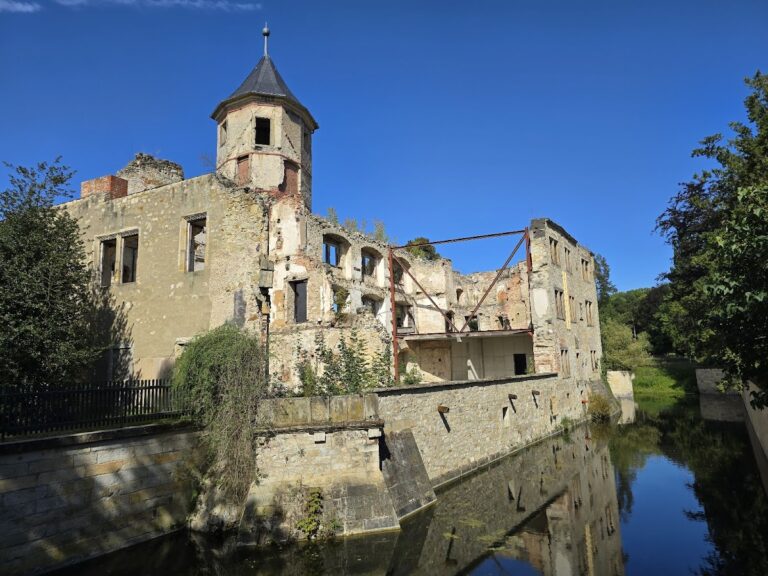
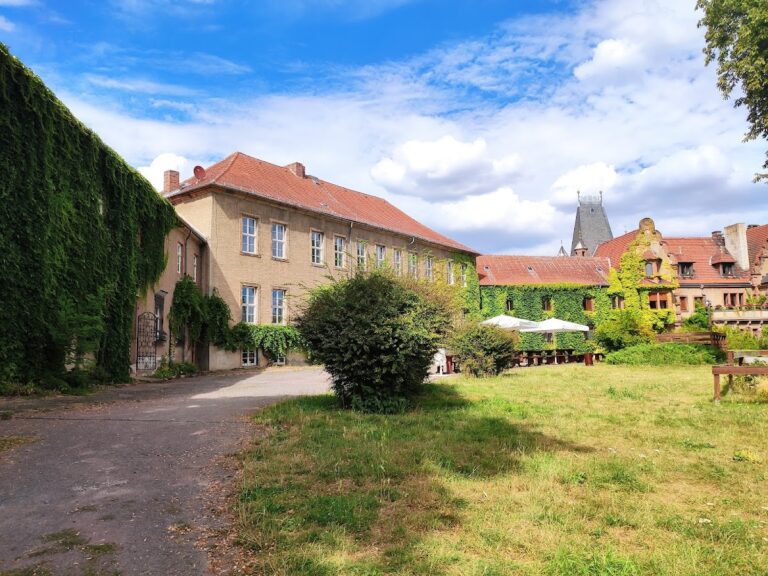
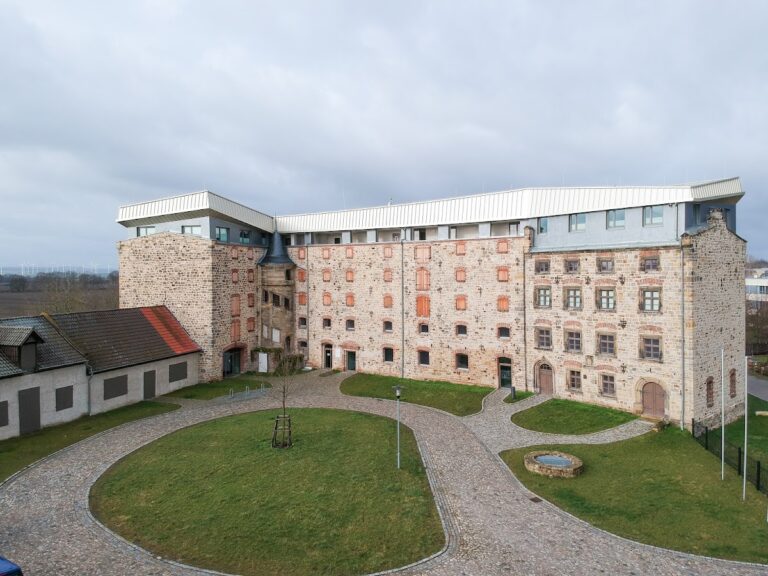
Burg Ummendorf survives as an irregular, largely preserved three-wing Renaissance complex incorporating medieval elements. Its principal surviving structures include the Romanesque bergfried, a fortified medieval tower used for defense and refuge, together with a gatehouse and a granary on the west side. The south wing remains in use as a primary school.
Medieval tower and western buildings
Bergfried
The bergfried preserves the oldest major fabric of the castle. Its lower stories date from the second half of the twelfth century, close to the foundation period. The upper section, including an octagonal tower room, was added in the sixteenth century. Rising more than 20 meters, the tower was long popularly known as the “Prisoners’ Tower” and can be visited as part of the museum tour.
Granary and gatehouse
A granary stands on the west side of the medieval complex, while the gatehouse forms part of the surviving castle structures. Together with the bergfried, these elements remain integrated into the later three-wing arrangement produced by the sixteenth-century alterations.
Renaissance wings and grounds
The sixteenth-century building campaign reshaped Burg Ummendorf into an irregular three-wing complex. Much of this Renaissance arrangement remains preserved, with the south wing continuing to accommodate the primary school and other parts of the castle forming the setting for the Börde Museum.
The grounds include a herb garden containing more than 400 different herbs and plants. This cultivated area forms part of the surviving castle grounds alongside the preserved buildings.
Nearby sites