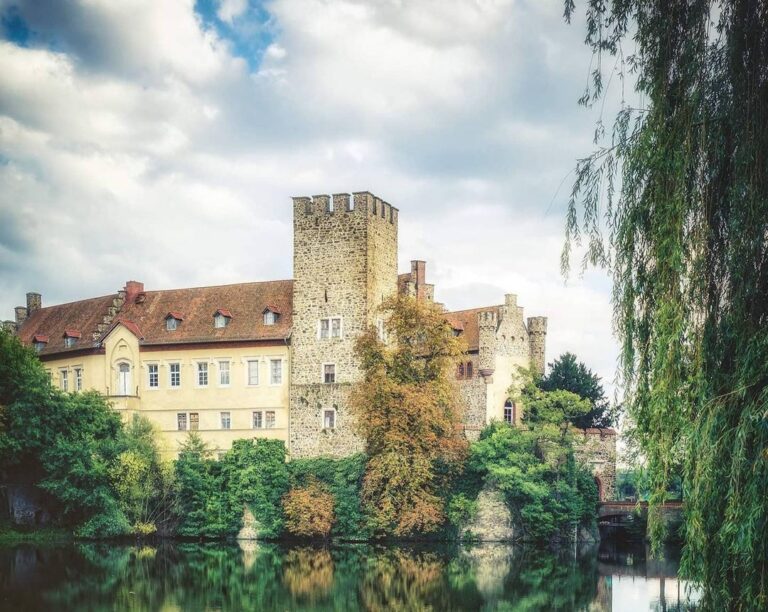
Burg Alvensleben (Veltheimsburg): A Former Castle Complex in Germany


Site at a Glance
- Rating
- 4.6
- Popularity
- Low
- Country
- Germany
- Primary era
- Medieval
- External website
- Open
- Eras represented
- Medieval, Modern
- Civilizations
- Holy Roman Empire, Margraviate of Brandenburg
- Site type
- Military
- Remains
- Castle
On this page11 sections
History
Burg Alvensleben, now called Veltheimsburg, is a former castle complex in Germany at Bebertal-Alvensleben, within the municipality of Hohe Börde. It developed during the medieval period on a rocky massif above the Bever valley, where the bishops of Halberstadt established a castle to protect the Archdeaconry of Alvensleben, one of the oldest districts of their bishopric, or territory administered by a bishop. A market settlement grew under the castle’s protection during the tenth century, and an unconfirmed first reference dates to 964.
Early settlement and the Alvensleben family
Nineteen communities belonged to the castle’s administrative district. The settlement later contained two churches and six fortified tower courtyards held by service-bound knights, while silver mining took place in the surrounding area. The ministerial family von Alvensleben, a service noble family attached to a territorial lord, took its name from the settlement and held the office of castle bailiff from at least 1175 into the thirteenth century. The place-name probably originated before the Carolingian period and may combine an uncertain personal name with a word meaning inheritance or estate. The traditional derivation from Alvo is considered unlikely.
The two medieval castles
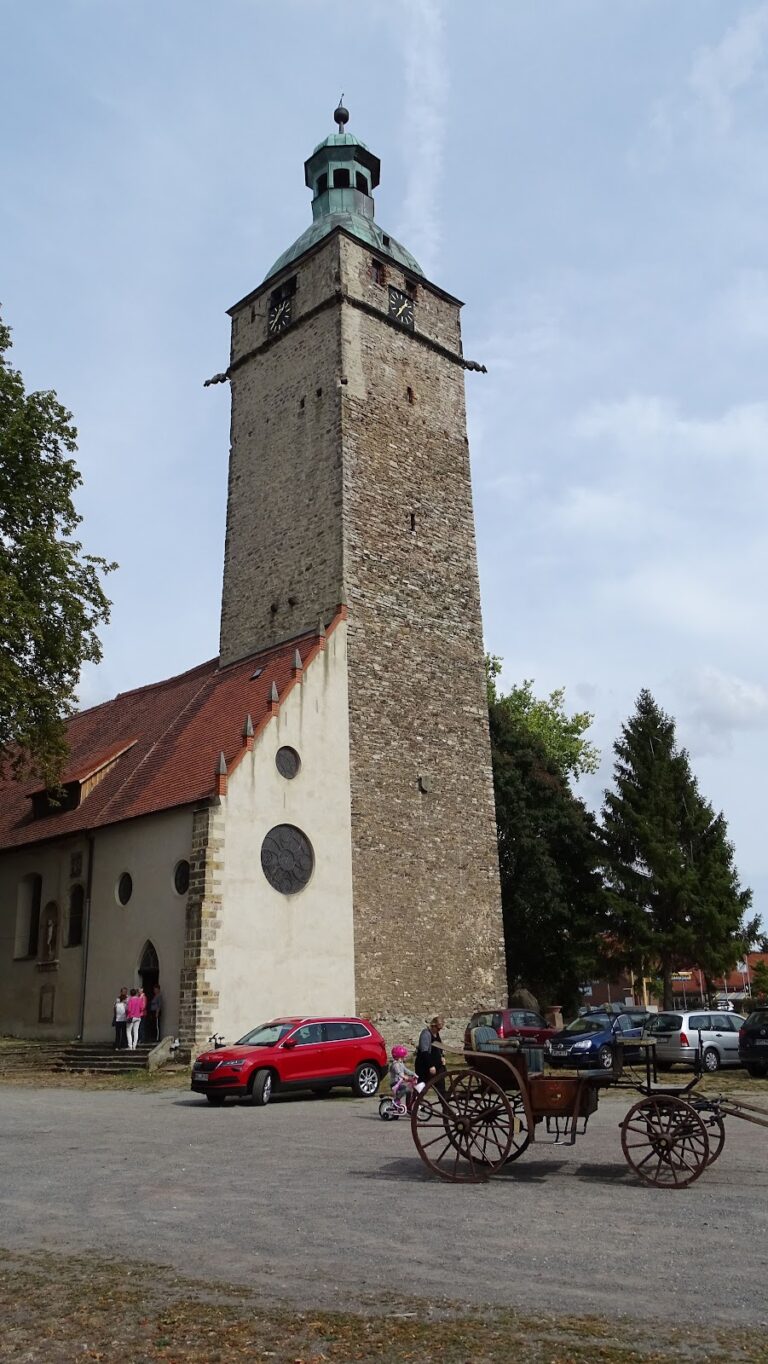
The site was dominated by two neighboring strongholds. The episcopal castle was first identified as belonging to the bishops of Halberstadt in 1180, although it was probably older. At the beginning of the fourteenth century, it passed to the archbishops of Magdeburg, whose archbishopric was a higher-ranking ecclesiastical territory governed by an archbishop. They generally pledged the castle to other holders, transferring it temporarily as security for a debt or political arrangement.
From 1534 to 1598, the episcopal castle was pledged to Gebhard XVII von Alvensleben and his sons Ludolf X and Joachim I. They restored buildings that had already fallen into serious disrepair. After 1598, officials of the ruling authorities administered the castle as a territorial office. Its economic operations moved to the Alvensleben market in 1649, followed by the official’s residence in 1685. The former administrative center then declined, with only its tower surviving as a major remnant.
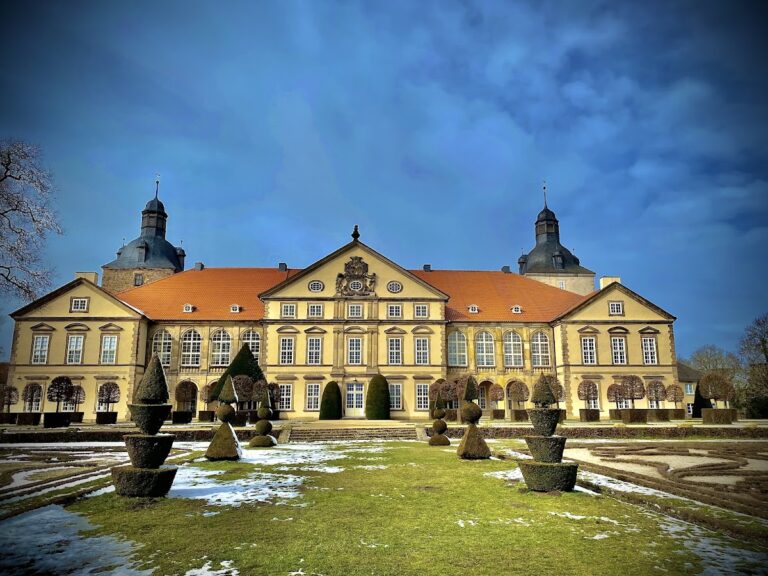
The neighboring Brandenburg margrave’s castle was built before 1245. A margrave was a frontier ruler of the Holy Roman Empire, and this castle formed part of the wider fortifications while also being known as the rear castle. In 1439 it became an archiepiscopal fief of the von Veltheim family. During the eighteenth century, the family gave it the name Veltheimsburg. The Veltheims expanded and supplemented the complex in romanticizing form in 1882 and 1910, retaining ownership until the land reform of 1945.
The reported Knights’ Castle
A third stronghold, called the Knights’ Castle or Musikenburg, was reportedly built in the early thirteenth century by Gebhard I von Alvensleben, who was active between 1190 and 1216. His son Johann II von Alvensleben, active between 1232 and 1248, sold it to the bishop of Halberstadt. The castle then served as a protective stronghold for the episcopal castle and became a bishop’s fief of Güntzel von Berwinkel around 1260. It remained with his family until the end of the fifteenth century, after which it was abandoned and had decayed by 1500. Its position remains unresolved. The field-name Musikenbreite preserves its memory, while a legend connects the name with continual music, feasting, and dancing within the castle.
Transformation into a park and later uses
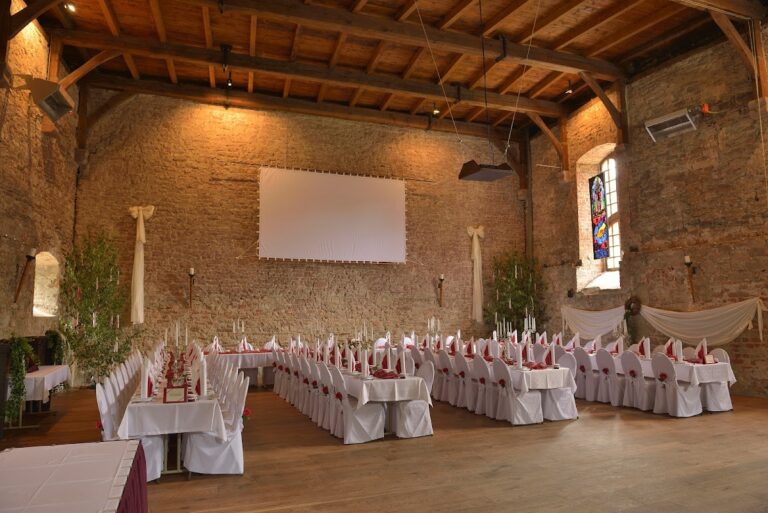
Landrat Otto August von Veltheim acquired the grounds of the former episcopal castle in 1837 during land consolidation and transformed them into a landscape park. After 1945, parts of the Veltheimsburg complex were used as a children’s home. Following German reunification in 1990, the Braunschweig entrepreneur Hans-Dieter Neddermeyer acquired the entire complex and undertook extensive renovations. Parts of the site now accommodate a registry office, a local-history room, and gastronomic facilities.
Remains
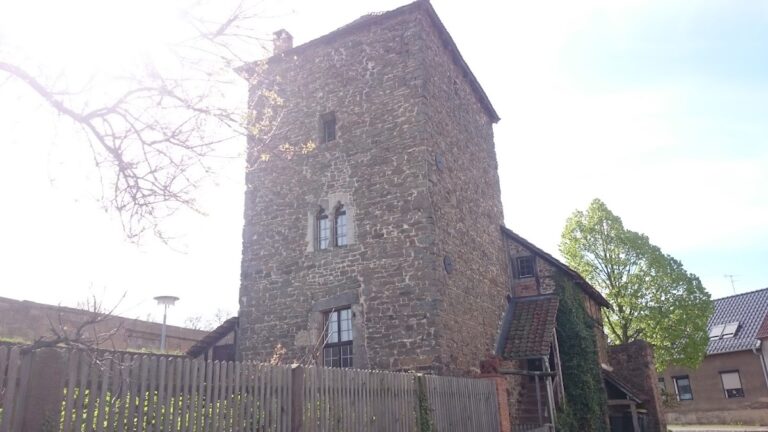
The surviving complex occupies the site of a former spur castle, a fortress built on a projecting ridge or rocky spur whose steep sides aided defense. The landscape park covers the former episcopal-castle grounds and the rocky castle hill, whose sides descend around the site. Most medieval buildings have disappeared, but the remodeled round keep and ruined remains of the neighboring margrave’s palas, the principal residential and representative hall, preserve elements of the medieval arrangement. A manor house and a farm building associated with the Veltheims form part of the present complex.
Surviving castle structures
Episcopal castle keep
The round keep, or principal defensive tower, is the clearest surviving medieval element of the episcopal castle. It remains standing but has been remodeled, reflecting the long transformation of the former fortified site after its administrative functions moved elsewhere. The tower survives within the park landscape on the rocky castle hill.
Margrave’s castle palas
The palas of the Brandenburg margrave’s castle survives in ruinous form. As the castle’s principal residential and representative hall, it belonged to the stronghold built directly beside the episcopal castle before 1245. Its remaining masonry forms a visible medieval part of the Veltheimsburg complex.
Veltheim buildings
The present grounds also include a manor house and a farm building connected with the Veltheim family’s ownership. Together with the remodeled keep and the ruined palas, these buildings represent the later phases of the complex and its adaptation beyond its medieval defensive functions.
Fortified settlement and underground traditions
The wider settlement was enclosed by a circuit of walls and gates. Its fortified urban fabric included two churches and six tower courtyards belonging to service-bound knights, placing the castle complex within a defended medieval settlement rather than as an isolated stronghold. An underground labyrinth of passages is said to extend beneath the park, but this claim remains unconfirmed.
Nearby sites