Burg Althornberg: A Medieval Hilltop Castle in Germany


Site at a Glance
- Rating
- 4.9
- Popularity
- Very Low
- Country
- Germany
- Primary era
- Medieval
- Eras represented
- Medieval
- Civilizations
- Holy Roman Empire
- Site type
- Military
- Remains
- Castle
On this page5 sections
History
Burg Althornberg is a vanished hilltop castle in Germany, near Triberg in the Black Forest. Traditionally dated to around 1100, it was built by the nobleman Adalbert von Ellerbach, who called himself Baron of Hornberg from 1111 onward. The castle occupied an elevated defensive position and became associated with nobles and counts.
Lordly Possession
Burg Althornberg was held successively by the Lords of Hornberg, the Lords of Triberg, the Counts of Hohenberg, and the Habsburgs. The Habsburgs were a major European ruling dynasty whose territories included parts of the Holy Roman Empire and whose members exercised extensive authority in central Europe.
Destruction and Later Occupation
The castle burned sometime between 1430 and 1440. During the Thirty Years’ War, the major European conflict fought from 1618 to 1648 amid religious, dynastic, and political struggles, Swedish forces occupied the site. The castle was then set on fire again.
Remains
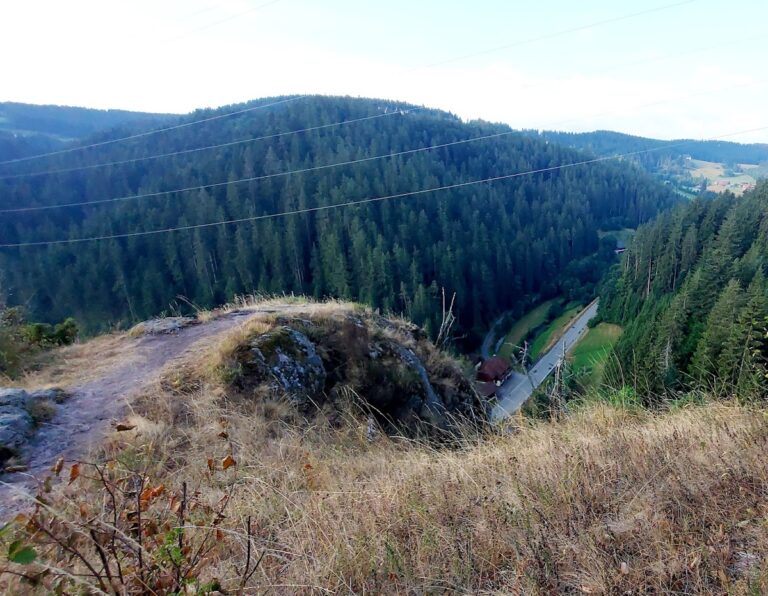
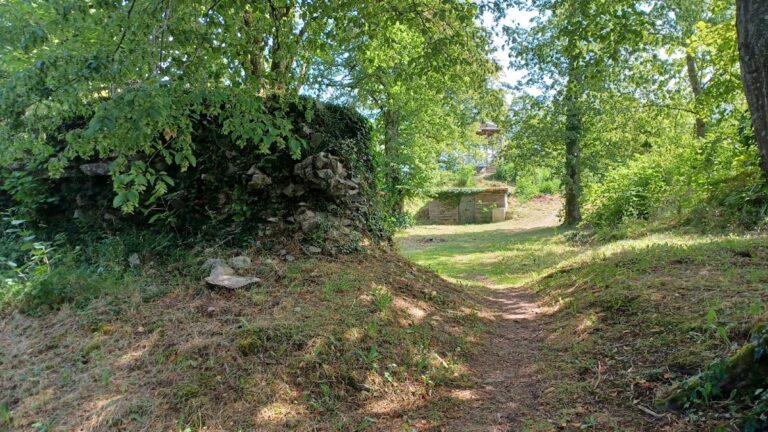
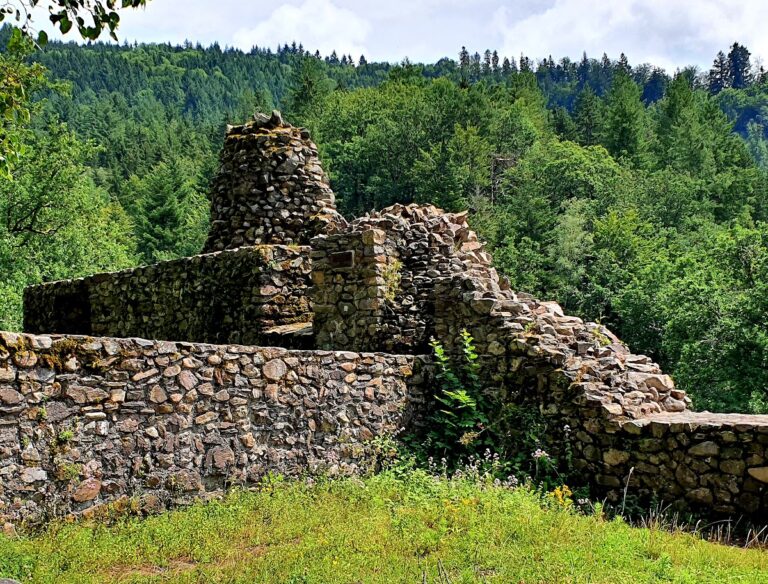
Burg Althornberg stood at about 786 metres above sea level in Althornberg, within Triberg in Baden-Württemberg. It occupied a steeply descending rocky spur above the Gutach River, opposite the Niederwasser district. The surviving remains of the castle itself consist of beam sockets, a cistern, and a rock chamber. A cistern is a built reservoir used to collect and store water.
Forward Defensive Structures
The Lords of Hornberg built an inhabited escort tower at the junction of the Tiefenbach and Schwanenbach valleys. An escort tower was a fortified residential tower designed to protect an approach or route. This tower also covered the approach to Burg Althornberg, although only a fragment of its masonry survives. A second escort tower stood at the northern end of the lordship on Turmerberg, where it controlled the trade road. Masonry remains of Gutach Castle have also survived.
Nearby sites