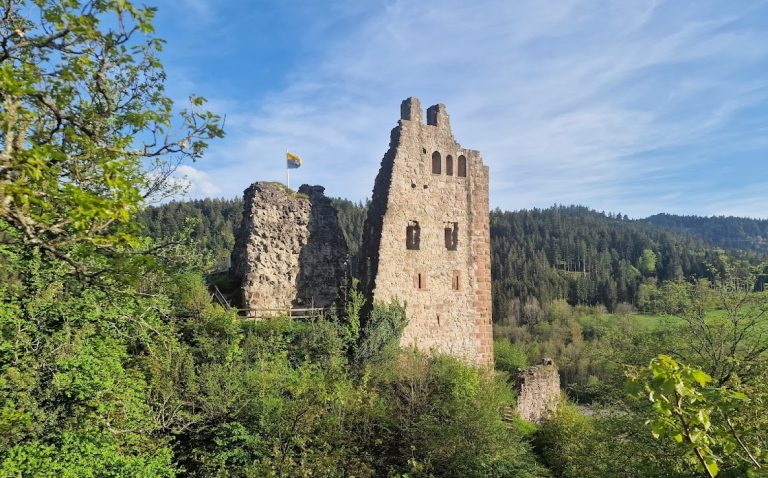
Ruine Ramstein: Medieval Castle Ruins near Schramberg, Germany


Site at a Glance
- Rating
- 4.5
- Popularity
- Very Low
- Country
- Germany
- Primary era
- Medieval
- External website
- Open
- Eras represented
- Medieval
- Civilizations
- Holy Roman Empire
- Site type
- Military
- Remains
- Castle
On this page12 sections
History
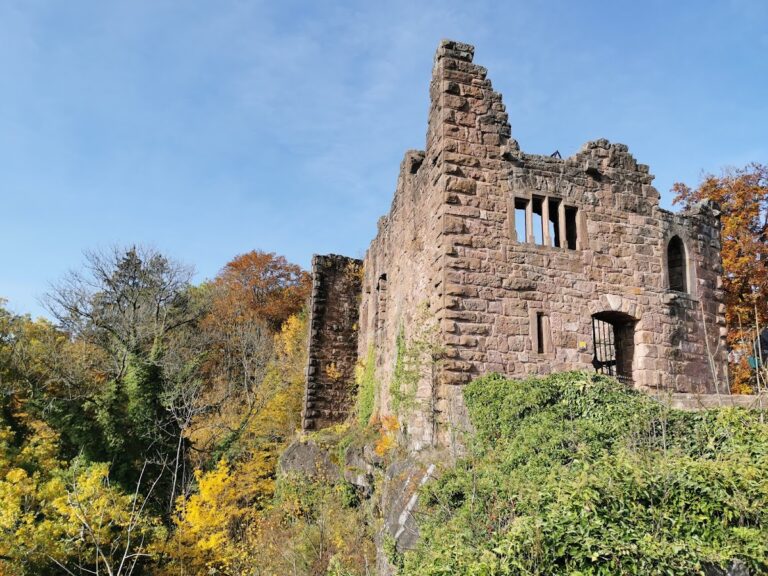
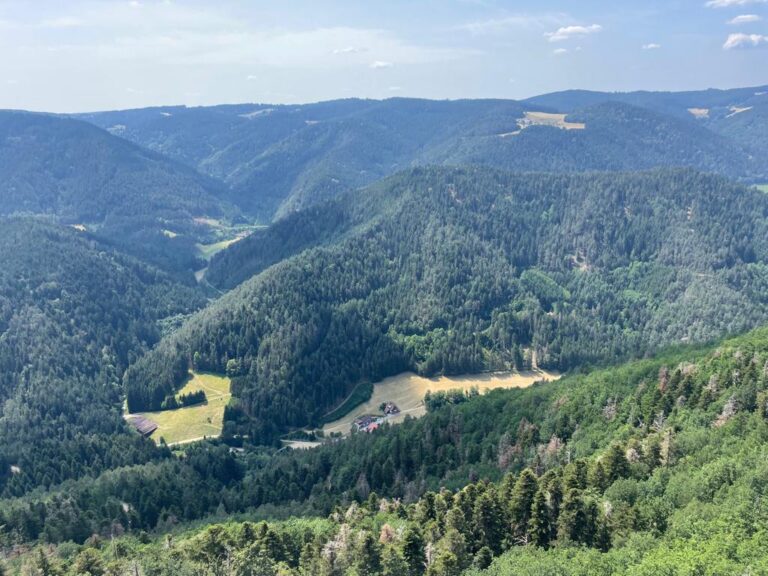
Ruine Ramstein is a medieval hilltop castle ruin in Germany, located between Schramberg and Tennenbronn in the upper Schiltach valley. It originated before 1137 as the political center and namesake of the Lords of Ramstein, a lineage that emerged from the Lords of Obereschach.
The Lords of Ramstein and Falkenstein-Ramstein
The Lords of Ramstein died out around 1280, and their lordship then passed to the Lords of Falkenstein-Ramstein. Although the castle appears in written sources only at the beginning of the fifteenth century, its earlier origins are reflected in surviving construction phases.
Sieges and destruction
In 1411, troops commanded by Konrad of Fürstenberg, supported by forces from the city of Strasbourg, besieged, captured, and destroyed Ramstein. The castle was restored in 1428. In 1449, it was held in pledge by Elisabeth of Rechberg, the wife of Hans of Rechberg.
In 1451, Hans of Rechberg and Heinrich of Eisenburg began a feud against the Swabian League of Cities, an alliance through which imperial cities in southwestern Germany acted together in political and military conflicts. They captured the merchants Jörg Ehinger of Ulm and Rudolf Muntprat of Ravensburg and brought them to Ramstein. The cities paid 5,200 gulden for their release.
After the captives were freed, the cities sent an army against Ramstein in July 1452. It consisted of 1,100 infantrymen and 200 cavalrymen. The siege lasted four days, and the castle fell on 19 July after intensive attacks with fire arrows. The attackers entered through the burned gate, while weapon finds indicate that fierce fighting continued inside the castle.
After the final destruction
In 1454, Emperor Frederick III, who ruled the Holy Roman Empire from 1452 to 1493, ordered peace negotiations between Rechberg and the imperial cities. The Rechberg party unexpectedly received 14,000 gulden in compensation for Ramstein’s destruction, but the castle was not rebuilt. Hans of Rechberg used the money to construct Hohenschramberg Fortress.
Remains
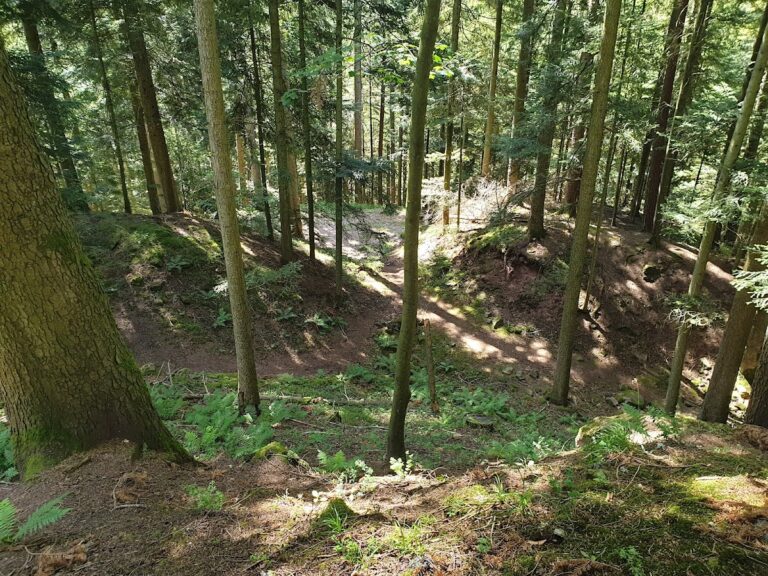
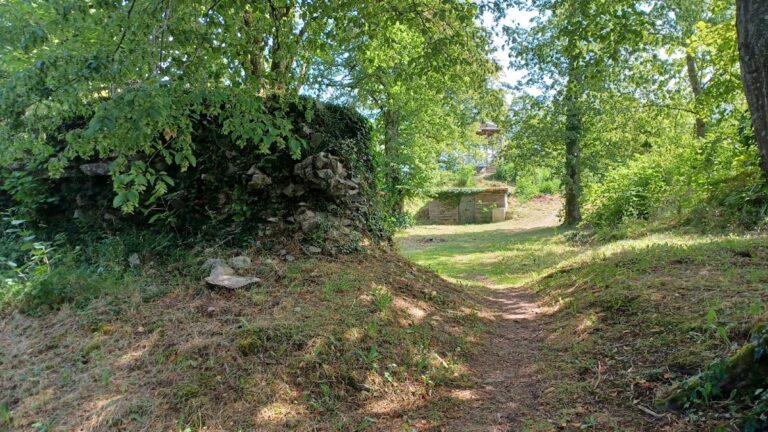
Ramstein occupied approximately 400 square metres on a wooded ridge about 688 metres above sea level. As a hilltop castle, it stood on elevated ground in the upper Schiltach valley, with a broad ditch separating it from the mountain side. The compact arrangement of the ditch, surrounding curtain wall, entrance, courtyard, and residential building is indicated by the 1606 St. Georgen land map and the surviving foundations. The visible remains today consist of a few wall sections.
Defensive enclosure and entrance
Walls and towers
The castle was enclosed by a curtain wall built with bossed stone blocks. Bossed masonry uses blocks whose outer faces project in a rough, cushion-like form, a technique commonly used in medieval fortifications. A round corner tower formed part of the defensive enclosure, while additional masonry secured the valley side. Surviving sandstone bossed blocks from the wall date to around 1250.
Gate and gate tower
The entrance consisted of a gate and gate tower positioned within the compact fortified complex. The broad ditch protected the uphill approach. The uphill wall, built from natural stone, may belong to an earlier construction phase than the sandstone wall sections.
Interior buildings
Courtyard
A small central courtyard occupied the middle of the castle. Its position formed part of the close arrangement shown by the 1606 map and supported the relationship between the entrance, defensive walls, and principal residential building.
Palas
The palas, the principal residential and representational building of a medieval castle, stood within the enclosure. It contained the lord’s living and reception rooms and formed one of the main components of the compact castle complex.
Evidence of the 1452 assault
Weapon finds from the castle include small shot balls, crossbow bolts, and swords. Together with the burned entrance, these objects reflect the fighting that followed the attackers’ entry during the four-day siege of 1452.