Neuhaus Castle near Stubenberg: A Medieval Hill Castle in Austria
Site at a Glance
- Rating
- 4.2
- Popularity
- Medium
- Country
- Austria
- Primary era
- Medieval
- Eras represented
- Medieval, Early Modern
- Civilizations
- Duchy of Styria, Habsburg, Habsburg Austria, Holy Roman Empire
- Site type
- Military
- Remains
- Castle
On this page8 sections
History
Neuhaus Castle near Stubenberg is a hill castle above the Stubenbergklamm in Stubenberg am See, Austria. The Styrian noble House of Stubenberg built it as a fief, land held under feudal tenure, around 1350–1375.
Foundation and rebuilding
A document from 1375 names Hans von Neuhaus. Members of the Drachsler family appear among the castle’s owners by about 1455, and the property passed to Sigmund Drachsler in 1506. A fire in 1541 destroyed the castle archive, after which Sigmund rebuilt the castle in its present form.
Strengthening and decline
Georg Andree Freiherr von Wurmbrand-Stuppach, a baron, acquired the estate in 1663 and substantially strengthened the castle. The work responded to threats during the Ottoman wars, conflicts between the Ottoman Empire and European powers including the Habsburg monarchy, and from the Kuruc, insurgents who opposed Habsburg rule. The estate’s administration later moved to Schielleiten.
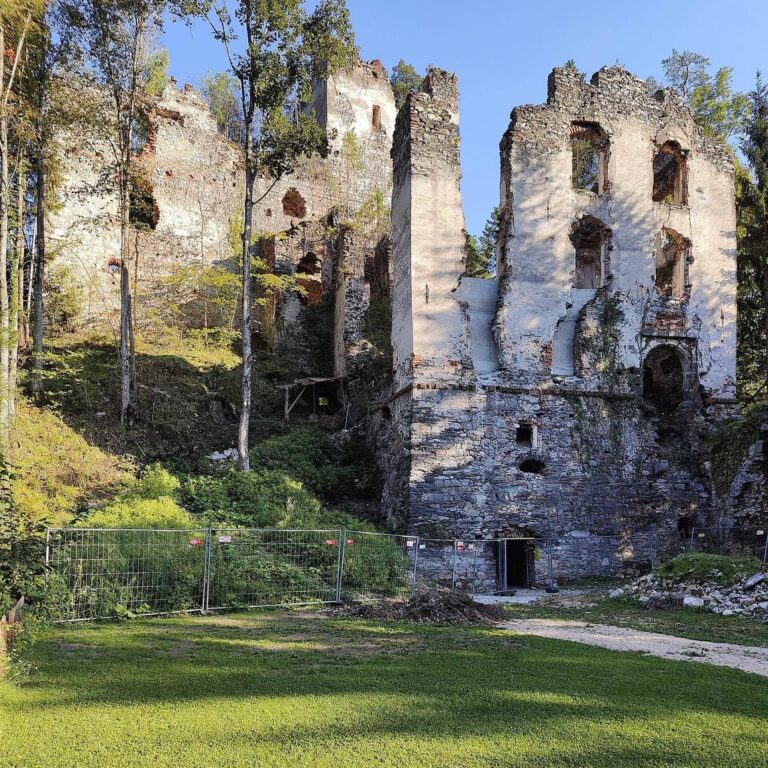
A lightning strike almost completely destroyed the castle around 1800. In 1809, Josef Ferdinand Grengg, administrator of Schielleiten, acquired the estate and its ruin. It passed in 1817 to Imperial Baron Ferdinand von Gudenus.
Revitalization
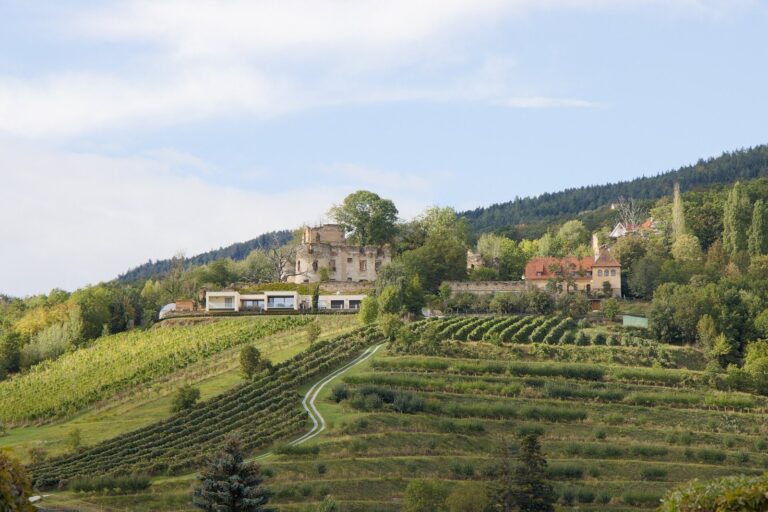
After roughly two centuries of decay, the Vetter von der Lilie family acquired the ruin in 1982 and began its revitalization. The castle is protected as a monument and has received the Styrian Landmark distinction.
Remains
Layout and restored fabric
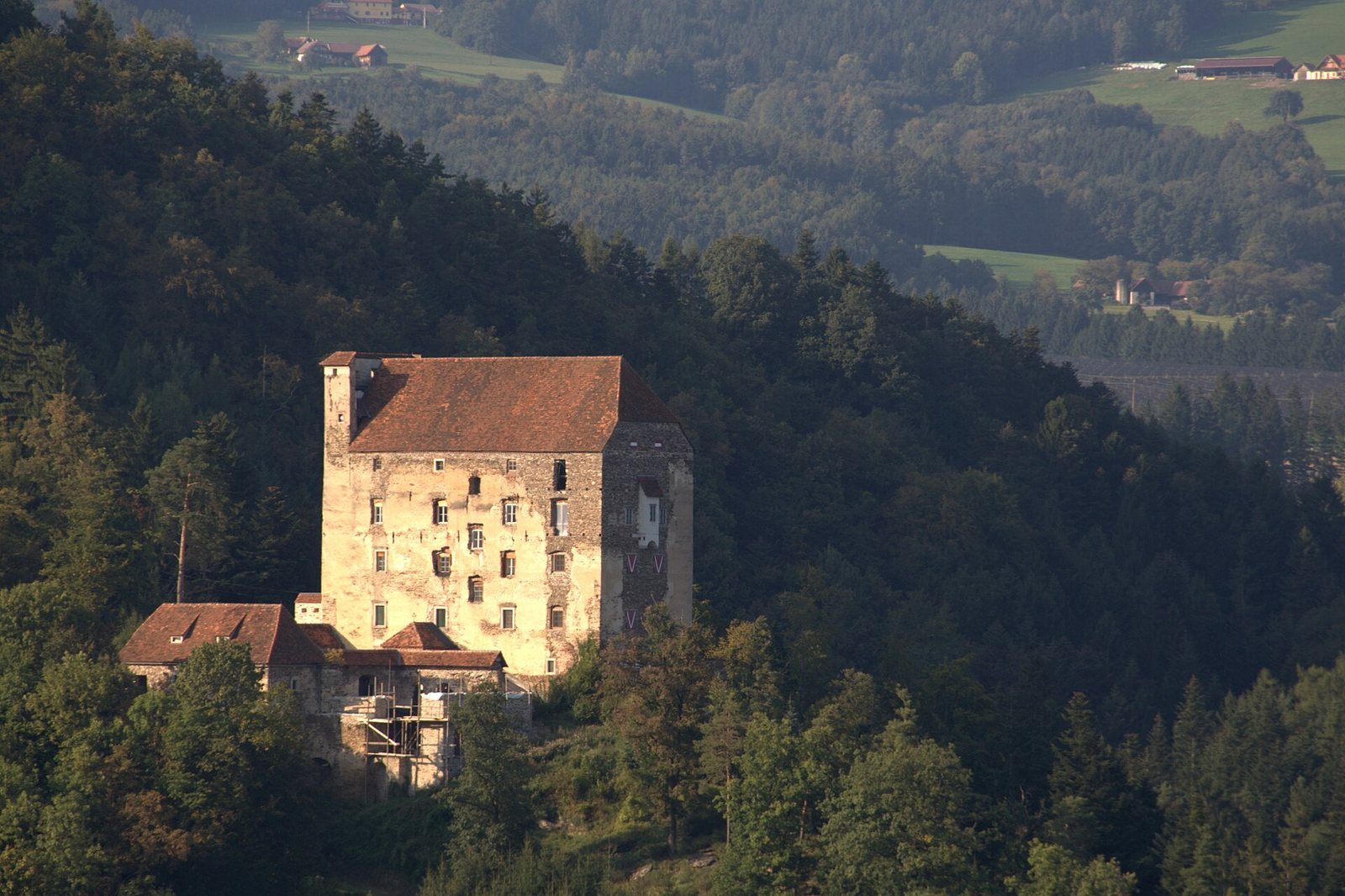
The hilltop castle stands above the Stubenbergklamm, a ravine of the Feistritz River, at 553 metres above sea level. It survives as a renovated ruin, with substantial parts of the historic structure retained.
Residential tower
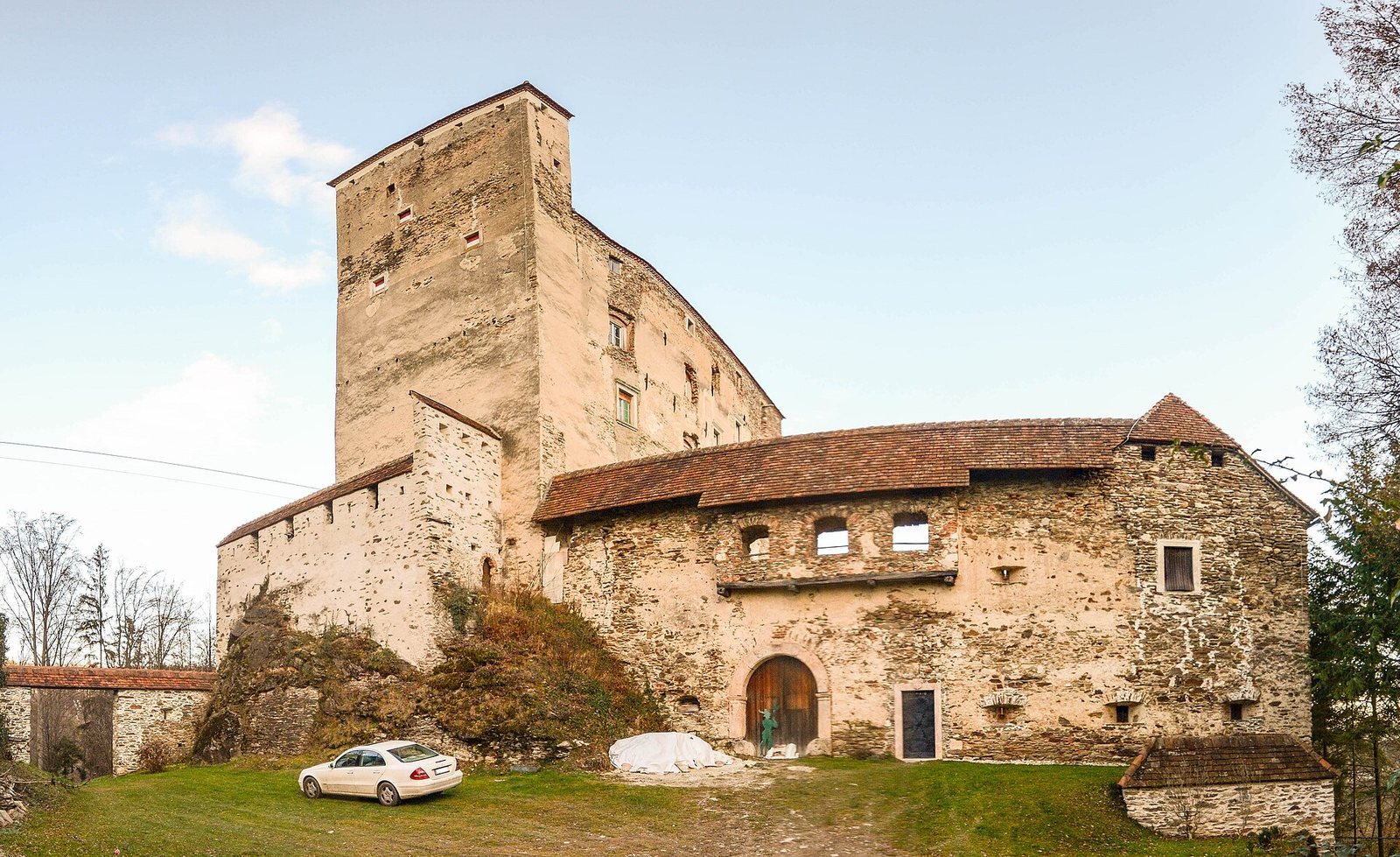
The medieval residential tower rises 32 metres. It is probably the oldest high-rise building in Styria. Its unusually thick, strong walls helped preserve enough of the structure for its revitalization. Restoration included clearing rubble from the tower and installing a new roof structure, and the tower’s restoration is largely complete.
Residential wing and adjoining buildings
The residential wing has been largely reconstructed to match its original form. Two adjoining ancillary buildings remain under reconstruction.