Burg Neuenfels: A Medieval Noble Residence in Germany


Site at a Glance
- Rating
- 4.5
- Popularity
- Low
- Country
- Germany
- Primary era
- Medieval
- External website
- Open
- Eras represented
- Medieval
- Civilizations
- Holy Roman Empire
- Site type
- Domestic
- Remains
- Castle
On this page7 sections
History
Burg Neuenfels is a medieval noble residence and ruined spur castle in Germany, built around 1300 by the Lords of Neuenfels. The family appears in records from 1303 and 1307, while the castle itself is first mentioned in 1343. Rather than serving a major military purpose, it functioned primarily as a residence for the local nobility.
The Lords of Neuenfels
In 1346, the Lords of Neuenfels sold the castle to Count Imer of Strassberg, lord of Badenweiler. They received it back as a fief, meaning property granted by a superior lord in return for service and loyalty. The family then served the successive lords of Badenweiler as ministeriales, service nobles who carried out administrative, military, or courtly duties.
During the Middle Ages, members of the family held several regional offices. These included the position of castle bailiff at Badenweiler, reeve of Neuenburg, provincial bailiff at Rötteln, judge, and priest. A claim that a member of the family became abbot of St. Trudpert is not supported by surviving evidence. Jörg von Neuenfels is associated with that institution as a custos, a church official responsible for the care or administration of sacred property and buildings, rather than as an abbot.
Decline and later tradition
Christoph von Neuenfels, the last representative of the family, sold the woodland surrounding the castle to the municipality of Britzingen in 1538. He later lived in Freiburg, where he owned a house on Schiffstrasse. He married Rosa Snewelin von Landeck in 1547 and died in 1550. His widow died on 31 July 1603.
The castle had already fallen into ruin by 1540. A sixteenth-century murder ballad linked its decline to the unexplained killing of Christoph von Neuenfels, his wife, children, servants, and mastiff in the castle courtyard. This account belongs to legend rather than established history.
Another local tale, The White Maiden and the Shoemaker’s Journeyman, tells of a shoemaker’s journeyman who encounters a white maiden at the ruins. She asks him to release her from her fate and promises him a rich treasure in return. The story later provided the basis for Harald Gritzner’s historical novel The Secret of the White Woman of Neuenfels.
Conservation
Repair and conservation work took place in 1904, 1926, 1936, 1954, 1973, and from 1991 to 1994. These interventions may have changed parts of the surviving structure from their original form. The ruin lies within the municipality of Müllheim in Baden-Württemberg, about 1,500 metres southeast of Britzingen and near Badenweiler.
Remains
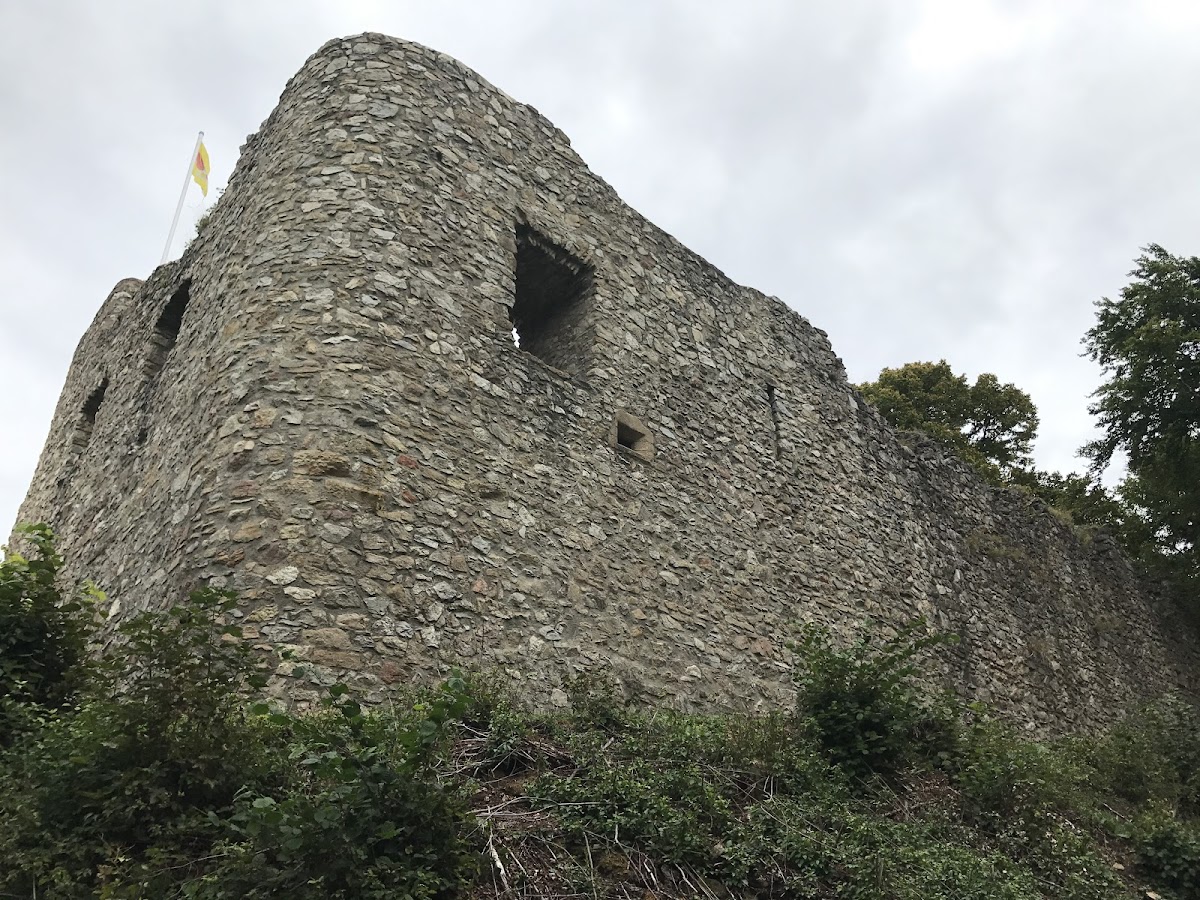
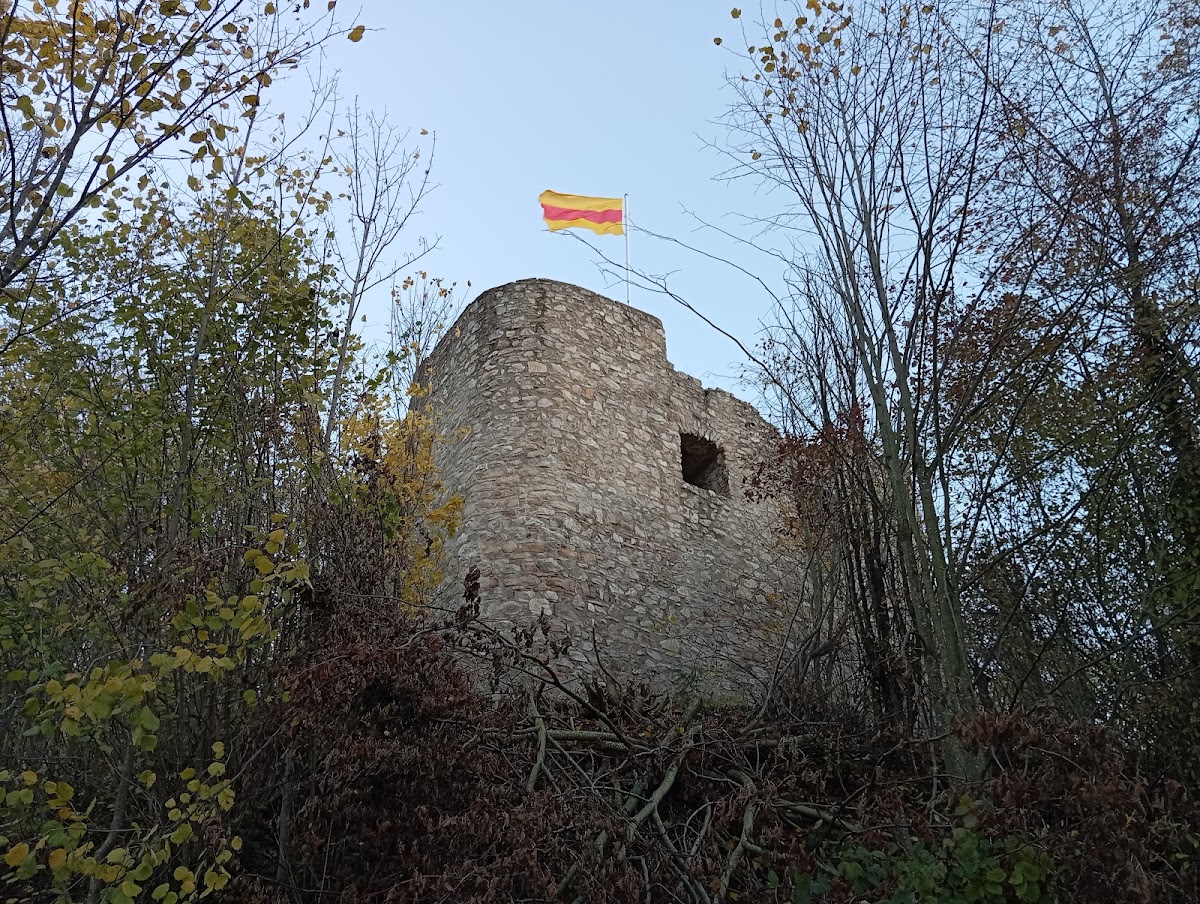
Burg Neuenfels occupies the western end of a mountain spur at about 595.1 metres above sea level. The ruined spur castle uses the natural shape of the ridge as part of its defensive arrangement. Steep slopes protect the northern, western, and southern sides, while a deep neck ditch cuts across the eastern approach, restricting access from the landward side.
Plan and defensive walls
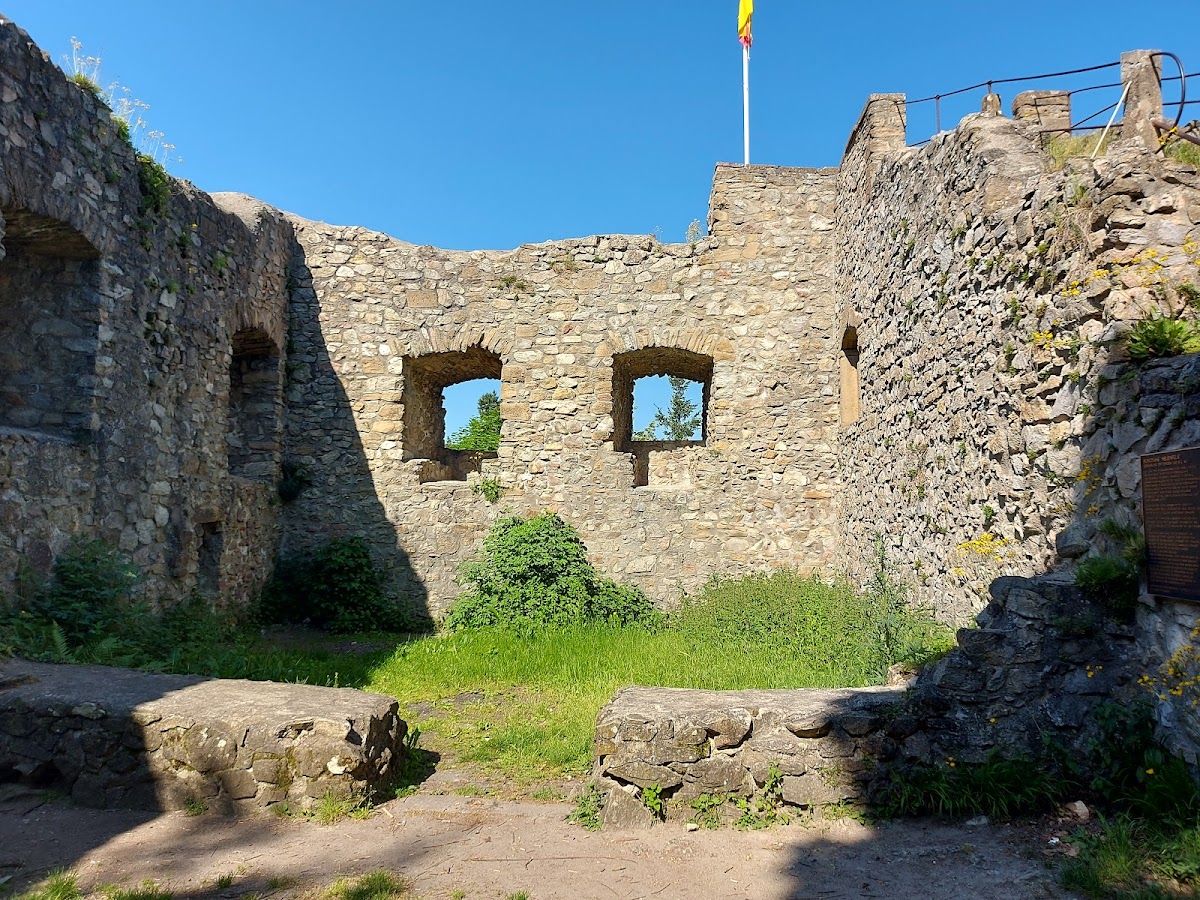
The castle had a box-like plan with rounded corners, measuring approximately 30 by 9 metres. It had no keep, the principal strong tower of a medieval castle. The surviving remains include the neck ditch and sections of masonry. Some wall sections rise to 12 metres, and the walls are slightly more than 2 metres thick. Along the more vulnerable eastern side, the defenses were reinforced in a wedge-shaped form reaching as much as 4.50 metres in thickness.
Battlements and landscape view
A prepared viewing platform with an orientation board stands on the castle battlements. From this position, the view extends across the Markgräflerland toward Badenweiler Castle and the Blauen. In clear weather, it reaches from the Swiss Jura to the outskirts of Freiburg.