Burg Lahr: A Medieval Castle Ruin in Germany
Site at a Glance
- Rating
- 4.5
- Popularity
- Very Low
- Country
- Germany
- Primary era
- Medieval
- External website
- Open
- Eras represented
- Medieval
- Civilizations
- Holy Roman Empire
- Site type
- Military
- Remains
- Castle
On this page6 sections
History
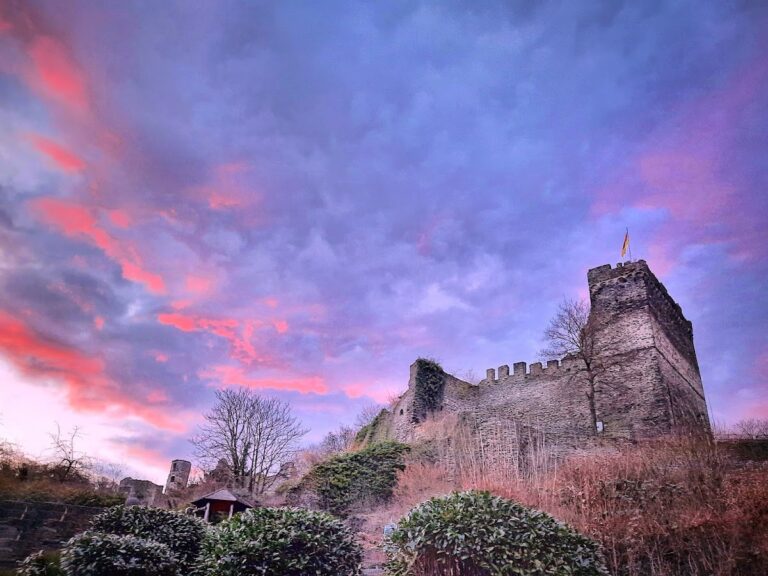
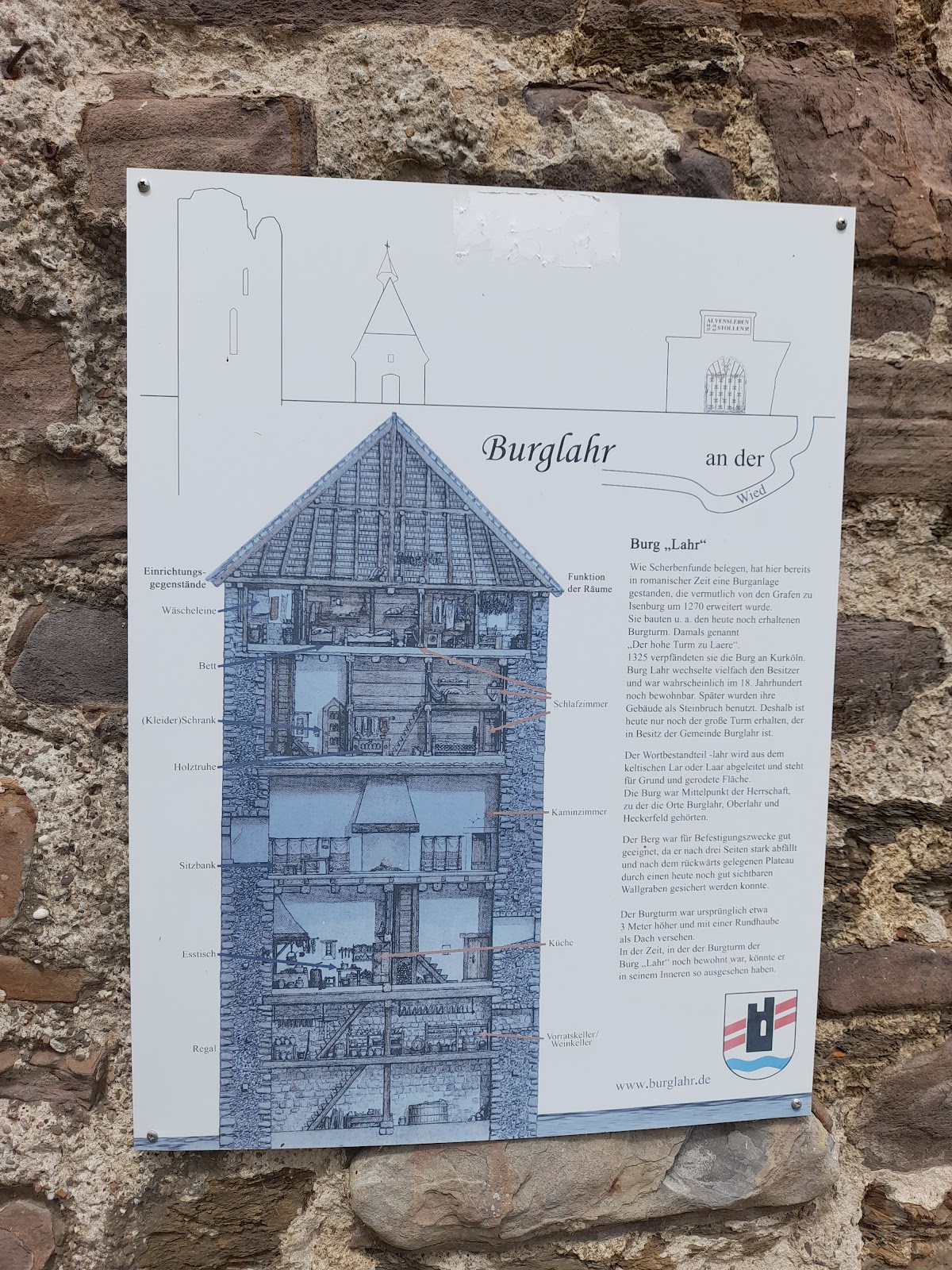
Burg Lahr is a small hilltop castle ruin above Burglahr in Germany. Built on elevated ground for defense and observation, it has an unknown construction date and builder, although it was probably considerably older than its first surviving records from the fourteenth century.
Medieval lordship
By at least the fourteenth century, Burg Lahr was a fief of Kurköln, the ecclesiastical territory governed by the archbishops and electors of Cologne. The Counts of Isenburg held the castle as vassals, members of a noble family of the medieval Rhineland who received the property in return for obligations and service.
In 1449, the Archbishop of Cologne pledged Burg Lahr to Count Heinrich von Nassau, a member of the Nassau noble house. Ownership changed several more times during the following centuries, reflecting the castle’s place within the shifting patterns of lordship in the region.
Ruination and preservation
Burg Lahr had become a ruin by the eighteenth century and was subsequently used as a quarry. The remaining structures were structurally secured during the twentieth century. The keep underwent complete renovation and restoration in 2014 and 2015.
Remains
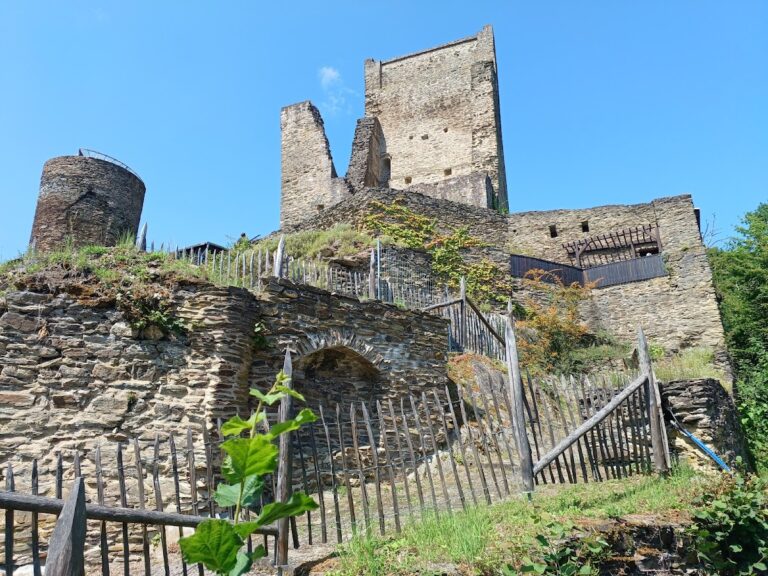
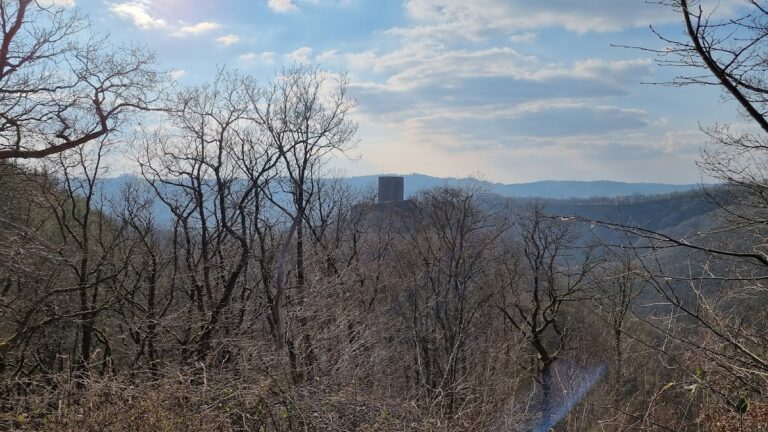
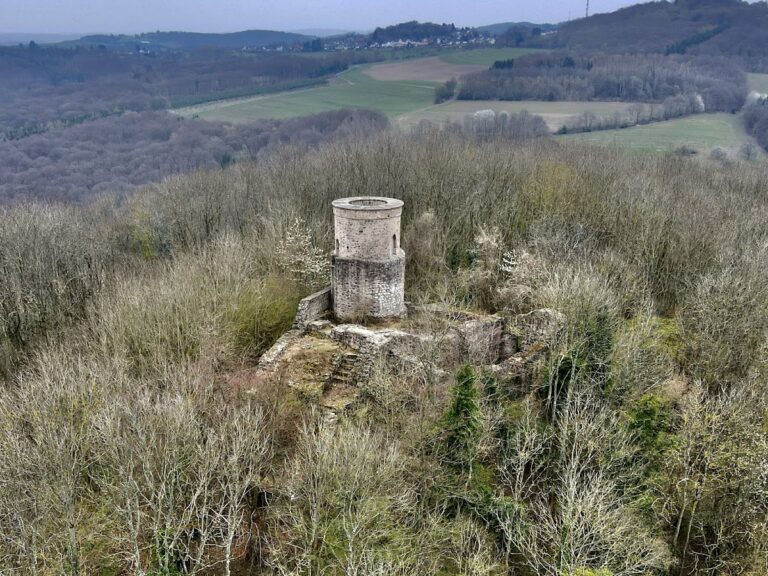
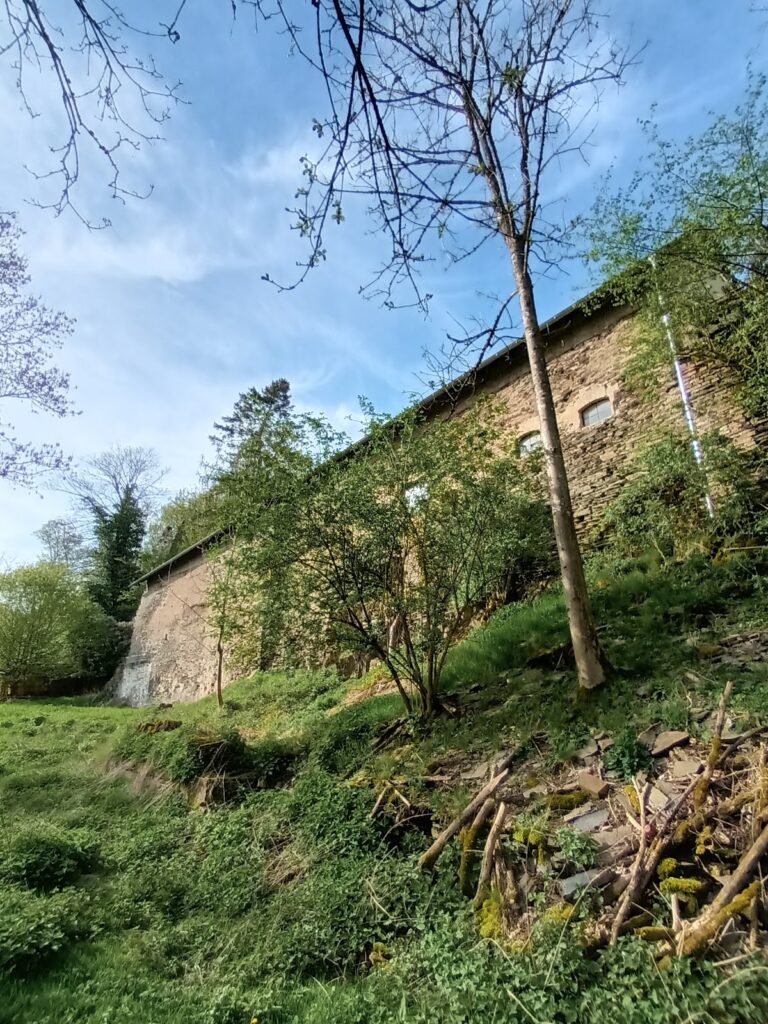
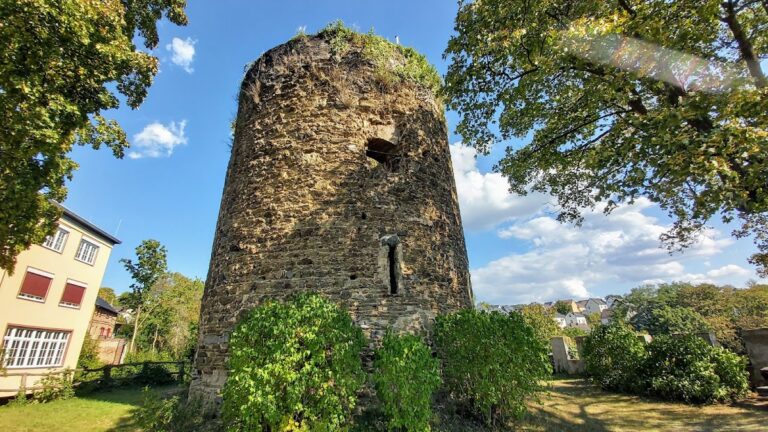
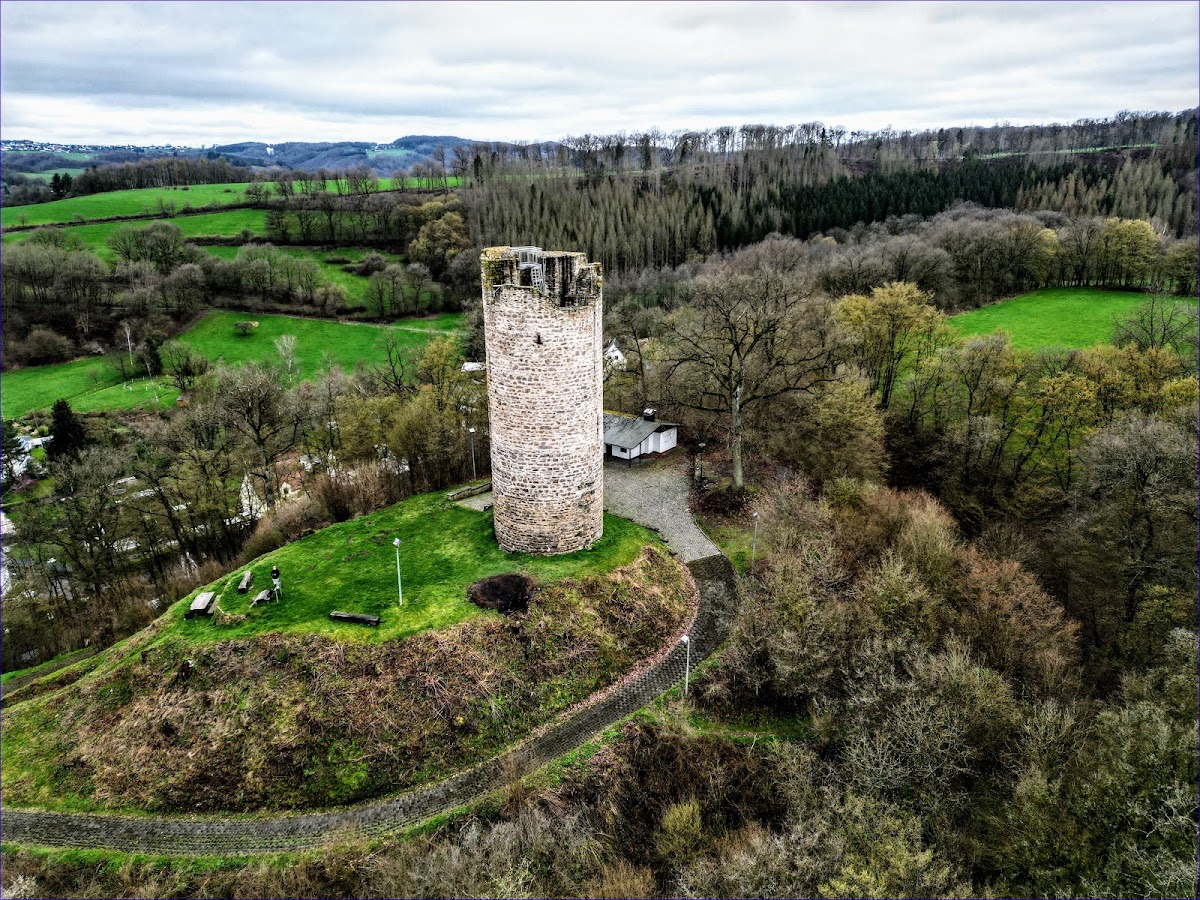
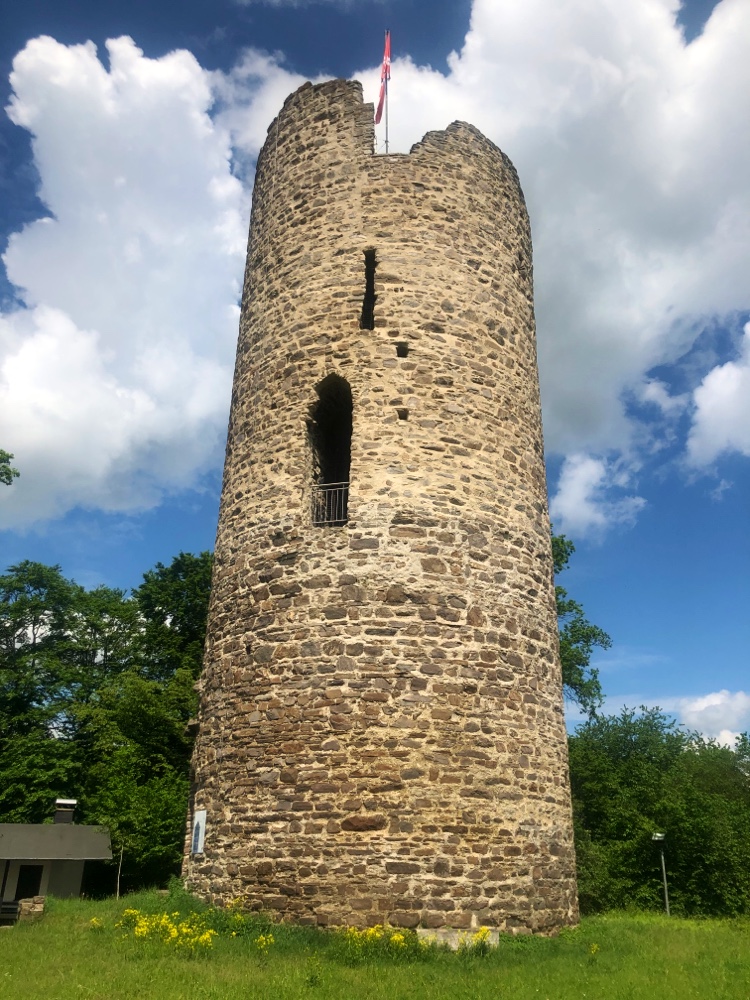
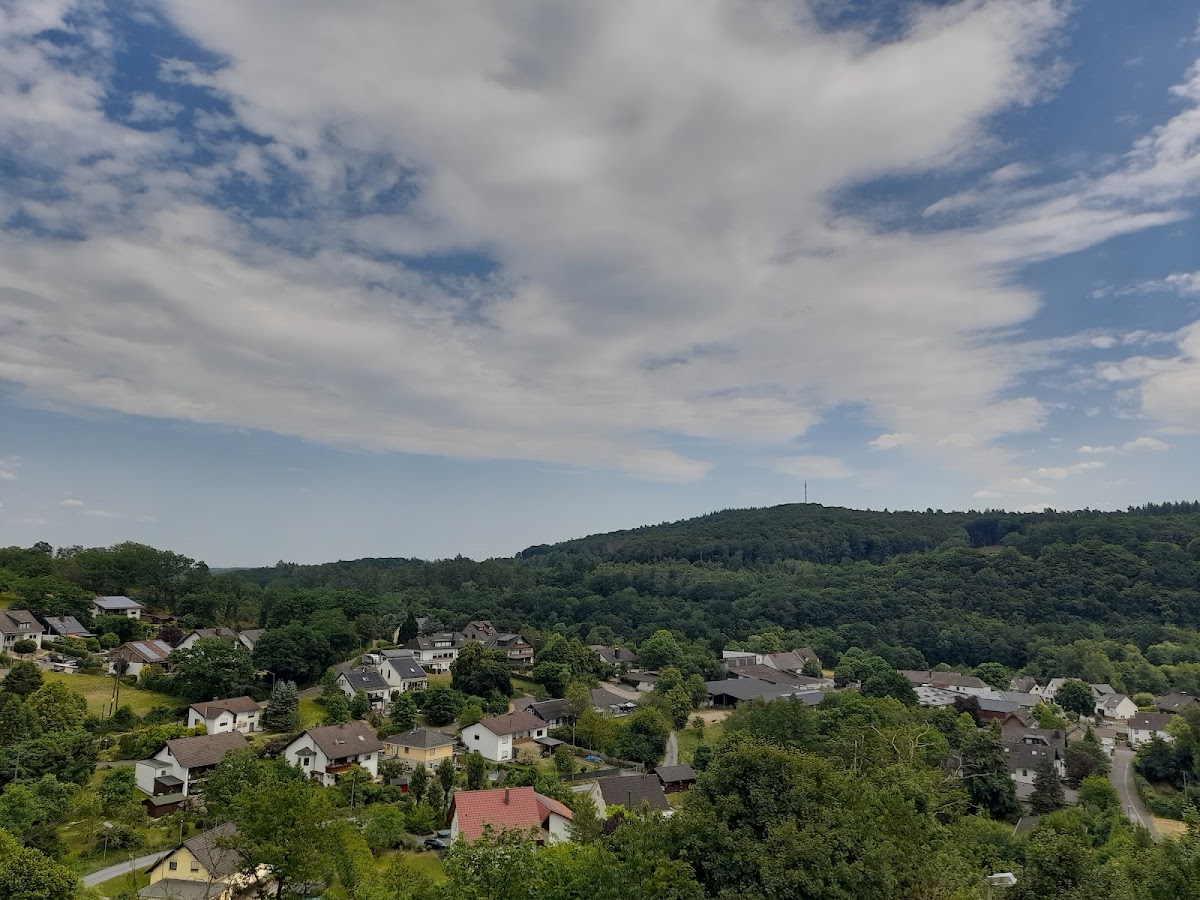
The castle stands on a wooded island hill at about 200 metres above sea level, roughly 40 metres above the Wied River, in the Wied valley of the northern Westerwald. The Wied originally surrounded the hill on three sides. After the river changed course, it came to run south of the castle and Burglahr. The surviving ruin is organized around a nearly 25-metre-high round keep, with wall fragments, foundation walls, and recognizable remains of the moat system around it.
Keep and defensive remains
The round keep is the dominant surviving structure. As the principal defensive tower of a medieval German castle, it would have supported defense and observation. Its present form rises nearly 25 metres above the hilltop. The rest of the castle survives in fragmentary form through sections of wall, foundations, and parts of the former moat system.
Later structure within the ruin
A newly built wooden hut stands within the castle ruin, adding a modern structure to the surviving historic fabric.
Nearby sites