Burg Kienburg: A Ruined Hilltop Castle in Austria
Site at a Glance
- Rating
- 3.3
- Popularity
- Very Low
- Country
- Austria
- Primary era
- Medieval
- Eras represented
- Medieval
- Civilizations
- Holy Roman Empire
- Site type
- Military
- Remains
- Castle
On this page9 sections
History
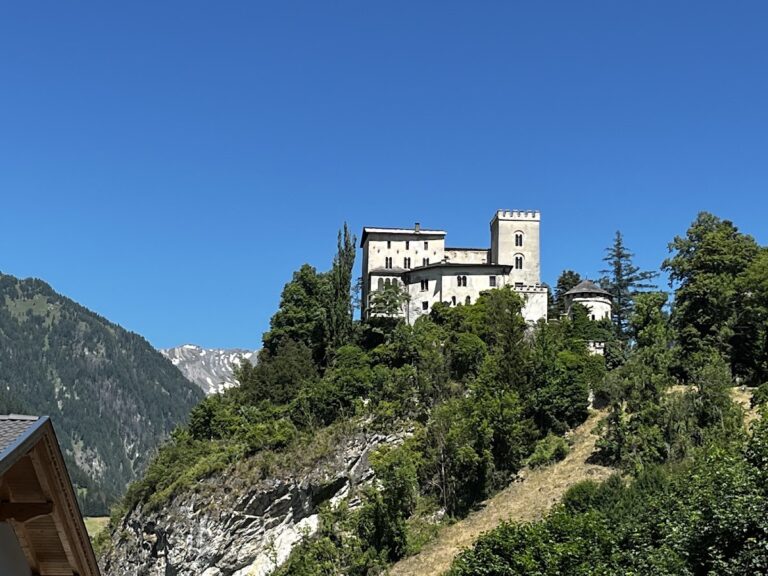
Burg Kienburg is a ruined hilltop castle in Austria, standing on the southern edge of the Isel Valley between Huben and Sankt Johann im Walde. The castle lies in the locality of Kienburg, whose name derives from the old German word kühn, meaning “bold” or “brave.” It was first mentioned around the year 1000 and was later associated with the Counts of Lechsgemünd.
From Lechsgemünd to Salzburg
In 1212, Burg Kienburg passed to the ecclesiastical principality of Salzburg. This was a political territory governed by the archbishop of Salzburg, who combined religious authority with secular power. During the middle of the thirteenth century, competing ownership claims and wider political interests brought warfare and devastation to the castle.
Philipp von Spanheim, Archbishop of Salzburg, feared an imperial invasion of the Enns Valley and ordered the pre-emptive seizure of castles belonging to the empire. Count Meinhard III of Gorizia, who supported Emperor Frederick II, answered by attacking Matrei and Virgen three times and plundering their villages. The conflict ended with the Peace of Lieserhofen in 1252. Under its terms, the fortress of Virgen passed to Salzburg, while Matrei Castle had to be returned. Kienburg remained disputed after the settlement and changed hands repeatedly.
Destruction and later ownership
The castle continued in existence until 1579, when a fire destroyed the robber-baron castle and left it uninhabitable. Its last knight, Count Christoph von Kienburg, then abandoned the site.
The surrounding area later became Austrian state territory. In 1825, the property entered the private ownership of the Wanner family, and on 1 October 1936 it passed to the Stocker family. Near the end of the Second World War, in 1945, a bomb dropped by an American aircraft struck the ruins and destroyed their main section, including the tower. The Stocker family remains the private owner, and renovation work is being undertaken to halt further deterioration.
Remains
Layout and construction
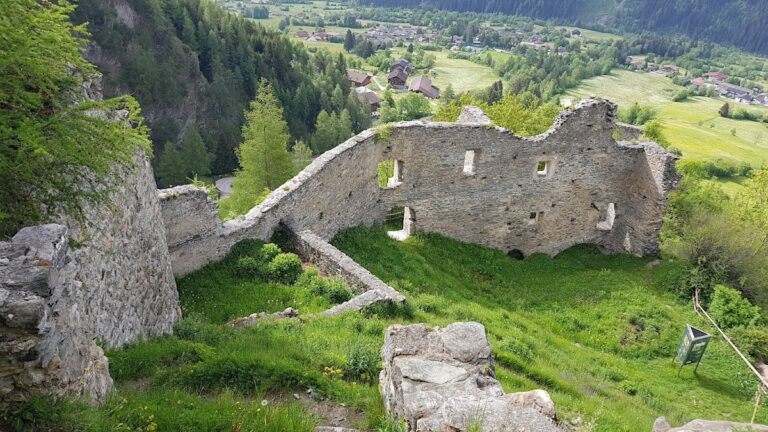
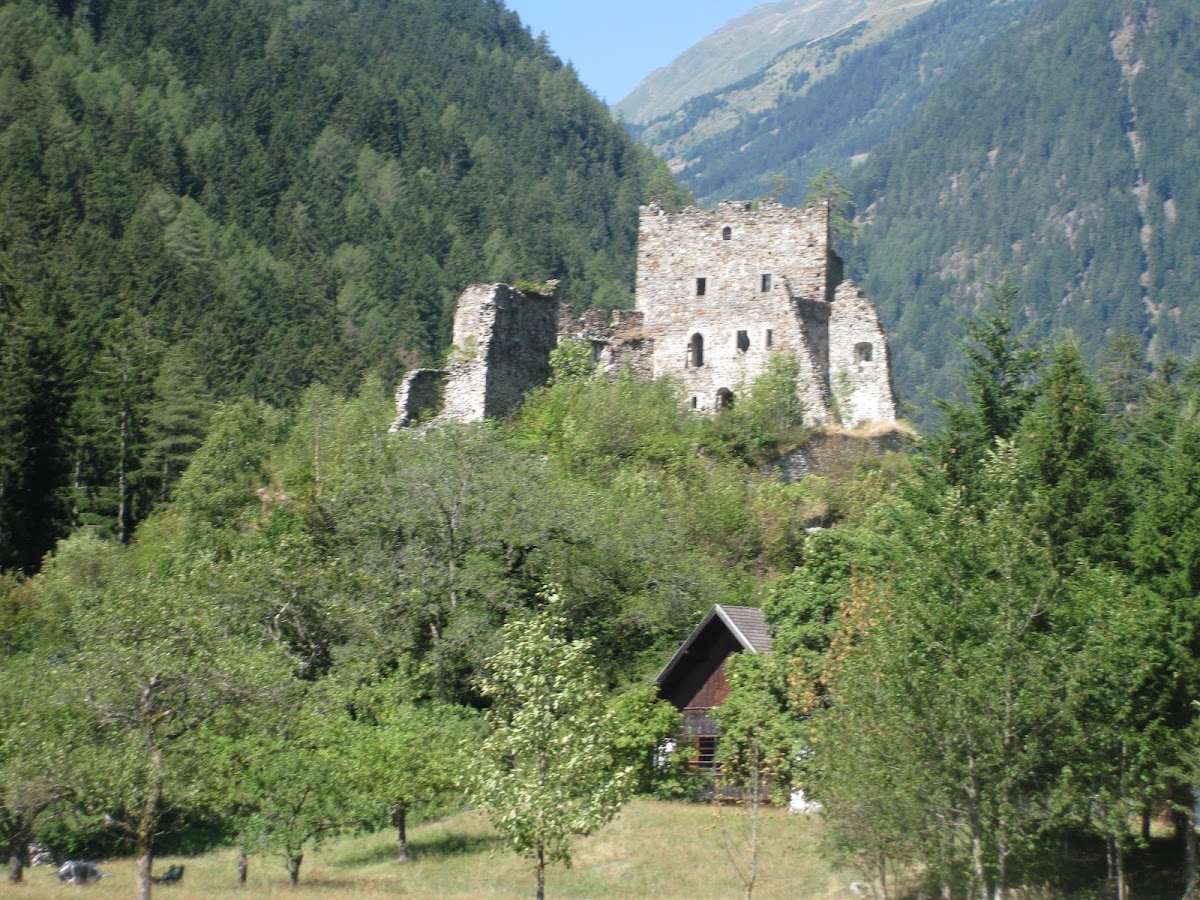
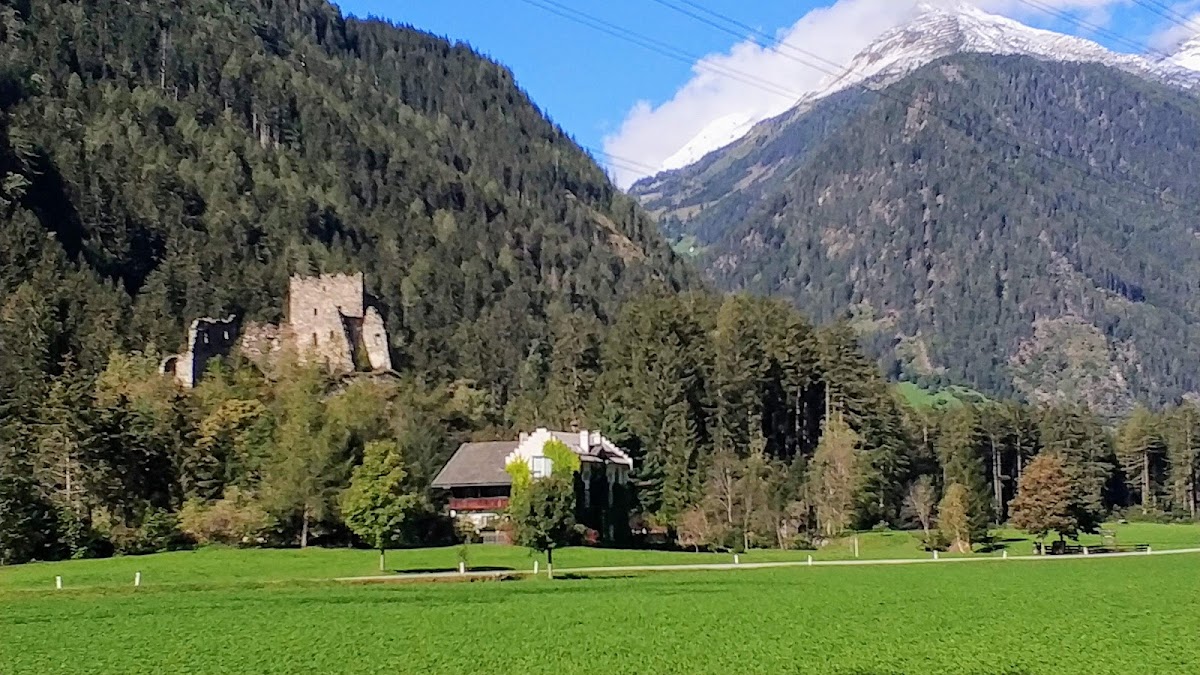
Burg Kienburg stands on a rocky elevation and survives as a rubble-stone ruin. Its ground plan is organized around a courtyard in the south, enclosed by a ring wall, and a residential wing in the north that projects beyond the wall circuit.
Southern courtyard and ring wall
The southern courtyard is enclosed by the ring wall, which was built from laid rubble stone. Parts of the masonry use opus spicatum, a herringbone technique in which stones are placed diagonally in alternating directions. The ring wall most probably dates from the twelfth century.
Northern residential wing
The residential wing occupies the northern part of the plan and projects beyond the circuit of the enclosing wall. Together with the courtyard and ring wall, it forms the surviving structural organization of the castle.
Wartime damage and present condition
Destroyed principal section and tower
The castle’s principal section and tower were destroyed by the 1945 bombing. The remaining ruin is being renovated to prevent further deterioration, while the approximately 103-hectare property is used mainly for forestry.
Nearby sites