Burg Derneck: A Medieval Hilltop Castle in Germany


Site at a Glance
- Rating
- 4.6
- Popularity
- Low
- Country
- Germany
- Primary era
- Medieval
- External website
- Open
- Eras represented
- Medieval, Early Modern
- Civilizations
- Holy Roman Empire
- Site type
- Military
- Remains
- Castle
On this page7 sections
History
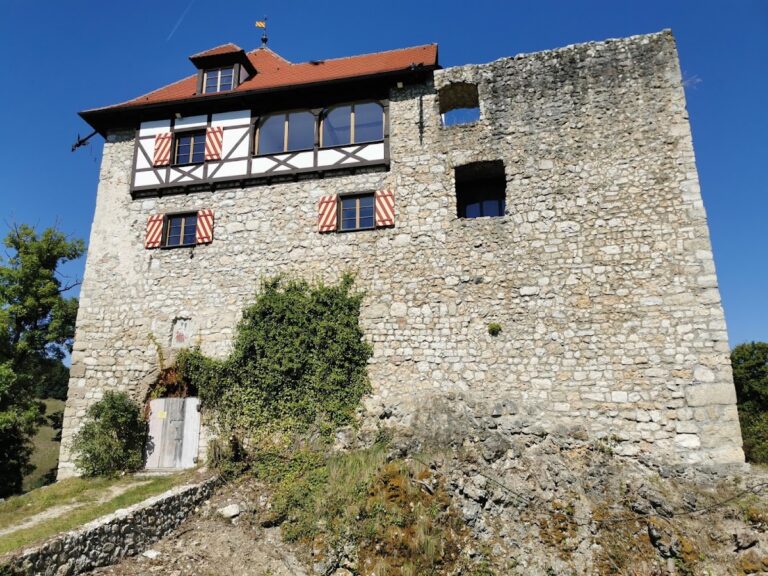
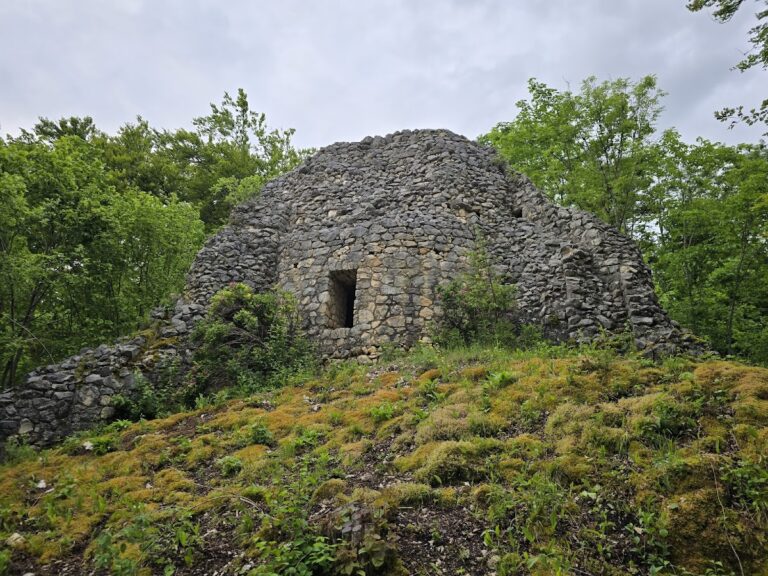
Burg Derneck is a medieval hilltop castle in Germany, built around 1350 by Degenhard von Gundelfingen, a member of the regionally influential Gundelfingen noble family. Located near Münzdorf, now part of Hayingen in Baden-Württemberg, the castle was established on a projecting hilltop spur. Its first construction phase included a massive shield wall, designed to protect the castle’s most vulnerable side, together with a defensive tower built into the wall.
Gundelfingen origins
The initial fortress formed the core of Burg Derneck, also known as Degeneck. In a later expansion, the shield wall and its defensive tower were enlarged into a residential tower-like stone house, combining defensive construction with domestic use.
Changing ownership and later use
When the Gundelfingen line of Derneck died out in 1546, the castle passed through several owners. The House of Fürstenberg, a princely German dynasty with territorial interests in southwestern Germany, acquired Burg Derneck in 1768 and added the other buildings that still form part of the complex.
In 1828, Burg Derneck became Württemberg property and served as a forestry residence until 1965. Extensive repairs and conversion followed in 1967 and 1968, adapting the castle for use by the Swabian Alb Association, a regional organization concerned with hiking and cultural heritage. The site is now state property and accommodates facilities operated by the association.
Remains
Defensive core
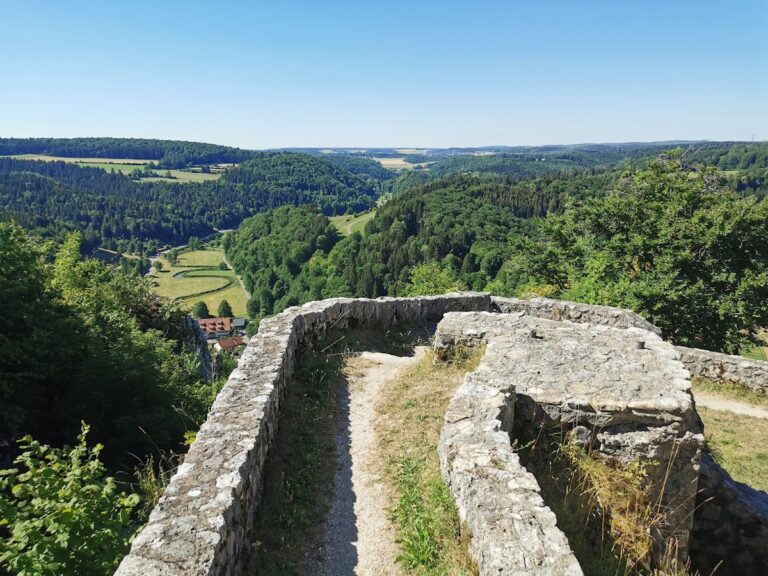
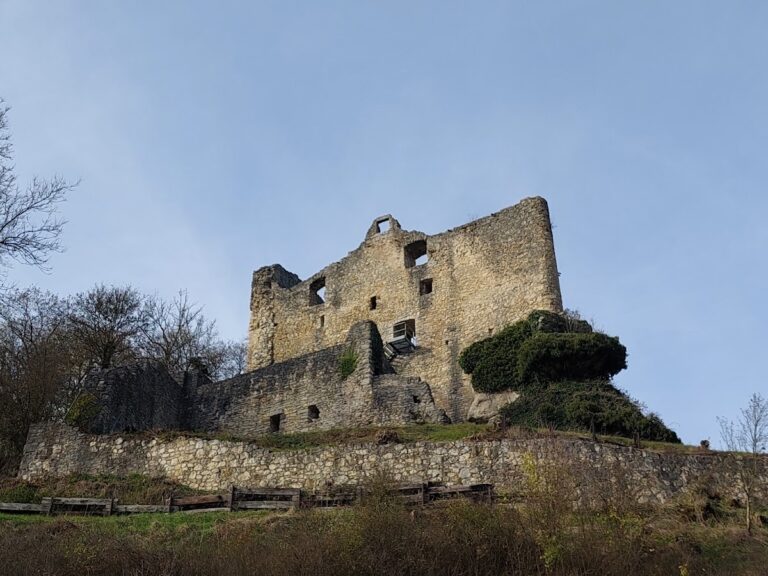
Burg Derneck occupies a projecting spur at approximately 650 metres above sea level. The fourteenth-century shield wall remains the dominant feature of the hilltop complex. A defensive tower is integrated into its northwestern side, while a zwinger wall, an additional defensive enclosure placed in front of the main wall, can still be seen. The shield wall and tower were later enlarged into a residential tower-like stone house, giving the principal surviving structure both defensive and residential character.
Later castle buildings
The buildings added under the Fürstenbergs make up the remainder of the surviving castle complex. Burg Derneck is partially ruined, but substantial parts of its structures remain. The later buildings stand alongside the earlier defensive core and reflect the castle’s expansion beyond its original wall-and-tower arrangement.
Present facilities and surrounding site
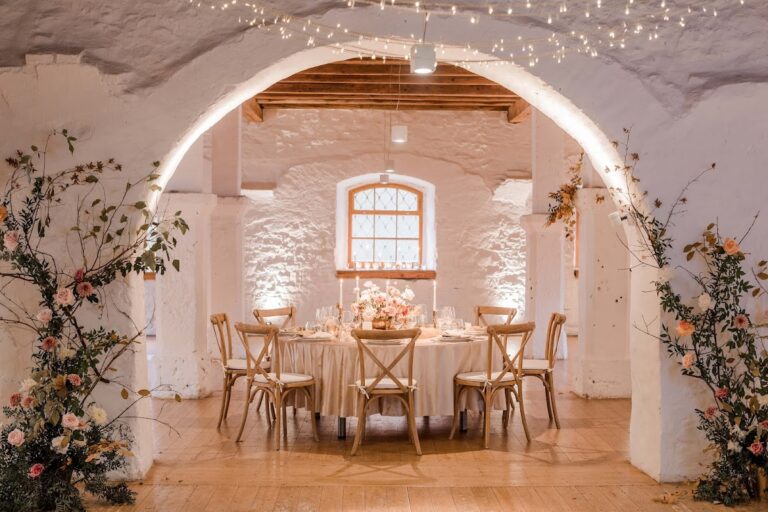
The surviving complex includes the small Burgschänke restaurant and a Swabian Alb Association hostel with 41 overnight places. Another castle site, Burg Weiler, lies about 330 metres to the south on the Kapf, also called Käpfle.
Nearby sites