Burg Ellar: A Medieval Hilltop Castle in Germany

Site at a Glance
- Rating
- 4.6
- Popularity
- Very Low
- Country
- Germany
- Primary era
- Medieval
- External website
- Open
- Eras represented
- Medieval, Early Modern
- Civilizations
- Holy Roman Empire
- Site type
- Military
- Remains
- Castle
On this page6 sections
History
Burg Ellar is a ruined hilltop castle in Ellar, Germany, probably built by the Counts of Diez at the end of the thirteenth century to protect imperial roads. Its elevated position also supported oversight of nearby routes, including the toll station at Gadelheimer Mühle. The castle was first mentioned in 1323, when Heinricus, its castellan, appeared in the retinue of Count Emicho of Nassau-Hadamar.
Diez and Nassau-Hadamar
During the fourteenth century, several castle men used Ellar as part of their surnames, reflecting the importance of the stronghold and its associated office. The Counts of Diez pledged the castle to the Counts of Nassau-Hadamar between 1337 and 1362. After the pledge was redeemed, Burg Ellar was repaired.
Katzenelnbogen and the imperial fief
In 1367–68, Burg Ellar passed as a dowry to the County of Katzenelnbogen. During this transfer, Emperor Charles IV confirmed the castle as an imperial immediate fief, meaning that it was held directly from the Holy Roman Emperor rather than from an intermediate lord. The complex had two castle seats.
In 1408, Johann of Nassau-Dillenburg and Johann of Katzenelnbogen concluded a castle peace at Ellar. Their agreement ended the Nassau-Hadamar succession struggle. During the Mainz Ecclesiastical Feud, a fifteenth-century conflict connected with the territorial and political struggles surrounding the ecclesiastical principality of Mainz, the Counts of Katzenelnbogen used Burg Ellar as a base for operations against the County of Sayn.
Decline and later refuge
When the Katzenelnbogen line died out in 1479, half of the castle passed to Hesse. The Treaty of Frankfurt, concluded on 30 June 1557 to settle the succession dispute between Hesse and Nassau, transferred the entire castle to the Counts of Nassau-Dillenburg. By then, Burg Ellar had lost its political and military importance and subsequently fell into decay.
During the fifteenth and sixteenth centuries, the castle served as the seat of an official and a rent collector, who managed local administration and revenue collection. Its permanent staff included a tower watchman and two cooks. During the Thirty Years’ War, the major European conflict of 1618–1648, the ruin was enlarged again as a refuge castle for inhabitants of surrounding villages.
Preservation measures began in 1969, and Burg Ellar is recognized as a cultural monument.
Remains
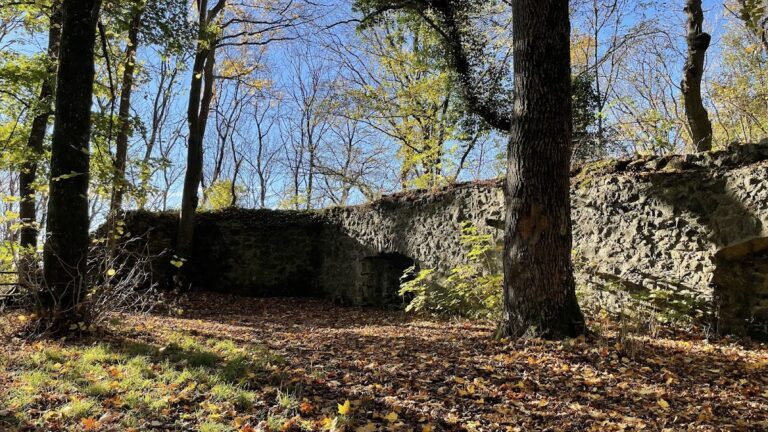
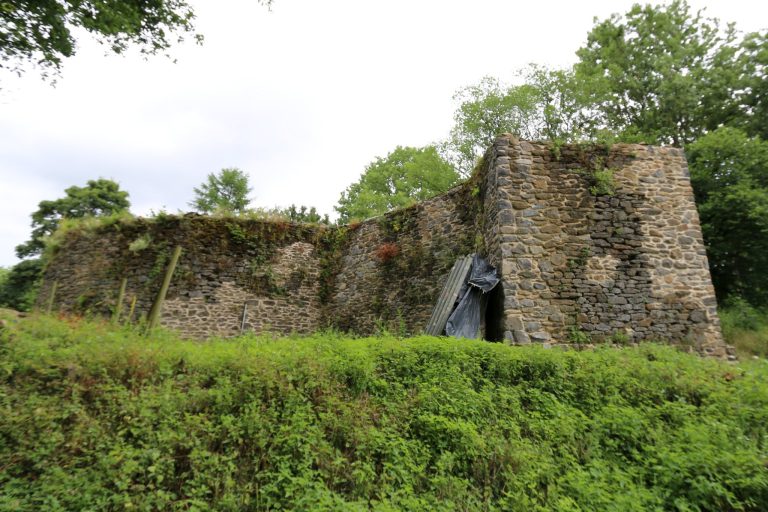
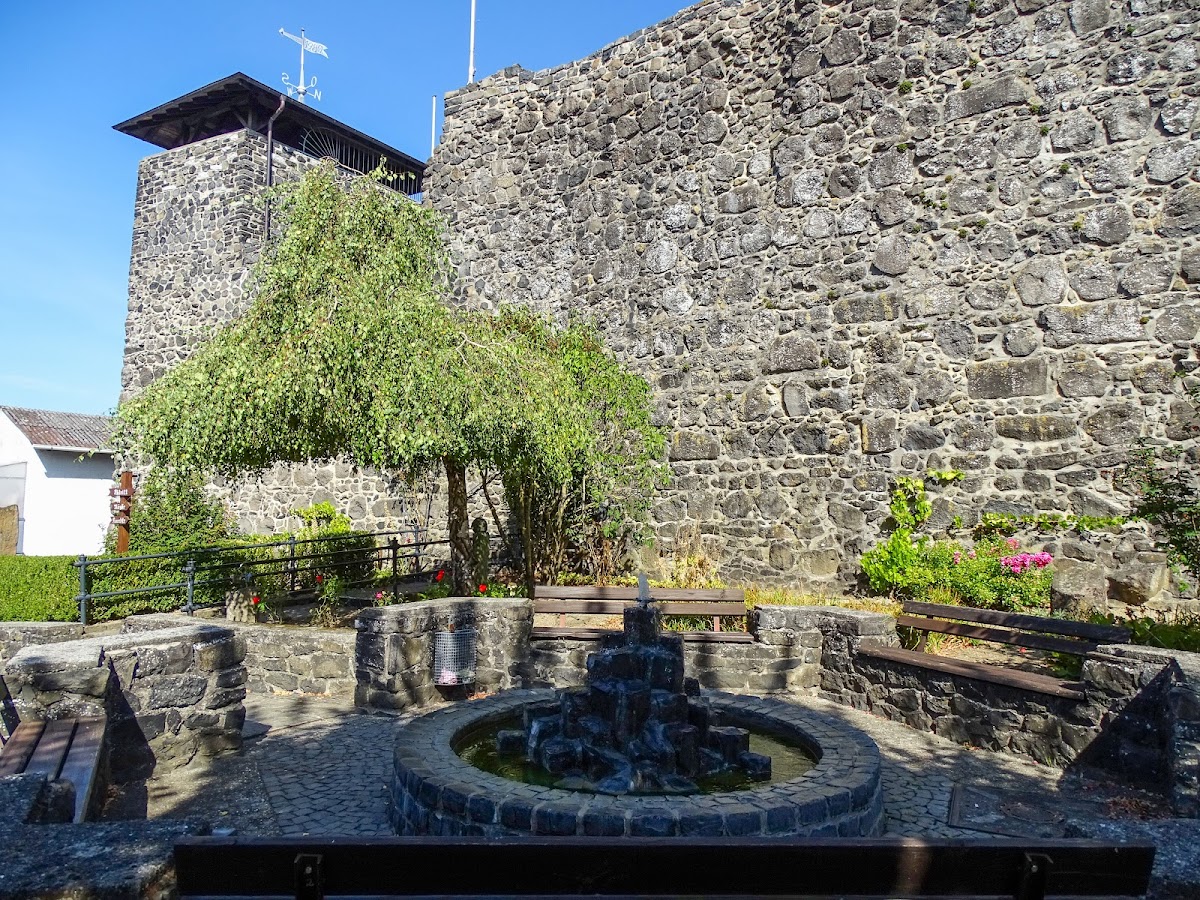
Burg Ellar occupies elevated ground at approximately 290 metres above sea level in Ellar, a district of Waldbrunn in the Limburg-Weilburg district of Hesse. The castle complex has an approximately rectangular plan, measuring about 21 by 27 metres externally. Its foundation walls are around two metres thick and built from basalt stone.
Castle tower and courtyard
A tower occupies one corner of the complex and now serves as an observation tower, a structure intended for visual surveillance of the surrounding area. Accounts kept by the rent collector describe a tower with a bridge, while the building also served as a dovecote, a structure for keeping domesticated pigeons.
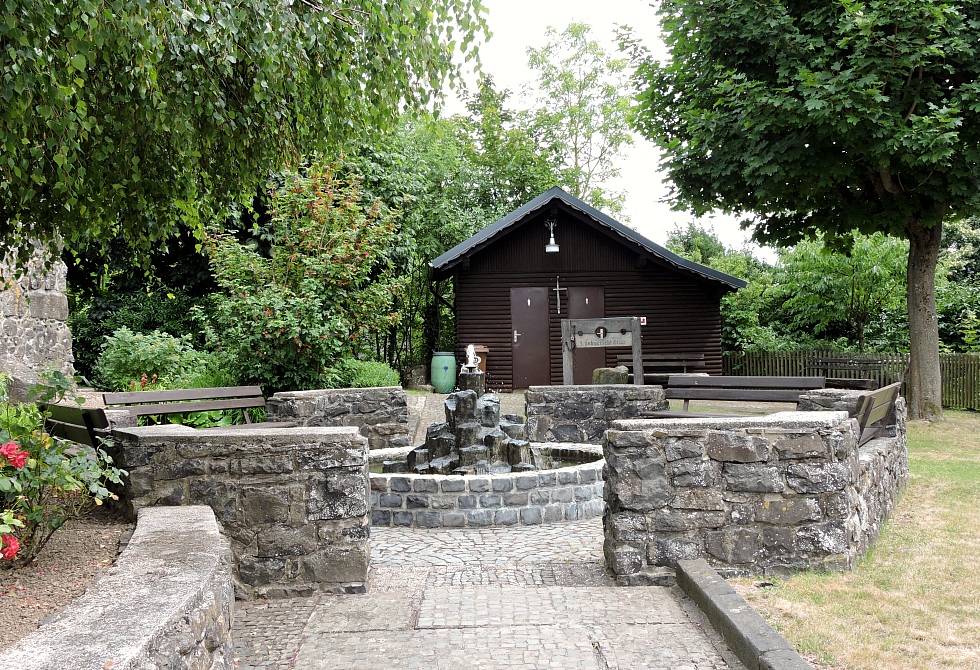
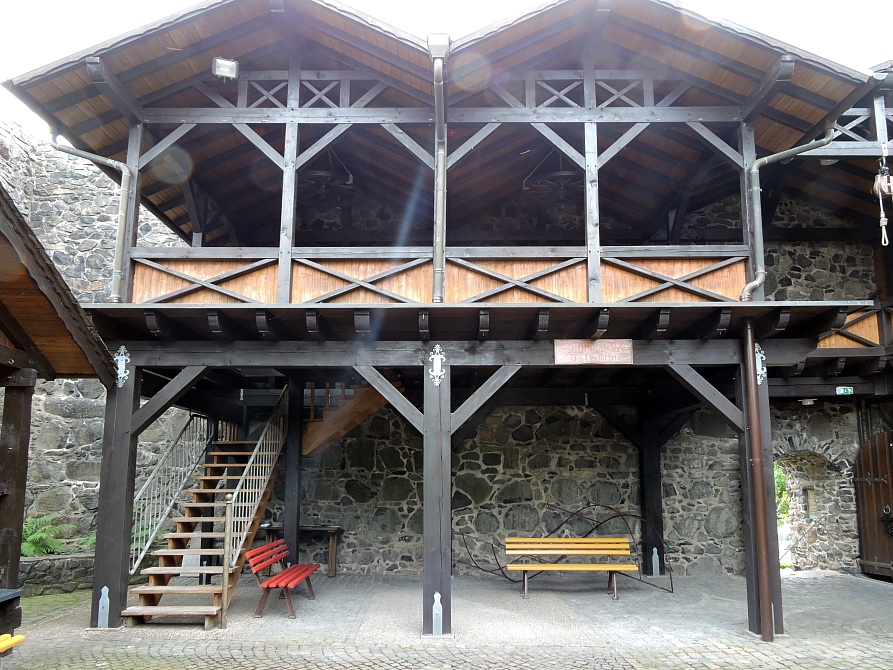
A roofed pavilion stands in the inner courtyard and provides a covered space for events. Together with the surviving foundation walls and corner tower, it forms the principal visible arrangement of the castle ruin.