Burg Baldenau: A Medieval Castle Near Morbach, Germany
Visitor Information
Google Rating: 4.6
Popularity: Low
Country: Germany
Civilization: Medieval European
Site type: Military
Remains: Castle
History
Burg Baldenau is situated near Morbach in modern-day Germany and was constructed by medieval German builders during the early 14th century. Its origin lies in the ambitions of the Electorate of Trier, a significant ecclesiastical principality within the Holy Roman Empire.
The castle was established around 1315 by Archbishop Baldwin of Trier, a member of the Luxembourg family who became Archbishop at the young age of 22 in 1307. Baldwin’s purpose in building the fortress was to strengthen the territorial control of the Trier Electorate, particularly to defend against the encroachments of the Counts of Sponheim, a regional rival. This defensive stronghold underscored the political and military tensions within the fractured landscape of medieval Germany.
Burg Baldenau lent its name to the administrative district known as Amt Baldenau, which encompassed fifteen villages in the surrounding area, highlighting its role as a local seat of governance. In 1332, city rights were granted to a settlement near the castle, indicating plans for urban development. However, this intended town never developed beyond the planning stage.
During the mid-17th century, the region was engulfed by the turmoil of the Thirty Years’ War. Swedish forces inflicted significant damage on the castle, but repairs had been carried out by 1649, restoring its defensive and residential functions. However, this revival was temporary. In 1689, during the War of the Palatine Succession, Burg Baldenau was destroyed permanently by French troops under King Louis XIV. Since then, the castle remained in ruins.
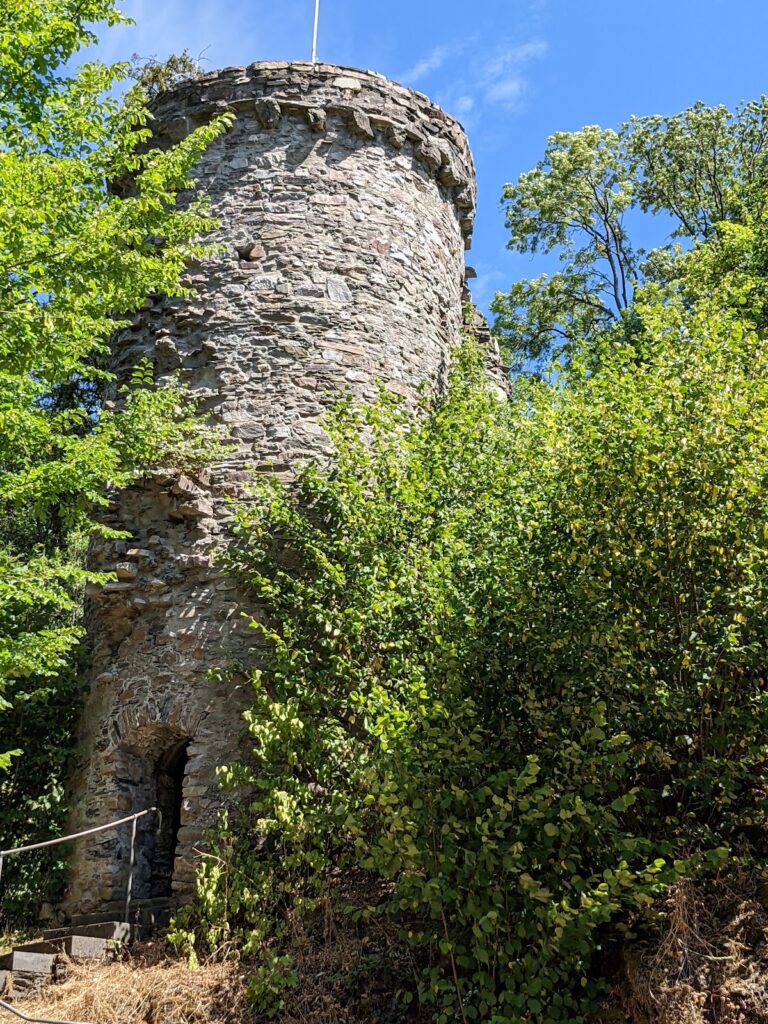
In the late 20th century, efforts began to stabilize the remnants of Burg Baldenau starting in 1982. Notably, the ruins also became a cultural site for filmmaking and were featured in the early 1980s as a location for Edgar Reitz’s critically acclaimed Heimat film trilogy. Alongside the castle, the nearby Stumpfer Tower, positioned about one kilometer away on an ancient Roman road, worked together to guard the western boundaries of the Trier Electorate by providing early warnings of approaching enemies, a strategic collaboration highlighting the region’s layered defenses.
Remains
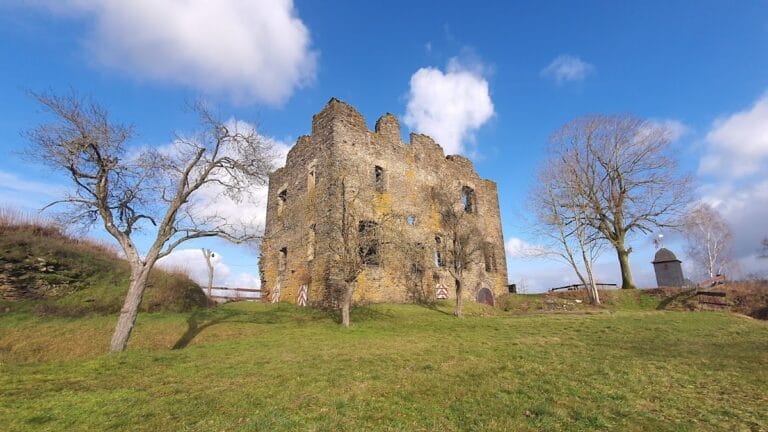
Burg Baldenau’s ruins sit atop a mountain ridge overlooking the upper valley of the Dhron River and its tributary, the Rebruchbach. The castle’s footprint is wedge-shaped, stretching roughly 52 meters in length and reaching up to 20 meters in width, reflecting a compact but well-fortified site typical of its period. The construction relied heavily on slate, a locally available stone, shaping many of its surviving walls.
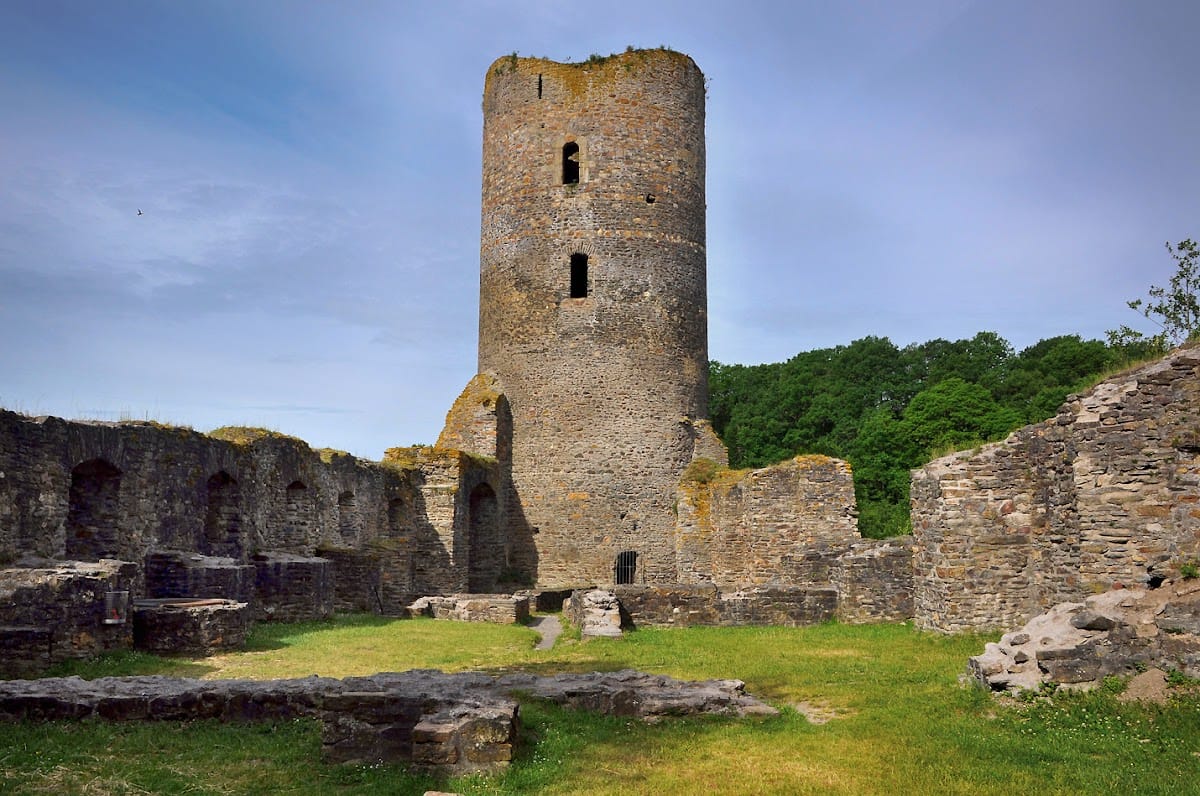
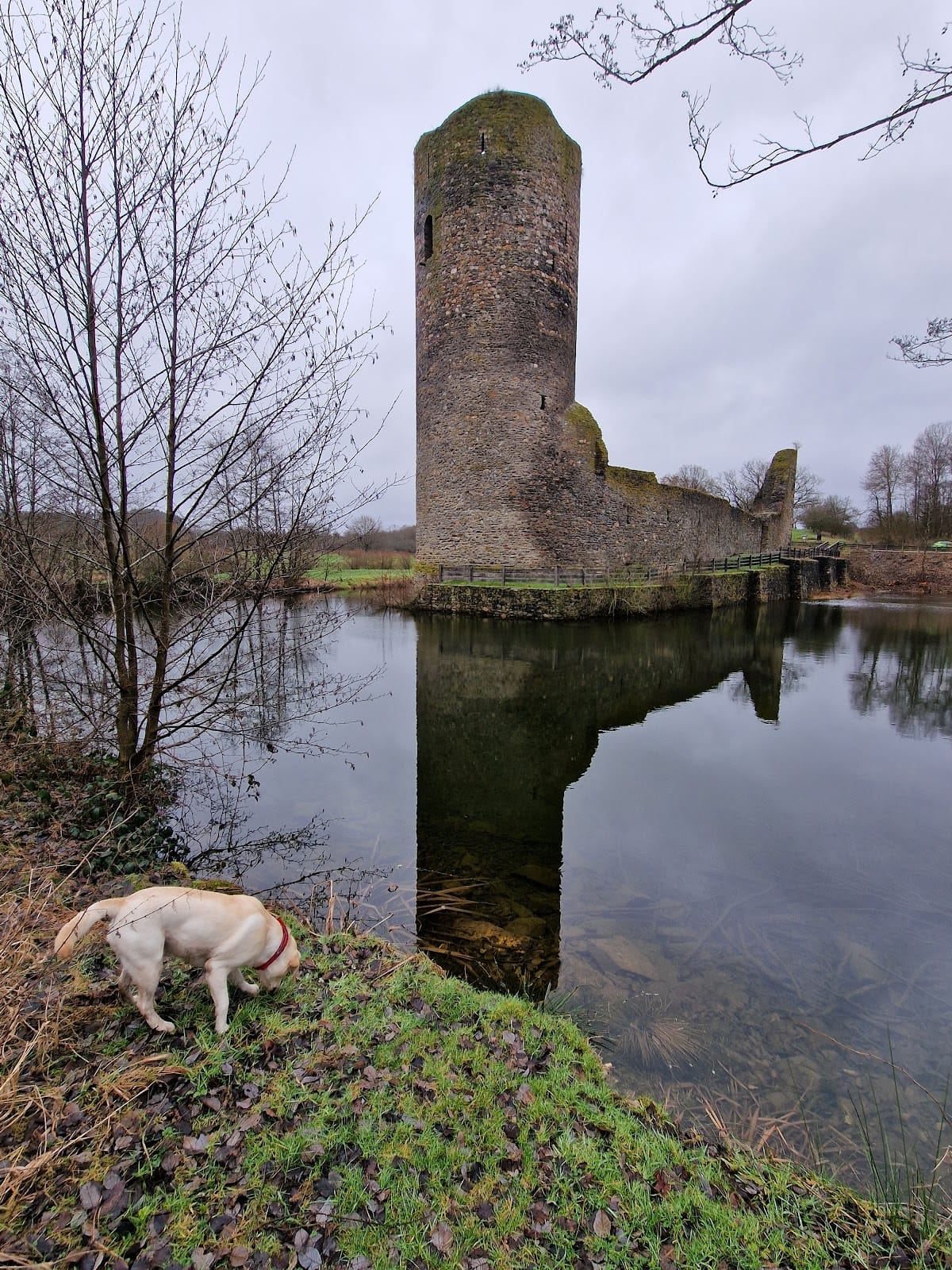
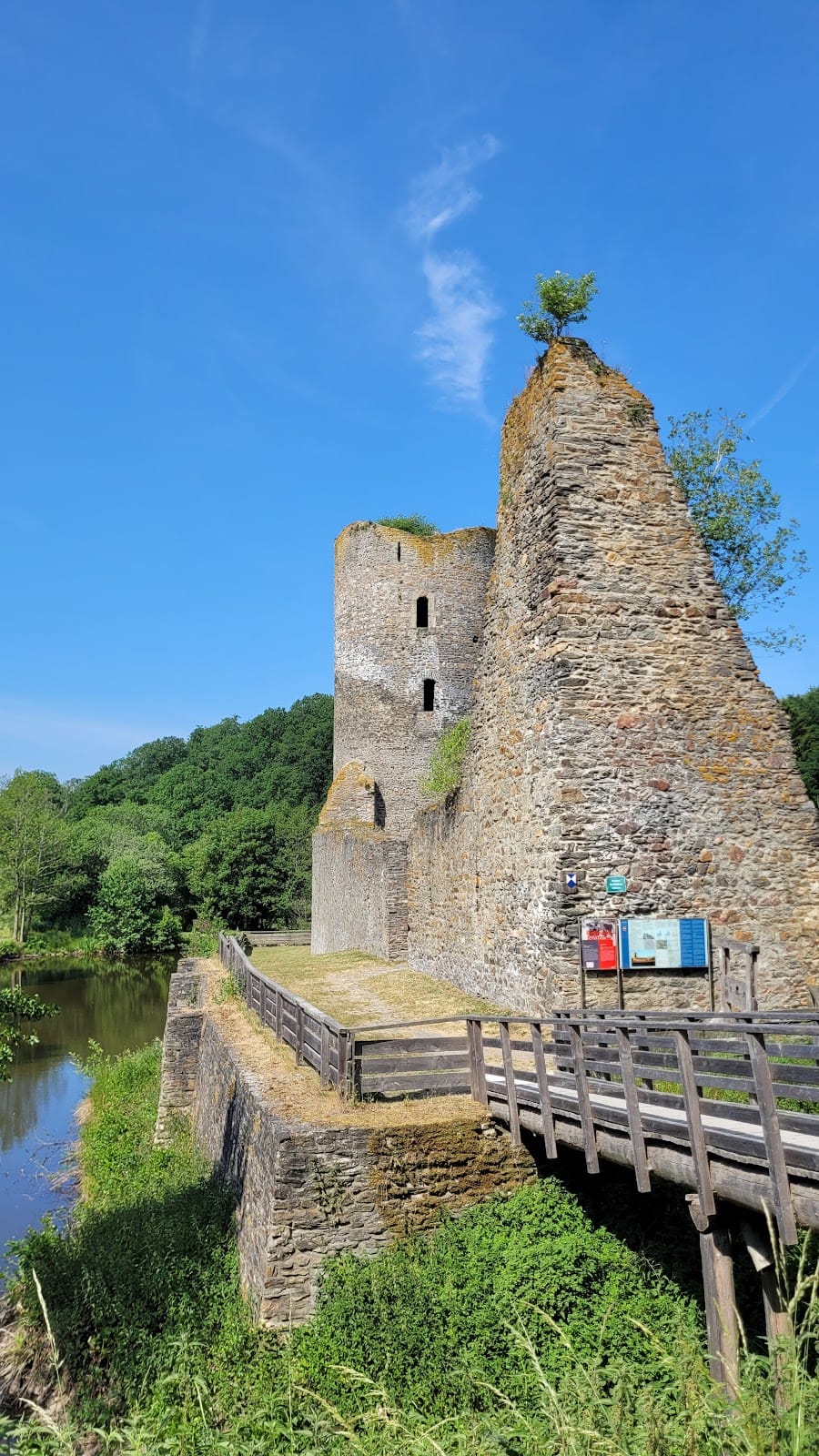
One of the most striking features is the round bergfried, a type of watchtower or keep common in German castles. This bergfried rises approximately 24 meters tall with a diameter measuring 10.5 meters. The walls are notably thick, up to 3.2 meters, underscoring its defensive purpose. It retains three stories, providing vertical control and observation of the surrounding terrain.
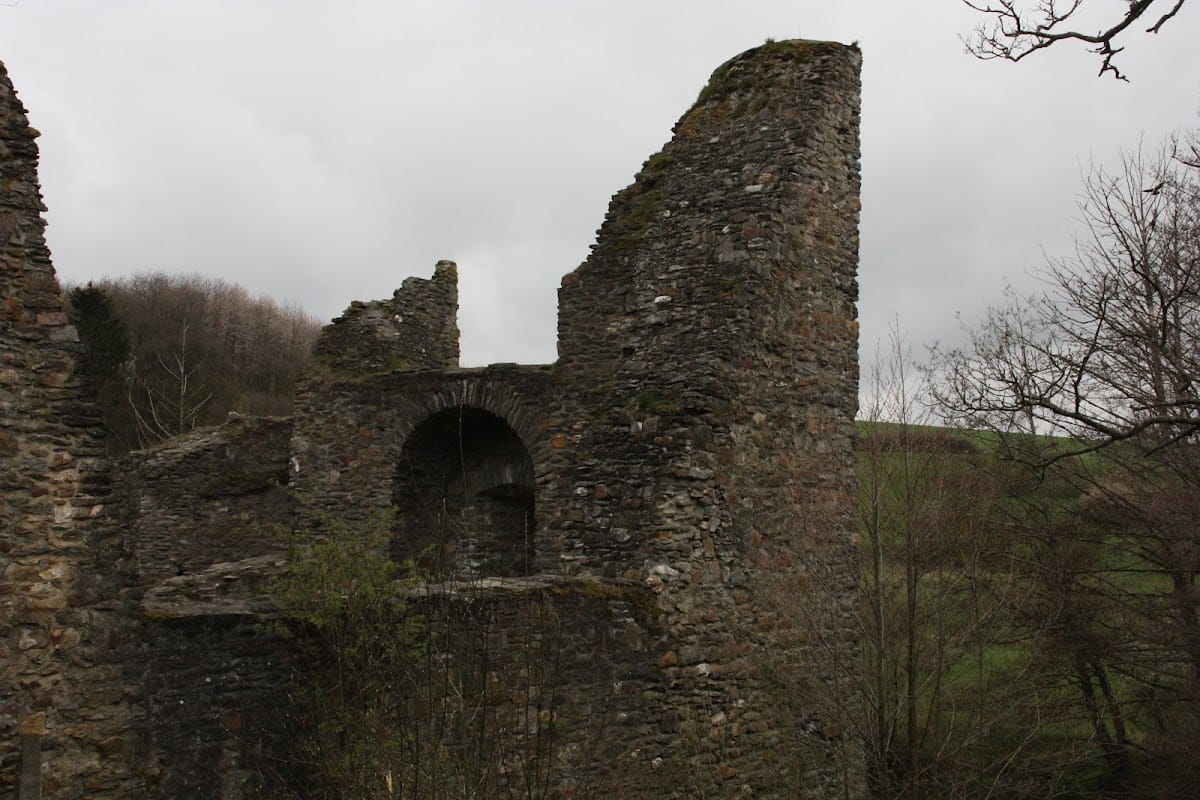
Across from this tower lie the remains of the main residential building, which once spanned at least three stories. Archaeological evidence reveals that these floors were accessed by an external wooden staircase tower. On the ground floor, the kitchen area has been identified by the discovery of a fireplace on the eastern side, indicating domestic activities within the castle walls.
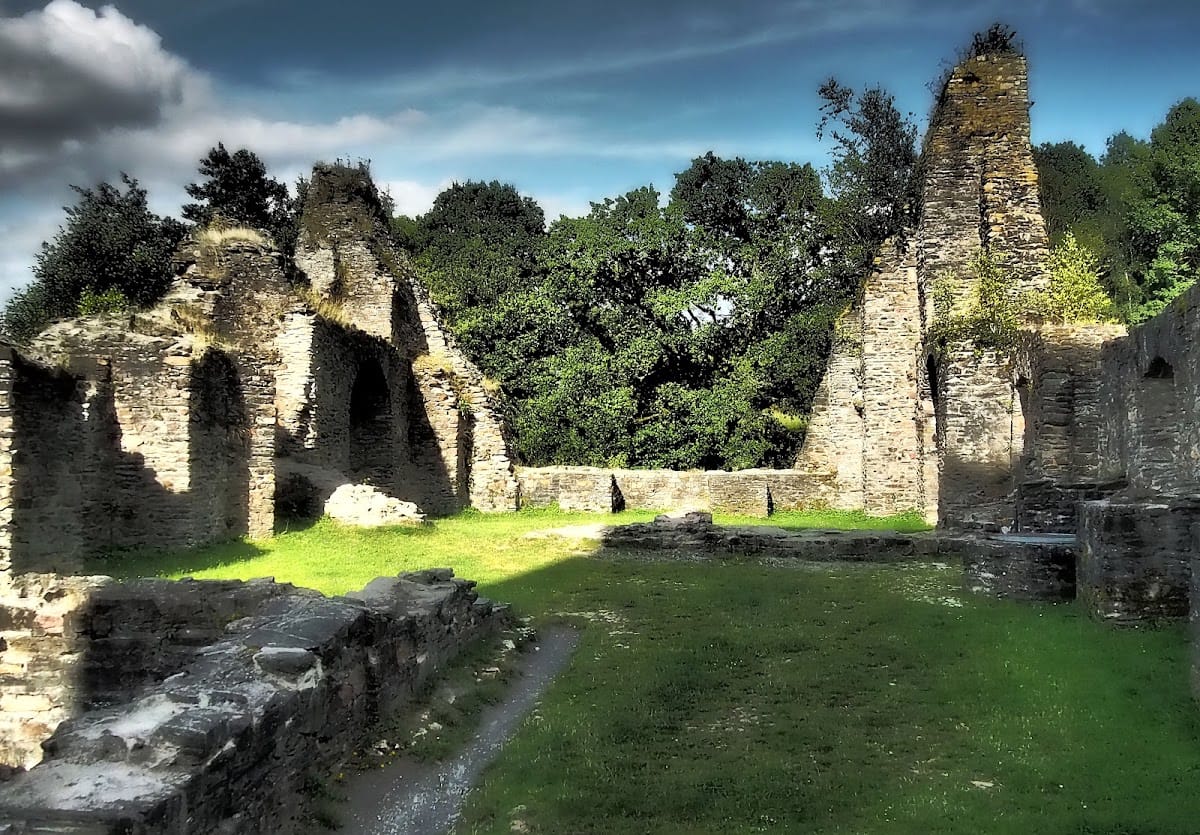
Surrounding the complex was a ring wall designed for defense. This wall contained embrasures—narrow slits through which archers could fire arrows while remaining protected—and was originally topped by a battlemented wall walk, allowing defenders to patrol and shoot from above. Within the enclosed courtyard, traces of smaller buildings have been uncovered by archaeological digs, suggesting multifaceted use of the space for storage, workshops, or support functions.
The castle’s water supply was secured by a well situated near the entrance, an essential feature for sustaining life during any siege. The entrance itself was accessed via a ramp. Additionally, Burg Baldenau was one of the few castles in the Hunsrück region fortified by a moat. This moat was artificially created and fed by the upper branch of the Dhron River, enhancing the defensive measures by surrounding the castle with water.
Recent decades have seen unfortunate damage to the ruins, including the removal of many stones—estimated to be at least 400—and multiple break-ins, particularly at the gate leading to the tower. Despite this, efforts to stabilize the remnants continue to preserve what remains of Burg Baldenau’s historical fabric.
Nearby sites