Wildenburg Castle: A Ruined Medieval Hilltop Castle in Germany
Site at a Glance
- Rating
- 4.5
- Popularity
- Low
- Country
- Germany
- Primary era
- Medieval
- External website
- Open
- Eras represented
- Iron Age, Classical, Medieval, Modern
- Civilizations
- Celtic, Holy Roman Empire, Roman
- Site type
- Military
- Remains
- Castle
On this page10 sections
History
Wildenburg Castle is a ruined medieval hilltop castle in Germany, near Kempfeld in Rhineland-Palatinate. Built by Wildgraf Friedrich von Kyrburg, a medieval count of the Wildgraf family, it was first mentioned in 1330 and stood at about 630 metres above sea level, making it the highest castle in the Hunsrück.
Celtic and Roman predecessors
The castle occupied a site already associated with defence. A probable Celtic refuge fort with double ramparts was established during the La Tène period, the later Iron Age culture of much of central and western Europe, around 450–50 BC. Its rampart belonged to a wider group of Celtic fortifications in the southern Hunsrück, including those at Otzenhausen, Ringkopf, Altburg, and Alteburg in the Soonwald.
A short-lived Roman fortification was built on the site around AD 350. This late Roman phase preceded the medieval castle that later occupied the western end of the earlier circular rampart.
Medieval castle and administrative centre
In the Late Middle Ages, Friedrich von Kyrburg built Wildenburg Castle on the rocks at the western end of the prehistoric enclosure. The castle was pillaged and destroyed by Lorraine troops in 1651. It was partly reconstructed in 1660, after which its lower ward became the administrative headquarters of the Amt of Wildenburg. An Amt was a territorial administrative district or office in the German administrative system. This function continued until the county was abolished in 1792.
Later reuse and conservation
From 1859, buildings in the lower ward were restored for use as a Prussian forest ranger’s office. Further alterations later converted them into a castle inn and the headquarters of the Hunsrück Club. Parts of the complex now lie within Hunsrück-Hochwald National Park. A former hamlet below the castle has disappeared, leaving an abandoned settlement site.
Remains
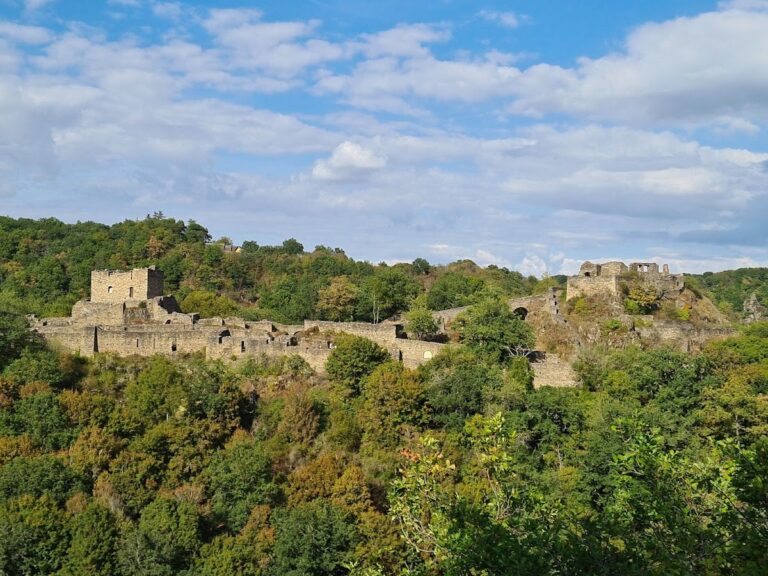
The ruins occupy the Wildenburger Kopf between the Hochwald to the north and Idar-Oberstein to the south, above the valley of the Idarbach. The castle was built on rocks at the western tip of a circular rampart. Its remains therefore combine the elevated medieval castle, surviving lower-ward buildings, and features associated with the earlier defensive enclosure.
Summit remains
Upper ward
The upper ward occupied the rocky summit. Only a few wall remains survive from this elevated section of the castle, which formed the highest part of the complex.
Reconstructed Celtic rampart
A short section of the prehistoric rampart has been reconstructed as a Gallic Wall, or murus gallicus. This was a Celtic defensive construction that combined timber elements with stone and earth, representing the earlier fortified landscape on which the medieval castle was established.
Observation tower
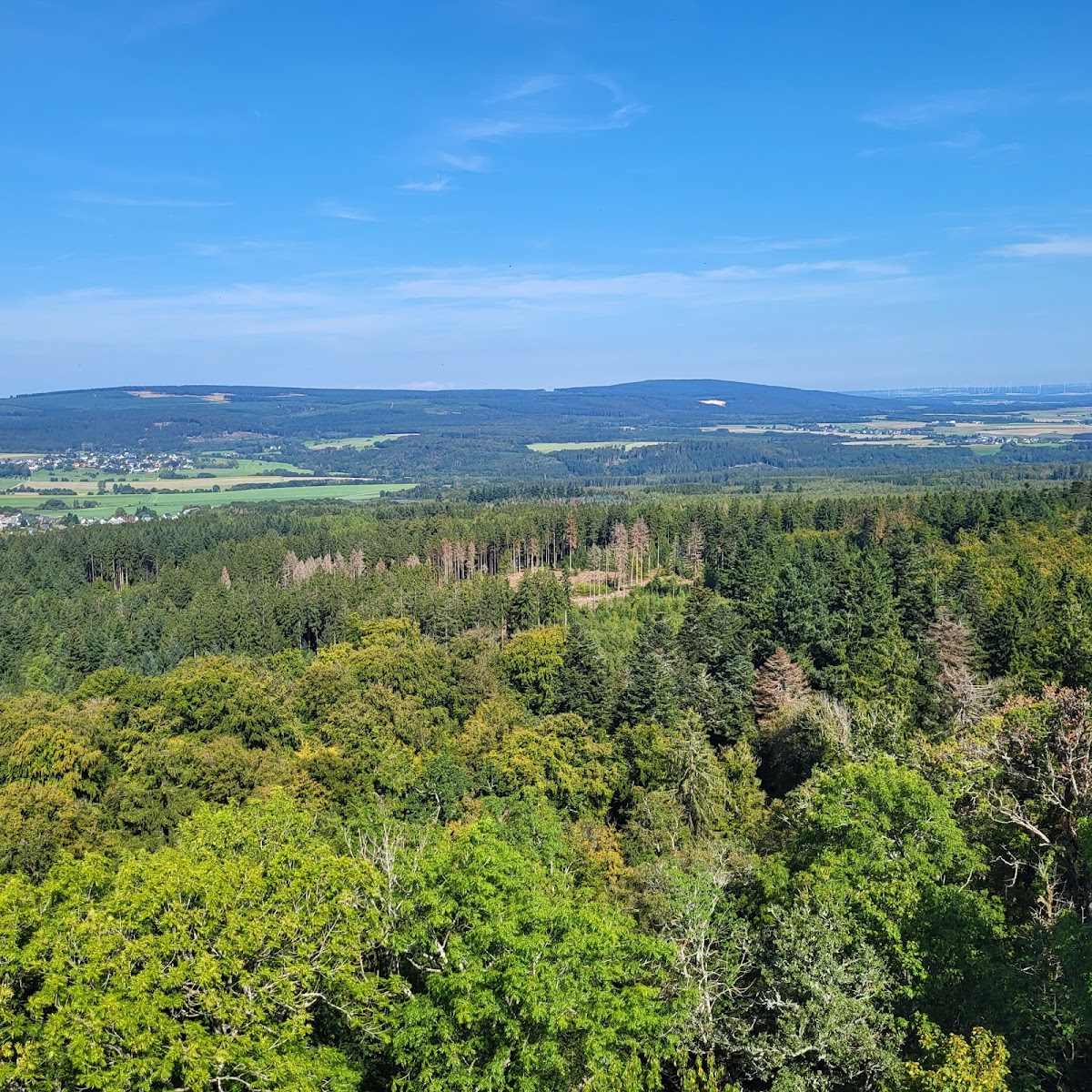
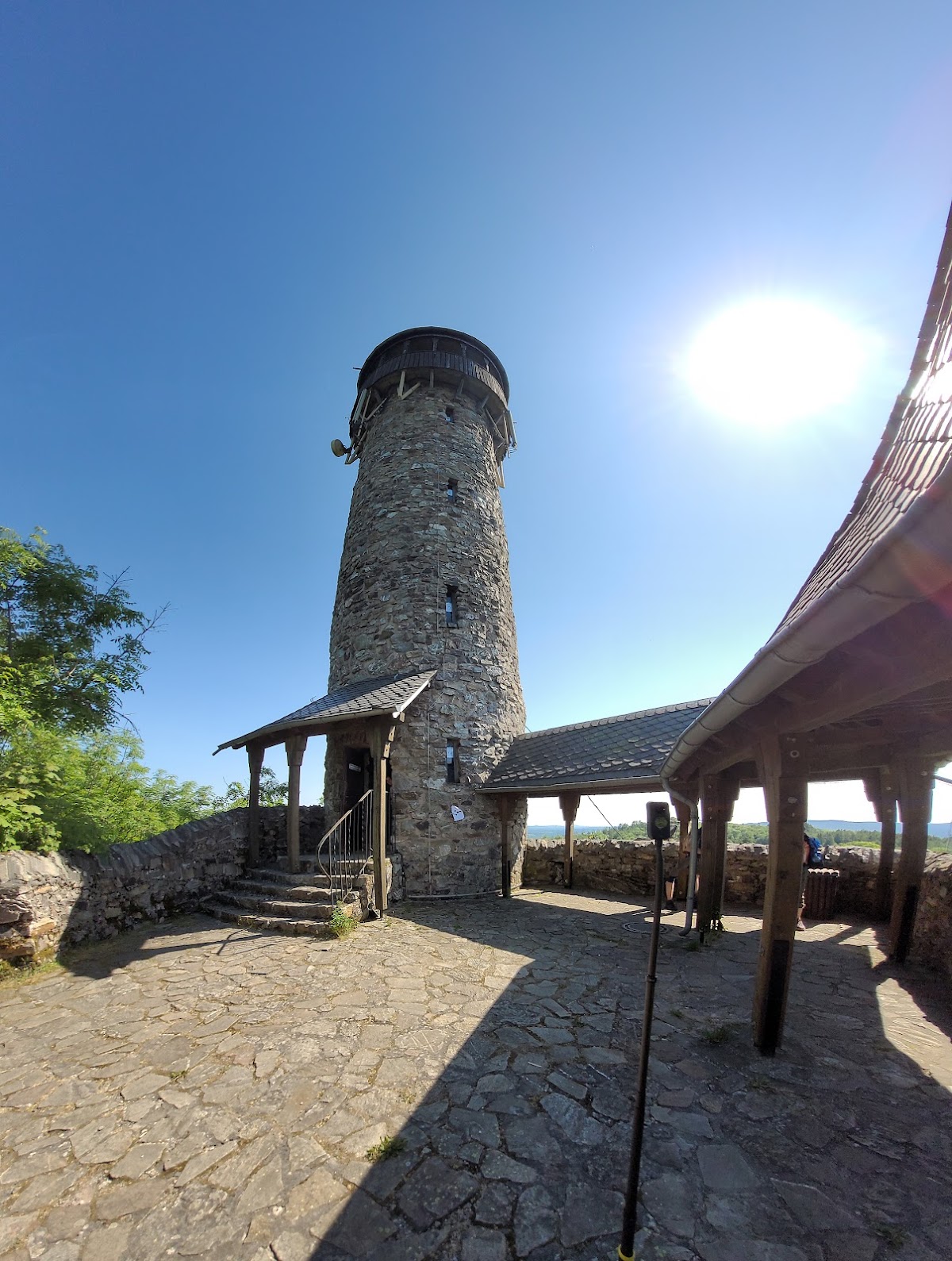
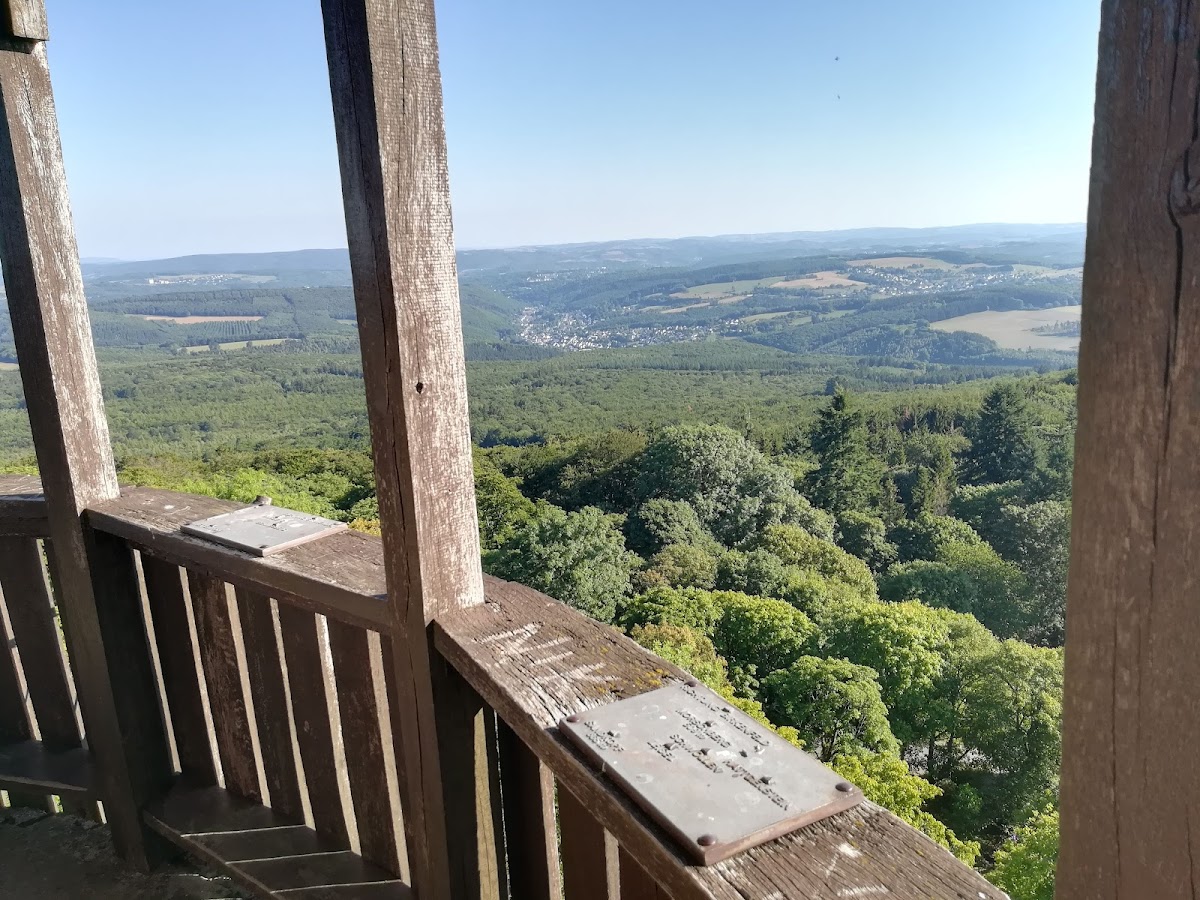
A 22-metre-high observation tower was built on the summit between 1980 and 1981. Its viewing platform forms a ring around the tower at a height of 15 metres. Orientation panels on the parapet identify destinations visible in all directions.
Lower ward
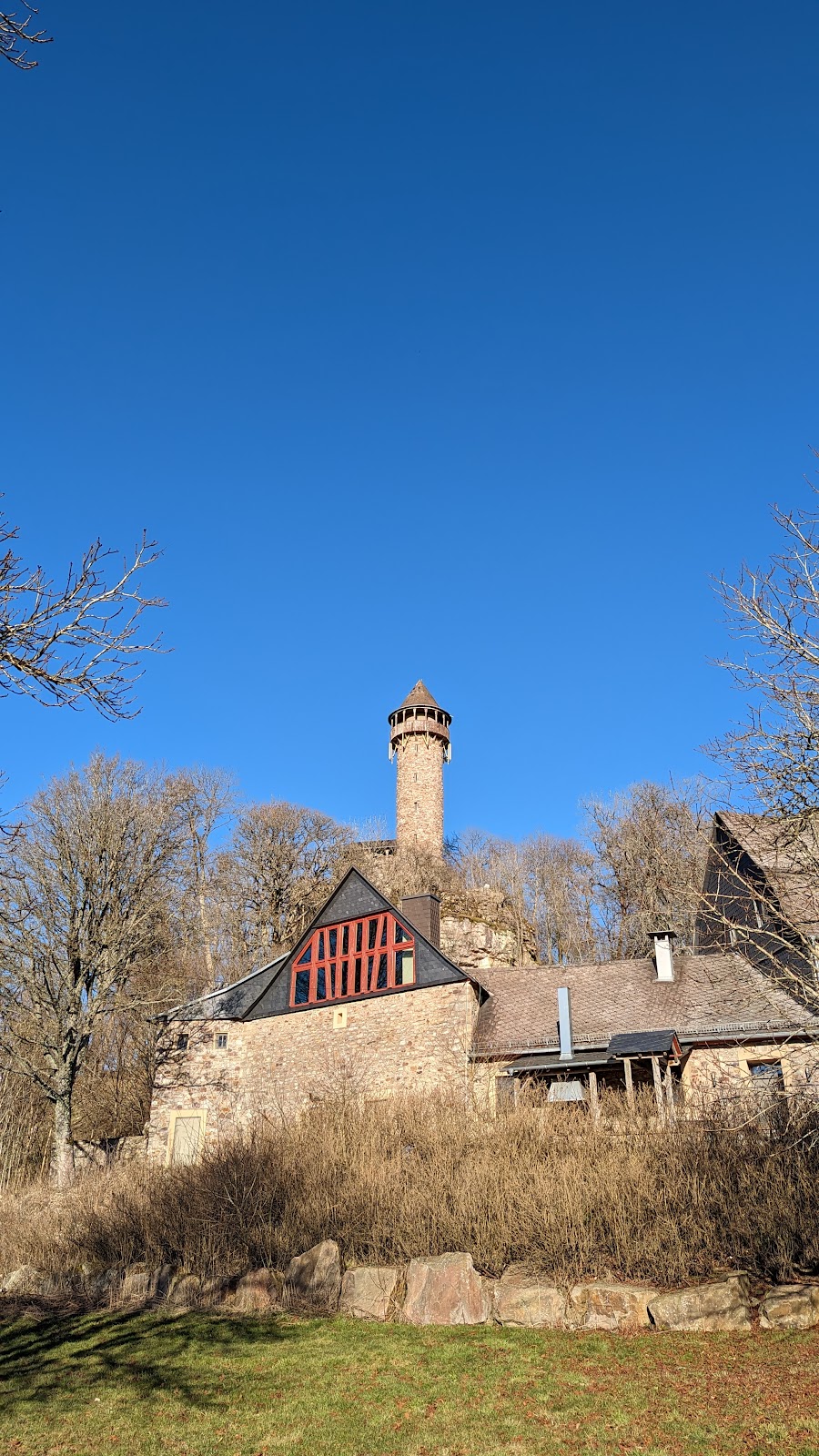
The lower ward contains a gate tower, domestic or service buildings, and an enclosing wall. The buildings now house a castle inn and the headquarters of the Hunsrück Club. The former knights’ hall serves as a civil-registry office and a venue for small celebrations.