Burg Landshut: A Ruined Hilltop Castle in Germany


Site at a Glance
- Rating
- 4.5
- Popularity
- Medium
- Country
- Germany
- Primary era
- Medieval
- External website
- Open
- Eras represented
- Classical, Medieval
- Civilizations
- Holy Roman Empire, Roman
- Site type
- Military
- Remains
- Castle
On this page8 sections
History
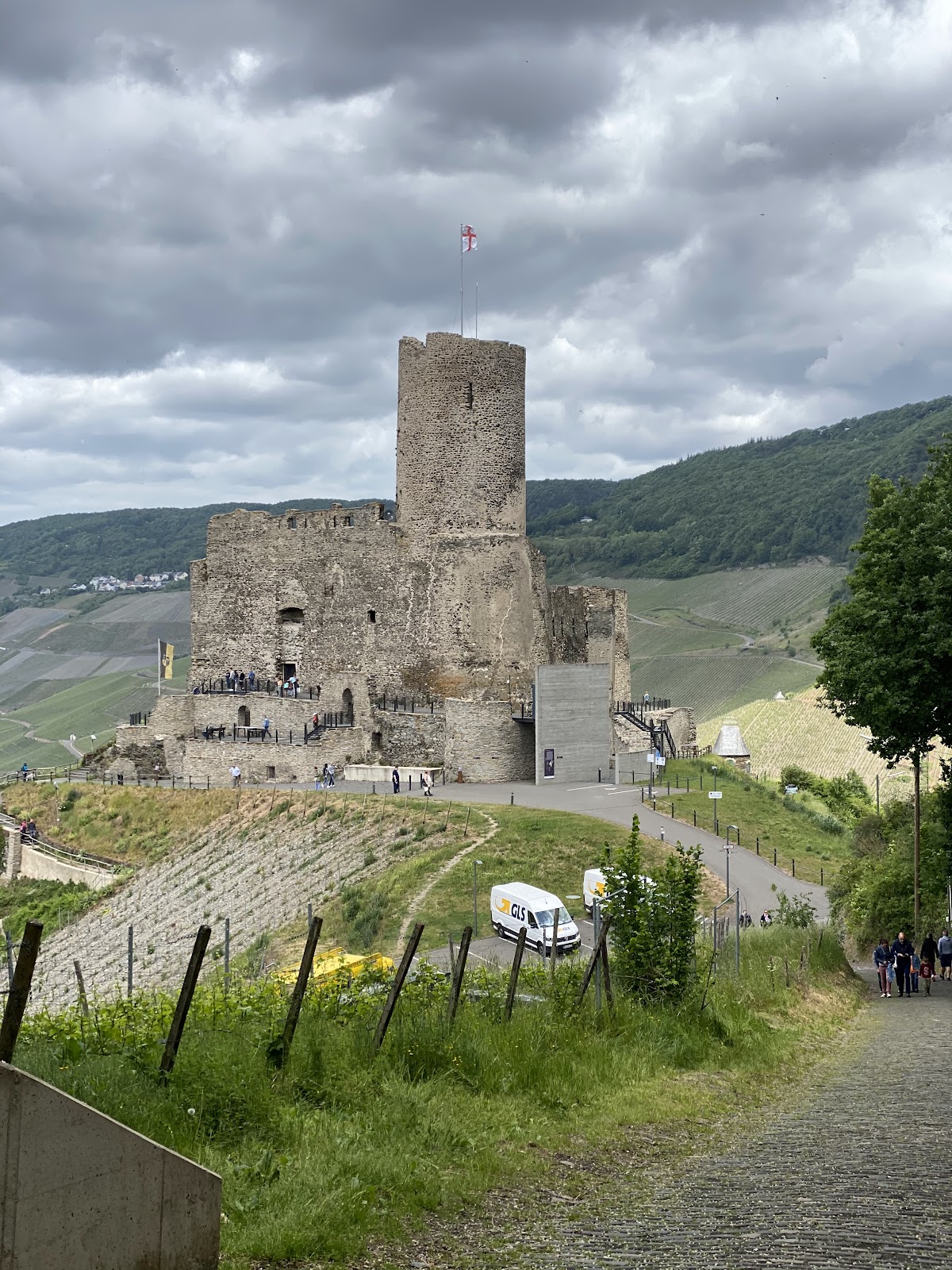
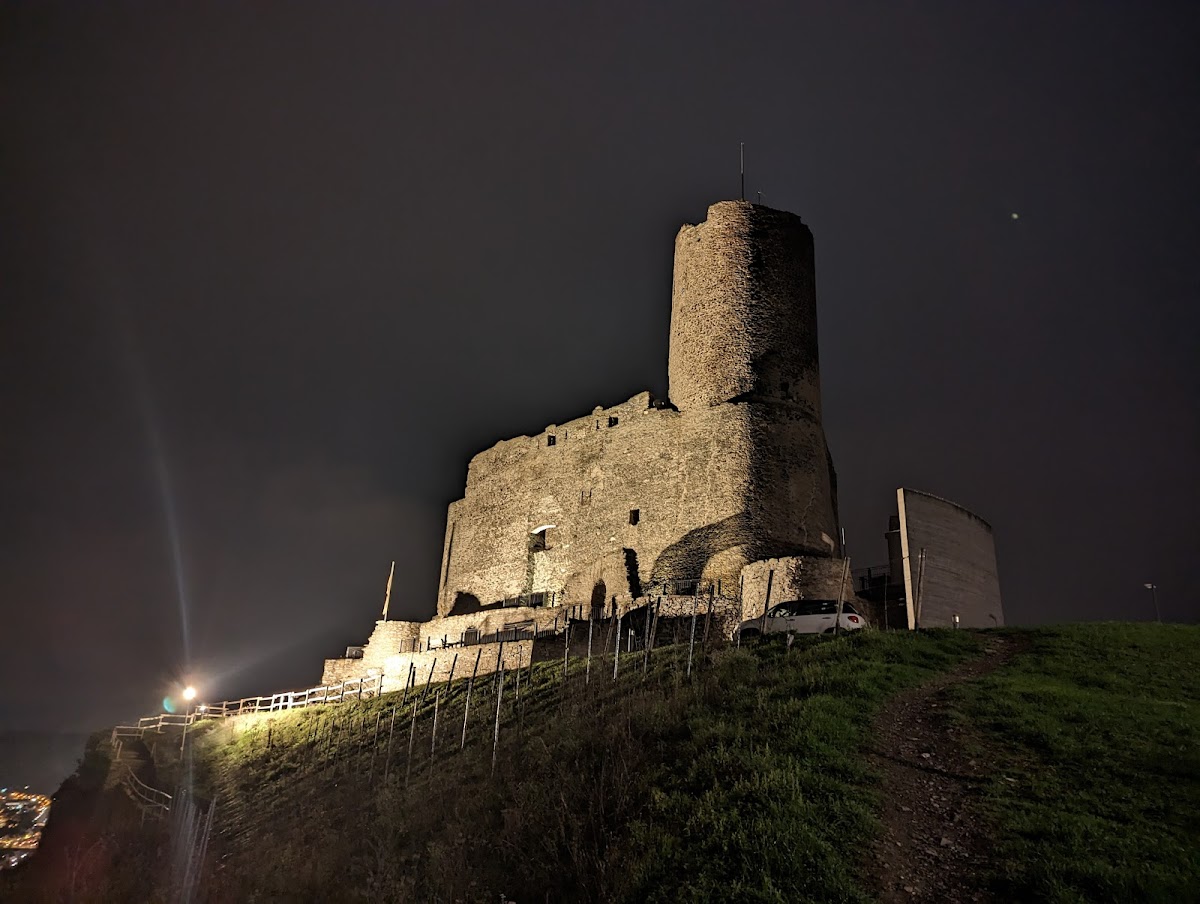
Burg Landshut is a ruined hilltop castle in Germany above Bernkastel-Kues, built as a stone medieval fortress in the late thirteenth century on the remains of a late Roman fort. Its position above the Moselle connected the site with successive Roman and medieval phases of military and territorial control.
The Roman Fort
A late Roman fort occupied the hill in the fourth century. It helped secure military supplies moving along the Moselle toward the Roman Empire’s Rhine frontier and linked defensive positions along the border. After Roman forces withdrew from the region in the fifth century, the fort was abandoned and remained in ruins for several centuries.
Early Medieval and Medieval Castles
Written evidence places a castle called Bernkastel on the hill around the year 1000. A separate castle associated with the Counts of Blieskastel appears in records from the twelfth century. The Archbishop of Trier destroyed it during the counts’ conflict with the archbishops of Trier.
After the Counts of Blieskastel died out, their heirs, the Counts of Salm, transferred the castle and its associated bailiwick, an administrative jurisdiction over lordly possessions, to the Electorate of Trier in 1280. The Electorate of Trier was an ecclesiastical principality ruled by the archbishops of Trier, who also held the rank of imperial elector. Heinrich von Finstingen, Archbishop of Trier, initiated construction of the present stone castle between 1280 and 1290, using the remains of the Roman fort as its foundation.
Landshut under Trier and Its Destruction
The castle was first recorded under the name Landshut in 1505. For many years it served as the residence of an Amtmann, an official who administered a territorial district for its ecclesiastical lord. This role placed the castle within the government of the surrounding Trier territory.
On 8 January 1692, a major accidental fire destroyed Landshut. The disaster was not the result of military action. The inhabitants left, and the castle was never rebuilt.
Municipal Ruins and Archaeological Evidence
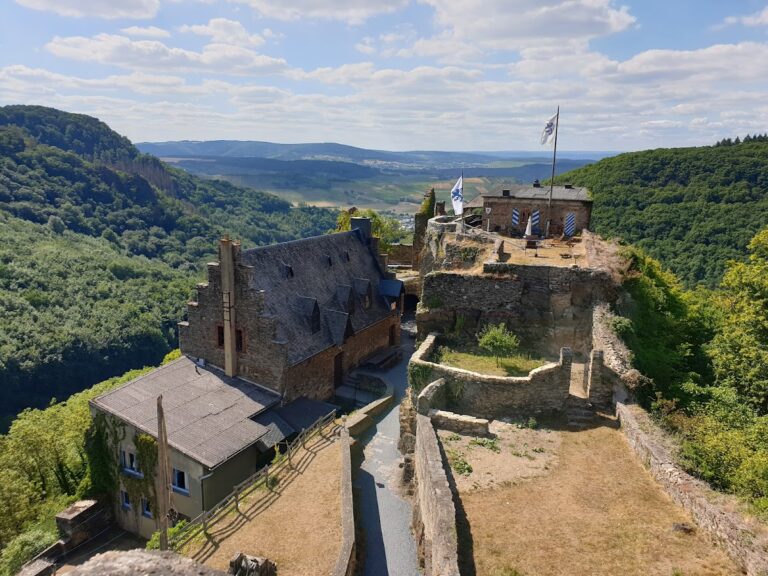
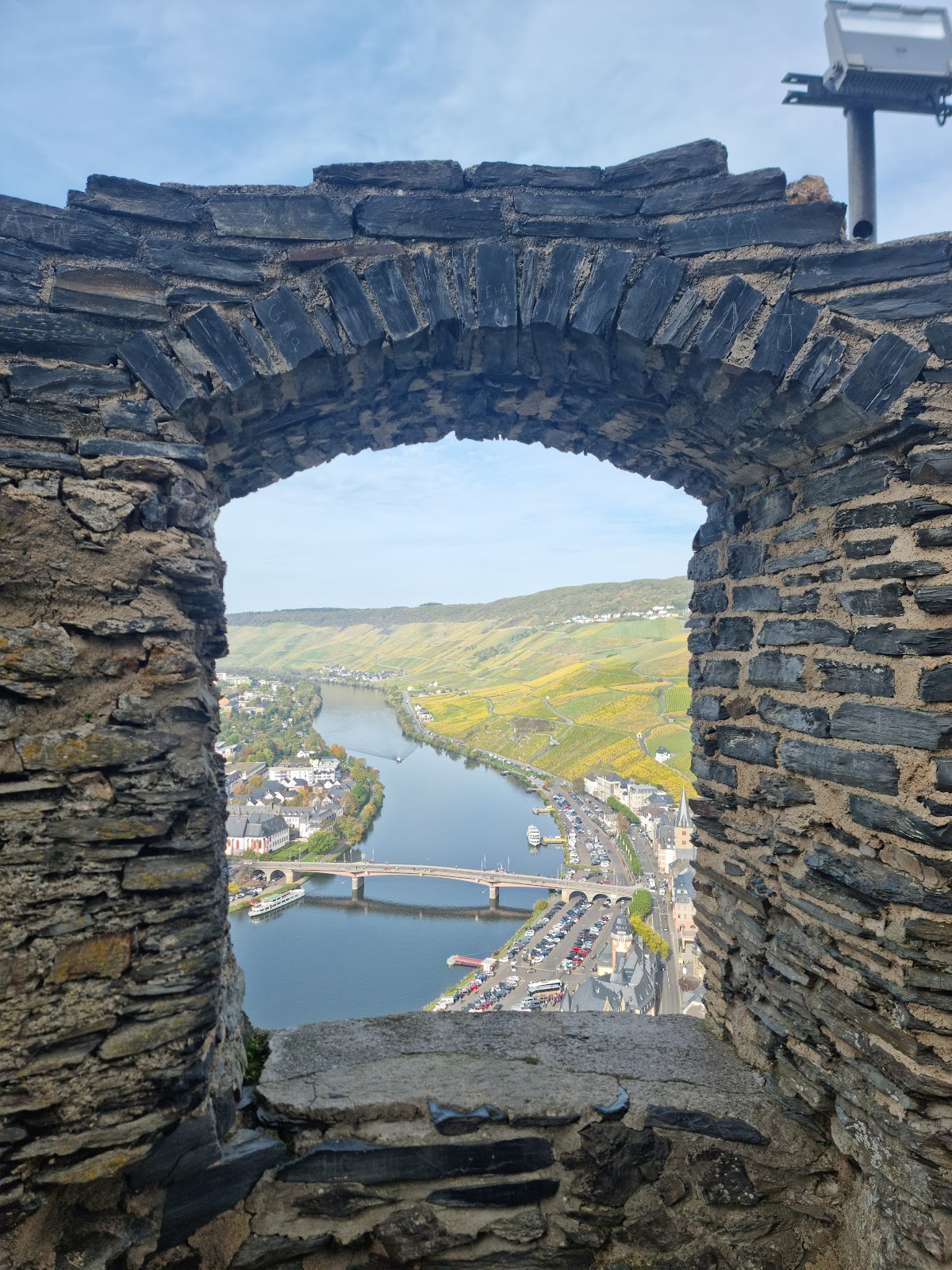
The ruins became municipal property in 1920 and remain owned by the city. They have also been used as an inn and resting place, while the accessible keep, the principal defensive tower of a medieval German castle, has been adapted as a viewing platform. Routine maintenance work in 2012 revealed remains of the Roman fortifications. Finds that may date from the fifth or sixth century have prompted the suggestion that Landshut may be among the oldest castles in the Moselle valley.
Remains
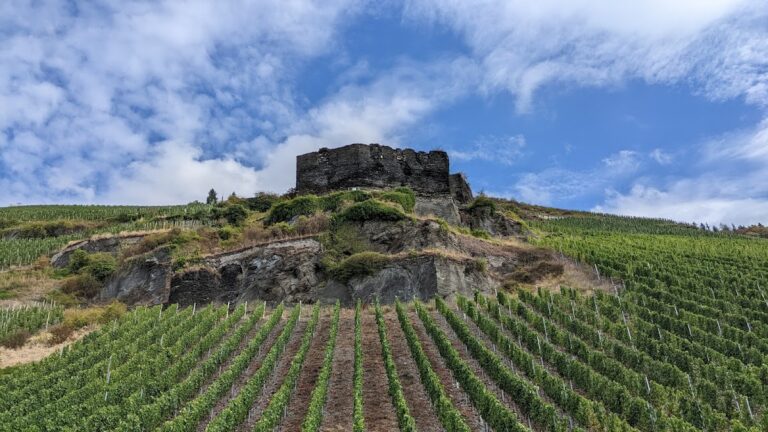
Burg Landshut occupies a hilltop on the approximately 235-metre-high Burgberg, on the western slope of the Hunsrück, a historic upland region in western Germany. The hill lies above Bernkastel, a district of Bernkastel-Kues, on the northern extension of the 415-metre-high Olymp. The castle stands on the right bank of the Moselle, above a bend where the river, approximately 107 metres above sea level, turns toward the northwest.
Roman Fortifications
The late Roman fort had a rectangular plan measuring approximately 60 by 30 metres. Its walls were built of quartzite and were about 1.8 metres thick. Six or seven square towers reinforced the defenses, each measuring approximately 6 by 6 metres at the base. Remains of these fortifications survive beneath and within the later castle complex.
Medieval Castle Remains
The medieval castle stands on the foundations and surviving defensive remains of the Roman complex. The documented surviving fabric includes the enclosing walls and the keep. The site as a whole is in ruins, while the keep remains accessible and has been adapted as a viewing platform over the Moselle valley.