Brozany: A Renaissance Fortress and Chateau in Czechia
Site at a Glance
- Rating
- 4.1
- Popularity
- Very Low
- Country
- Czechia
- Primary era
- Early Modern
- External website
- Open
- Eras represented
- Medieval, Early Modern
- Civilizations
- Holy Roman Empire, Kingdom of Bohemia
- Site type
- Military
- Remains
- Castle
On this page8 sections
History
Brozany is a fortress and chateau in Czechia, in the market town of Brozany nad Ohří, whose present form derives mainly from Renaissance rebuilding in the second half of the sixteenth century. The site was built as a fortress at the beginning of the fifteenth century and later became associated with successive noble estates and the administration of the surrounding region.
Medieval administration and royal pawns
From the thirteenth century, Brozany was connected with the Mělník provostry, a religious administrative institution whose officials managed ecclesiastical property. Its administrators initially lived in a manor beside the Church of Saint Gothard. From the beginning of the fifteenth century, they occupied the fortress, where Beneš Slaboně is recorded as castellan in 1410. A castellan was responsible for administering and defending a fortified residence.
During the Hussite Wars, the religious and political conflicts in Bohemia that began after the execution of Jan Hus, the surrounding area was controlled by the Prague League. In May 1421, the league appointed Hynek of Valdštejn and Kolštejn captain of the Litoměřice region. Kings Sigismund and George of Poděbrady later pawned Brozany repeatedly. A pawned estate was temporarily transferred to a creditor or holder in return for a financial obligation.
Boreš of Osek held the estate from 1452 to 1456, while Mikuláš Rachmberk held it from 1464. King Vladislaus Jagiellon redeemed Rachmberk’s claim in 1480, but two years later he pawned the village to Litvín of Klinštejn. Vojtěch Tvoch of Nedvídkov acquired the estate in 1486. In 1500, it passed by inheritance to Zdeněk of Valdek, Bohuslav Žleb of Střízkov, and the brothers Purkhard and Oldřich of Čichalov. Jindřich of Vřesovice and Libčeves bought it from them in 1502, together with Hostěnice and Rochov.
The Vřesovice and Zajíc families
After Jindřich died in 1515, his son Jaroslav of Vřesovice inherited Brozany. Jaroslav became captain of the Litoměřice region and, from 1529, provincial hetman. After his death in 1531, the estate passed to his younger brother Jiřík. Jiřík’s sons divided Brozany in 1543 between Zikmund and Jakub of Vřesovice. Jakub soon sold his half to his brother Jindřich, who then sold the whole share to Jan Zajíc of Hazmburk at Budyně. Jan temporarily pawned his half to Jaroslav Beřkovský of Šebířov, later redeemed it, and sold it to Kryštof Zajíc of Hazmburk in 1558.
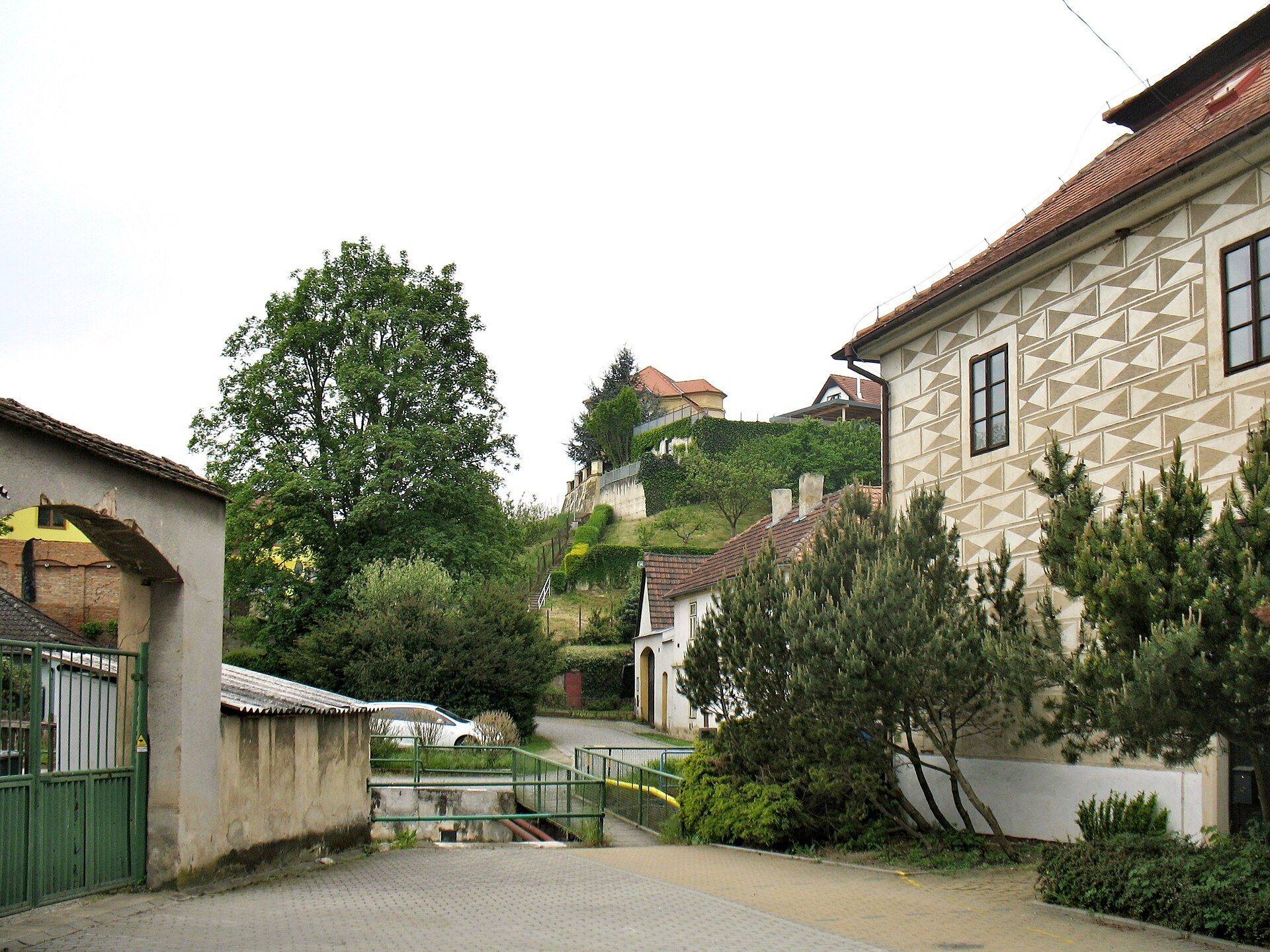
After 1559, Zikmund of Vřesovice rebuilt the old fortress as a Renaissance chateau and bought back the Zajíc family’s share. His son Jan Václav sold the entire Brozany estate to Jan Zbyněk Zajíc of Hazmburk in 1601. After 1600, Jan Zbyněk raised the chateau by one storey, added two oriel projections, and expanded its sgraffito decoration. Sgraffito is made by scratching through one surface coating to reveal a contrasting layer beneath.
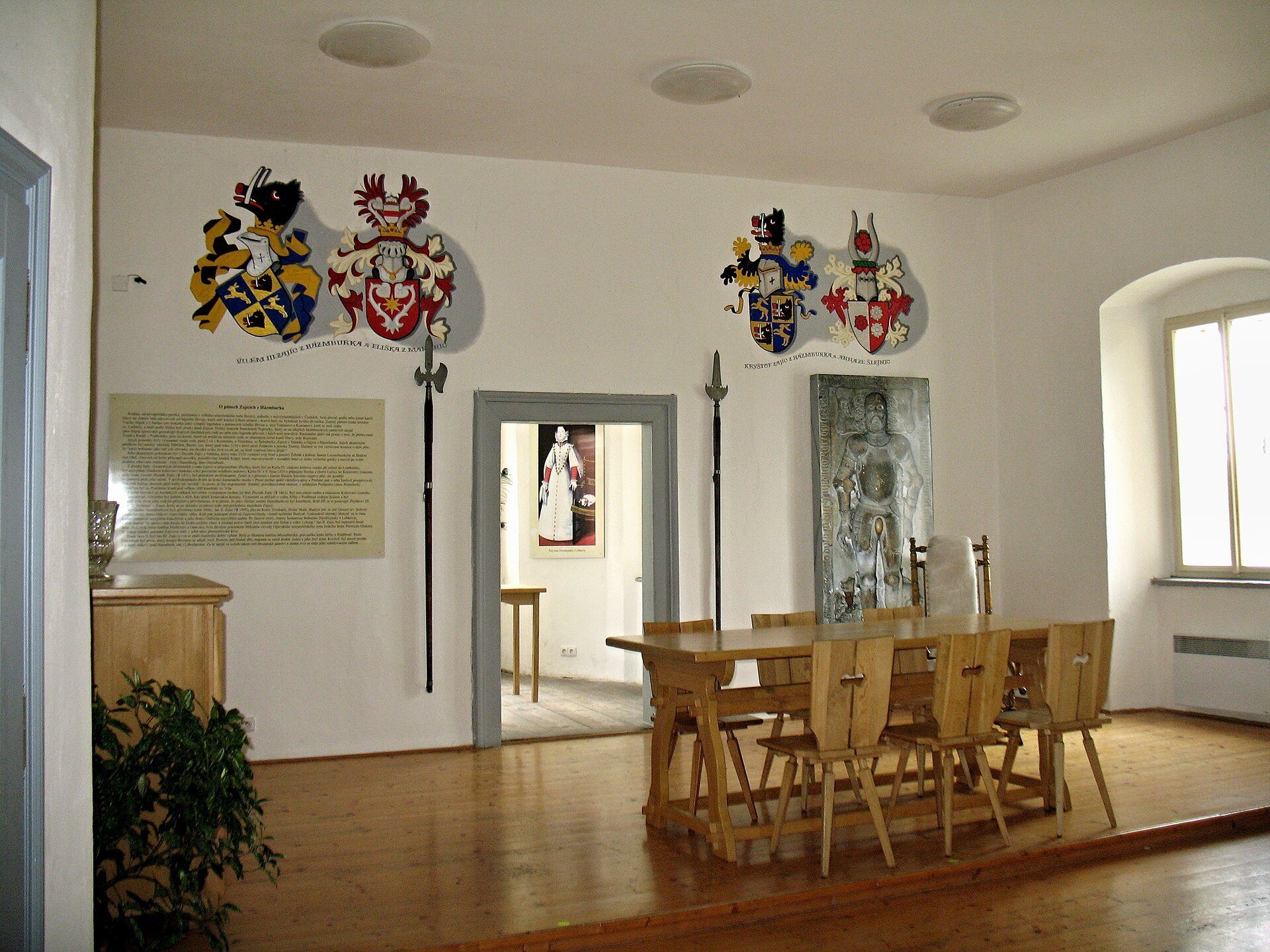
Jan Zbyněk’s expensive lifestyle led him to sell family property. Brozany passed to his wife, Polyxena of Minkvice, as her dowry in 1604. Before her death in 1616, she bequeathed the estate to her underage sons Jan, Mikuláš, and Jaroslav. Their guardians sold the indebted property in 1617 to Polyxena Pernštejnská of Lobkowicz for 50,000 kops of groschen and used the proceeds to repay debts. The Zajíc heirs received only weapons, armor, books, and clothing, which were taken to Prague. Jan later became a soldier and rose to lieutenant colonel, while Jaroslav served as a courtier of Emperor Ferdinand III without restoring the family’s former influence.
War, fire, and modern adaptation
During the Thirty Years’ War, the major European conflict of 1618 to 1648, Brozany was captured in 1631 and burned together with the village. The owners lived at Roudnice Chateau afterward, while the Brozany residence served officials and agricultural purposes.
A fire in 1880 resulted in the demolition of the two upper storeys, and the sgraffito decoration was covered with ordinary plaster. After 1948, the fortress was nationalized and adapted in the 1950s for the local Unified Agricultural Cooperative. Until the end of the 1990s, the Litoměřice District National Committee and later the district office used the building for civil-protection purposes.
In the twenty-first century, the market town of Brozany nad Ohří took the fortress into its administration. Repairs to the deteriorated chateau began in 2002 after a historical survey. Brozany is protected as a cultural monument.
Remains
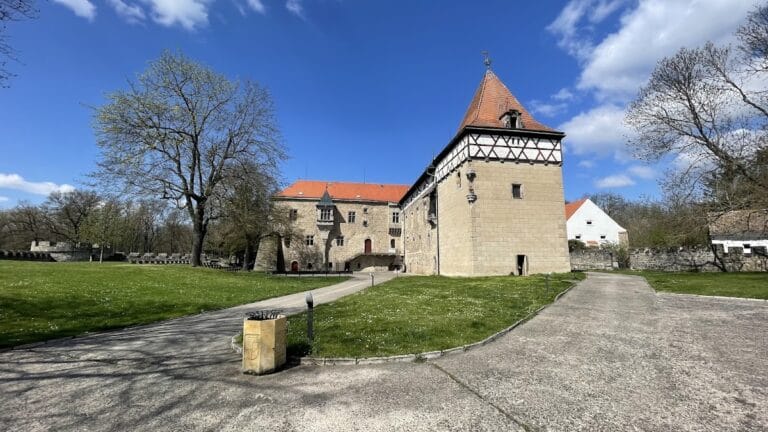
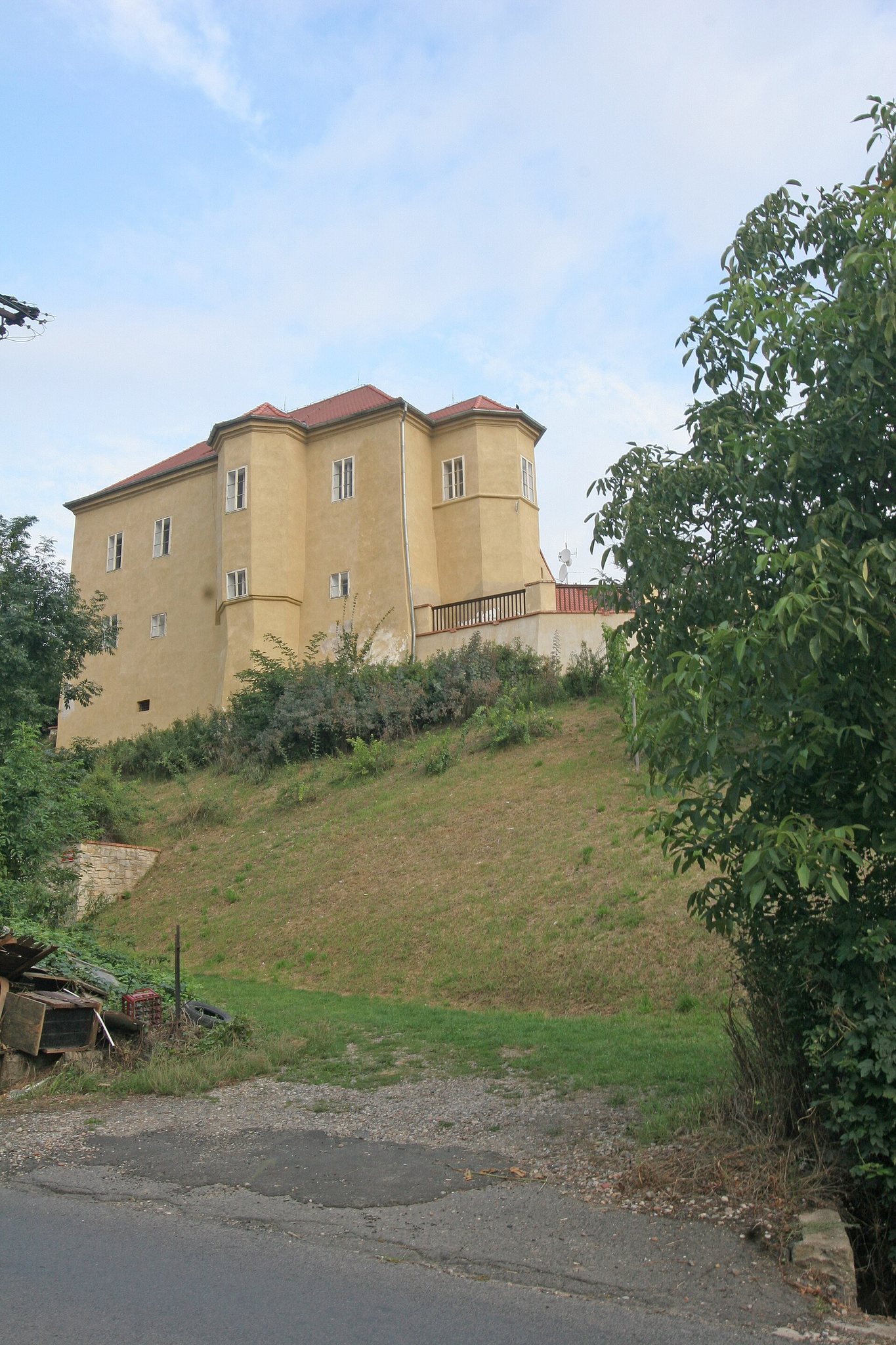
The surviving building is a two-storey structure with an irregular plan, a hipped roof, and later additions. Its Renaissance character reflects the rebuilding of the former medieval fortress in the second half of the sixteenth century, while subsequent changes shaped its present form. Polygonal projections extend from the north, east, and south facades, and part of the former fortifications survives across the neck ditch.
Chateau building and fortifications
Main building
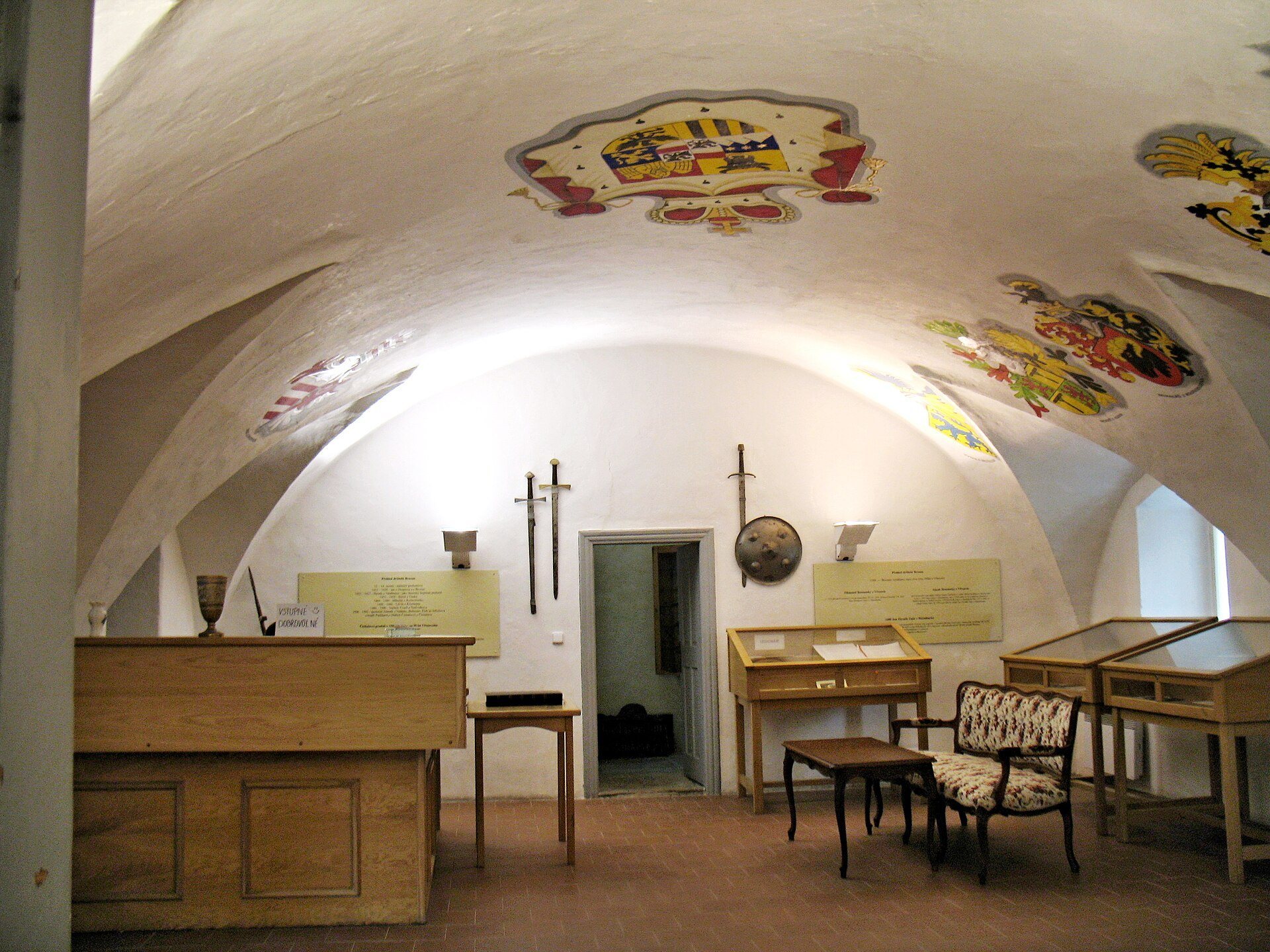
The chateau contains ground-floor rooms with barrel vaults and upper-floor rooms with flat ceilings. Its Renaissance interiors now contain an exhibition on the history of Brozany and the noble families who owned the fortress. The municipality also uses these interiors for ceremonial occasions.
Well and bridge
A well stands in front of the building. A surviving section of the former fortifications forms a bridge across the neck ditch, preserving part of the defensive arrangement associated with the earlier fortress.