Bridge of Mizarela: A Medieval Crossing in Portugal
Site at a Glance
- Popularity
- Medium
- Country
- Portugal
- Primary era
- Medieval
- Eras represented
- Medieval
- Civilizations
- Unclassified
- Site type
- Infrastructure
- Remains
- Bridge
History
The Bridge of Mizarela is a medieval bridge in Sidros, Portugal, first built during the Middle Ages and reconstructed in the early nineteenth century. Its history includes a military episode during the French retreat from Porto in 1809, as well as local legends that have shaped its identity.
On 17 May 1809, Marshal Soult’s French army crossed the bridge while retreating from Porto. Portuguese militia chose to barricade the crossing rather than destroy it. Major Dulong, a French officer of the 31st Light Infantry Regiment, led an assault there. The bridge is also believed to have helped Soult’s troops evade Anglo-Portuguese forces commanded by British general Arthur Wellesley.
Longstanding local traditions connect the bridge with pagan beliefs and stories of the Devil. In one version, a fugitive who had become lost at a torrent promised his soul in return for a crossing. The Devil built a bridge, which vanished after the man had crossed. Years later, the repentant fugitive confessed his pact to a priest. The priest restored the bridge and drove the Devil away by sprinkling holy water three times with a rosemary branch, making the sign of the cross, and reciting exorcisms. The Devil disappeared in a pungent vapor, while the bridge remained. Another version casts the tale as a fertility legend in which the Devil aids a young man in exchange for his soul. The bridge is also known as the Bridge of Misarela and the Bridge of the Friars; local names include the Bridge of the Devil, Bridge of Hell, and Bridge of the Savior. It was nicknamed Saltador (“Jumper”). A summer festival reenacts the legend and usually concludes with a queimada, a traditional Galician alcoholic drink prepared by setting the liquor alight. The bridge has been classified as a Property of Public Interest since 6 December 1958.
Remains
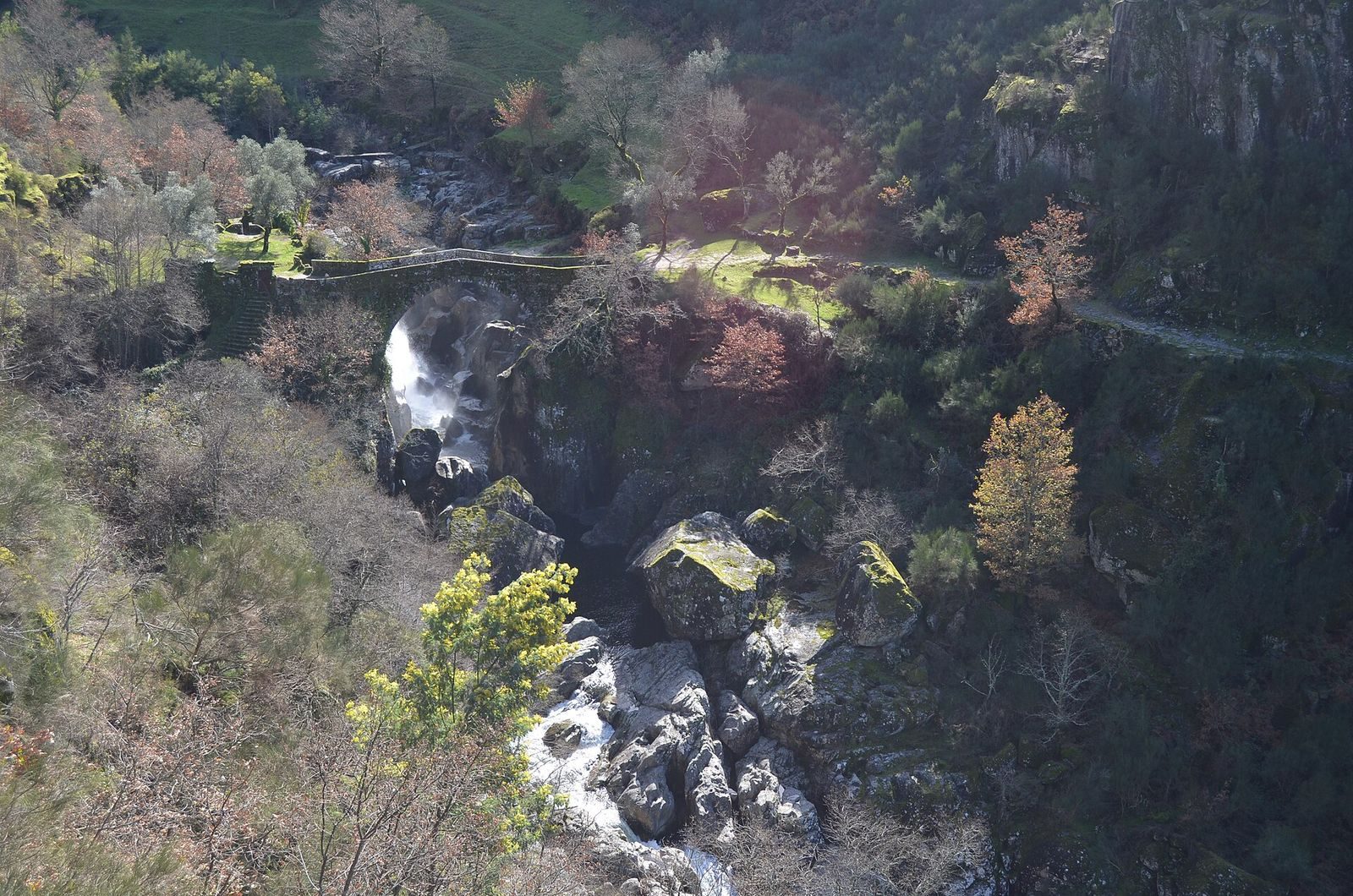
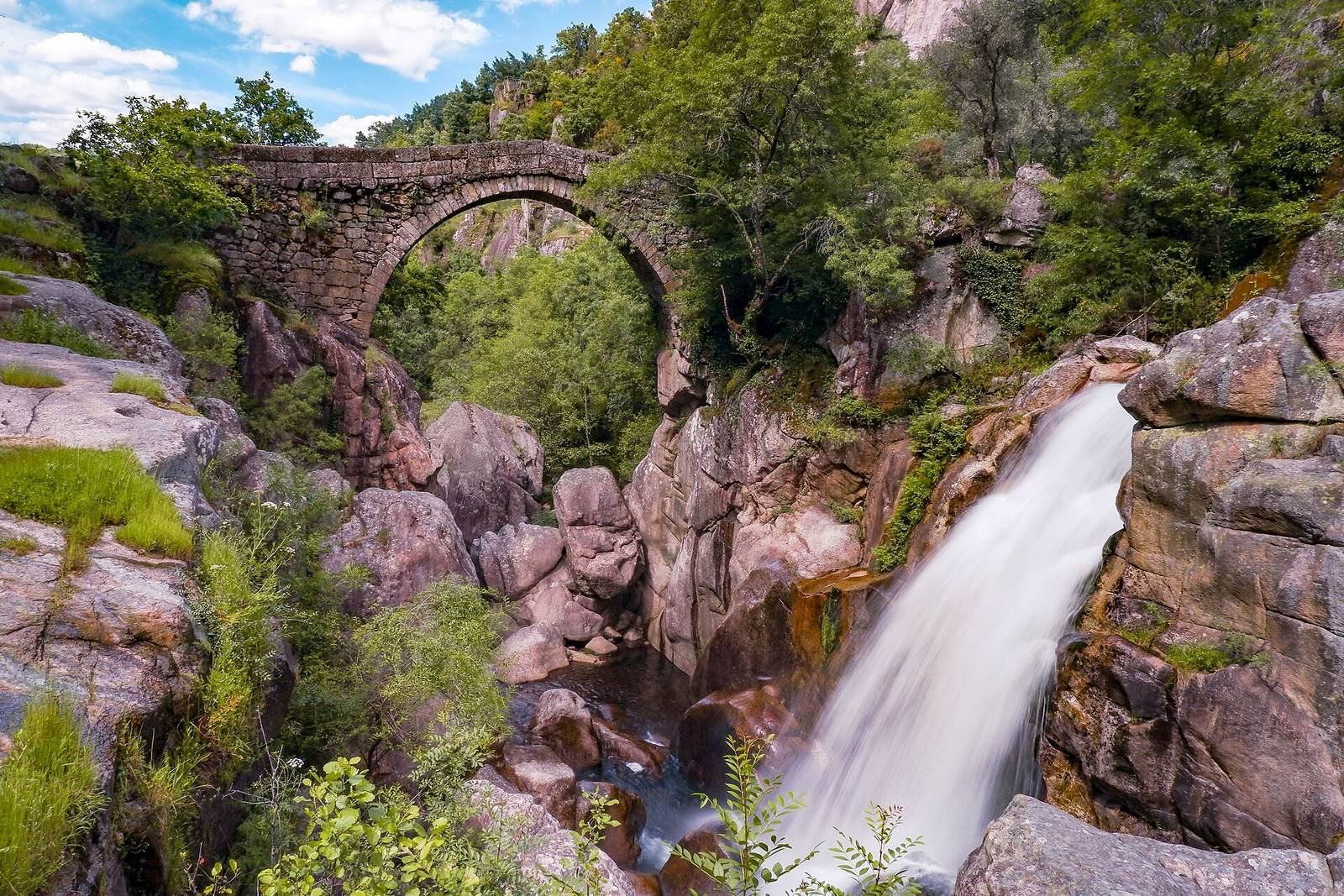
The granite bridge crosses the Rabagão River on a single arch with a span of about 13 metres. It rests on granite rocks at the bottom of a steep gorge, above the riverbed, roughly one kilometre from the Rabagão’s confluence with the Cávado. The crossing links Ruivães and Campos, in the municipality of Vieira do Minho, with Ferral, in the municipality of Montalegre. It lies within Peneda-Gerês National Park and near Venda Nova Dam.