Bonnefont Abbey: A Cistercian Monastery in France
Site at a Glance
- Rating
- 4.4
- Popularity
- Medium
- Country
- France
- Primary era
- Medieval
- Eras represented
- Medieval, Modern
- Civilizations
- French
- Site type
- Religious
- Remains
- Monastery
On this page14 sections
History
Foundation and regional influence
Bonnefont Abbey was founded in 1136 by a Cistercian community in Proupiary and Sepx, France. The Cistercians were a monastic order rooted in the Benedictine tradition and communal religious life. Flandrine de Montpezat and her sons donated the land, and the bishop of Comminges summoned the community to establish the abbey. Bonnefont was a daughter house of Morimond, a major early Cistercian abbey that served as its mother house. Its patronage was the Virgin Mary, under the title Our Lady of the Clarity of God.
Bonnefont had religious, artistic, agricultural, economic, and political roles in Comminges. It established daughter abbeys at Villelongue in 1149; Boulbonne and Pérignac in 1150; Nizors in 1180; and Santa Fe and Lavaix, in present-day Spain, in 1223 and 1224 respectively. Its agricultural lands included at least eight granges, or monastic estates, among them Auzas, Appas, and Linas in Castillon, Sainte-Foy in Aurignac, Pentens in Martres-Tolosanes, La Peyrière in Proupiary, Le Frechet, Lias, and the more distant Canet and Minhac. It also held town houses in Saint-Gaudens and Toulouse.
The abbey took part in establishing planned settlements known as bastides, a characteristic form of settlement in medieval southwestern France. These included Boussens, Carbonne, Lestelle de Saint-Martory, Plaisance du Touch, Beauchalot, Mazières, Boulogne-sur-Gesse, and Blajan. Boussens, Carbonne, Lestelle, Plaisance, and Beauchalot were established on land belonging to Bonnefont’s granges.
Counts of Comminges and decline
Four counts of Comminges were buried at Bonnefont: Bernard II, who died before 1153; Bernard V, who died in 1241; Bernard VI, who died between 1295 and 1300; and Bernard VII, who died in 1312.
The monastic community began a gradual decline in the fourteenth century. The French Revolution ended monastic life at Bonnefont in 1791. The abbey was sold as national property, and its purchaser and descendants dismantled the complex.
Safeguarding the site
Two associations acquired the abbey complex in 1983 with the aim of protecting it. In 1984, Bonnefont was listed and classified as a French historic monument, recognizing its heritage importance.
Remains
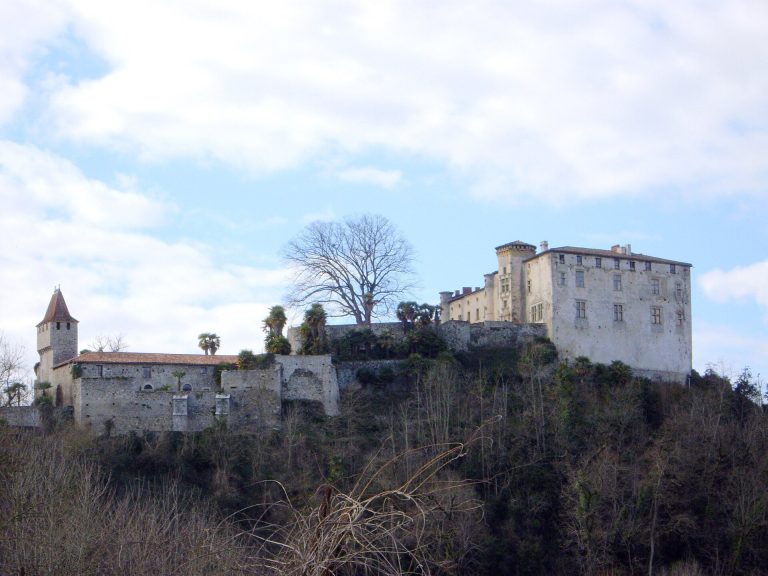
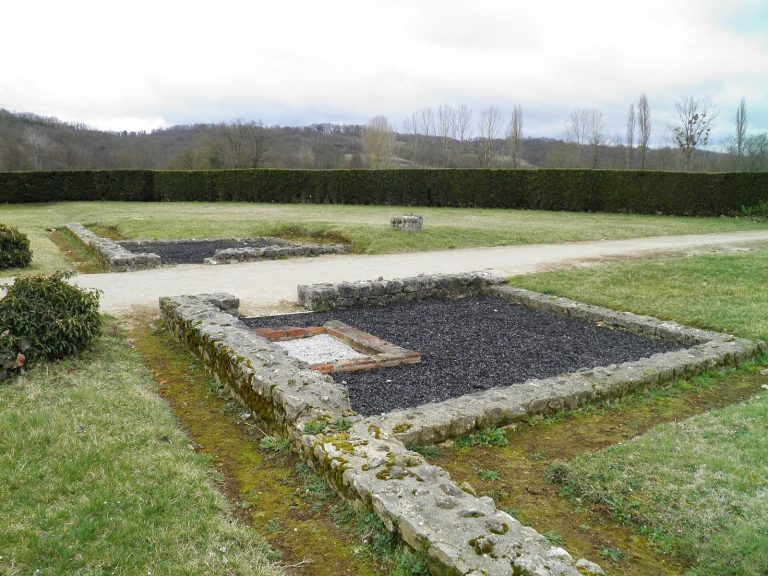
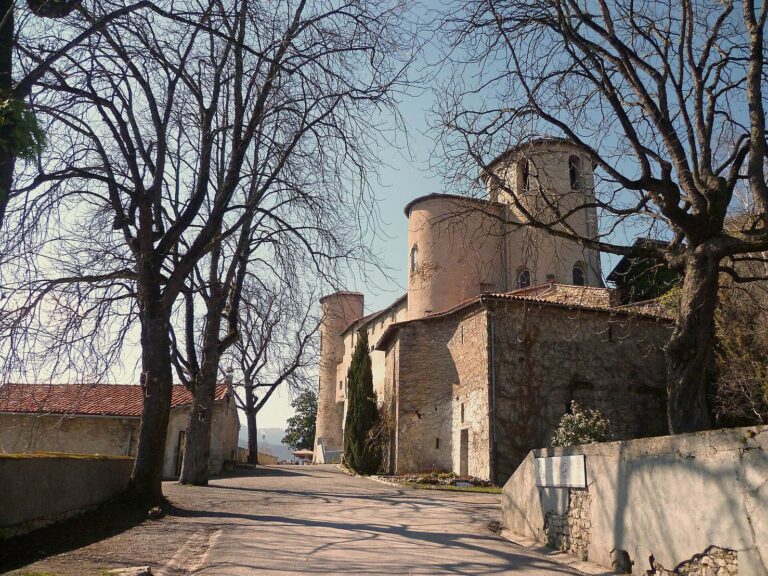
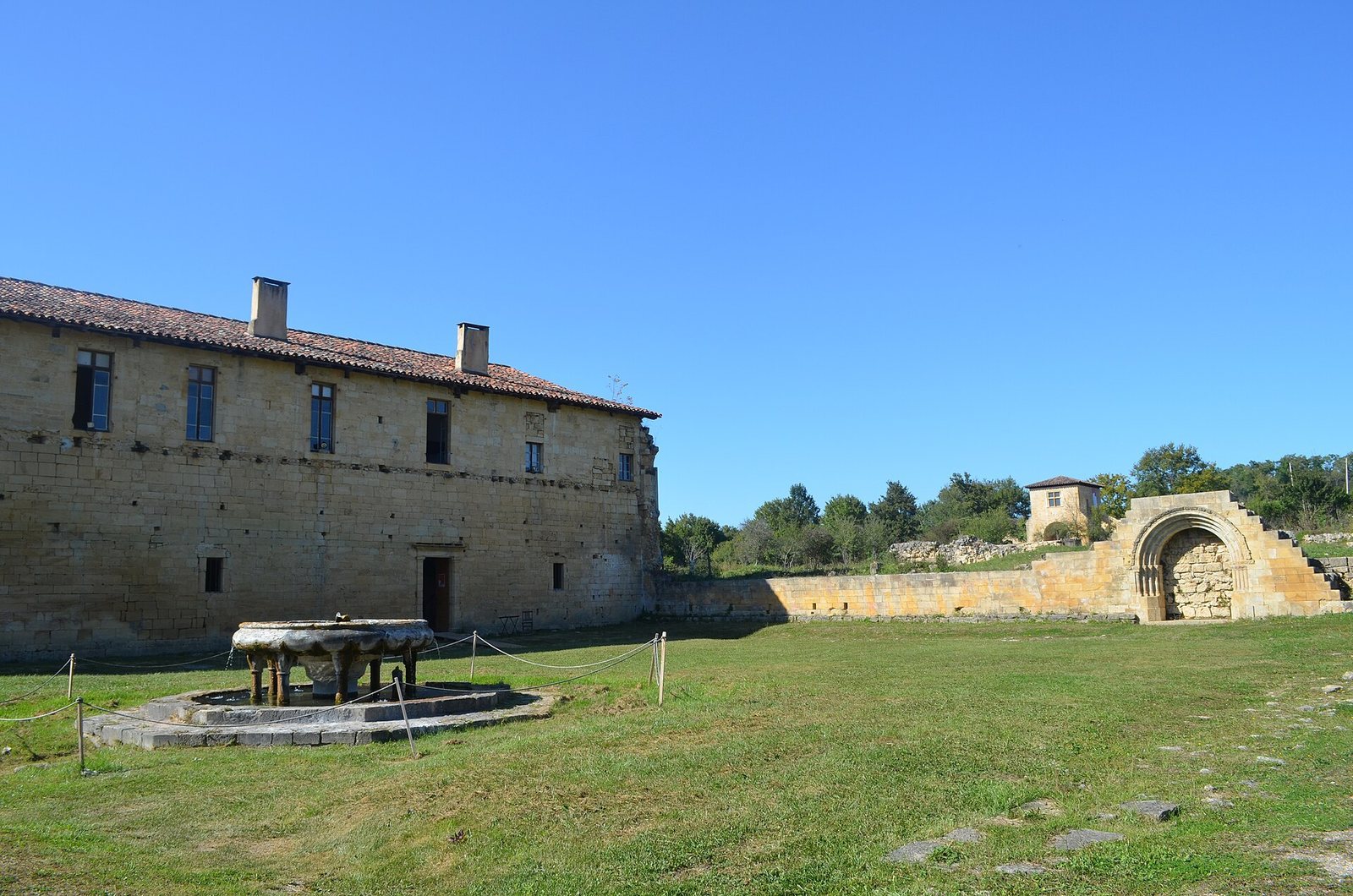
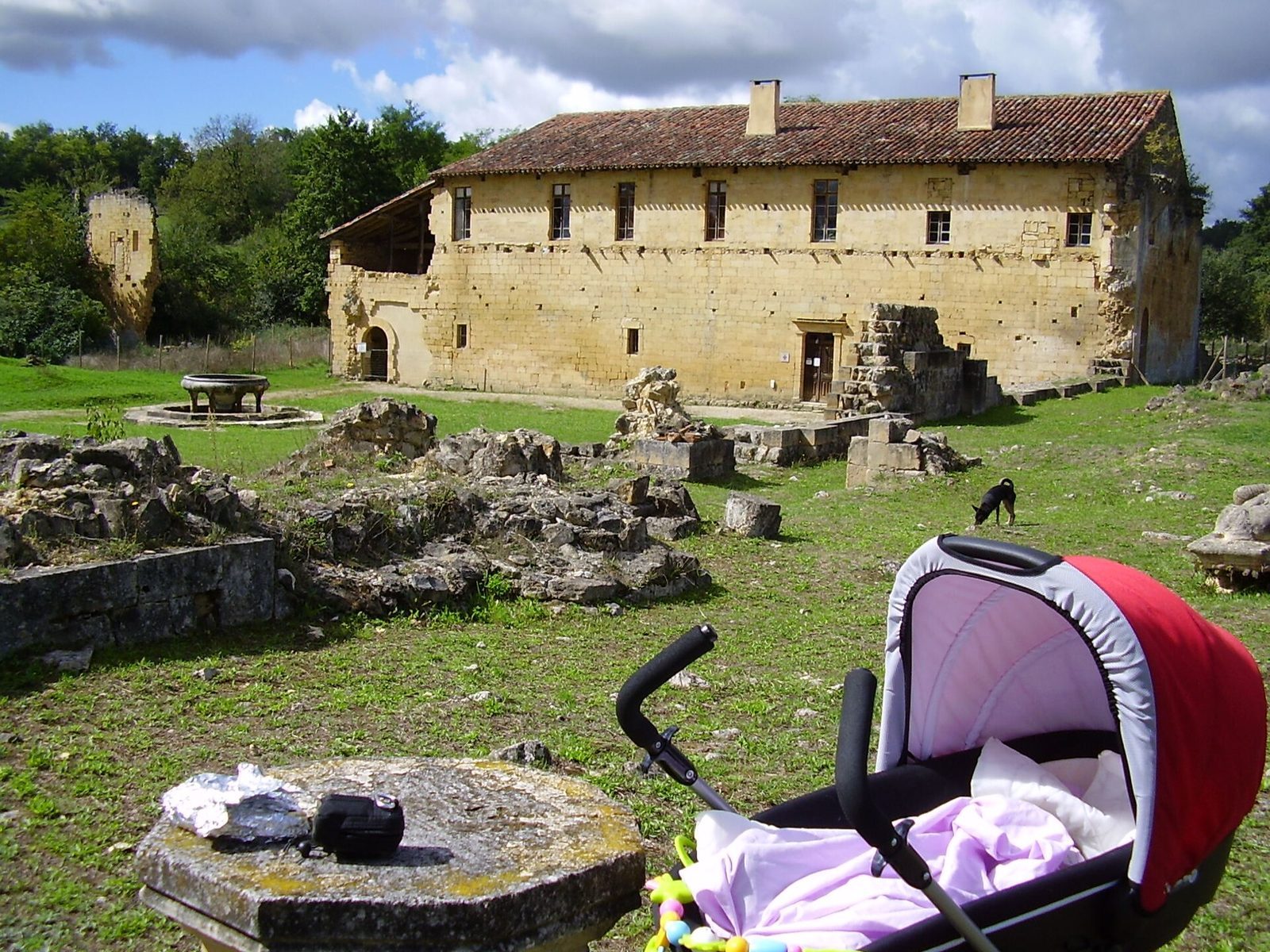
The site preserves a fifteenth-century tower, a gatehouse, and parts of the convers’ wing, a section of the monastery used by lay brothers. Other elements of the abbey survive in altered or relocated form, including fragments of the church, cloister, and chapterhouse. Excavation and conservation work has also restored features within the complex.
Buildings at the abbey
Tower and gatehouse
A fifteenth-century tower and the gatehouse remain at the abbey site. The gatehouse underwent restoration in 2013.
Convers’ wing and cellar
Parts of the convers’ wing date to the thirteenth century. Its cellar retains a timber roof structure and Romanesque window openings. In 2014, the timber structure was strengthened and the openings fitted with stained glass inspired by Cistercian design.
Lavabo and funerary recess
Restoration work reinstalled the lavabo, a basin used for washing, and overhauled the abbey’s hydraulic system. A funerary recess was returned to its original position.
Relocated and dispersed remains
Abbey church
The abbey church had disappeared by 1856. Parts of the building were incorporated into the west facade of the Church of Saint-Ferréol in Touille, about 14 kilometres from Bonnefont.
Cloister
The Gothic cloister, dated to the first half of the twelfth century, had 128 columns. Thirty-two were reassembled in a public garden in Saint-Gaudens, while 52 were taken to The Cloisters museum in New York.
Chapterhouse
The chapterhouse portal, from the monastic community’s meeting room, was transferred to the parish church in Saint-Martory. The chapterhouse facade was reassembled at the former gendarmerie there, then dismantled and placed in storage from 1990. Part of the facade was restored in 2016.
Count’s effigy
A recumbent effigy, a sculpted figure shown lying on a tomb, from Bonnefont was acquired by the Musée des Augustins in Toulouse in 1823. It may represent Bernard VI or Bernard VII.