Boglösa Church: A Medieval Lutheran Parish Church in Sweden
Site at a Glance
- Popularity
- Very Low
- Country
- Sweden
- Primary era
- Medieval
- Eras represented
- Medieval, Early Modern, Modern
- Civilizations
- Swedish
- Site type
- Religious
- Remains
- Church
On this page19 sections
History
Boglösa Church is a medieval Lutheran church in Boglösa village, about seven kilometres southeast of Enköping, Sweden. Consecrated in the thirteenth century, it serves Boglösa parish within the Church of Sweden, Sweden’s Lutheran national church, and the Uppsala Archdiocese, an ecclesiastical district led by an archbishop. The oldest parts of the building probably date to the twelfth or thirteenth century.
Medieval origins and enlargement
An old tradition places a battle against an unnamed enemy at the church site. The surrounding area is known for its preserved Bronze Age rock carvings. During the first half of the fourteenth century, the church was extended eastward, and its sacristy was probably added at the same time. Brick vaults were introduced over the nave and sacristy in the fifteenth century. The porch may date to the Folkung era, associated with a medieval Swedish ruling house, between 1250 and 1350, although it could be later.
Early modern changes
In 1545, seven kilograms of the church’s silver were surrendered during King Gustav Vasa’s confiscation of church silver. Vasa, king from 1523 to 1560, was central to Sweden’s Reformation-era religious changes. Seventeenth-century notes also refer to a hill northeast of the church where a guild hall, a meeting place for members of an organized association, was said to have stood.
Eighteenth-century transformation
The church was extended westward in the eighteenth century, and its interior was altered as the building took on its present form. In 1804, the southern gateway to the churchyard was demolished and replaced by pillars and iron gates.
Conservation and renewed use
The altarpiece was returned to its former place in the choir in 1918. In 1957–59, the interior was renovated under the direction of castle architect Ragnar Jonsson, a professional title for an architect appointed to work on royal or state buildings. The church’s fixed furnishings were conserved during this work.
Remains
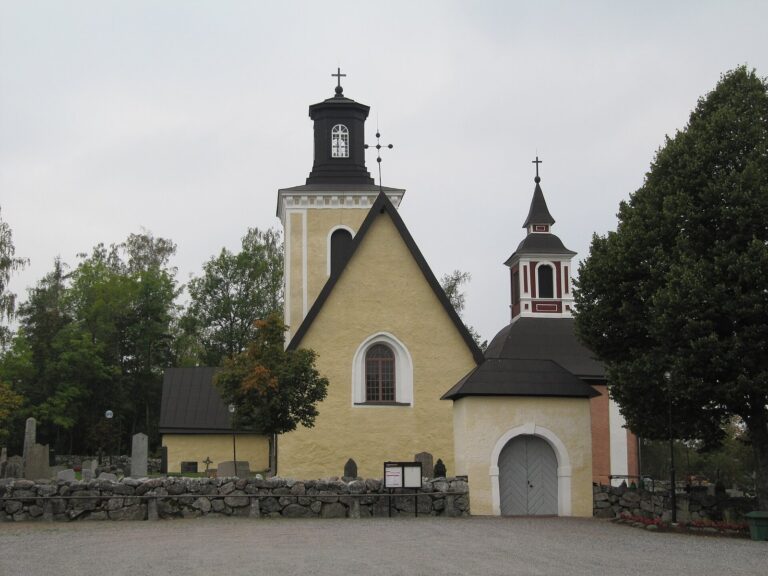
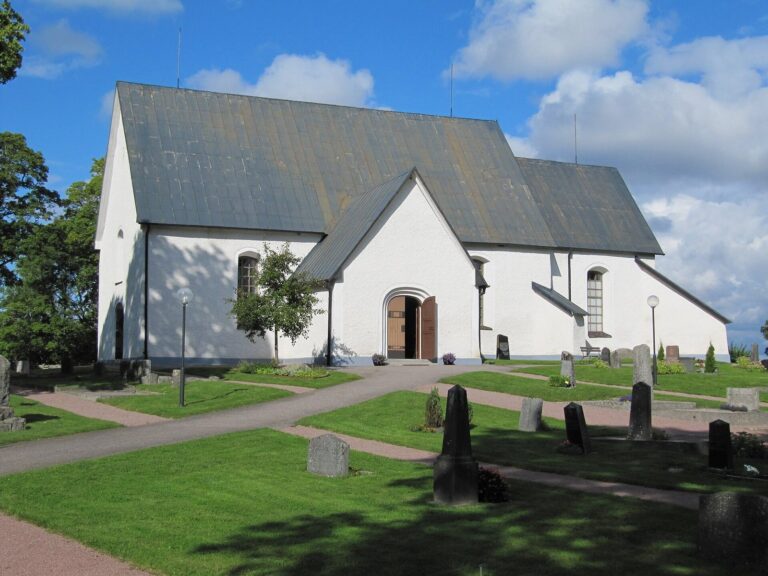
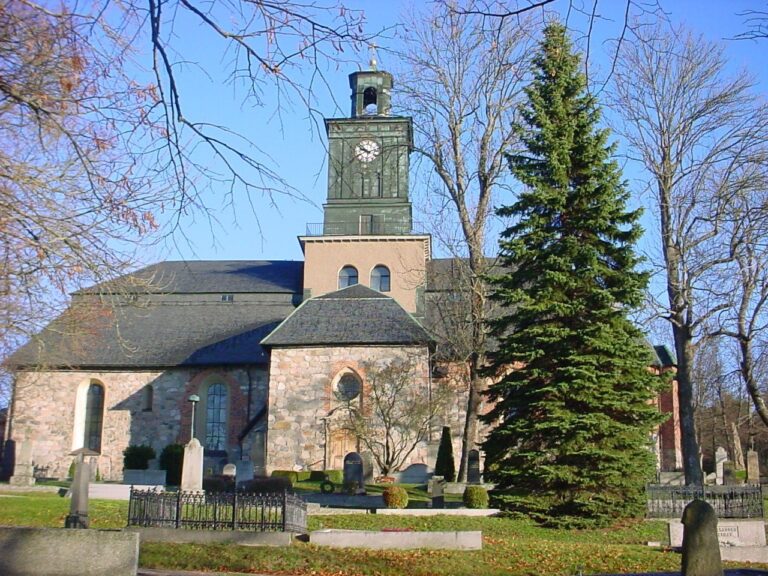
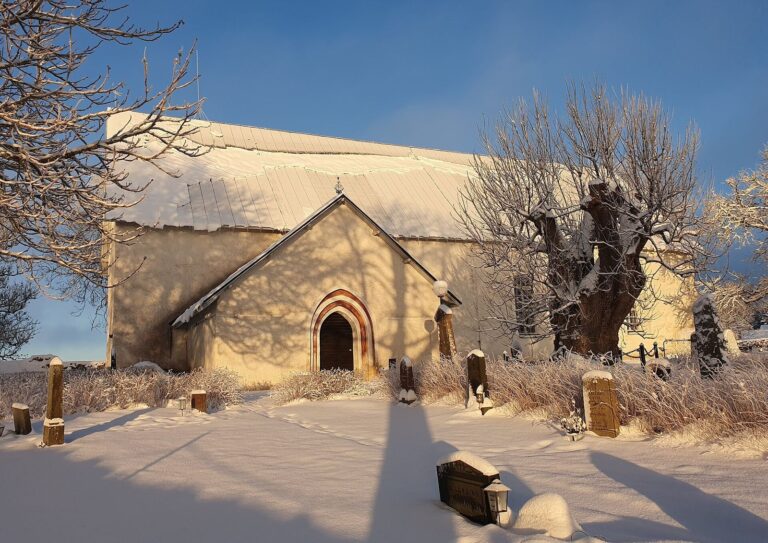
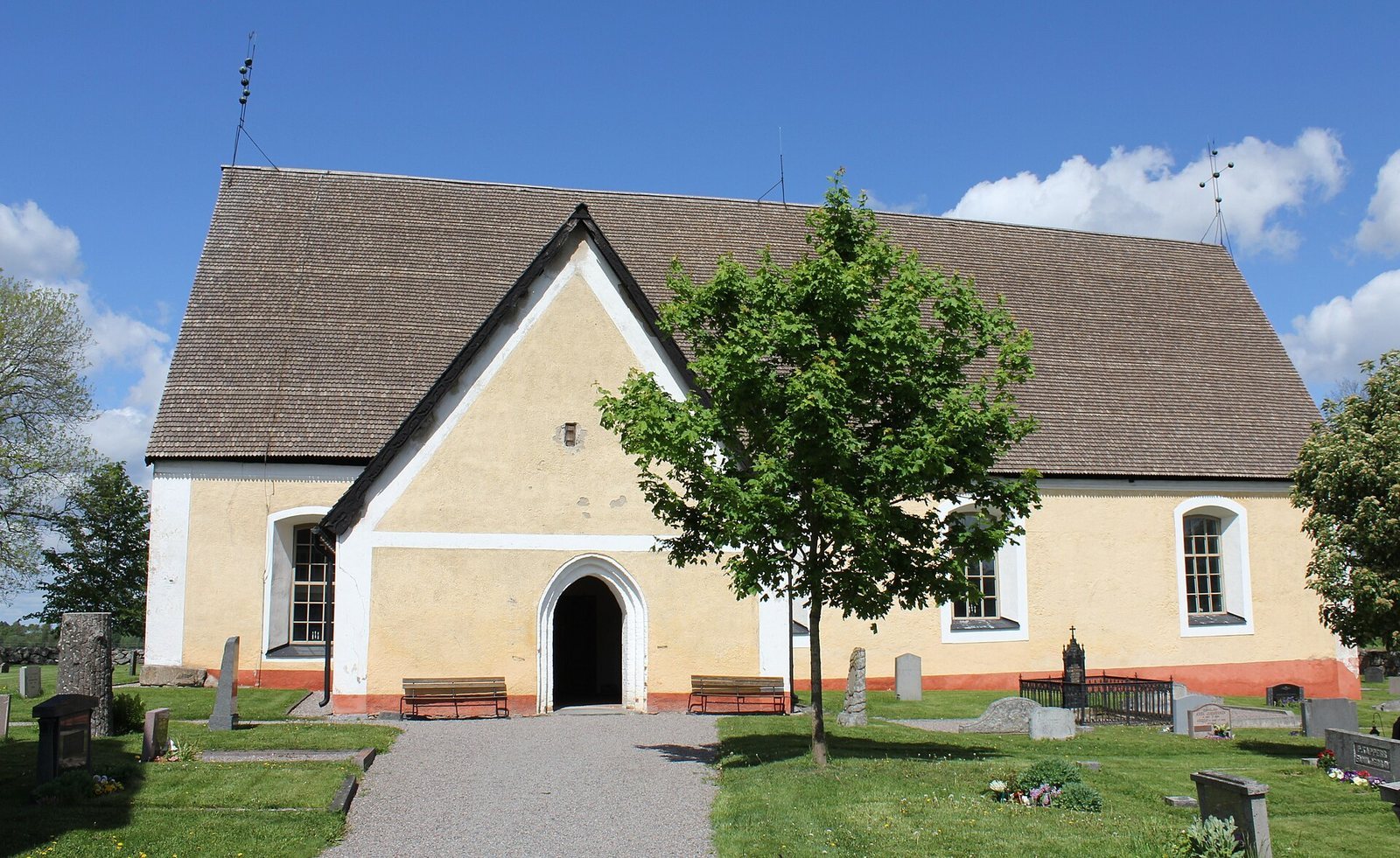
Boglösa Church is a single-nave hall church, with one main worship space and no side aisles. It is built of natural stone, and its interior and exterior walls are plastered. The rectangular nave meets a choir, the part around the altar, with a straight east end. A sacristy, used for storing liturgical objects and preparing for services, adjoins the northeast side, while a porch projects from the southwest.
Church fabric and layout
Exterior and earliest church
The exterior is yellow-plastered, with white surrounds at the windows and corners. A steep, shingle-covered gable roof rises above the nave, and wrought-iron crosses stand at its gable ends. The earliest church was about one-third the size of the present building. Its choir was narrower than the nave and may have ended in a rounded apse. The early interior may have had either a flat wooden ceiling or an open roof structure. Inside the south wall, a trace of a Romanesque-style window survives, from a medieval architectural style associated with features such as rounded arches.
Eastward extension
The eastern extension is made of large, sharply edged stones laid in regular courses. Masonry on the new east gable still traces the outline of a group of three windows, and a doorway was added on the choir’s south side. A wooden sacrament cupboard, built into the wall for sacred Eucharistic objects, was found in the choir’s north wall and dates to the construction of that part of the church.
Vaults and western extension
The nave and sacristy have brick vaults. The nave also has a wooden barrel vault, a continuous arched ceiling. Its roof trusses remain visible in the attic, and timber wall plates can be seen high on the interior walls. The eighteenth-century western extension contains two western vaults. Enlarged and additional windows brought more light into the interior.
Porch and entrance
The porch has carved medieval bargeboards decorated with plants, each ending low down in a gaping dragon’s head. Their early character may reflect the porch’s age, but they could have been reused from an earlier wooden porch if the present structure was built later. A massive medieval iron door, with elaborate ornament and heavy locks, closes the entrance.
Interior furnishings
Choir and altar furnishings
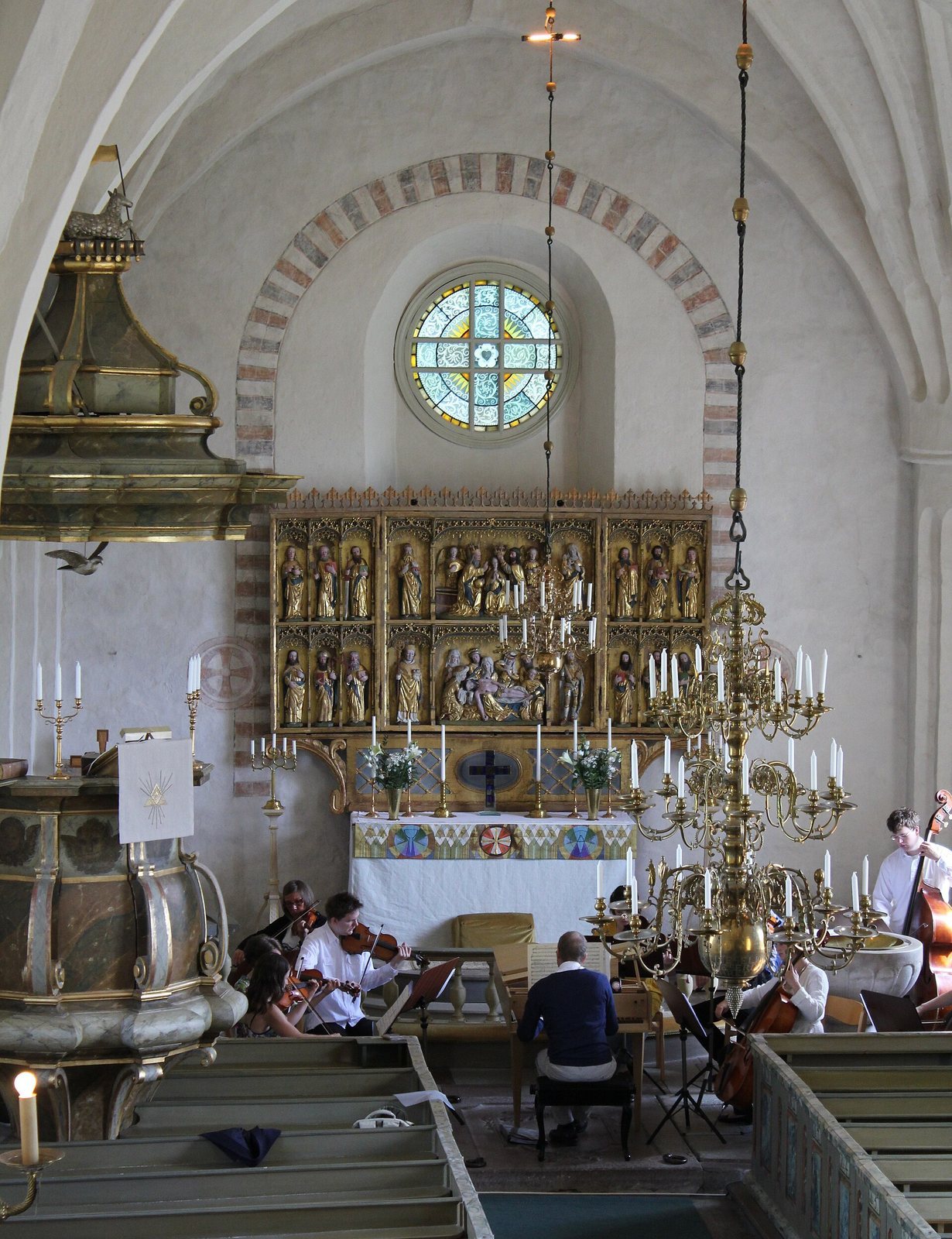
The fifteenth-century altarpiece was made by Bertil the painter. It was first created for the choir of the Guild of the Holy Body at Stockholm Cathedral and was sold to Boglösa around 1470, when the cathedral choir was altered. Its supporting predella, the base beneath an altarpiece, was made in Enköping in 1798. Most of the medieval group of eastern windows was later blocked, leaving a small round window fitted with stained glass by Yngve Lundström. A large triumphal crucifix, a crucifix displayed within a church, probably dates to the fourteenth century and hangs by the north choir wall.
The limestone baptismal font came from Gotland and dates to around 1300. Its foot survives from an older sandstone font of the early thirteenth century.
Pews, gallery, and pulpit
The enclosed pews were made in 1744 by Master Lars of Enköping. A gallery built in 1754 has a painted barrier. The pulpit was made in Stockholm by Johan Berger in 1744 and painted the following year by Master Schönfeldt.
Lighting and silver
The church has several chandeliers. A cast-metal chandelier with 16 arms was bought in Enköping in 1656. A 30-arm cast-metal chandelier, taken to the German Church in that year, was purchased for Boglösa in 1782. Another 16-arm chandelier was bought in Stockholm in 1782 in a transaction involving a small church bell. Two wooden chandeliers were donated by parishioners. The silver includes a chalice made in 1653 by melting down two medieval chalices, a communion wafer box made in 1762, and a pitcher purchased in 1644. The chalice and pitcher were remade in 1749.
Organ
Pehr Gullbergson of Lillkyrka built the mechanical organ in 1844. It has slider chests, wind boxes with movable controls that direct air to sets of pipes, and a stated compass of 54/24. The organ was dedicated on 12 January 1845.
Cemetery structures
Boundary wall and entrance
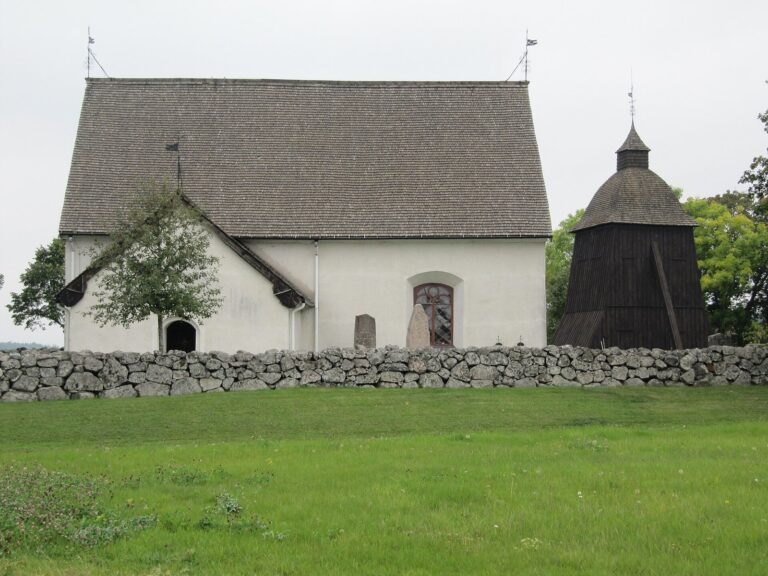
A wall whose course dates from the Middle Ages surrounds the cemetery. It was formerly topped by a wooden roof. The present entrance has pillars and iron gates, which replaced the southern churchyard gateway demolished in 1804.
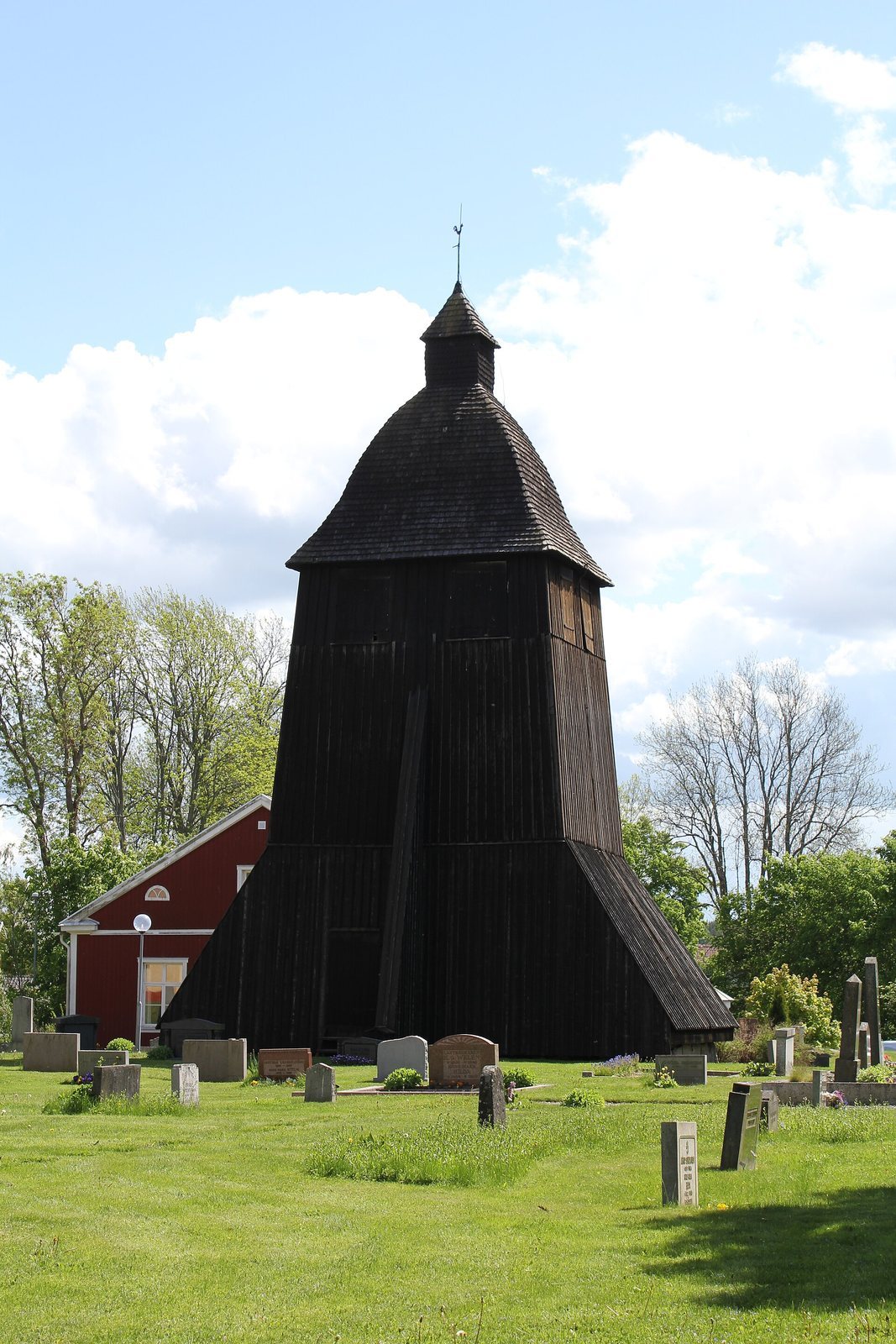
Bell tower
A board-clad bell tower of unknown age stands in the cemetery. It was boarded and tarred in 1639 and contains three bells. The large bell was recast in Stockholm in 1861 by F. M. Bergholtz, while the small bell was recast there in 1811 by C. F. Grönvall.