Blonay Castle: A Medieval Hilltop Castle in Italy’s Aosta Valley
Site at a Glance
- Rating
- 4.2
- Popularity
- Very Low
- Country
- Italy
- Primary era
- Medieval
- Eras represented
- Medieval
- Civilizations
- Duchy of Savoy
- Site type
- Military
- Remains
- Castle
On this page6 sections
History
Blonay Castle is a medieval hilltop castle in Avise, Italy, in the Aosta Valley. Its tower was built in the twelfth century, while the rest of the complex was probably added in the fifteenth century. The castle stands among three castles in the municipality and was described by Jean-Baptiste de Tillier as the first residence of the lords of Avise, a noble family present in the valley by the twelfth century.
From the lords of Avise to the de Blonay family
The separate construction phases reflect changing ownership and defensive needs. In 1645, Prosper d’Avise, a senator of Savoy, left the building adjoining the tower to his nephews Claude and Josué de Blonay. They were the sons of Marie d’Avise and Jacques de Blonay of Chablais, a historical region in the western Alps around Lake Geneva. After his mother died between 20 and 27 March 1649, Claude de Blonay received the feudal holding again, and this part of the castle remained with the de Blonay family.
During the first half of the eighteenth century, the castle continued to be held jointly by the lords of Blonay and Avise. The Avise family also owned a separate, newer castle in a more convenient position, with a slate-roofed pavilion tower, gardens, orchards, meadows, and other land. François-Gaspard d’Avise was the last heir of the Avise family. Under the testament of his father, Antoine-Balthazard d’Avise, dated 9 February 1677, half of the fief went to François-Gaspard, while the other half passed to Claire-Marie d’Avise and her husband, Charles-Joseph Bianco di San Secondo.
The prison tower and later condition
For a long period, the tower served as a prison and became known as the Tower of the Prisons. In a feudal declaration of 1787, Philippe de Blonay claimed the exclusive right to imprison criminals there. André Zanotto described the castle as uninhabited in 1980. The building has since been restored and is now in good condition.
Remains
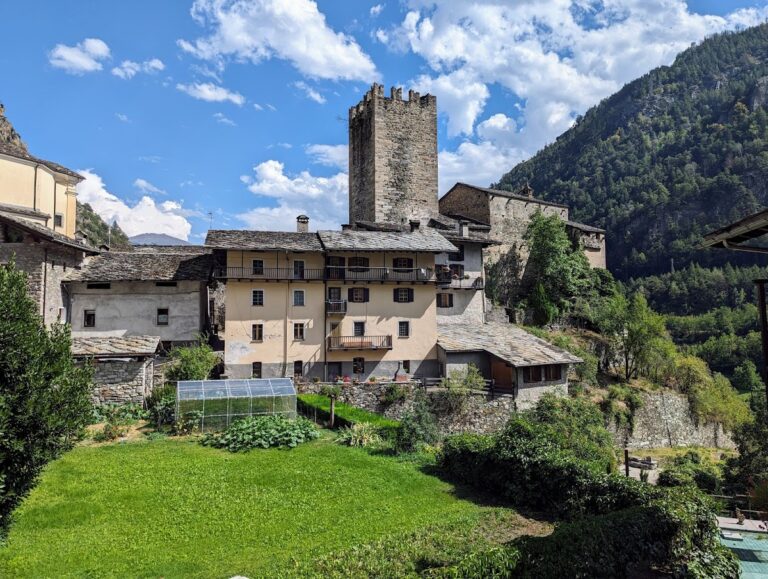
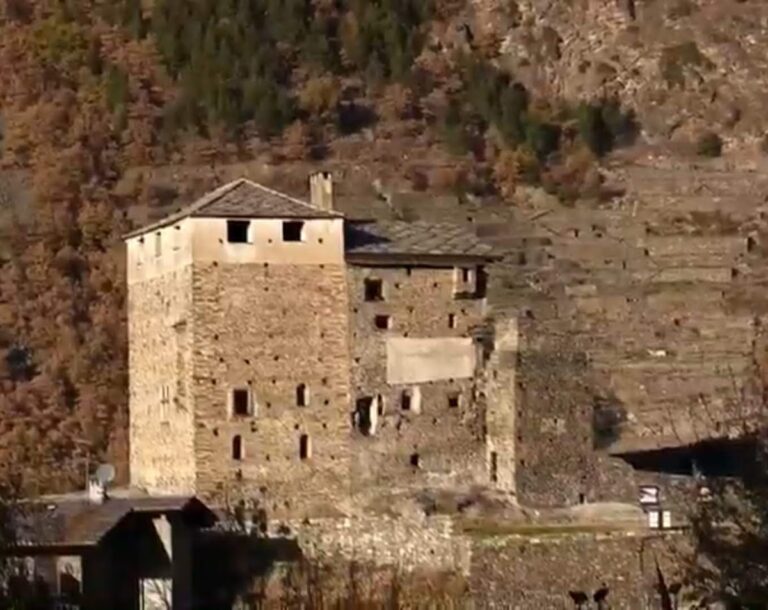
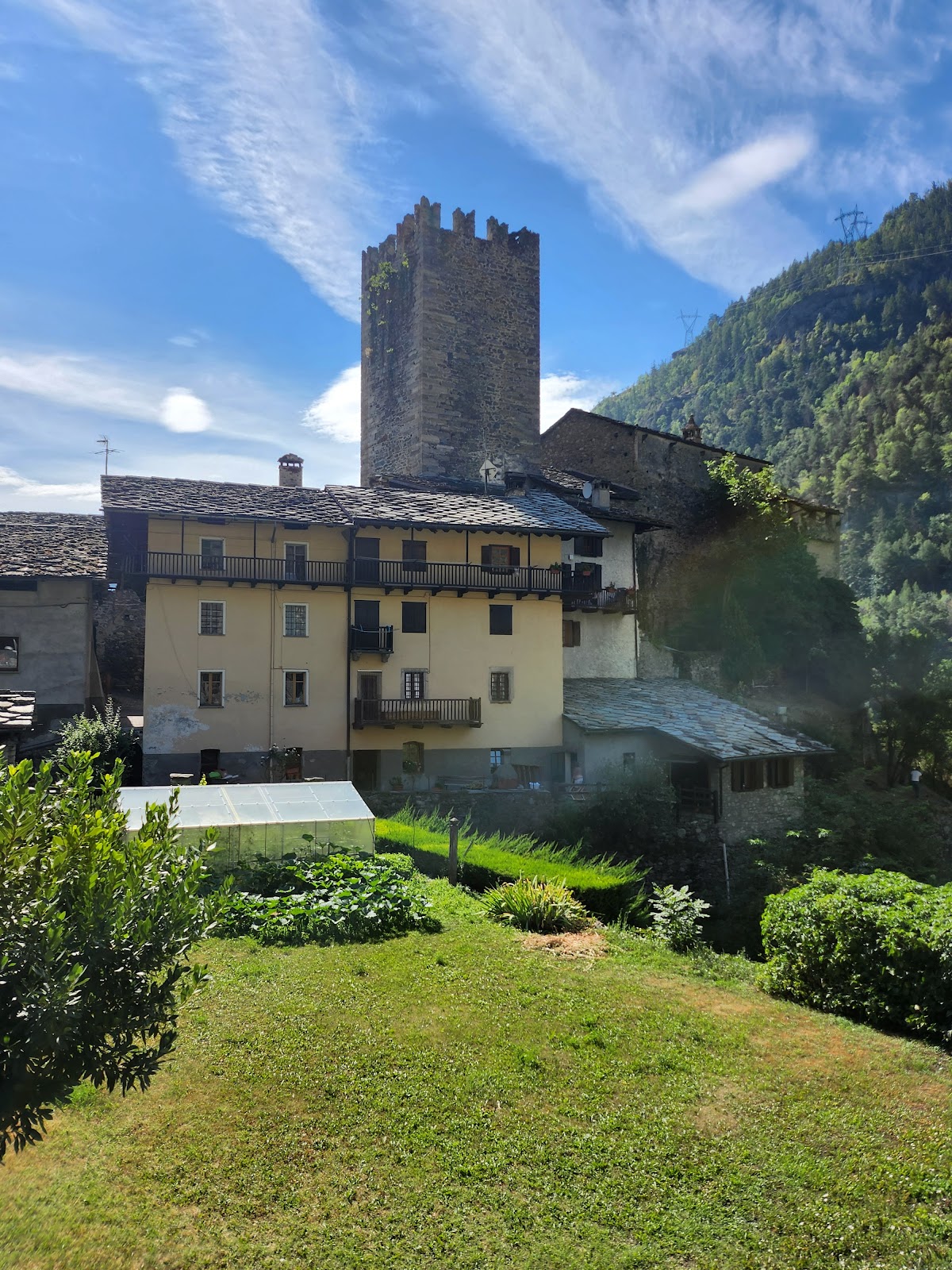
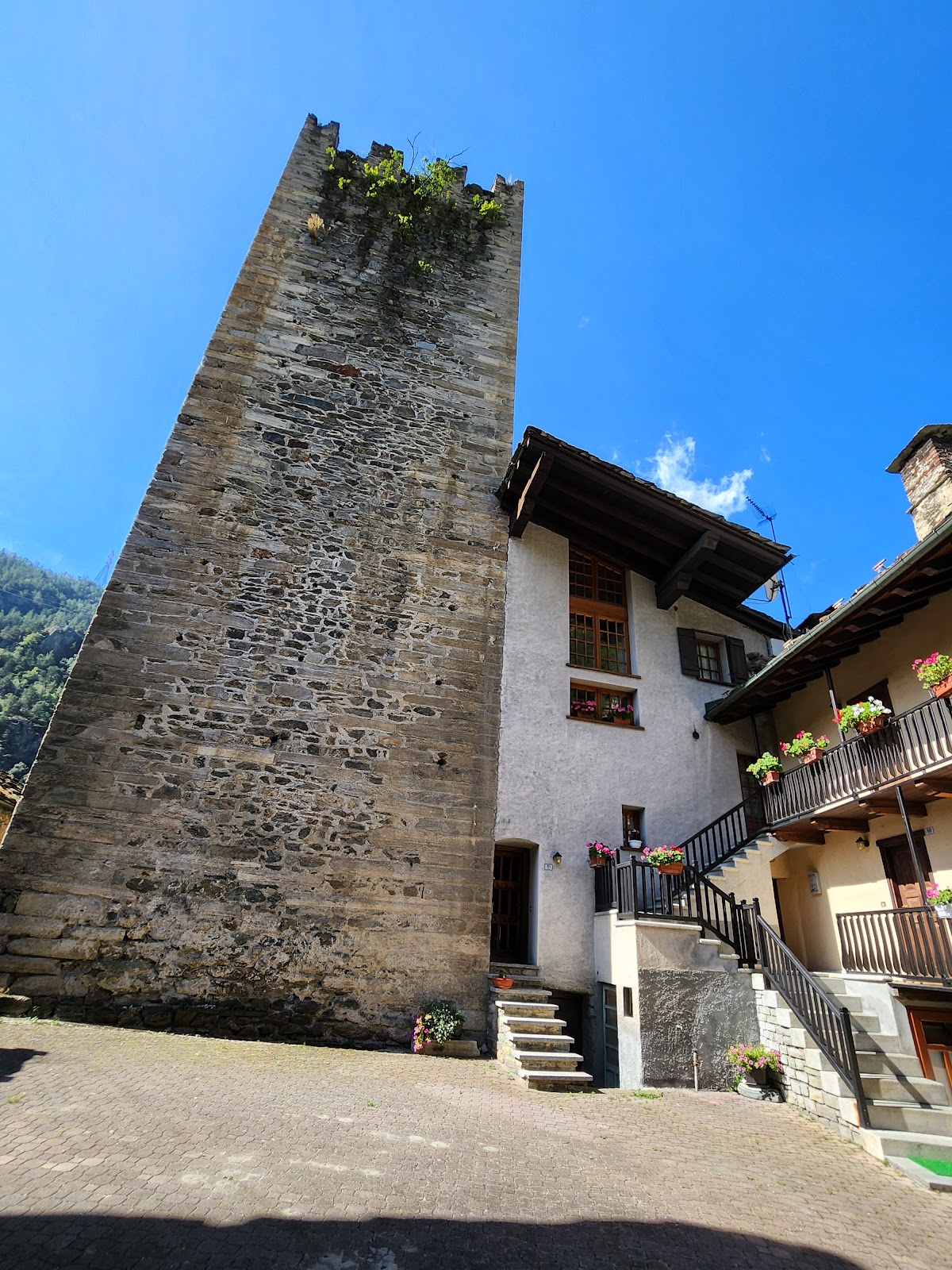
Blonay Castle stands at approximately 763 metres above sea level on elevated ground in the village of Avise, near the parish church of Saint Brice. The complex combines a large square tower with a later building attached on its south side. Rubble stone forms the construction, while the contrast between the tower’s heavier masonry and the more regular adjoining structure reveals the castle’s successive building phases.
The twelfth-century tower
The oldest surviving part is the large square tower. Its walls are thicker than those of the rest of the complex, reflecting its earlier date and its original role as a separate defensive structure. It followed the simple form of early castles in the Aosta Valley and is crowned with swallowtail crenellations, battlements whose raised sections end in a forked, tail-like profile. The tower’s later history as a prison gives this principal medieval structure an additional association with the castle’s legal and feudal functions.
The later adjoining building
A more geometrically regular and less severe-looking building is attached to the tower on the south side. It probably belongs to the fifteenth-century expansion of the castle and contains several cross-mullioned windows, which are divided by worked-stone elements into intersecting cross-shaped sections. Its lighter architectural character contrasts with the tower’s massive walls and expresses the change in defensive requirements that shaped the completed complex. The castle is well preserved and restored.