Bhavangad Fort: A Maratha Stronghold for the Bassein Campaign
Site at a Glance
- Popularity
- Medium
- Country
- India
- Primary era
- Early Modern
- Eras represented
- Early Modern
- Civilizations
- Maratha
- Site type
- Military
- Remains
- Fort
On this page10 sections
History
Bhavangad Fort, also known as Bhavani Gad Fort, stands in Saphale-Madhukar Nagar, Palghar district, Maharashtra, India. Shrimant Chimaji Appa Peshave, a Maratha military commander, built it in 1737 with the help of 2,000 laborers. The fort was intended to curb abuses by the Portuguese, a European colonial power with possessions on India’s western coast, and to support the Maratha army’s campaign to capture Fort Bassein, a coastal stronghold associated with historic Bassein, or Vasai. Bhavangad played a prominent part in that campaign.
Maratha control and British capture
The Maratha Empire, a major power centered in western India, controlled the fort from its construction until 1818. British forces captured Bhavangad that year.
Company, empire, and Indian ownership
From 1818 to 1857, the fort was controlled by the East India Company, a British trading company that exercised territorial rule in India. It then came under the British Indian Empire, the period of direct British rule, which lasted until 1947. Since that year, the fort has been under the ownership of the Government of India.
Remains
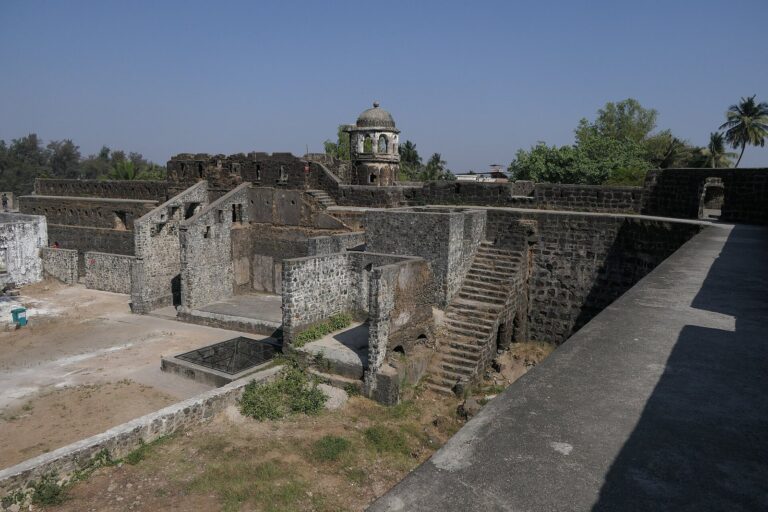
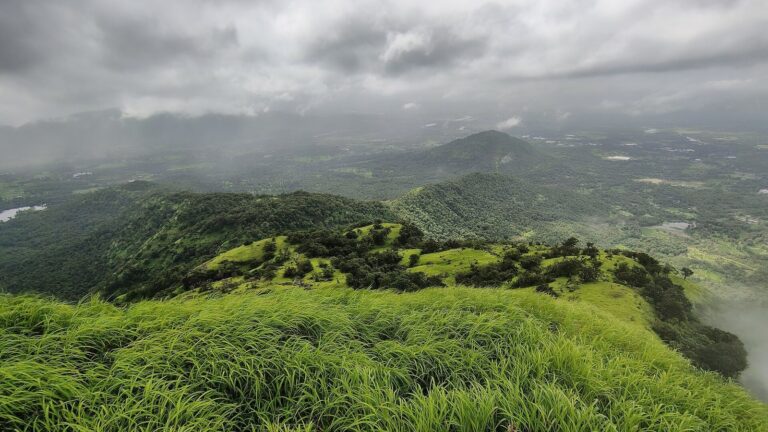
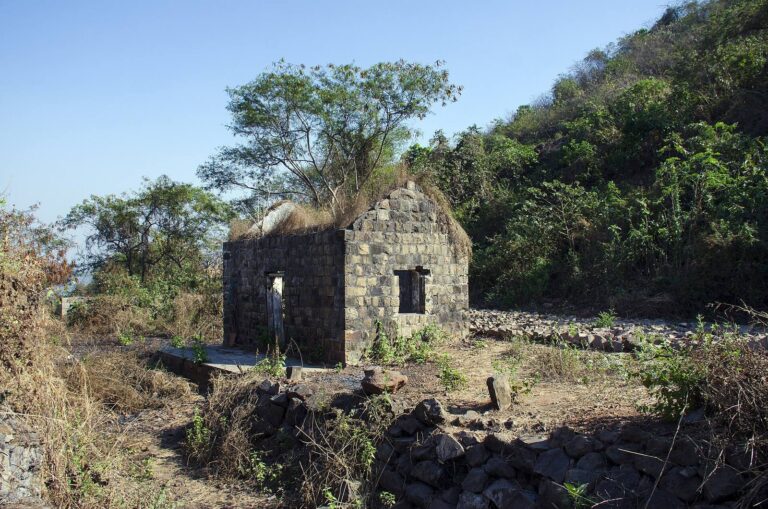
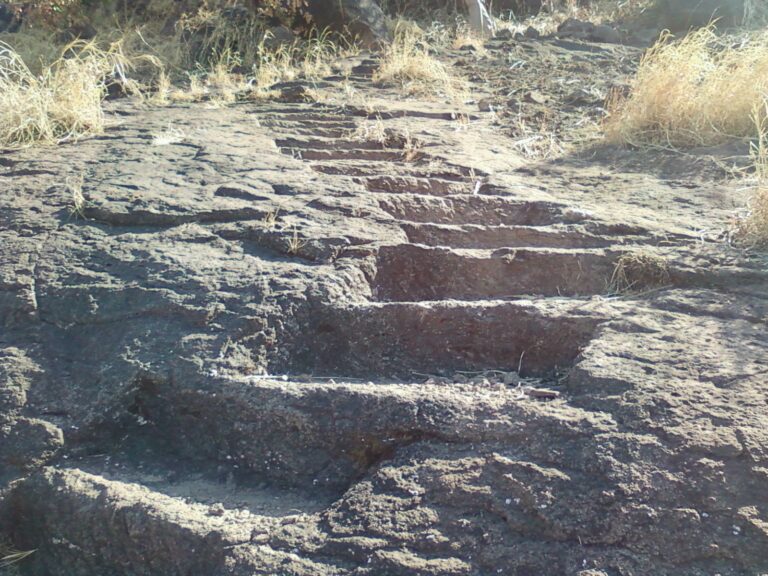
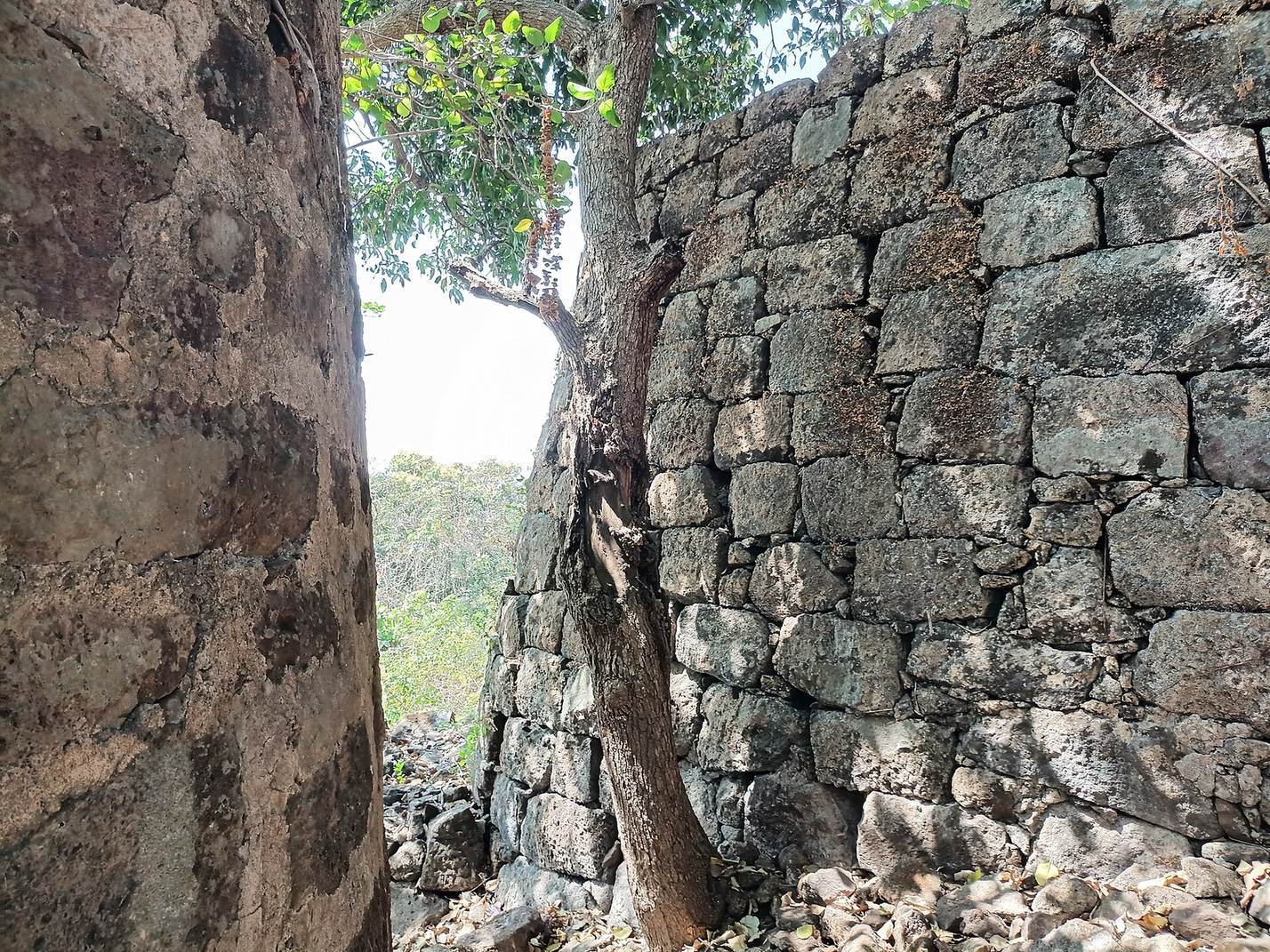
Bhavangad Fort lies on the Konkan coast, 3 km from Kelve village, at a listed height of 165 feet. Its surviving remains include outer defenses and a fortified inner area, or citadel. Black basalt was used in construction; in many places, walls, steps, parapets, and bastions were built without limestone. The fort is in a very dilapidated state.
Fortifications and entrances
Walls and bastions
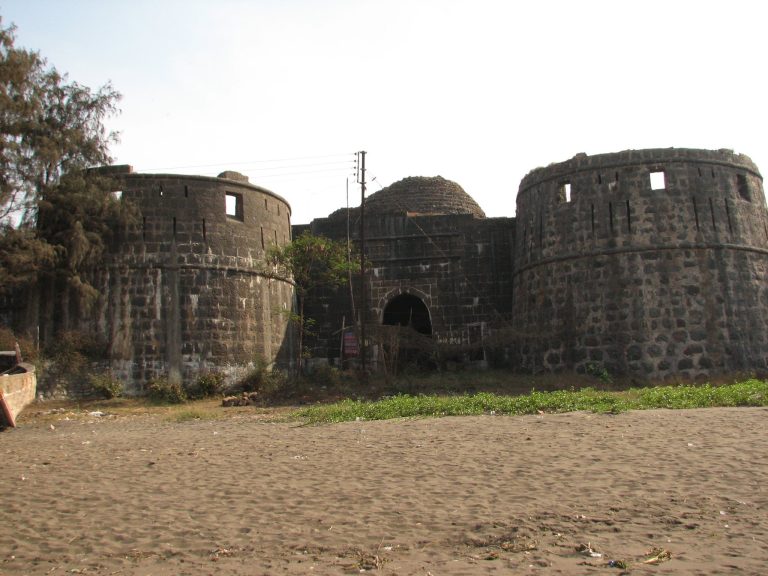
Sections of the fort walls and bastions survive as part of its outer defenses. Their construction reflects the use of black basalt, with many parts built without limestone.
Citadel gateways
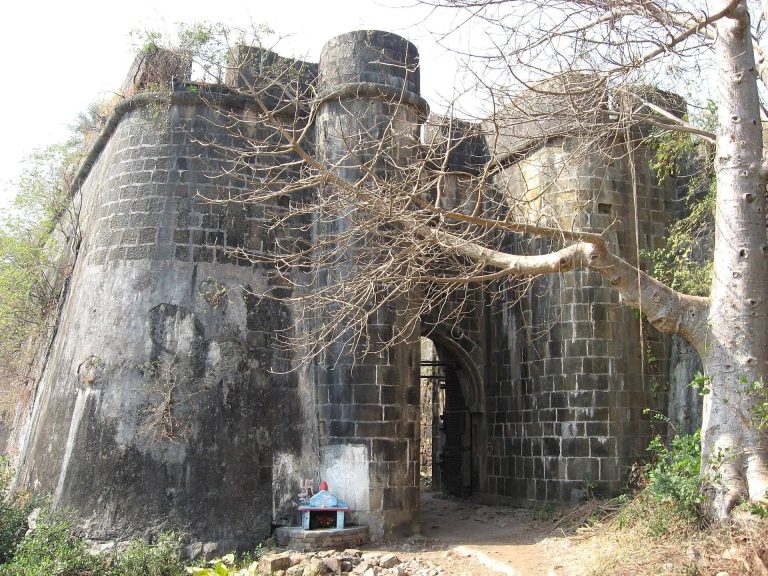
The main entrance to the citadel faces west and follows a Gomukhi plan, a defensive gateway layout named for its resemblance to a cow’s mouth. Its arch has collapsed, though the surrounding bastions and fortifications remain intact. Guard chambers lie inside the entrance. A second ruined gateway leads into the citadel, and lime mortar was used at the citadel entrance.
Citadel interior
Rock-cut water tank
A square tank carved into the rock lies inside the citadel and holds a substantial amount of water. A cement platform built by villagers stands beside it.
Bhavangadeshwar temple
The Bhavangadeshwar temple stands at the fort’s highest point.