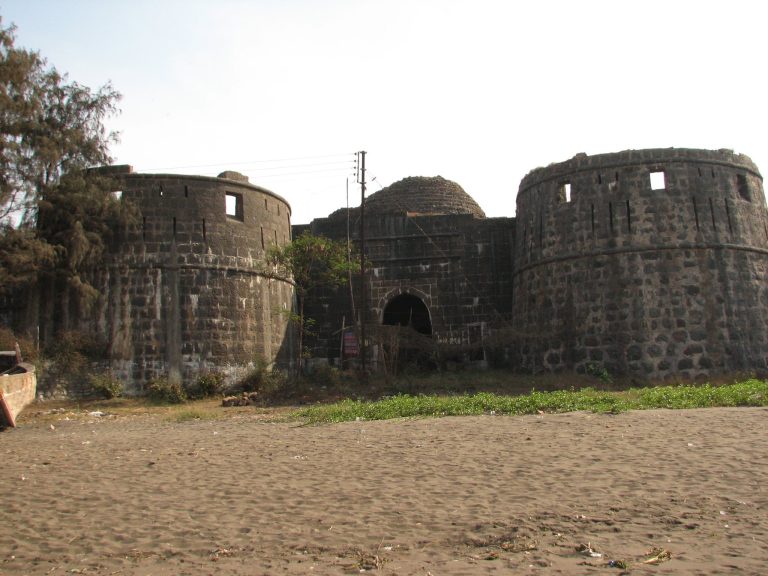
Fort Vasai: A Portuguese Coastal Fortress in India
Site at a Glance
- Rating
- 4.3
- Popularity
- High
- Country
- India
- Primary era
- Early Modern
- Eras represented
- Early Modern
- Civilizations
- Portuguese
- Site type
- Military
- Remains
- Fortified Town
On this page16 sections
History
Fort Vasai is a Portuguese coastal fort in India, at the former settlement of Bassein near Vasai, whose major fortification began in 1536 in accordance with Renaissance European principles of military design. The fortress enclosed an entire town and became the headquarters of Portugal’s northern territories in India, known as the Northern Court, or Corte da Norte. For more than 150 years, it served as an administrative, military, commercial, and religious center.
Before Portuguese rule
The Vasai area was under Chalukya rule in the sixth and seventh centuries. It later came under the Silhara dynasty of Konkan and then the Yadava dynasty. Under the Yadavas, Vasai served as a district headquarters from 1184 to 1318. The territory subsequently passed to the Gujarat Sultanate.
In 1514, the Portuguese writer and official Duarte Barbosa described Vasai as a prosperous port belonging to the ruler of Gujarat. Portuguese forces attacked and burned parts of the settlement during the early 1530s, although they suffered reverses before reoccupying it.
Portuguese foundation and expansion
On 23 December 1534, Sultan Bahadur Shah of Gujarat ceded Vasai, its territories, islands, and surrounding seas to Portugal through the Treaty of Vasai. The agreement placed Vasai, Salsette, Bombay, Thana, Bandra, Mahim, Worli, Mazagaon, and other dependencies under Portuguese control.
A Portuguese factory and the Church of Nossa Senhora da Vida were established at Vasai in 1535. After a Gujarati attack, Governor Nuno da Cunha ordered a major fortification in May 1536. Garcia de Sá became the first captain and governor of Vasai, and António Galvão laid the first cornerstone. The fort was formally dedicated as the Fort of Saint Sebastian.
The design has been attributed to Giovanni Battista Cairati, a Milanese military architect who served the Portuguese in Asia. The attribution connects the fort’s plan with Renaissance bastioned fortification, in which projecting defensive structures allowed fire to cover the adjoining walls.
Vasai developed into the center of Portuguese power north of Goa. Catholic religious orders established a network of institutions there. Franciscans were present by 1534, while Jesuits took over a Franciscan college in 1548. Dominicans and Augustinians later followed. The college trained indigenous clergy and missionaries, and Vasai became a base for missionary work between Chaul and Daman.
Growth and disruption in the seventeenth century
The fortified city expanded during the sixteenth century. Its walls were built between 1552 and 1582, while new churches included São Gonçalo, founded by the Dominicans in 1564; Nossa Senhora da Graça, founded by the Jesuits in 1581; and Nossa Senhora da Anunciada, founded by the Augustinians in 1596. A mint was established at Vasai in 1611.
Vasai prospered as the administrative center of the northern Portuguese province. In 1634, its population was recorded as approximately 400 Portuguese families, 200 Indian Christian families, and 1,800 enslaved Indians and Africans. By 1674, the city contained two colleges, four convents, and six churches.
The settlement suffered a plague and a destructive cyclone on 15 May 1618. The storm damaged boats and houses, uprooted coconut trees, drove brackish water inland, and severely damaged churches, convents, a seminary, and a Jesuit chapel. A later failure of rain brought famine-like conditions.
In 1674, 600 Arab pirates from Muscat landed at Vasai and plundered churches outside the fort. Maratha pressure increased during the late seventeenth and early eighteenth centuries. The transfer of Bombay to the British in 1665 also reduced Vasai’s strategic and economic importance.
Maratha conquest and British control
Maratha forces under Chimaji Appa, the brother of Peshwa Baji Rao I, besieged Vasai in 1739 and defeated the Portuguese. The remaining defenders surrendered on 16 May, and the Portuguese administration and army left on 23 May. The conquest became an important source of Maratha political prestige.
British forces captured the fort in 1774 during the First Anglo-Maratha War. The Marathas recovered it under the Treaty of Salbai in 1783, but the Treaty of Vasai signed on 31 December 1802 placed the remaining Maratha possession under the British East India Company. British forces recaptured the fort in 1818.
Later history and religious memory
The fort was later abandoned and eventually passed to the Republic of India. It is a Monument of National Importance protected by the Archaeological Survey of India, the government institution responsible for the protection and conservation of nationally important monuments. Restoration work has taken place, although conservation activists have criticized its quality.
The former Portuguese Christian population of the region became associated with the Bombay East Indians, who also used the name Norteiros, meaning “northerners,” in reference to Vasai’s former position as the Northern Court. An annual pilgrimage and religious ceremony is held at the ruins of the former Jesuit church in honor of Gonçalo Garcia, a former student of the Vasai college who became a Franciscan and was martyred at Nagasaki in 1597.
Remains
Fort Vasai is a coastal fort and land battery at the estuary of the Ulhas River, along Vasai Creek and Bhayandar Creek near the Arabian Sea. Its stone-and-lime defensive walls extend broadly from west to east and enclose the former town, whose urban layout developed around a central citadel. Basalt and lime mortar are also associated with the fort’s construction.
Walls, bastions, and entrances
Defensive walls and bastions
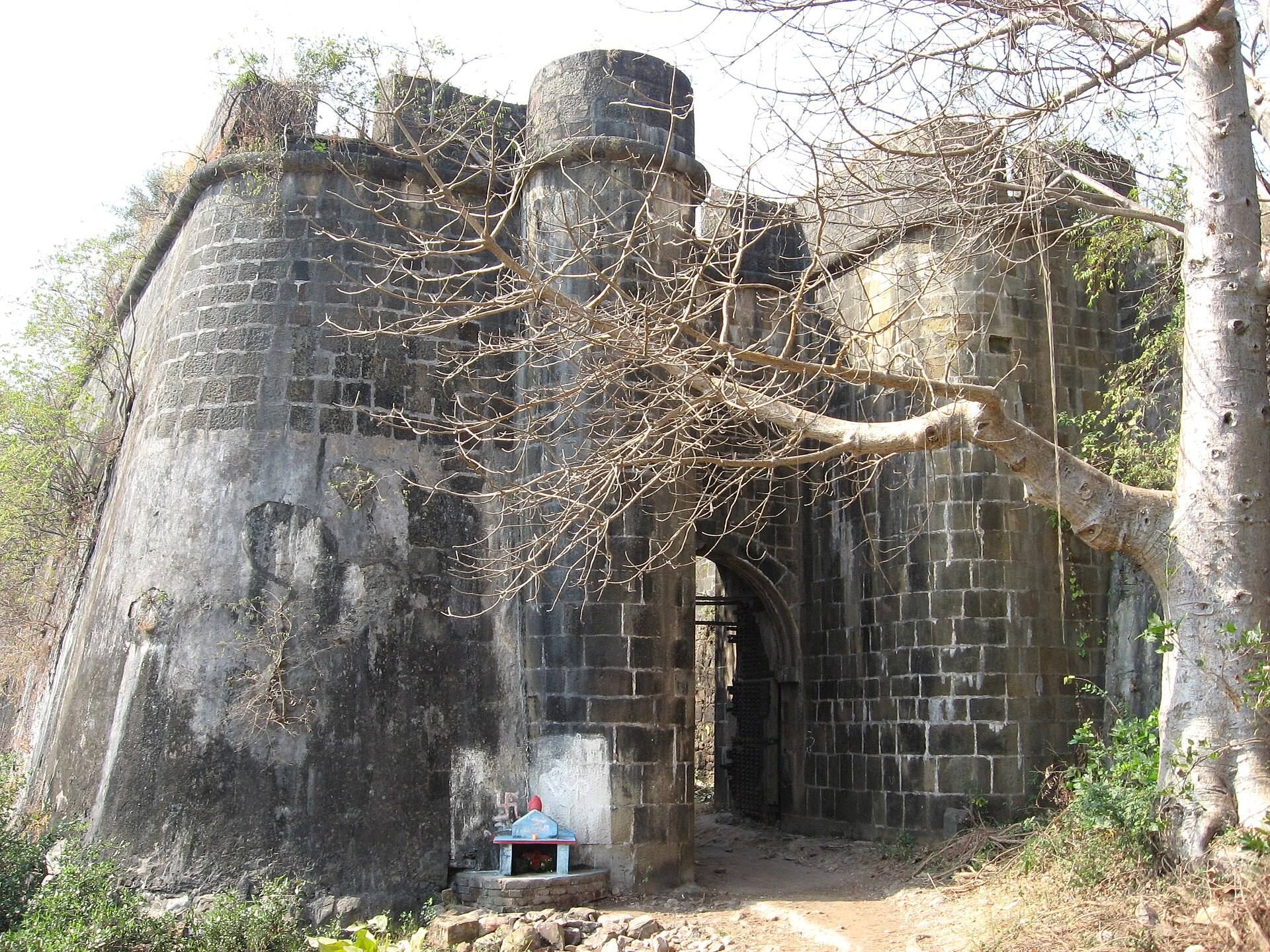
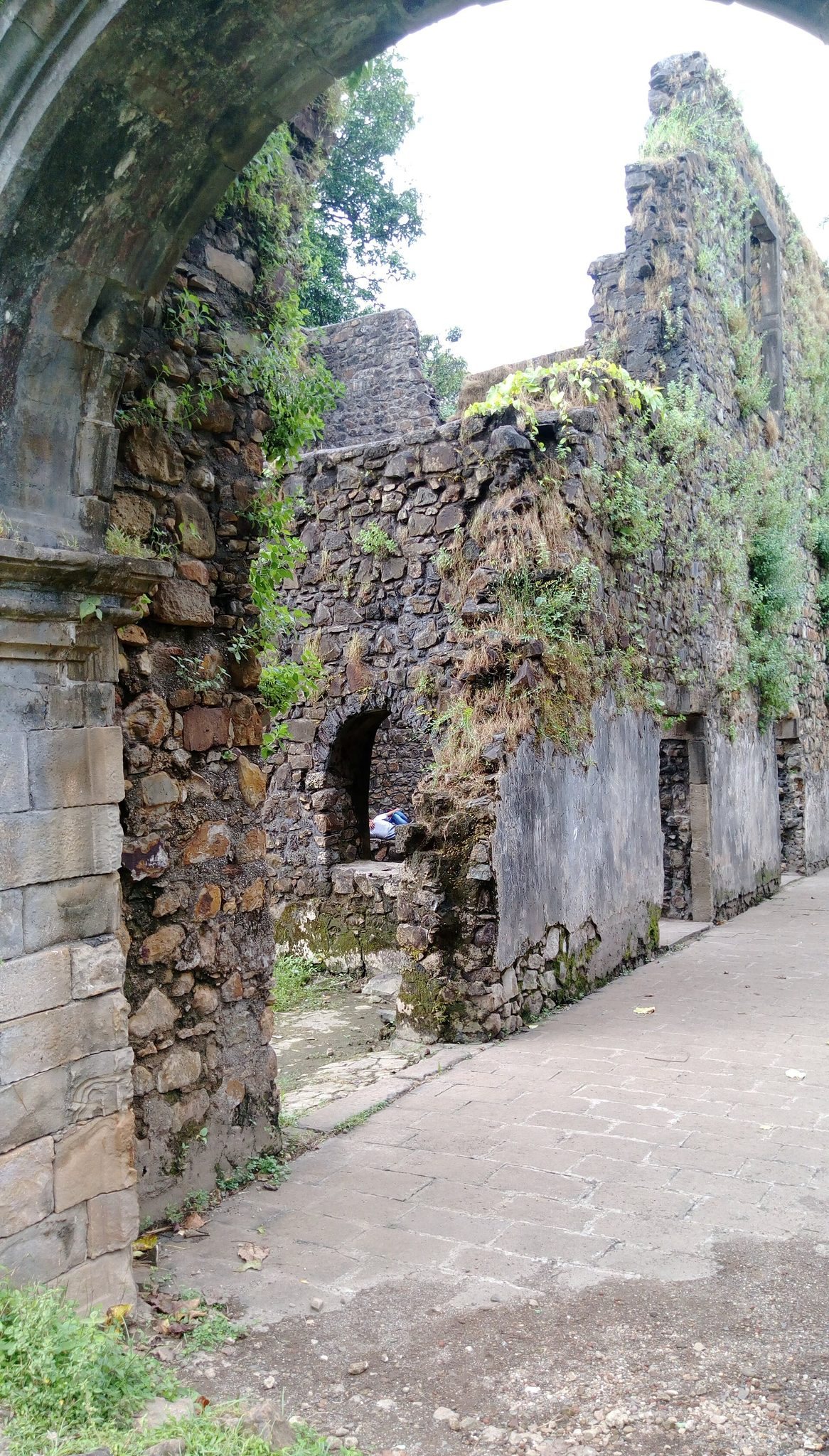
The fortifications include ten bastions named Cavalheiro, Nossa Senhora dos Remédios, Santiago, São Gonçalo, Madre de Deus, São João, Elefante, São Pedro, São Paulo, and São Sebastião. São Sebastião is also identified as Porta Pia, meaning the Pious Door of Bassein. The ramparts remain substantially preserved, although vegetation covers much of their surface. Several watchtowers still stand, with stairways leading to their upper levels, and the elevated defenses overlook the surrounding creeks.
Seaward and landward gateways
The two principal medieval gateways were Porta do Mar on the seaside and Porta da Terra. Porta do Mar retained massive teak doors reinforced with iron spikes. During the Maratha conquest, forces entered through the São Sebastião bastion.
Artillery and harbor defenses
The fort was equipped with ninety artillery pieces, including twenty-seven bronze guns, and seventy mortars, seven of them bronze. Its harbor defenses included twenty-one gunboats, each carrying approximately sixteen to eighteen guns.
Urban ruins and religious buildings
Town buildings and inscriptions
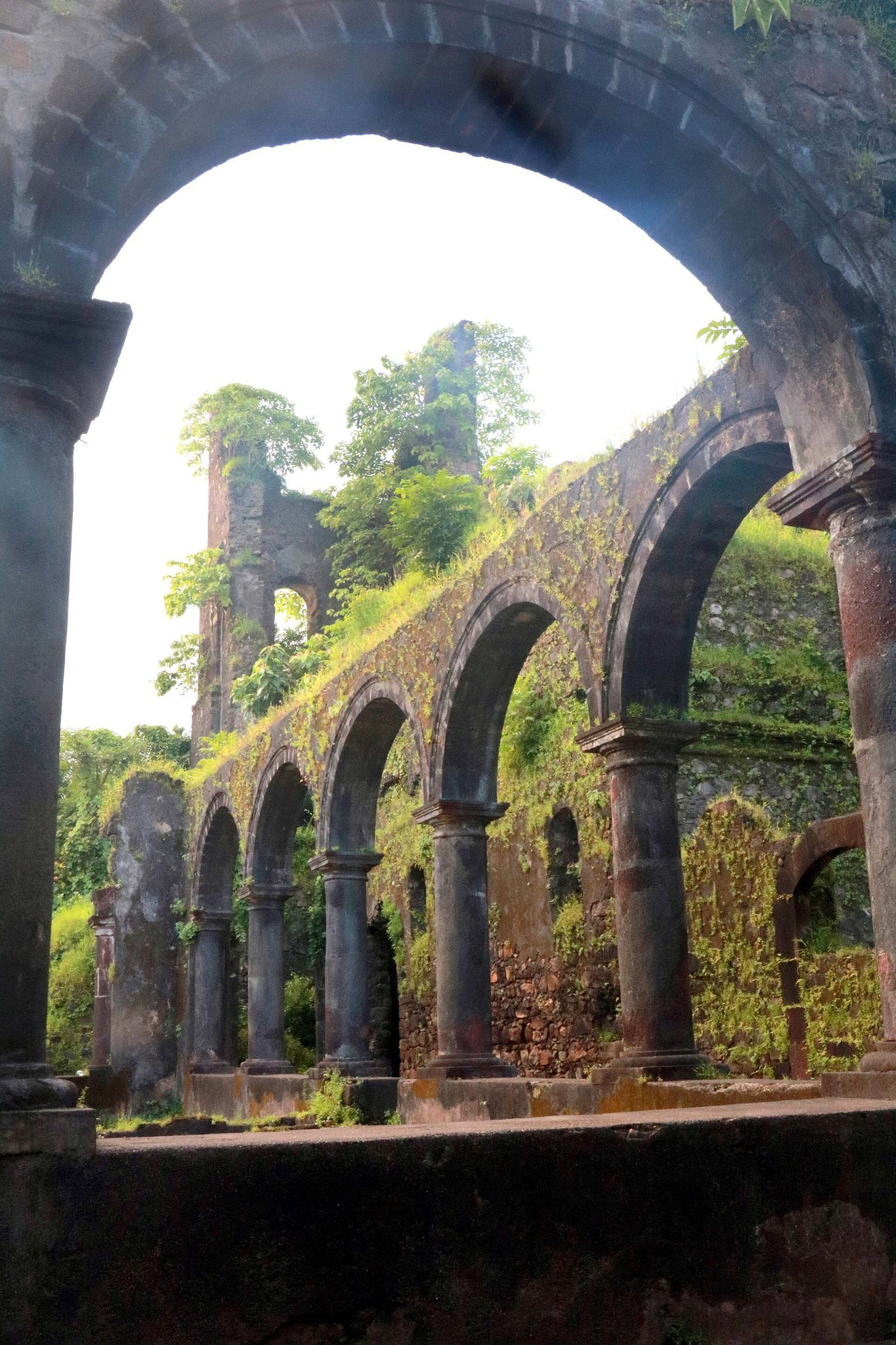
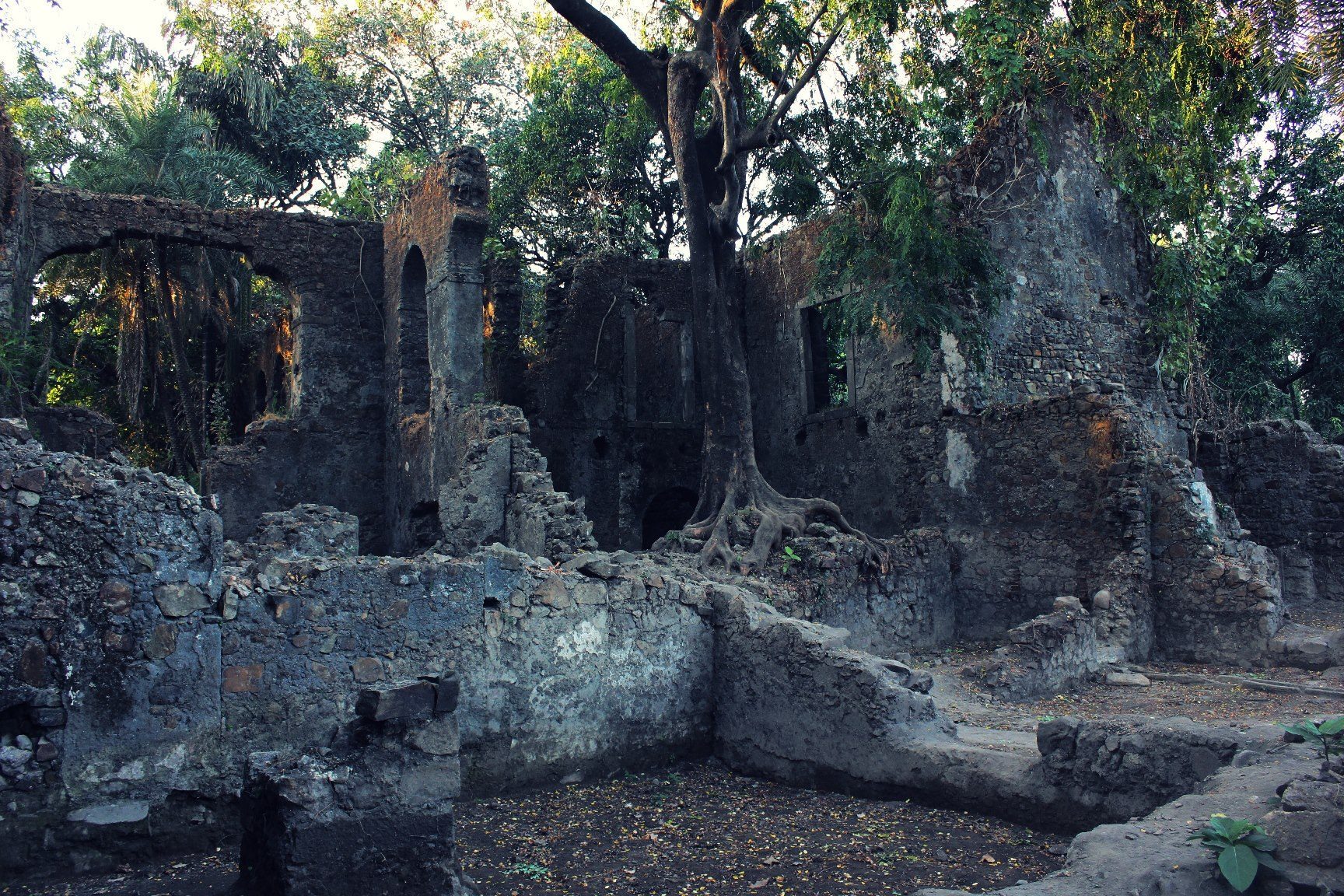
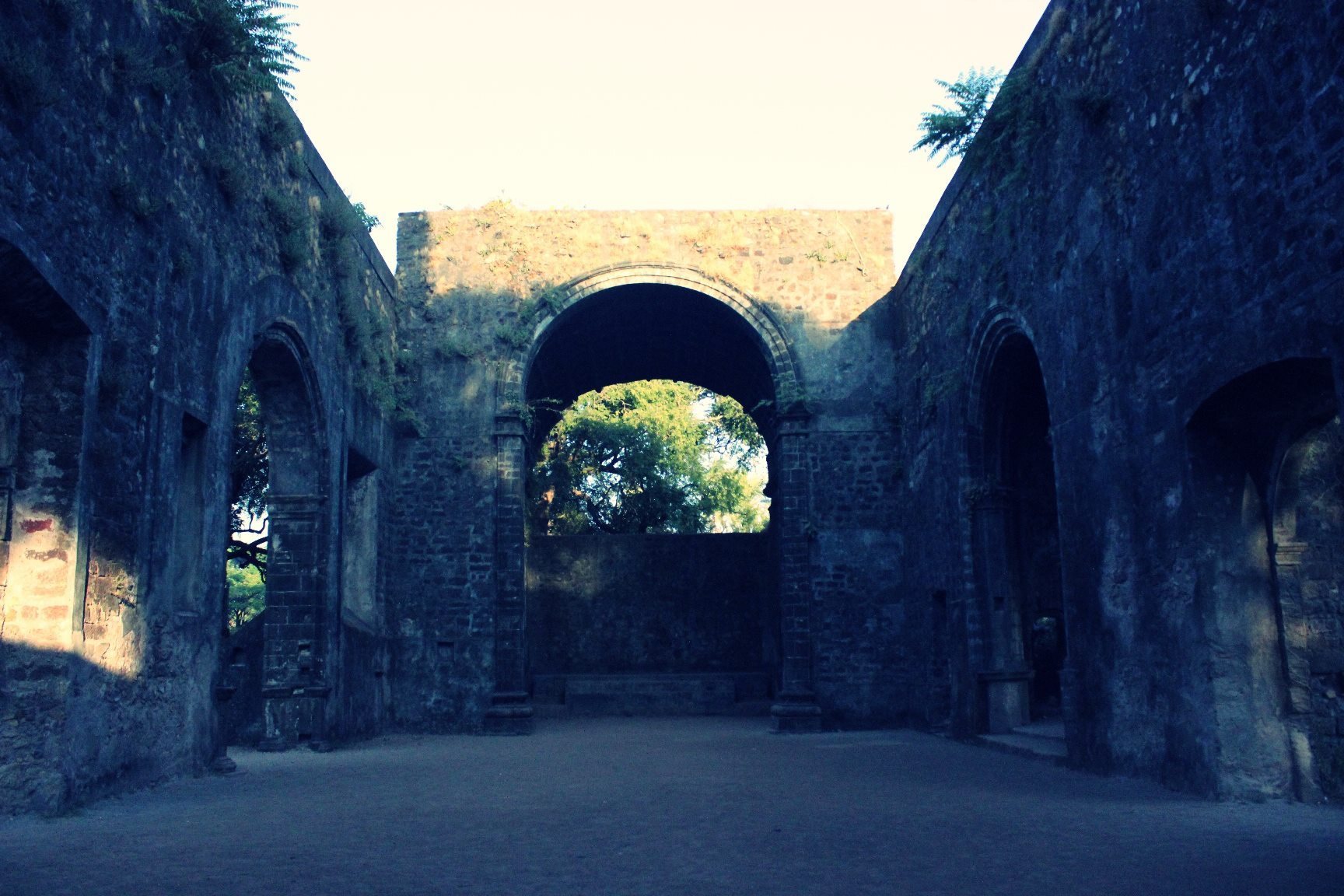
Most buildings within the fort are ruined, but surviving foundations and walls reveal former floor plans and the general arrangement of the town. Some façades remain standing, along with many arched structures. Their carved-stone decoration ranges from heavily weathered surfaces to areas that retain sharp chisel marks.
An inscription on the ramparts refers to construction of the fort by Garcia de Sá on the order of Governor-General Nuno da Cunha. A second inscription begins with words meaning “these are the houses,” although its complete meaning and purpose remain uncertain.
Churches and chapels
Three churches or chapels inside the fort remain recognizable. Their façades and structures, including lateral cloister arrangements, reflect seventeenth-century Portuguese church architecture. The southernmost has a well-preserved barrel-vaulted ceiling, a continuous curved ceiling formed from a semicircular vault. One of the churches contains elaborate eighteenth-century tombstones.
Jesuit college and church
The former Jesuit college and its associated church form part of the religious remains. The church ruins are used for the annual religious observance dedicated to Gonçalo Garcia, linking the surviving structure with the religious institutions that once made Vasai a base for education and missionary activity.
Landscape and later commemorative features
Vegetation has spread across much of the fort, where butterflies, birds, plants, and reptiles are observed. A baobab tree stands near the seaward entrance. North of and outside the former fort walls, a monument carries an equestrian statue of Chimaji Appa, the Maratha commander who directed the successful conquest of Vasai in 1739.