Benevár: A Historic Fortress in Gyöngyös, Hungary
Visitor Information
Google Rating: 4.6
Popularity: Low
Country: Hungary
Civilization: Medieval European
Site type: Military
Remains: Castle
History
Benevár is situated in the municipality of Gyöngyös, Hungary. The site traces its origins back to the early days of the Hungarian state, emerging as a large fortress associated with the descendants of the chieftain Edömér during the Hungarian conquest. The initial fortress was likely pagan in character and belonged to Bene vitéz, who was Edömér’s grandson and received his land grant within the Mátra forests at the southern end of the Benevár ridge.
The fortress suffered destruction during the devastating Mongol invasion of Hungary in the 13th century, known as the Tatárjárás. Following this, between 1243 and 1250, the castle was reconstructed by Csobánka, a comes (count) of the Aba clan, who established Benevár as the main seat of his family. By the early 14th century, the castle’s owners conceded to the influential regional power Csák Máté and subsequently aligned with him through military support. However, after King Charles I of Anjou secured control over Hungary, the fortress changed hands and was taken from the Csák allegiance to be granted to the nobleman Szécsényi Tamás.
Benevár held a notable position as a noble estate, with jurisdiction over several dependent villages and ownership of the nearby market town of Gyöngyös, enhancing its regional importance. In the early 15th century, the fortress’ fortunes declined during the tenure of Salgói Miklós, a nobleman accused by King Sigismund of counterfeiting coins and engaging in adultery. These accusations led to Miklós’s exile and the royal confiscation of his possessions, including Benevár.
By 1424, the castle was directly under King Sigismund’s control. Subsequently, it was granted to Queen Barbara and later transferred to the Rozgonyi family. The fortress’ final days came amid the turbulence caused by the Hussite movements; it is believed that forces linked to the Hussites, who found refuge in the nearby Pata castle, were responsible for the destruction of Benevár. By the end of the 15th century, in 1497, records classified the site as an abandoned castle under the ownership of the Kanizsai family. Archaeological interest in the site was renewed during the 1980s through excavations and partial restoration efforts, confirming aspects of its historical development.
Remains
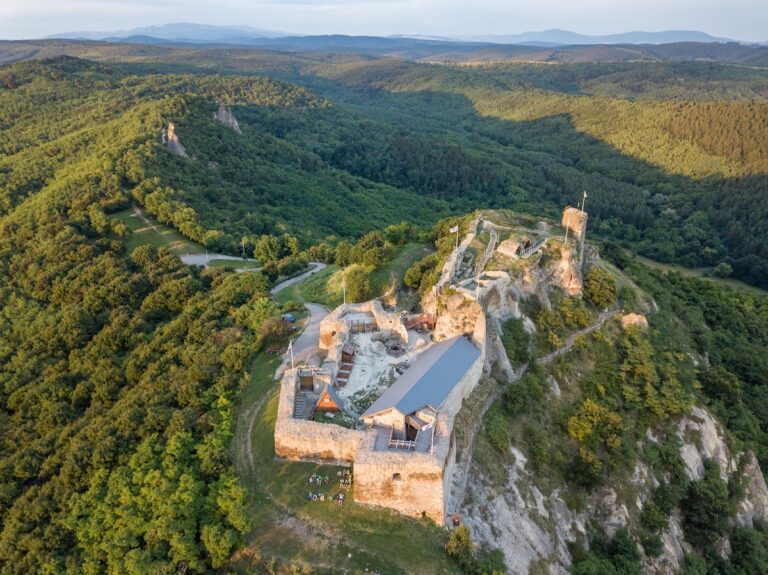
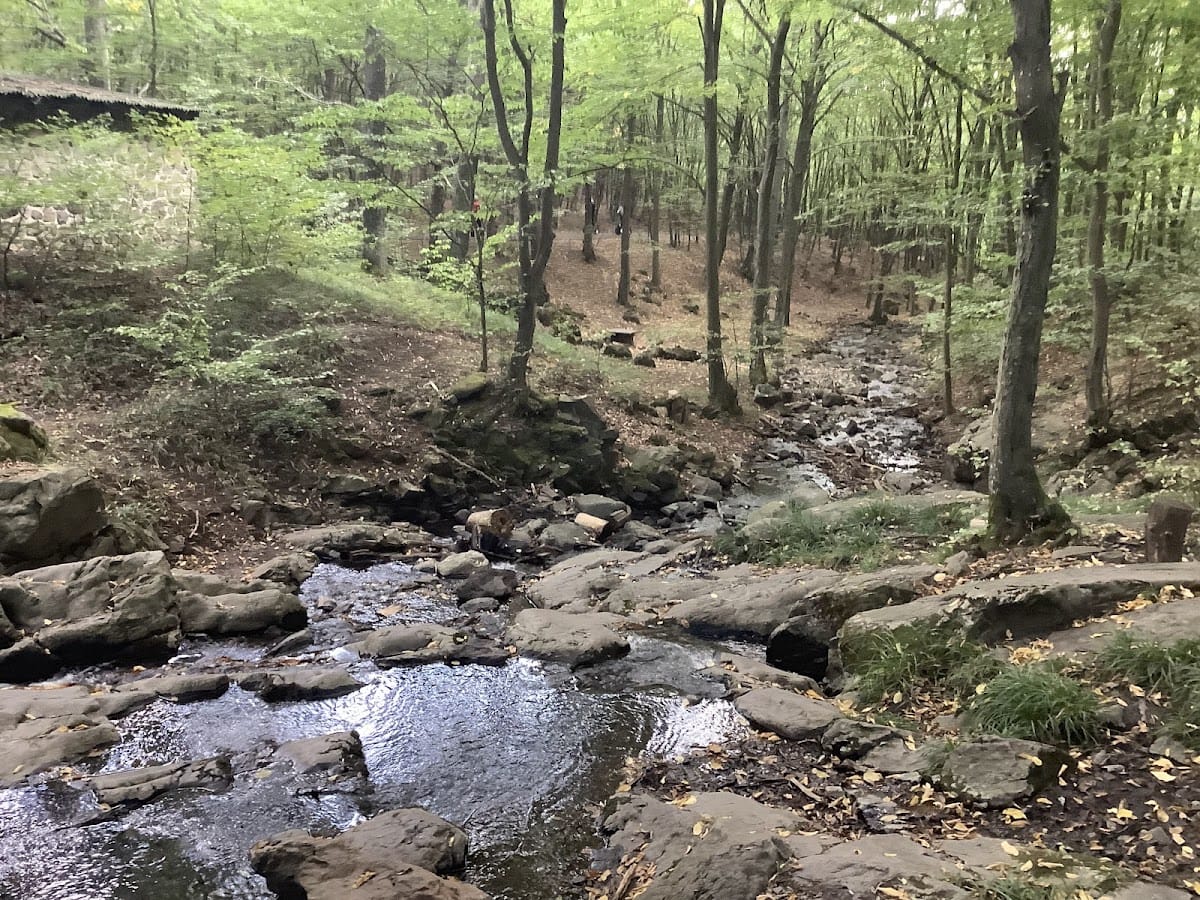
The ruins of Benevár reveal a fortified complex expertly designed for defense in its mountainous setting. The castle’s layout was elongated and pentagonal, constructed primarily of stone and fortified with a double dry moat encircling the outer perimeter to impede attackers. Positioned at approximately 470 meters above sea level, the fortress occupied a ridge between the Somor and Csatorna streams, providing natural defensive boundaries on either side.
Within the enclosure, several key structures have been identified through archaeological excavation. A large, sturdy old tower formed a central feature of the fortress, likely serving as both a lookout point and a last refuge during sieges. Adjacent to this tower stood a palace wing, intended as residential quarters for the castle’s noble inhabitants. Surrounding these were smaller ancillary buildings used for economic purposes, supporting the daily operations of the estate.
Guarding the entrance to the castle was a second tower, strategically placed to oversee access and boost the defensive capacity at this vulnerable point. While the medieval documentation referencing the site is faded, its descriptions align closely with the archaeological remains uncovered, confirming the castle’s pentagonal shape and the presence of these major elements.
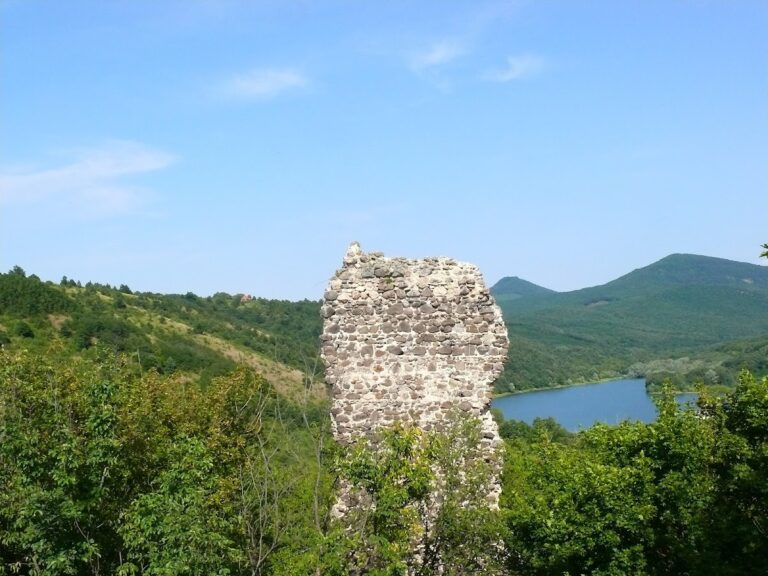
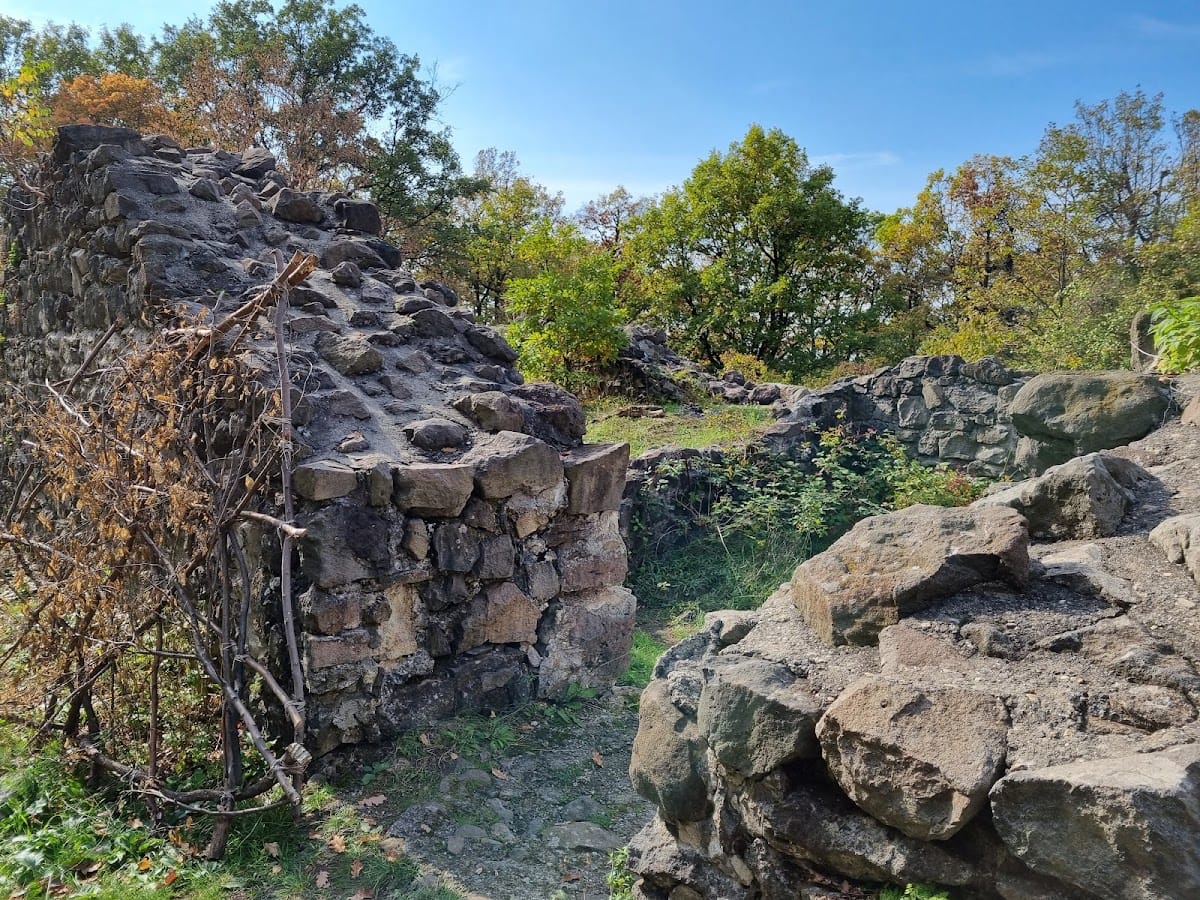
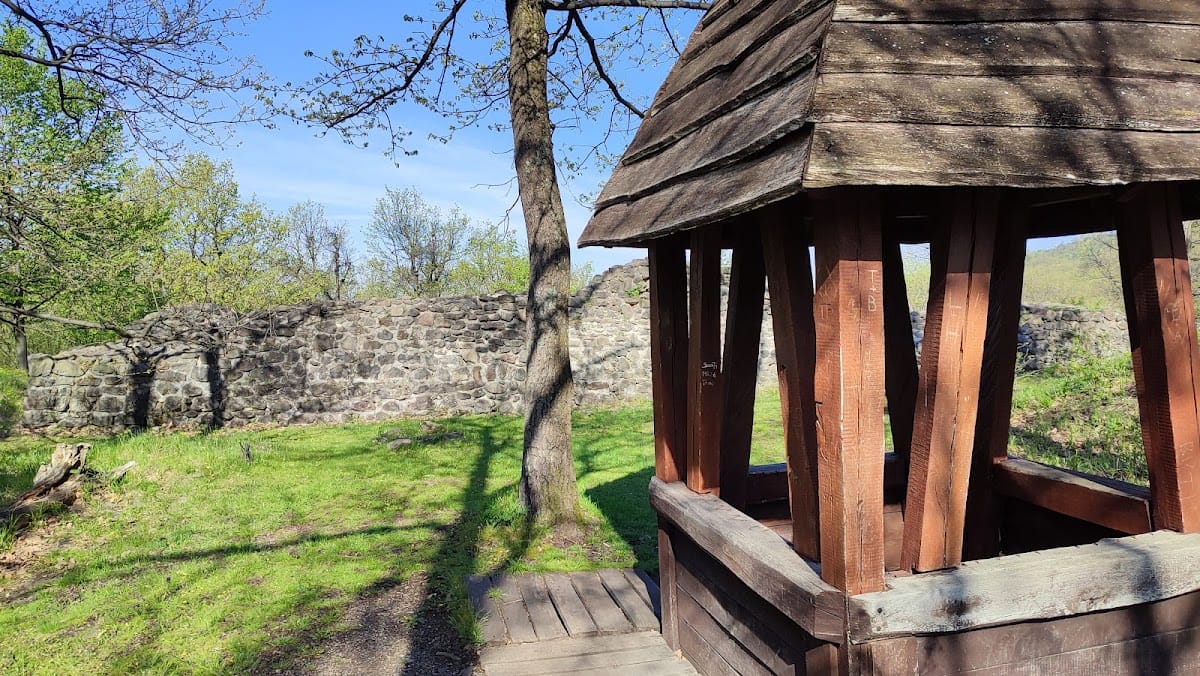
Today, the stone foundations and structural remnants remain visible on site, offering a tangible connection to Benevár’s past. Partial restoration undertaken in the 1980s has stabilized some sections of the ruins, yet much survives in fragmentary form. The site’s location near the Pata castle is significant, as historical accounts associate nearby Hussite activity with the destruction of Benevár, linking the physical remains to the broader conflicts of the era.
Nearby sites