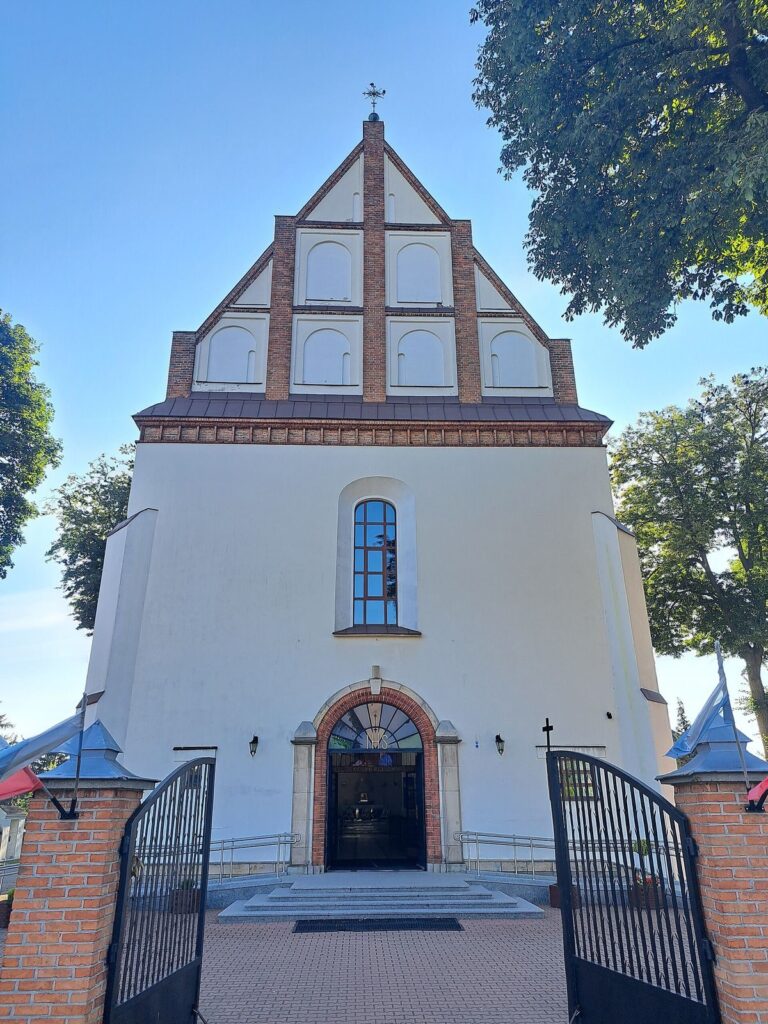
Basilica of the Assumption in Węgrów: A Catholic Parish and Collegiate Church
Site at a Glance
- Popularity
- Medium
- Country
- Poland
- Primary era
- Early Modern
- Eras represented
- Early Modern
- Civilizations
- Polish–Lithuanian Commonwealth
- Site type
- Religious
- Remains
- Basilica
On this page8 sections
History
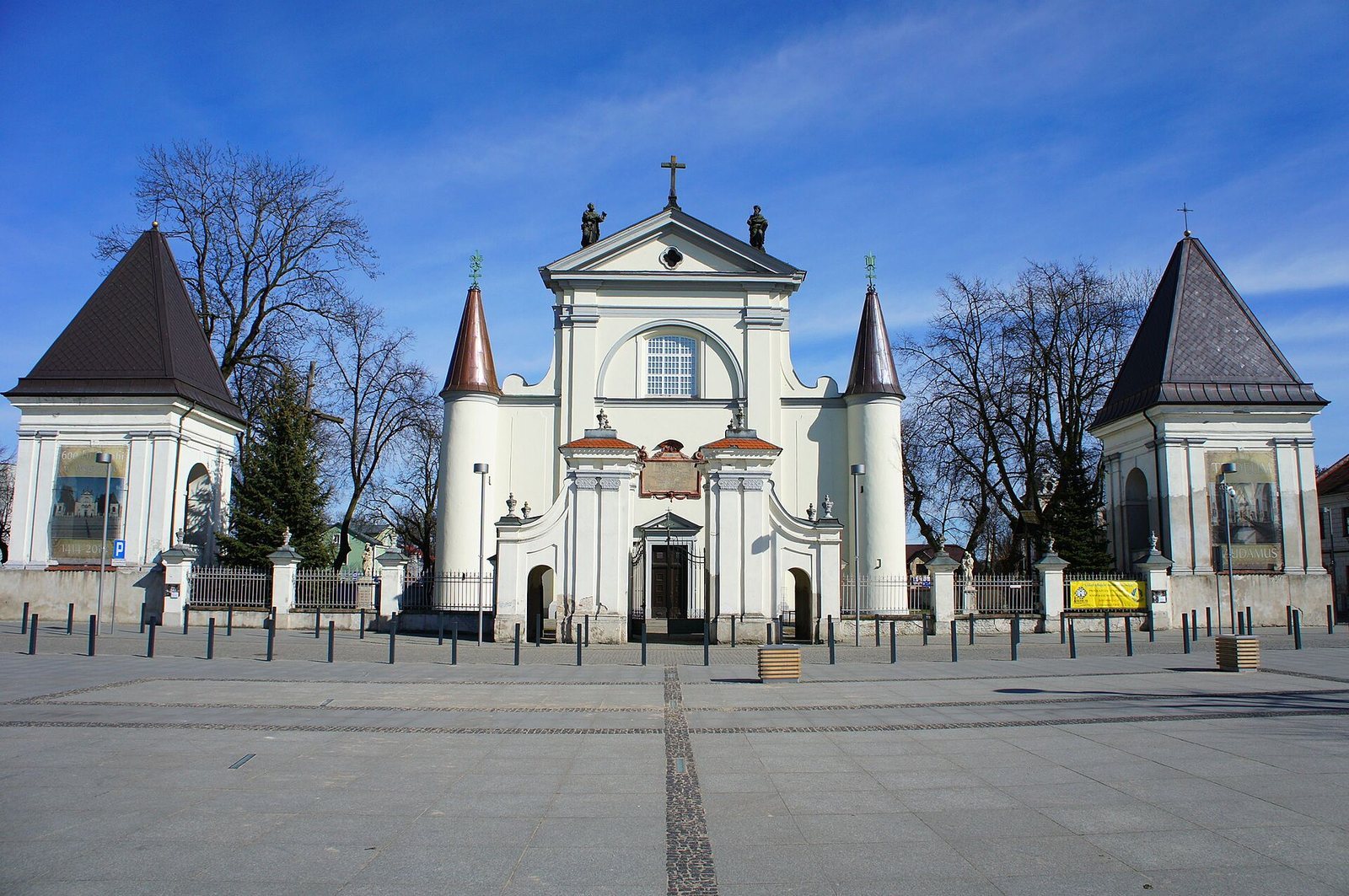
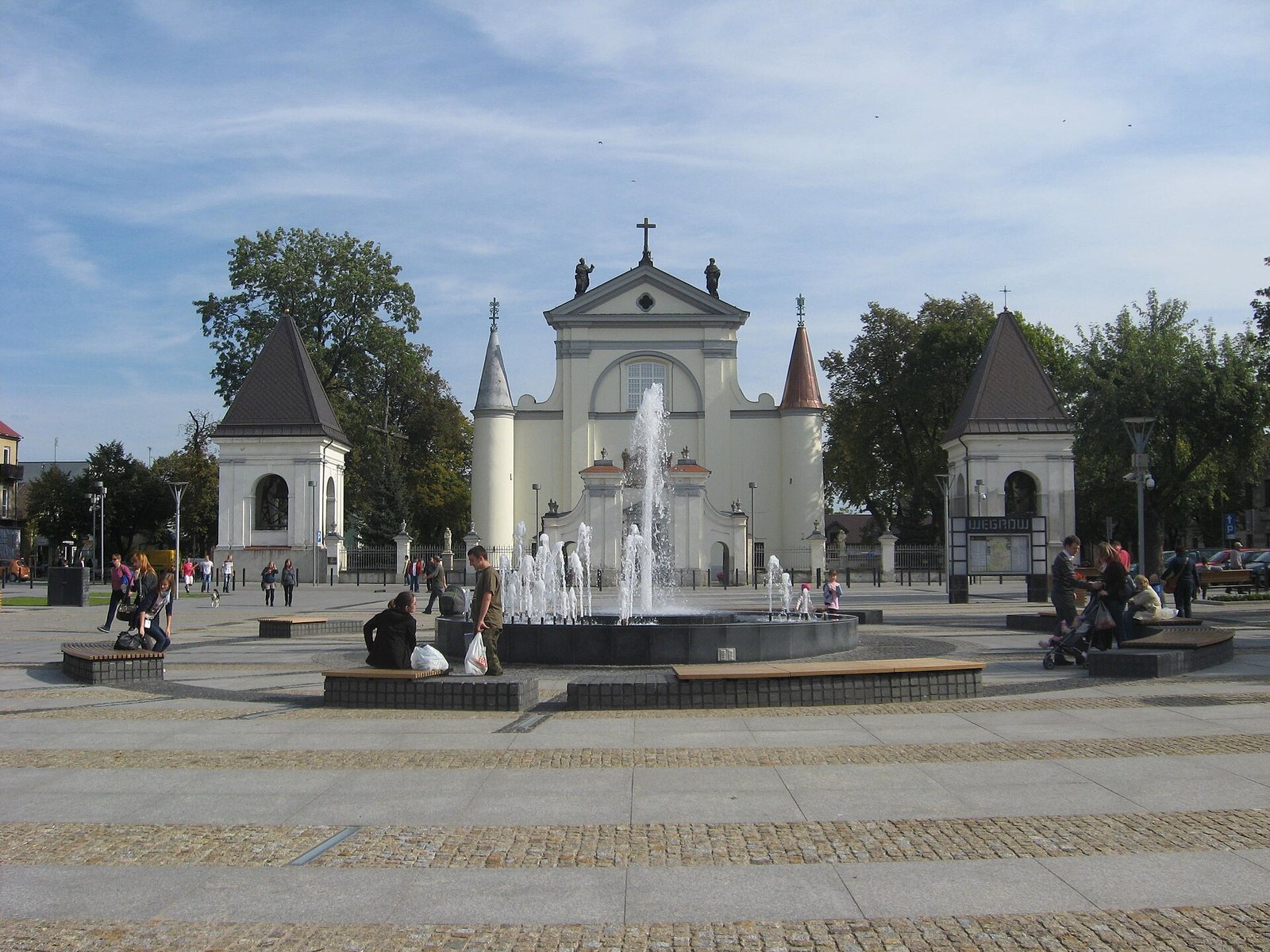
The Basilica of the Assumption in Węgrów is a Roman Catholic parish and collegiate church in Poland. Probably built in the Gothic style during the first half of the sixteenth century with Kiszka family support, it later became a Baroque church after a fire in 1703. Its history includes several changes of religious control before it became a Marian shrine and minor basilica.
Parish foundations and Protestant control
Piotr Pilik, of the Rogala heraldic family, founded Węgrów’s first parish church in 1414. Another parish church, dedicated to Saint Barbara, was established in 1509. The present church was probably built in the first half of the sixteenth century.
In 1558, Anna Radziwiłłówna Kiszczyna transferred the church from Catholic to Calvinist control, removed its parish priest, and assigned it to a congregation she had founded. In 1565, Jan Kiszka and Piotr of Goniądz, the town’s pastor, brought it under the Polish Brethren, a Protestant movement that rejected the doctrine of the Trinity. The church returned to Reformed Evangelicals in 1592 and to Catholics in 1630.
Fire, rebuilding, and church administration
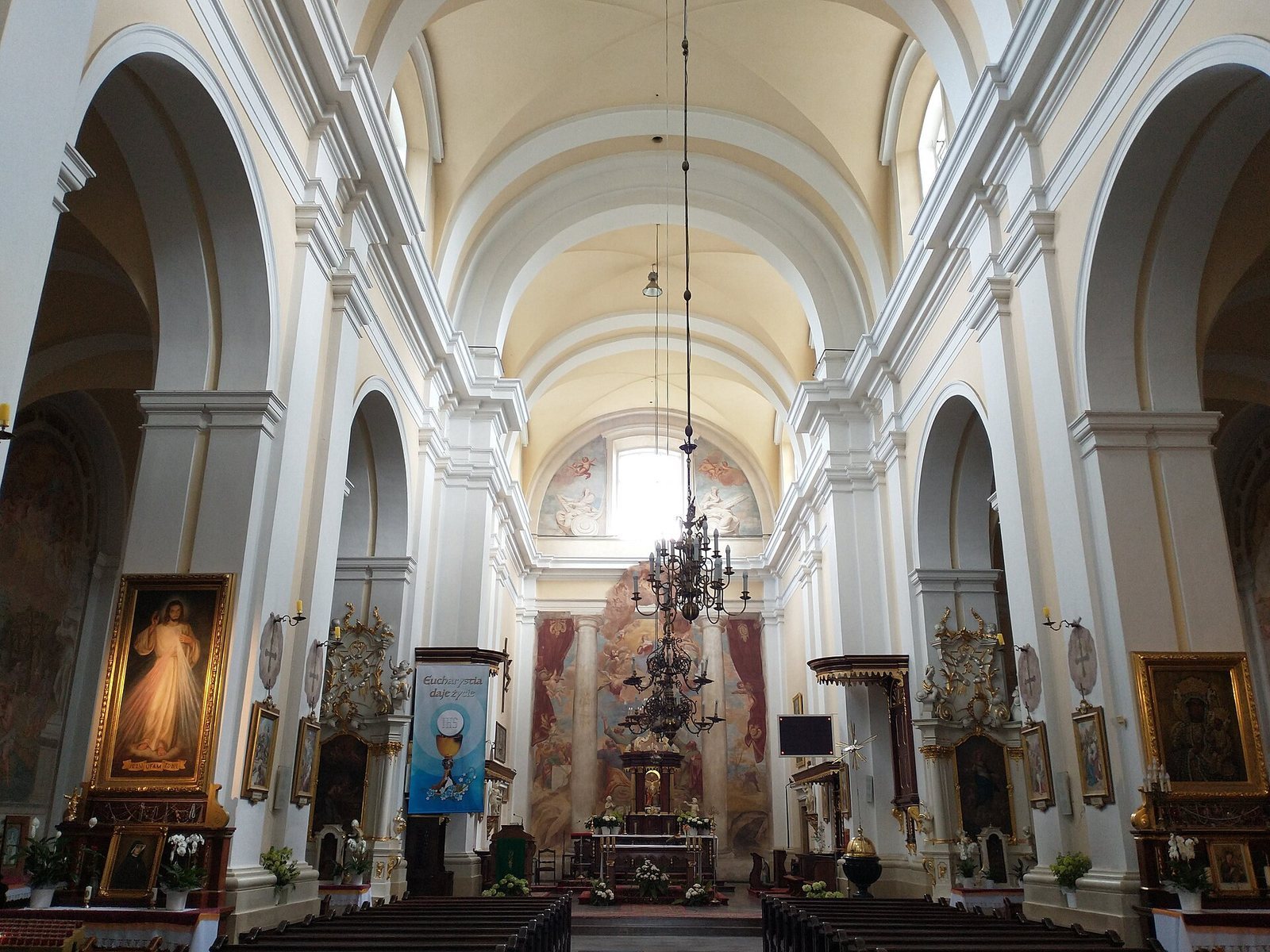
The church burned in 1703 during the Great Northern War, a conflict among northern and eastern European powers that lasted from 1700 to 1721. It was rebuilt between 1703 and 1706 in the Baroque style, following a design by Tylman van Gameren. Architects Carlo Ceroni and Jan Reisner carried out the work. The Bartolomites, a Catholic clerical congregation, took charge of the parish in 1707. Aleksander Benedykt Wyhowski, Bishop of Lutsk, consecrated the rebuilt church in 1711.
When the Bartolomite college in Węgrów was dissolved in 1839, its priests left and diocesan clergy assumed responsibility for the church.
War damage and later status
The church was bombed on 9 September 1939 and remained closed throughout the Second World War. Religious services resumed after the war. In 1992, Bishop Władysław Jędruszuk established a chapter there, making the church a collegiate church of the Diocese of Drohiczyn. Bishop Antoni Pacyfik Dydycz declared it a Marian shrine in 1996, and Pope John Paul II granted it the title of minor basilica in 1997. It is dedicated to the Assumption of Mary, the Catholic belief that Mary was taken body and soul into heaven, and to Saints Peter, Paul, Andrew, and Catherine of Alexandria.
Remains
Plan and exterior
The brick church has a rectangular plan and three naves, with a central nave much wider than the flanking aisles. Intersecting barrel vaults, curved ceilings crossing one another, cover the interior. The façade has a triangular gable topped by a Latin cross, with statues of the apostles Peter and Paul. Two Gothic turrets beside the façade survive from the earlier fortified church.
Painted interior and organ
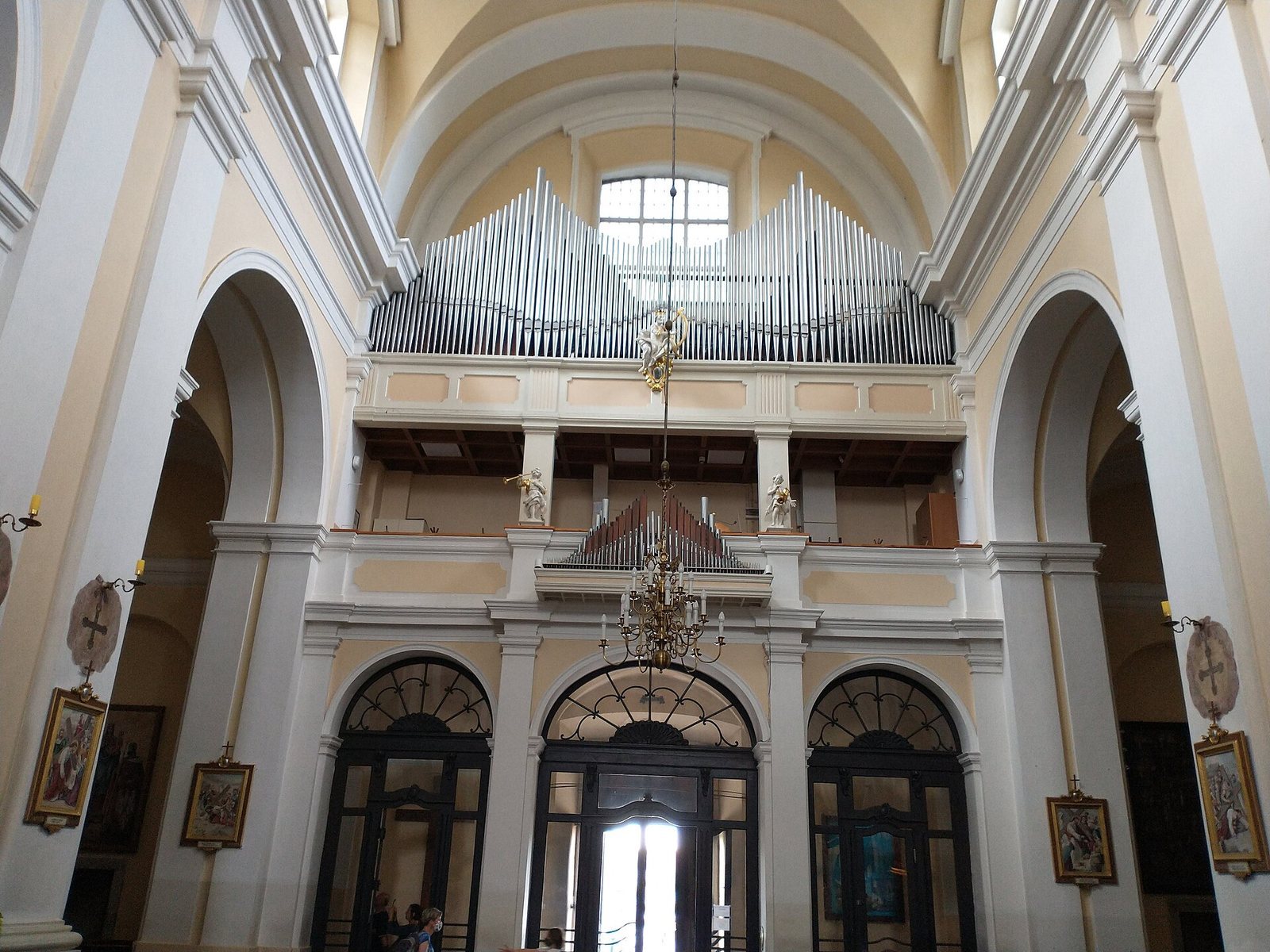
Michelangelo Palloni, a painter from Florence, created a series of Baroque frescoes in 1707–1708 in the Counter-Reformation style, associated with Catholic reform and responses to Protestantism. A prominent painting in the presbytery, the area around the altar, depicts the Assumption of Mary. The church organ has 24 stops and two manuals, or keyboards.
Cemetery and sacristy collection
A cemetery of the Polish Brethren stood beside the church in the sixteenth century. The sacristy holds eighteenth-century portraits and the Twardowski Mirror, which Polish legend regards as a magical object associated with the sorcerer Twardowski.