Bachorza Manor: A Historic Polish Country House
Site at a Glance
- Popularity
- Low
- Country
- Poland
- Primary era
- Modern
- Eras represented
- Early Modern, Modern
- Civilizations
- Polish–Lithuanian Commonwealth, Russian
- Site type
- Domestic
- Remains
- Manor House
On this page8 sections
History
Eighteenth-century estate
Bachorza manor is a historic manor house in Poland. The estate’s oldest part dates to the second half of the eighteenth century, when it belonged to Michał Kleofas Ogiński, a Polish composer. Ownership changed frequently, and the property was held by the Radziwiłł, Krasiński, Ogiński, and Kobyliński families.
Nineteenth-century rebuilding
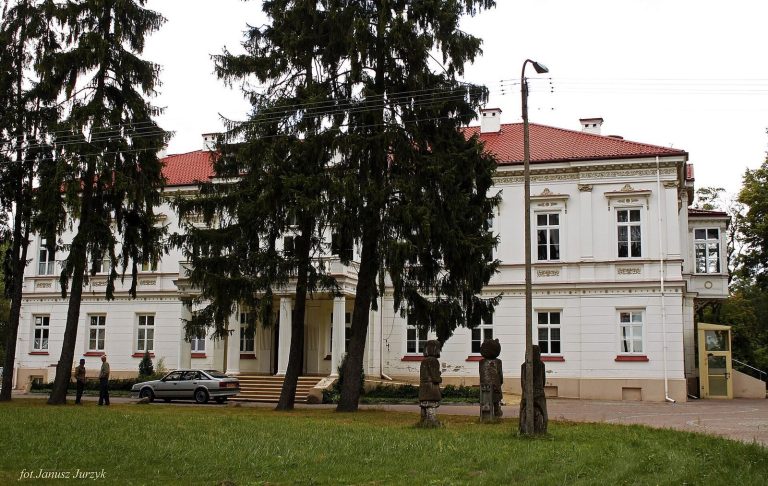
In the nineteenth century, the estate passed to the Dernałowicz family. Around 1850, they rebuilt the manor in a neoclassical style to a design by Chrystian Piotr Aigner, a leading Polish architect associated with neoclassicism. This rebuilding established the house’s present form.
Twentieth-century owners and local traditions
At the beginning of the twentieth century, the estate belonged first to Stefan Ciecierski and then to Count Antoni Odrowąż-Wysocki, who used the manor as a hunting lodge. Stefan’s son, Tadeusz Ciecierski, was born there. He later became a lieutenant colonel in the Polish cavalry and received the Virtuti Militari, a Polish military decoration for valor.
After Count Antoni died suddenly in 1935, his family sold the estate to Teofil Dołęga-Zaleski. The house had a reputation for being haunted, which may have affected its sale price; Dołęga-Zaleski said that he did not believe the stories. One local tradition links the name Bachorza to a child found on the manor steps on a winter night. The mistress of the house took the boy in, and he later became the estate’s farm manager. Neighbors were said to have mockingly connected the estate’s name with him. In Polish, bachor is a colloquial, often disparaging word for a child.
A haunting legend tells of noises in empty rooms, paintings that moved or disappeared, and objects that appeared and vanished. Natalia Dołęga-Zaleska, Teofil’s wife, was said to have suffered recurring nightmares and to have seen a procession of phantoms shortly before her death in 1942.
War and postwar changes
During the war, one of the Zaleski daughters became seriously ill and died; Natalia died afterward. In 1943, two of Teofil’s daughters, like their father members of the Polish Home Army, an underground resistance organization, were arrested and sent to Treblinka, a Nazi German extermination camp in occupied Poland. Anna was murdered there. Janina was arrested by the NKVD, the Soviet state security and police agency, and deported to Siberia. Henryk Oleksiak, known by the code name Wichura, was the husband of another daughter and commanded a Home Army unit in Podlasie. He was killed during an underground operation.
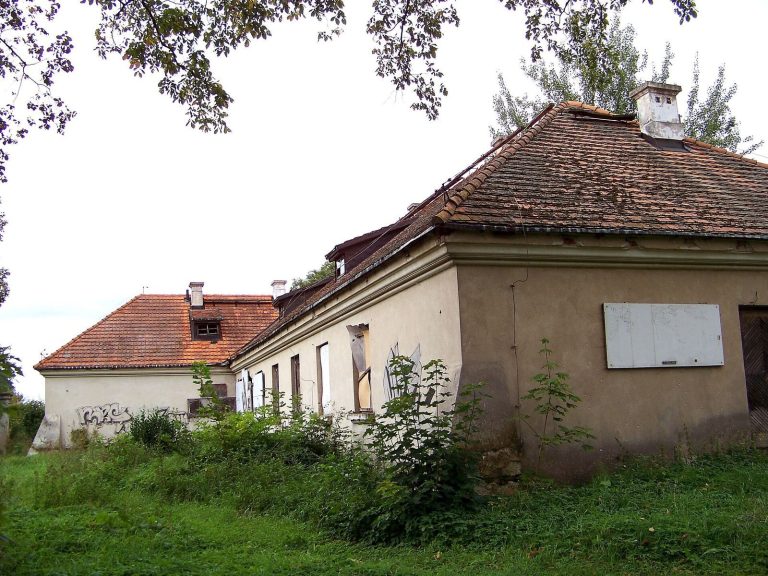
Soviet forces expelled the last owners in 1944. The property was nationalized in 1945 and taken over by a state agricultural farm, a state-run farming enterprise. Estate buildings became offices and workers’ housing, while neglect contributed to the manor’s decline. The property is now privately owned. In the 1990s, descendants of Zaleski made an unsuccessful attempt to reclaim it. The manor’s deterioration has been linked to the wider decline of Polish manorial architecture, particularly the lack of funds for restoration.
Remains
The manor house
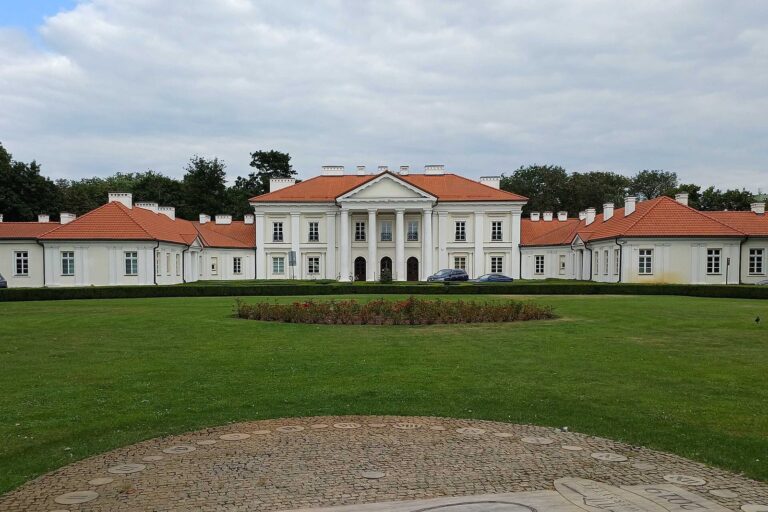
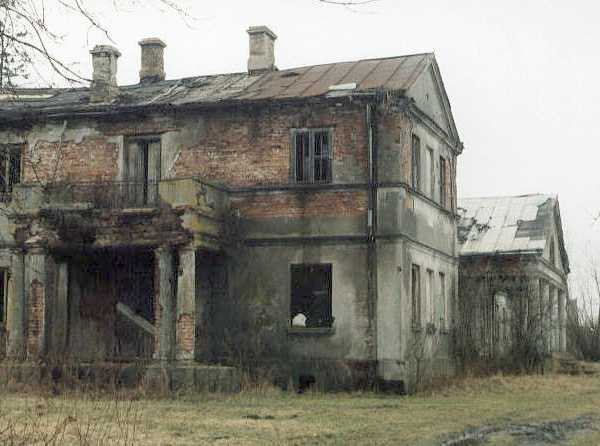
The manor has an H-shaped plan, with a one-storey central section and two-storey side wings topped by triangular gables. A four-column entrance porch in the Tuscan style, a plain form of classical design, marks the center of the front façade. It was probably added between the world wars. A simple pediment, the triangular feature above an entrance, frames the doorway, and each wing has a porch supporting a balcony. The roof is covered with sheet metal. The house is now in ruins.
Park and approach
The manor stood within a large English-style park planted with oak and maple trees. The historic grounds have deteriorated, but a tree-lined avenue still runs from the gate toward the manor’s main entrance.