Nichoria: A Mycenaean Settlement and Regional Center in Greece
Site at a Glance
- Popularity
- Medium
- Country
- Greece
- Primary era
- Bronze Age
- Eras represented
- Bronze Age, Iron Age
- Civilizations
- Mycenaean
- Site type
- Settlement
- Remains
- Town
On this page13 sections
History
Nichoria was an ancient settlement near modern Rizomylos and Karpophora in Greece, and it became a major regional center in Mycenaean Messenia during approximately 1700–1200 BC. It was occupied from the late Neolithic, around 3500 BC, through the Archaic period, around 750 BC. Occupation resumed in the Hellenistic period, beginning in the fourth century BC, and continued into the thirteenth century AD, during the Byzantine period of the medieval Eastern Roman Empire.
Early settlement and Mycenaean growth
Nichoria developed from the Early Helladic period and grew gradually during the Middle Helladic period. By the start of the Late Helladic period, it had become an important local center of power and production. Its water supply, including the nearby Karia and Velika rivers, supported cultivation and grazing. During the Middle and Late Bronze Age, residents grew olives and terebinth for export. By the end of the Bronze Age, olive cultivation may have used as much as a tenth of the surrounding land.
At its height, Nichoria was a major regional center subordinate to the kingdom based at Pylos. It served as a principal outpost in the Trans-Aigolaia, an administrative province of that kingdom. After coming under Pylian authority, Nichoria ceased using its royal hall built in the Pylos style.
Pylian administration and the place-name
Toward the end of Late Helladic IIIB, ten tablets from Pylos refer to a place-name written as TI-MI-TO A-KO, which has been tentatively identified with Nichoria. The tablets connect the place with bronze working, six standard forms of regional taxation, recycling bronze for weapons, coastal defense, gold, landholdings, livestock, male personnel, and intensive flax production.
The meaning of the name is uncertain. TI-MI-TO may represent themittos, meaning “boundary,” or tirminthos, the terebinth tree. A-KO may mean agos, or “sacred ground,” though agkos, meaning “hillside” or “glen,” has been considered more likely. A suggested connection with the Knossian form OU-TE-MI has been understood either as “not permitted” or as a term describing furniture.
Destruction and later occupation
Nichoria was destroyed near the end of the thirteenth century BC, around the time the palace at Pylos fell. The settlement subsequently declined, although occupation continued, and it may have revived during the Geometric period. By the eighth century BC, the area may once more have been a center for a powerful local family.
After the First Messenian War, a conflict between Sparta and Messenia dated to 743–724 BC, Sparta conquered Messenia, including Nichoria. Nichoria probably had its own port, possibly at Petalidi or near the mouth of the Karia River.
Archaeological investigation
The University of Minnesota Messenia Expedition recognized Nichoria’s archaeological importance during field observations in 1958 and surveyed the area in the 1960s. Excavations followed from 1969 to 1973 under archaeologist William Andrew McDonald. Later test trenches added further evidence about the settlement.
Remains
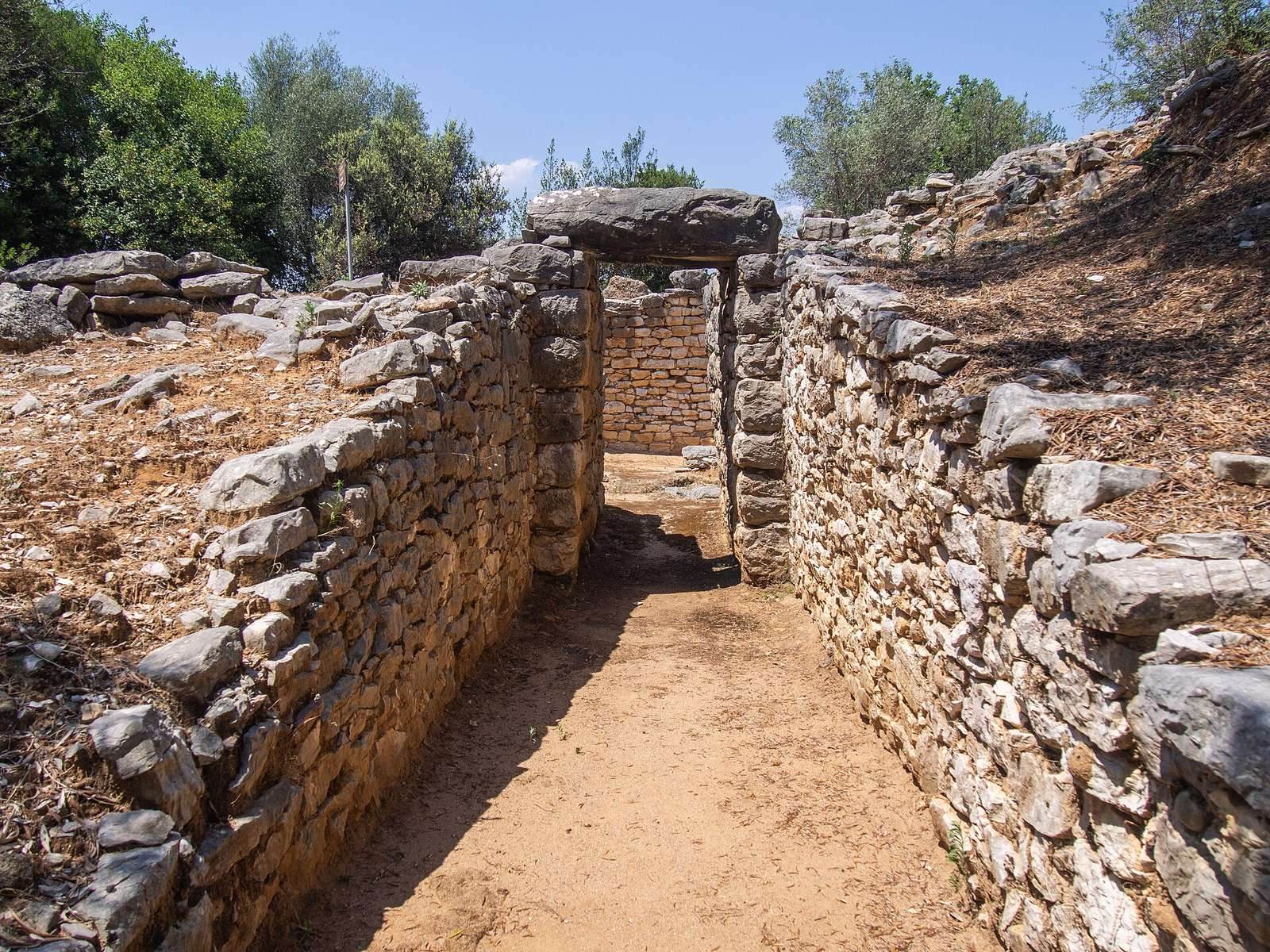
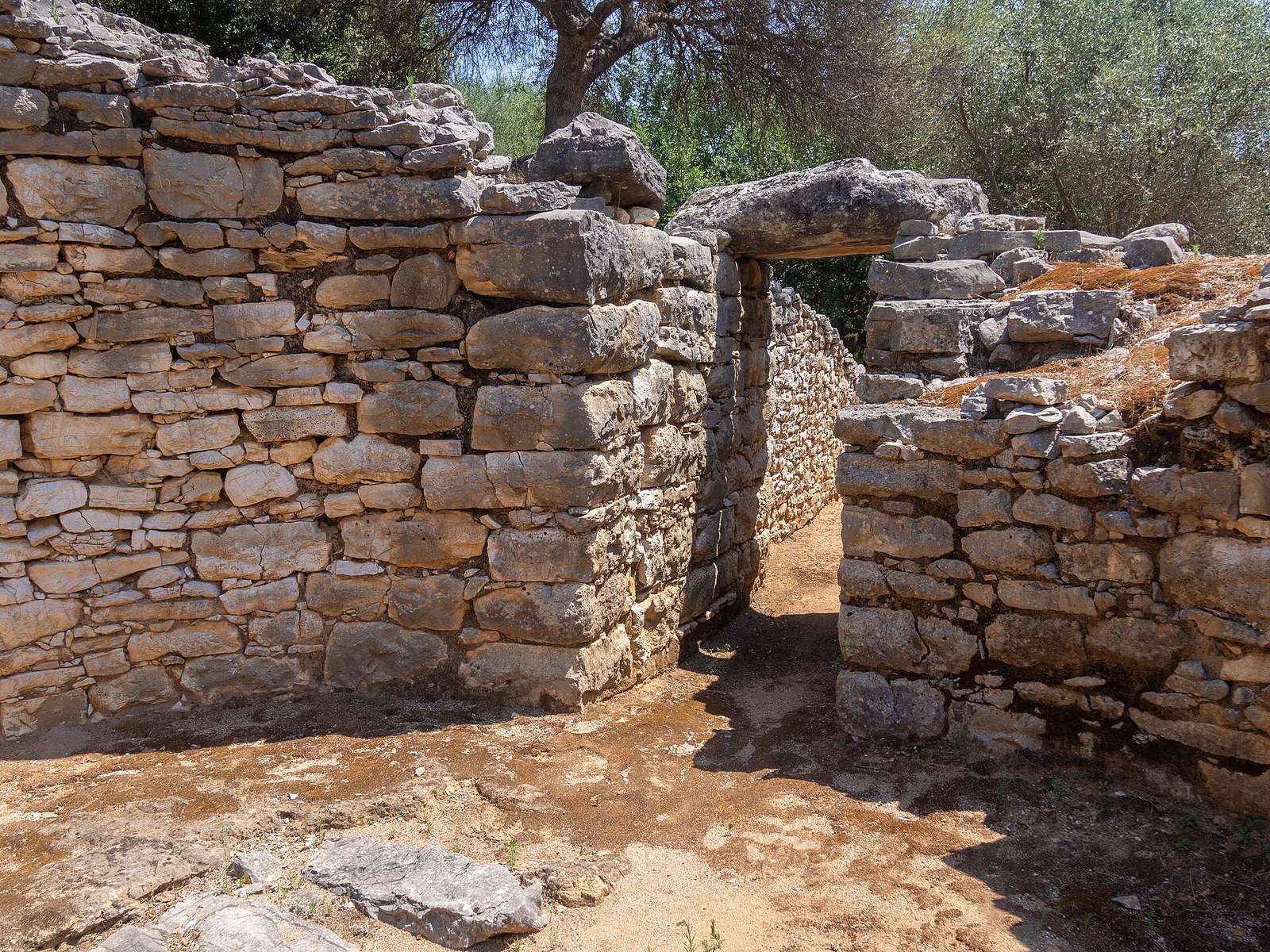
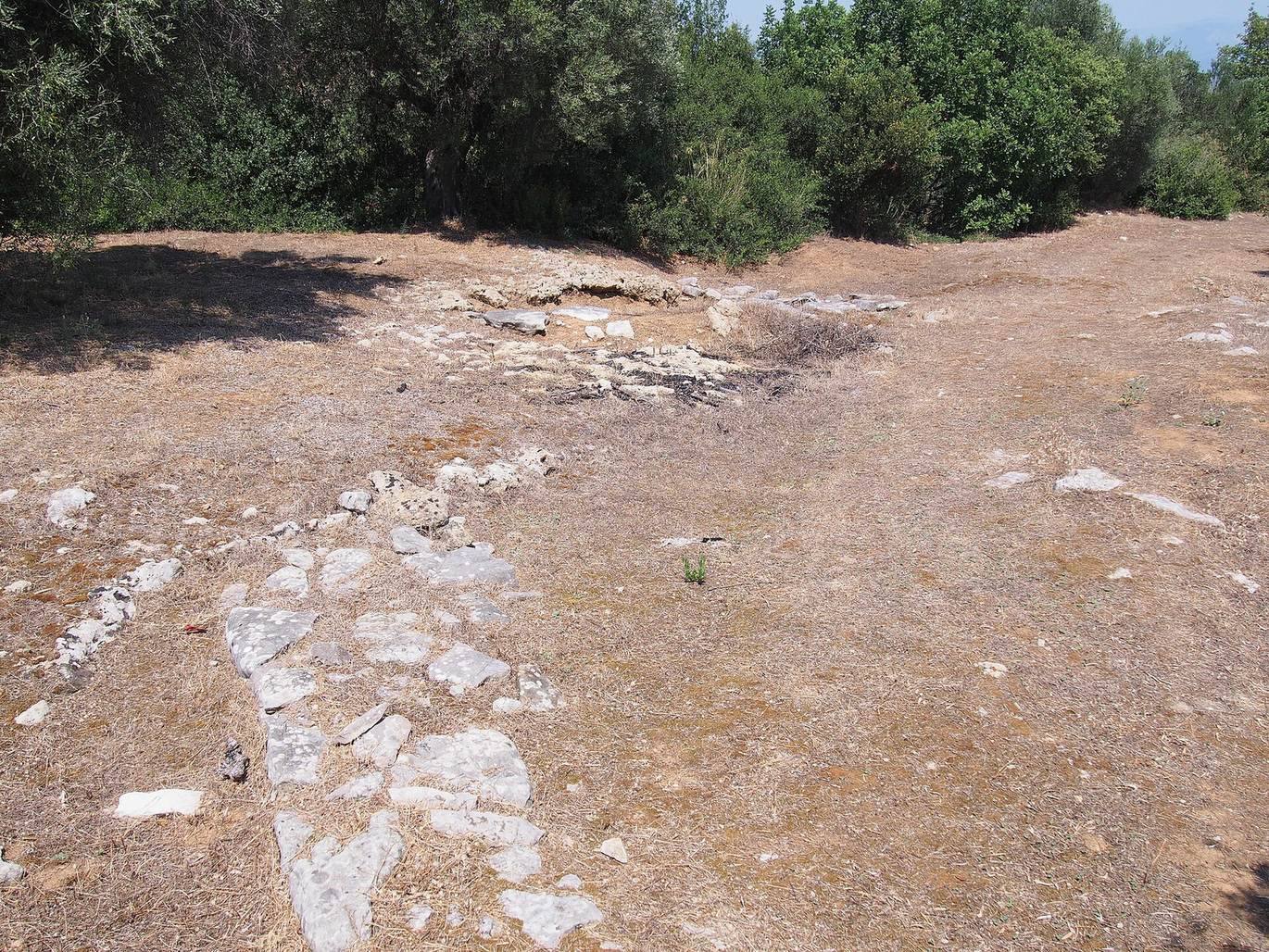
The settlement occupied a ridge-top plateau running northwest to southeast, about 500 m long and 50–150 m wide. It lay roughly 2–2.5 km from the northwestern corner of the Messenian Gulf, beside the Karia and Velika rivers, and extended onto adjoining hills where cemeteries were scattered. Excavations exposed a main street and parts of residential buildings. At its greatest extent, during Late Helladic IIIA:2, the settlement covered about five hectares. The river-mouth area is now cultivated land formed by sediment deposits, and a port may have stood there or at Petalidi.
Buildings on the settlement plateau
Apsidal hall and circular building
The most prominent excavated building of the Submycenaean period, which followed the Mycenaean palace era, was an apsidal megaron, a principal hall with a rounded end. It measured about 13 m by 8 m and was among the largest buildings of the Greek Dark Ages, the centuries following the collapse of the Mycenaean palace system. Its size has also prompted the suggestion that it served as a royal residence. A circular building with a paved floor stood with it; a religious or ritual function has been proposed for this structure.
Other megaron halls
Two further megaron-type buildings have been identified, one dating to Late Helladic II and the other to Late Helladic IIIA1. A separate royal hall in the Pylos style belonged to Nichoria’s peak period. It was smaller than the megaron at Pylos.
Burial places
Burial circle
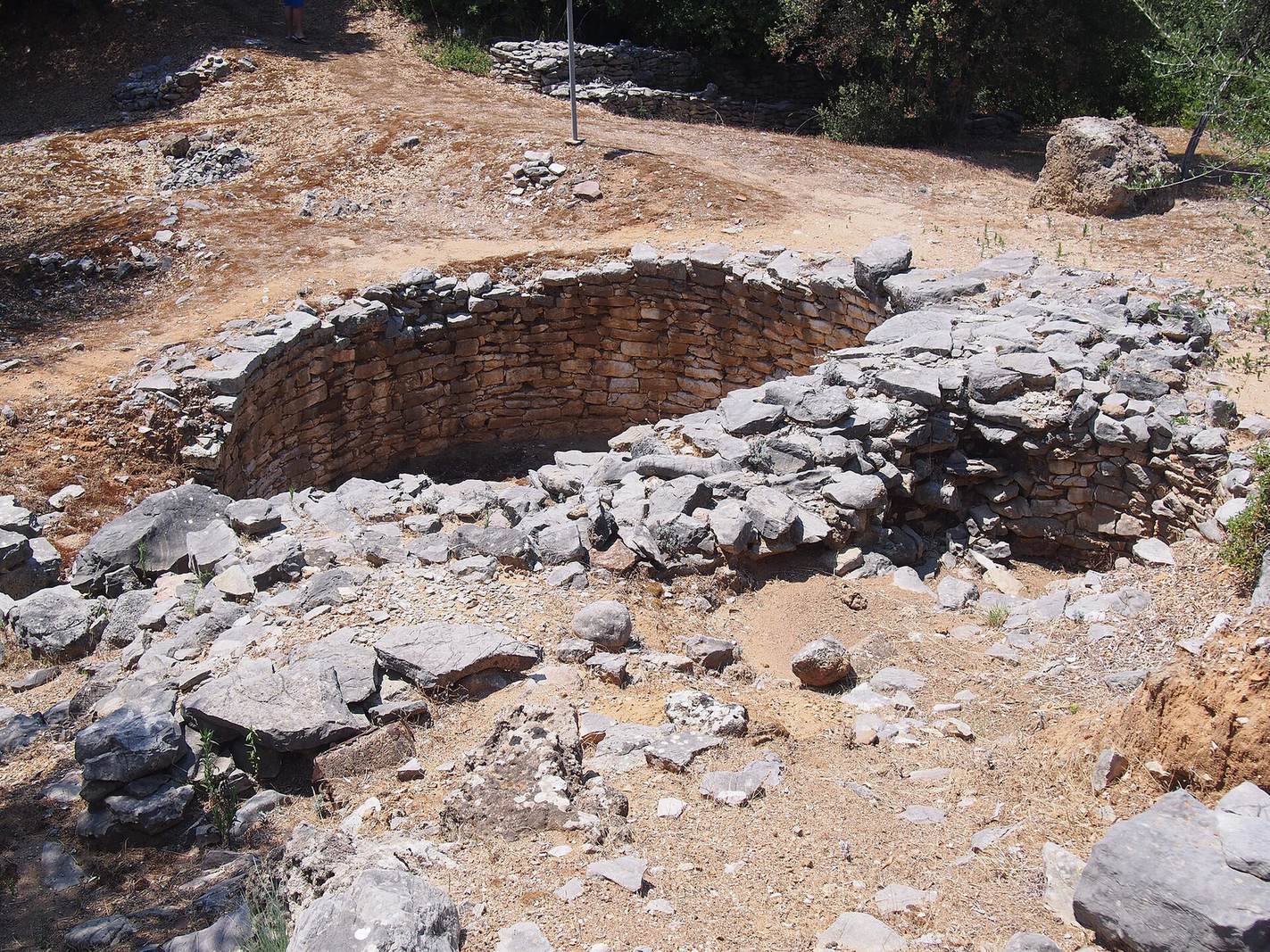
A burial circle at the foot of the acropolis held the collective remains of seven people. It was established at the beginning of Late Helladic II and remained in use until Late Helladic IIIA. Building the adjacent large tholos tomb later cut through part of its enclosure.
Tholos tomb
The large tholos, a circular tomb with a vaulted, beehive-shaped interior, stood at the prominent northwestern edge of the acropolis. Used during Nichoria’s peak around 1400–1200 BC, it measured 6.60 m across and probably exceeded 6.50 m in height. Four pits lay inside the tomb, which had been looted in antiquity. Finds nevertheless included pottery vessels, semiprecious stone sealing gems, and small objects of gold, ivory, and faience, a glazed material. A pit between pits 1 and 2 held bronze vessels and other objects, including a bent sword with an ivory handle. The tomb was reused in the Late Classical and Hellenistic periods in connection with ancestor worship.
Other cemetery burials
A necropolis extended around the acropolis, with tholos and chamber tombs, horseshoe-shaped tombs, and burials in large storage jars called pithoi. These graves date from the fifteenth to the eighth century BC. A pithos burial of a warrior, dated to about 725 BC, contained an iron sword and spear, a bronze ring, two bronze bowls, and three locally made vessels: a polished cup, a deep Argive-type kantharos, and a plate.