Basilica of St. Mary: Gothic Church of Vilafranca del Penedès
Site at a Glance
- Popularity
- Medium
- Country
- Spain
- Primary era
- Medieval
- Eras represented
- Medieval, Early Modern, Modern
- Civilizations
- Crown of Aragon, Habsburg, Habsburg Spain, Spanish
- Site type
- Religious
- Remains
- Church
On this page20 sections
History
The Basilica of St. Mary is a Catholic church dedicated to Saint Mary in Vilafranca del Penedès, Spain, built in the fifteenth century in a principally Gothic style. It belongs to the Diocese of Sant Feliu de Llobregat, a territory administered by a bishop.
Medieval origins and construction
A church dedicated to Saint Mary stood on the site by 1188, during the reign of Alfonso I of Aragon. As Vilafranca grew economically, socially, and ecclesiastically in the thirteenth century, a new church was planned over the remains of the earlier building. Guilds and confraternities became its principal contributors from 1285.
The present church was built in the fifteenth century and consecrated late in that century. Its Gothic fabric reflects the period of its construction, while later work added other architectural influences.
Alterations and basilica title
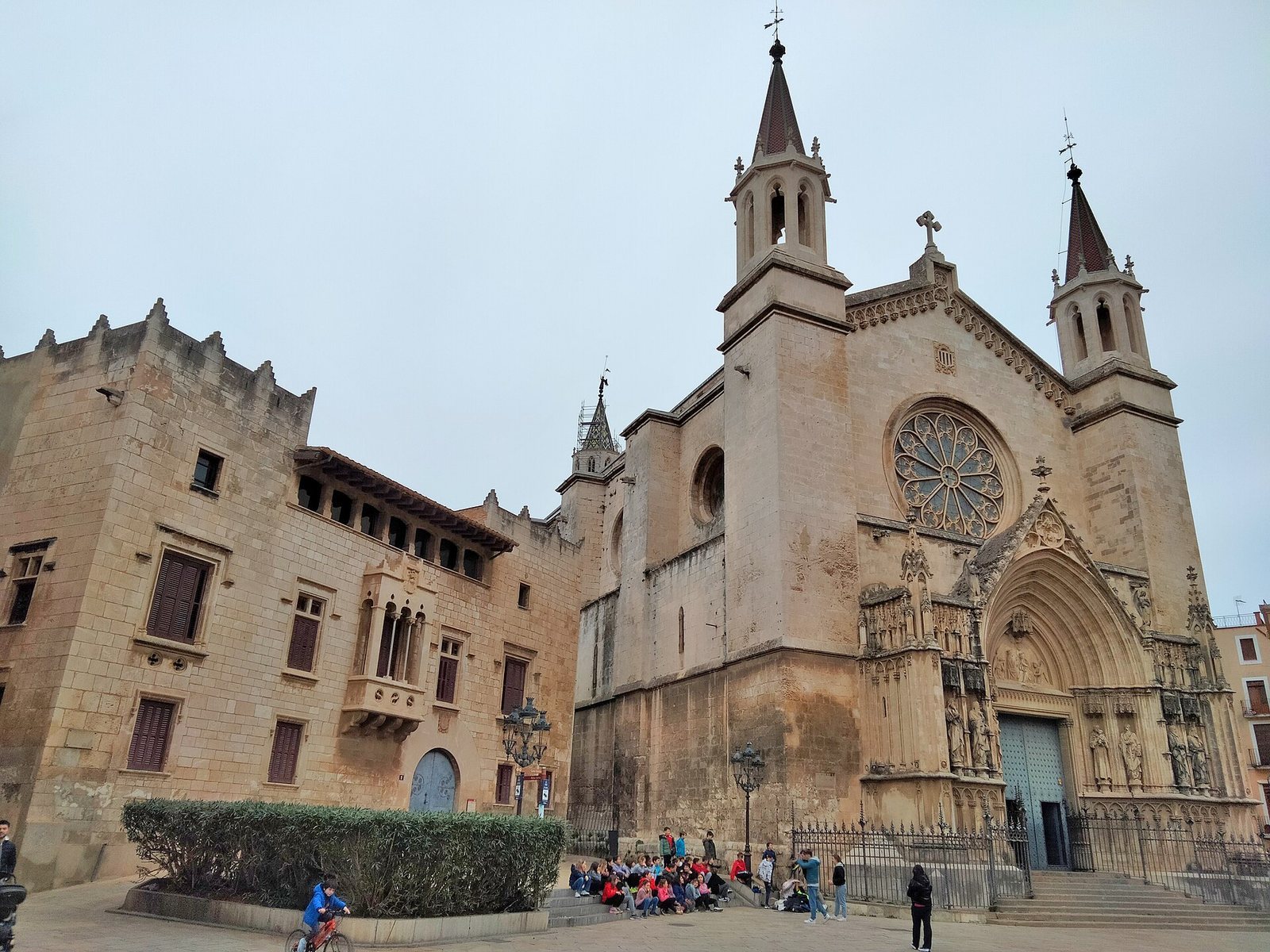
The church’s rib vault collapsed in 1735 and was subsequently repaired. The bell tower was altered in 1775, 1860, and 1919, and the Chapel of the Blessed Sacrament was built in 1809. From 1903 to 1905, the Renaissance main façade was replaced by a Neo-Gothic design intended to complete it in a Gothic style. August Font i Carreras designed the project, which Santiago Güell i Grau directed.
Pope Benedict XV granted the church the honorific title of minor basilica. A decree concerning the title was issued in 1919, and the elevation is dated to 1920. A minor basilica is an honor granted to certain Catholic churches, not a separate rank within a diocese.
Fire, war, and conservation
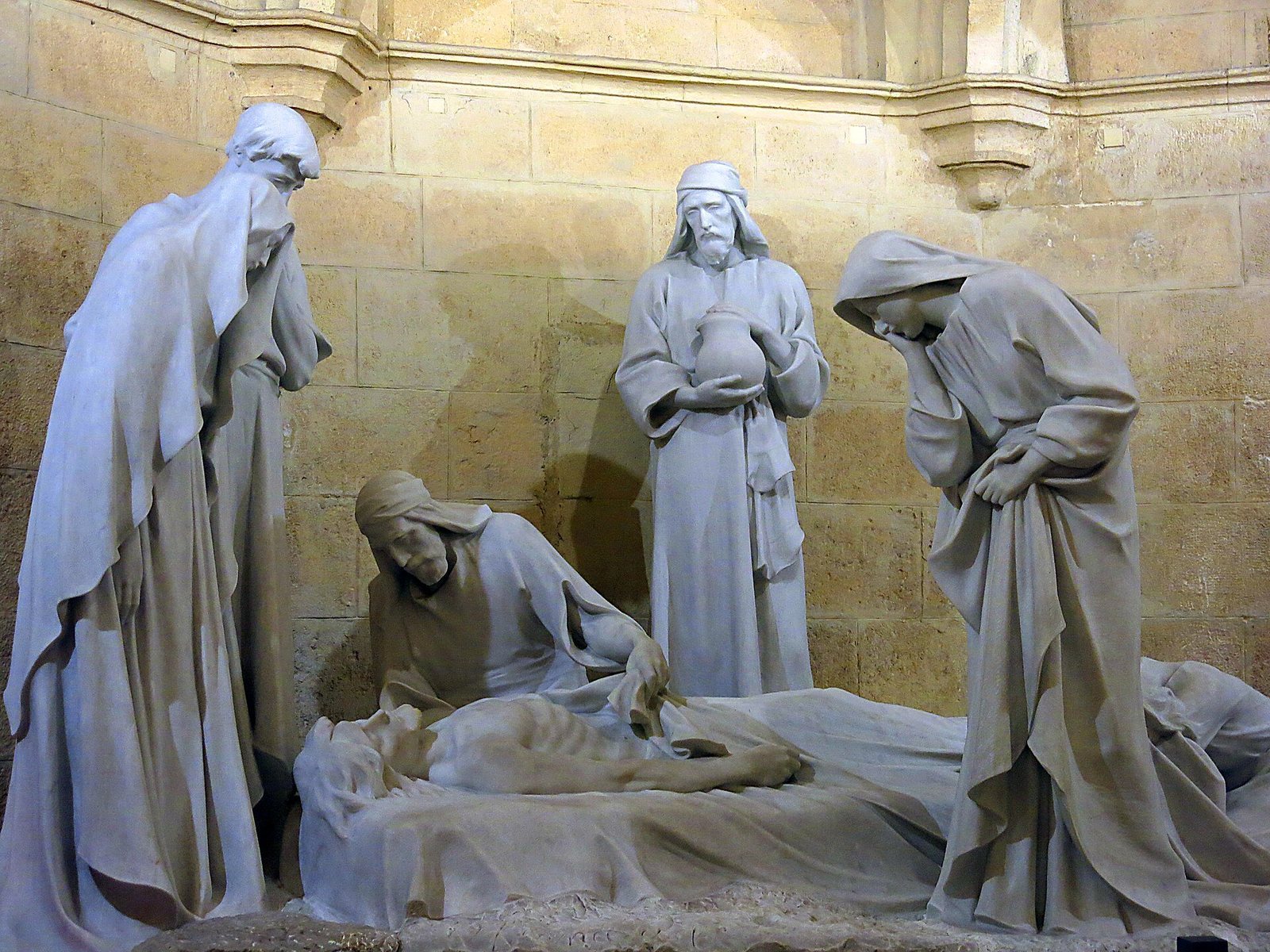
A fire in 1934 prompted immediate reconstruction under architect Jeroni Martorell. The church was declared a Historic-Artistic Monument in 1935. During the Spanish Civil War in 1936, many interior artworks were destroyed; Josep Llimona’s sculptural group The Entombment of Christ survived.
Strong winds dislodged stone fragments from the façade towers in early 2009. An inspection then found structural deficiencies throughout the building. A phased conservation project repaired the main façade, its two towers, and the cross between July and December 2010; the south façade was restored from 2015 to 2017. In 2014, the church received the designation Cultural Asset of National Interest, Catalonia’s category for protected cultural property of national significance.
Remains
The church’s plan measures 34 by 15 metres. Its principal structure is Gothic, with historicist features that draw on earlier styles and Neo-Gothic elements. The building combines a long central space with side chapels, a polygonal sanctuary end, two entrances, and towers of different forms and positions.
Plan and exterior
Nave and apse
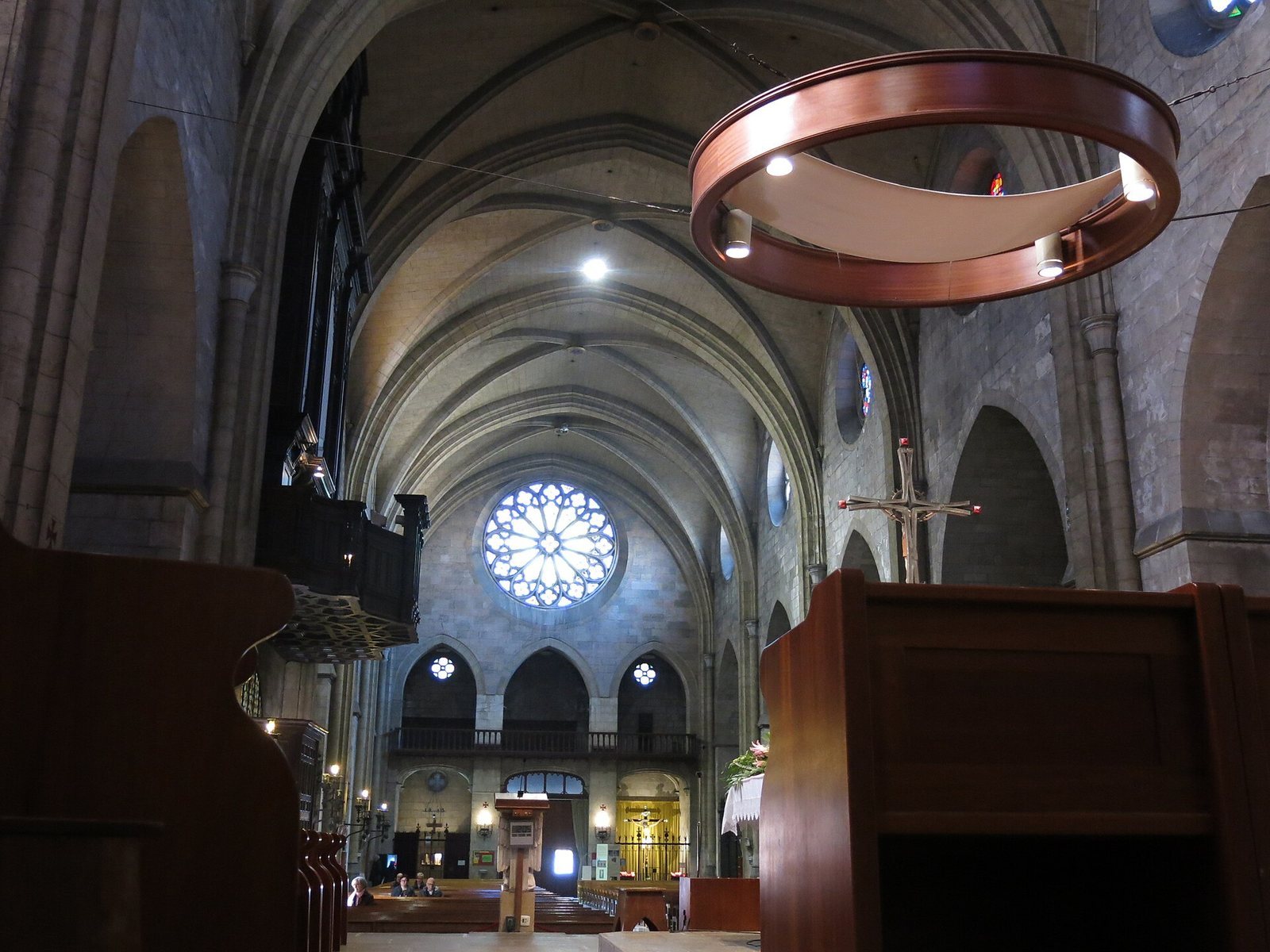
The nave, the main body of the church, is divided into five bays and covered by a rib vault, formed by structural ribs crossing beneath the vaulted surface. Five side chapels on each side sit between broad internal buttresses. At the eastern end, the seven-sided apse, the area containing the sanctuary, has internal buttresses and a section that appears lighter than the rest of the nave.
Entrances and main façade
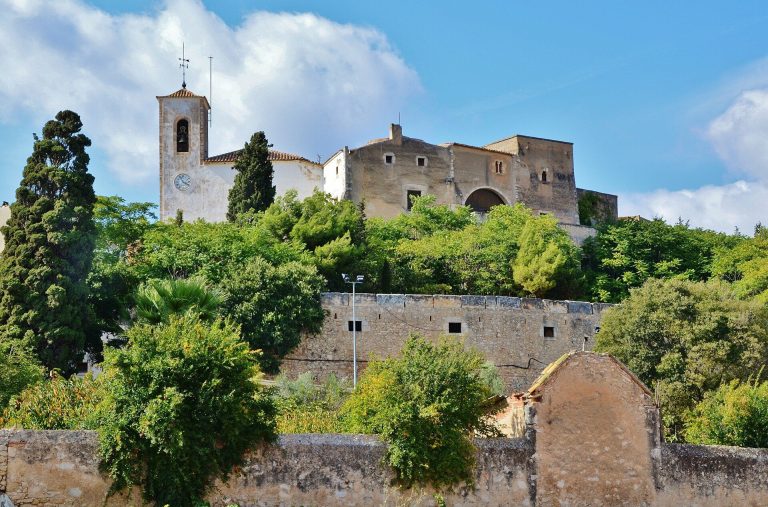
The present main entrance opens onto Jaume I Square. Its large pointed arch frames a tympanum, the area enclosed above a doorway, with a sculptural Coronation of the Virgin. An enlarged rose window sits above the portal. Higher up, a double-pitched gable incorporates blind arches and small turrets at the sides; two towers form part of the façade.
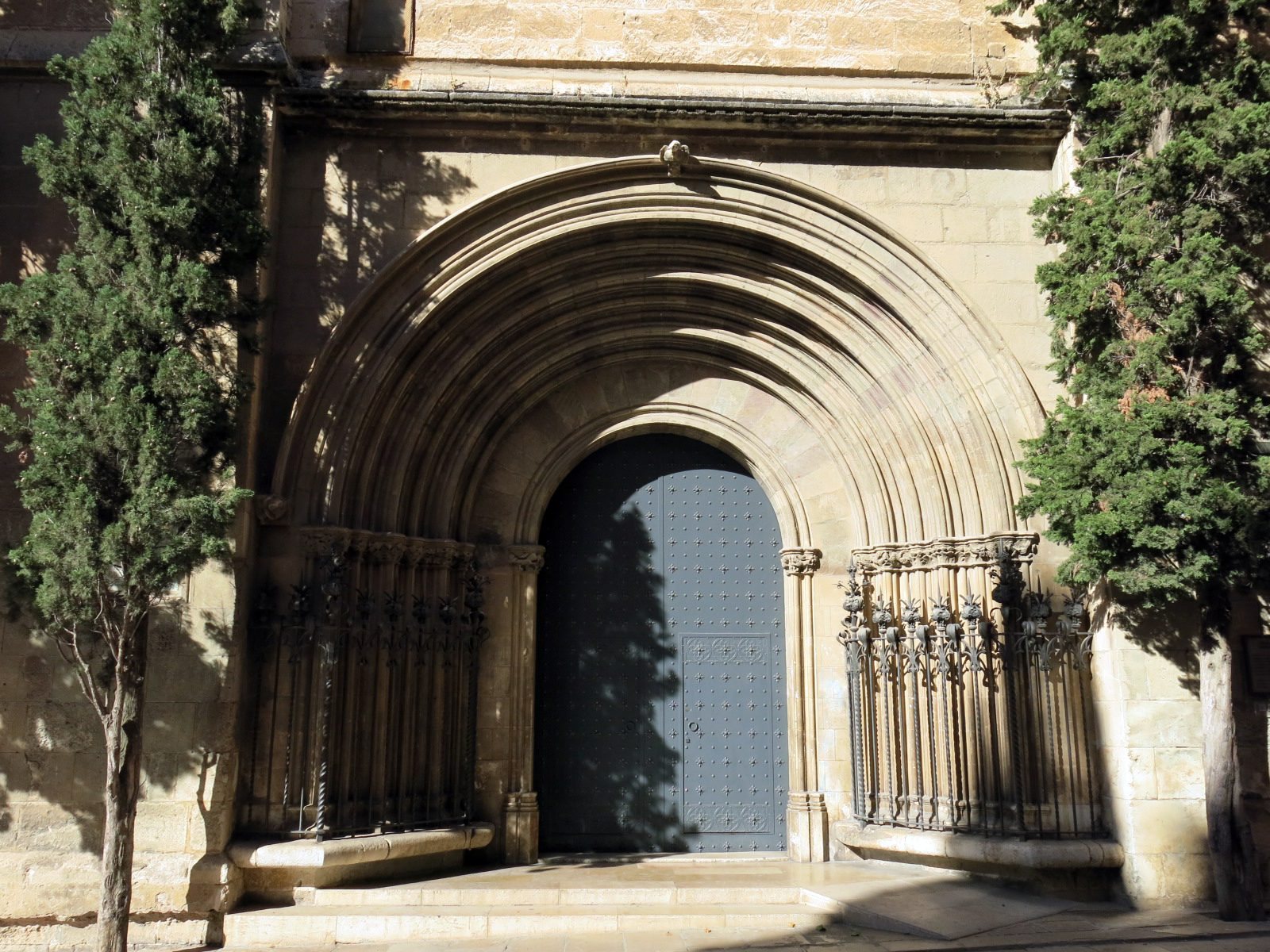
The former main entrance, known as the Santa Maria doorway, faces Santa Maria Street. Dating to the late thirteenth century, it has a round arch and retains traces of painted colour. Fourteenth-century painted fragments survive at the centre of its outer archivolt, the moulded band following the arch, and on the upper part of the adjacent side wall. They depict the Crucifixion, with the Virgin and sun on one side, Saint John and the moon on the other, and figures beneath arches. Found in 1973, the paintings remain at serious risk of irreversible deterioration.
Bell towers
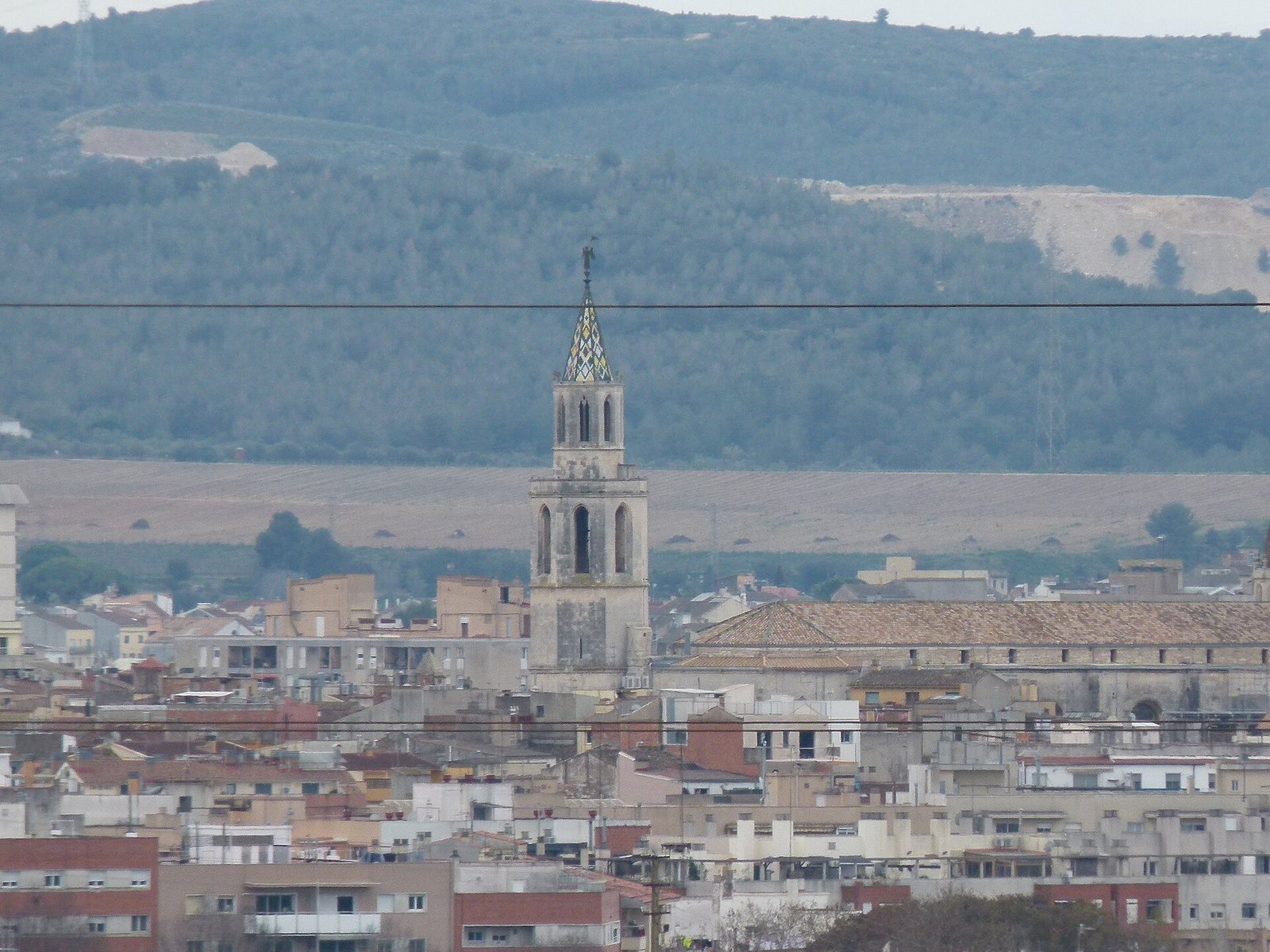
A separate octagonal bell tower stands behind and to the right of the apse. Dating to the nineteenth century, it is topped by an angel. Its bells occupy two levels: four liturgical bells in the main chamber and three older clock bells of different origins and dates above. The liturgical bells were cast at Olot in 1939 by Hijo de Esteban Barberí. The small bell Eloisia cracked and was replaced in 1996 by Montserrat, now the smallest bell.
Crypt and devotional sculpture
Crypt
The crypt, dating to 1561, lies beneath the presbytery, the area around the main altar. Its rib vault has sculpted bosses, carved stones at the intersections of the ribs. Two sixteenth-century bosses with rounded outlines show the Resurrection and the Virgin holding Christ in her lap. In the Resurrection scene, Christ stands above the tomb as two armoured soldiers fall back.
The Entombment of Christ
Josep Llimona’s white-marble group, dated 1916, occupies the crypt. Christ lies dead on a bed as Joseph of Arimathea covers him with a shroud, while Nicodemus stands behind. Mary Magdalene is at Christ’s feet; the Virgin Mary and Saint John are at his head, and Mary Salome appears in the foreground. The sculpture has a stylized, realist character associated with Catalan Modernism, the region’s form of the Art Nouveau movement. An inscription records that Bishop Josep Torras i Bages funded the work.
Altar of Saint Felix
The crypt also contains a twentieth-century white-marble altar dedicated to Saint Felix, venerated as Vilafranca’s patron saint. The saint, dressed as a priest, stands on a pedestal decorated with a martyr’s palm, an axe, a crown of roses, rose garlands, and laurel leaves. Two grieving angels in robes lean against the pedestal with their wings spread.
Interior furnishings
Main altar
An eighteenth-century polychrome ivory crucifix stands at the main altar. Christ’s body curves to the left, with his legs together and feet crossed; his head inclines left and backward beneath his raised arms. The cross is a later addition made of silver. A twentieth-century enamel of the Last Supper, painted in multiple colours on metal, also decorates the altar. Its figures are arranged symmetrically around Christ, with bread and wine on the table.
Retable of Saint Raymond
The twentieth-century retable, an ornamental structure behind or above an altar, is by Rafael Solanic i Balius. Its central polychrome wooden statue shows Saint Raymond of Penyafort in a friar’s habit, holding a book, with a key at his belt and a tiara at his feet. Repoussé bronze panels, raised by hammering the metal from behind, show scenes from the saint’s life. A plain frame of wood and marble surrounds the work.
Other sculptures and paintings
A polychrome wooden statue of Saint Lucy depicts her in a tunic and mantle, holding a martyr’s palm and a plate with eyes. The presbytery contains figures of Saints Mark, Matthew, Luke, and John, the four symbolic figures associated with the Gospel writers. Sculptures also occupy the north jamb of the main portal, and mural paintings decorate the Chapel of the Blessed Sacrament.
Organ and ironwork
Organ
The organ dates to 1942. Its wooden case rises in three tiers, with semicircular and segmental arches, mouldings, a triangular pediment, and small pinnacles. Brackets and supports in the lower section form a balcony-like shape. Metal pipes fill the case, and pierced wooden ornament in plant forms appears in some places.
Iron grilles
Wrought-iron grilles enclose the side chapels. Their bars form simple, paired, or triple arches, including pointed, flattened, and cusped shapes. The grilles have pointed arches and cornices decorated with stylized Gothic foliage, rosettes, and trefoils. Spiked ornaments above alternate among flowered, agave-like forms, pomegranates with spikes and flowers, and spirals of spikes. An iron grille also stands at the Chapel of the Blessed Sacrament.