Basilica of Our Lady of the Assumption, Genoa: A Baroque Parish Church
Site at a Glance
- Popularity
- Medium
- Country
- Italy
- Primary era
- Early Modern
- Eras represented
- Early Modern, Modern
- Civilizations
- Genoese, Italian
- Site type
- Religious
- Remains
- Church
On this page8 sections
History
The Basilica of Our Lady of the Assumption is a Baroque Roman Catholic parish church in Sestri Ponente, Genoa, Italy, constructed from 1610 to 1618. It is dedicated to the Assumption, the Catholic belief that Mary was taken into heaven. The church belongs to the Archdiocese of Genoa, a major Catholic jurisdiction led by an archbishop, and its Sestri Ponente vicariate, a local grouping of parishes.
Foundation and parish establishment
Residents of Sestri petitioned the Genoese Senate for permission to build a church on 6 June 1607. The Senate approved the project on 1 October 1610, and three days later Giovanni Battista Dario, archpriest of Genoa’s Cathedral of Saint Lawrence, laid its foundation stone. A small chapel served the community during construction. The designer is unknown, though the church’s design has been tentatively attributed to Rocco Pellone, a Lombard architect and sculptor.
Felice Tamburelli, a general vicar who exercised authority delegated by a bishop, blessed the church on 8 June 1620 and celebrated its first Mass. Later that year, Archbishop Domenico De Marini established a parish there. This decision prompted a dispute with the older nearby church of Saint John the Baptist, a parish since 1132. The initial decision was reversed, but on 3 February 1623 the two churches were declared independent parishes. The disagreement continued until the Congregation of the Council, a department of the Roman Curia, the Holy See’s central administrative institutions, settled it on 15 November 1631.
Consecration and later history
Bishop Vincenzo Giovanni Spinola of Brugnato consecrated the church on 10 October 1629. In 1672, Archbishop Giovanni Battista Spinola made it the seat of an archpriest, a senior priestly office, and granted it an honorary title. On 10 August 1951, Pope Pius XII gave the church the title of minor basilica, an honorary papal designation that does not make it a cathedral. Frescoes in the nave and side chapels were restored between 2003 and 2006.
Remains
Plan and interior layout
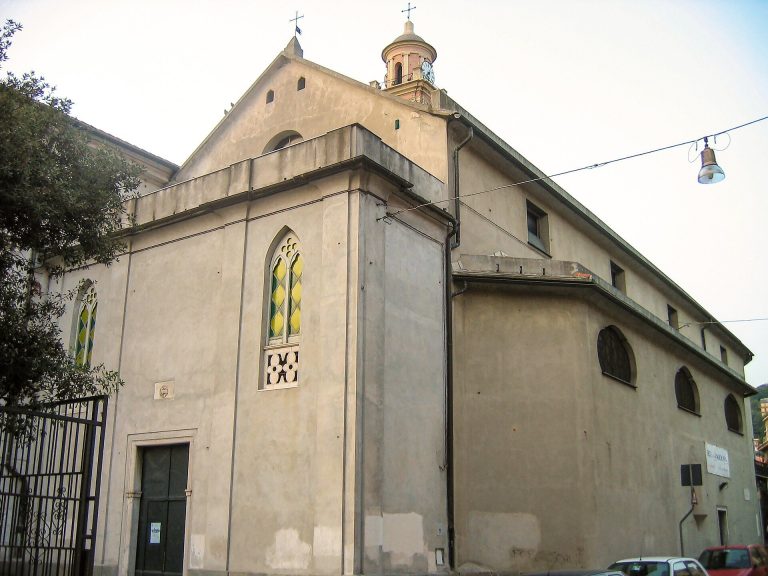
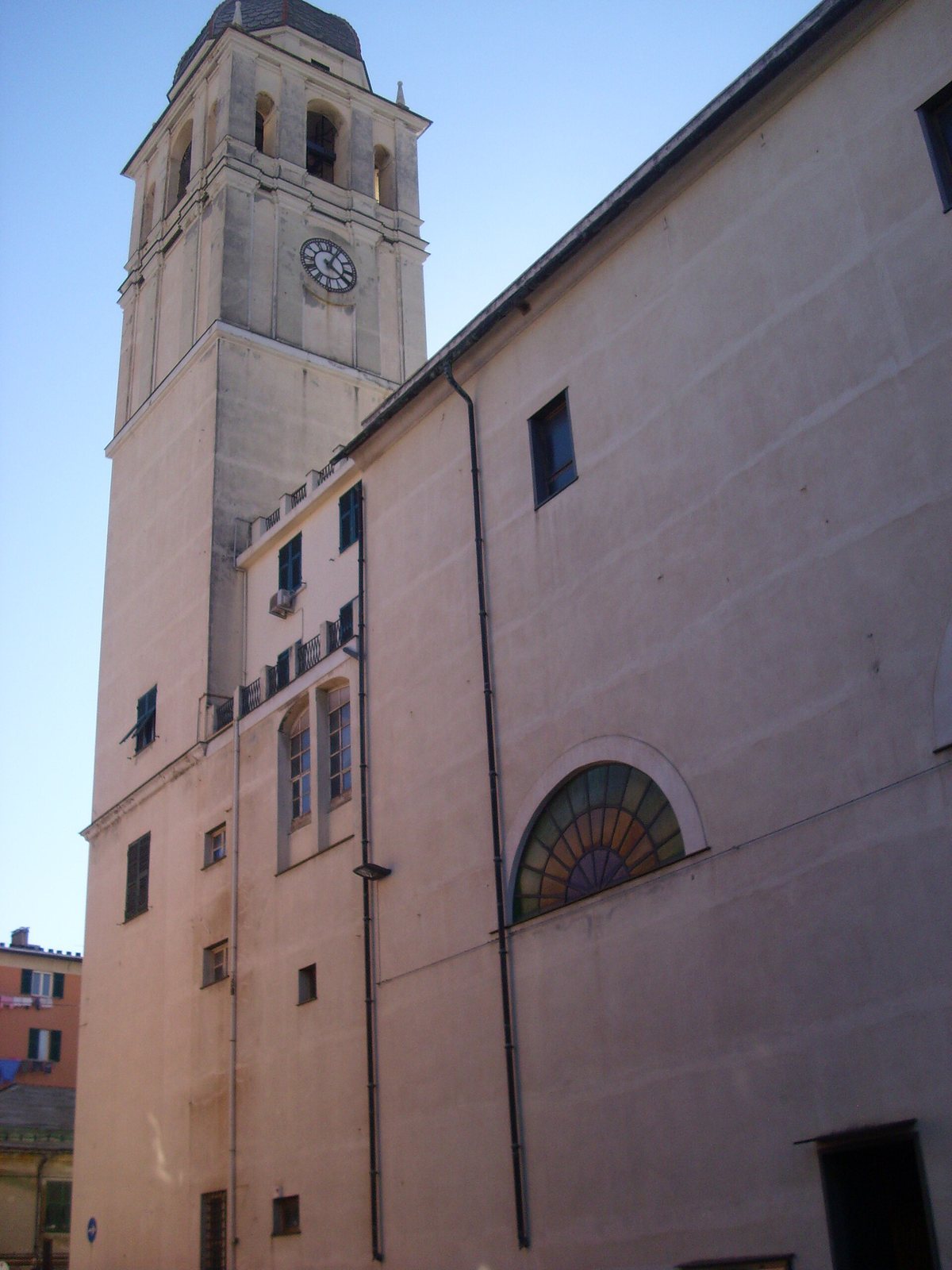
The church follows a north-to-south axis and has a single nave, the main body of the building, beneath a barrel vault, a continuous semicylindrical ceiling. The nave measures about 18 metres across and 38 metres in length, while the choir extends another 17 metres. Five side chapels open on each side, and a semicircular apse, the rounded terminal space, completes the interior. A bell tower was added in 1624 beside the apse.
Exterior and façade
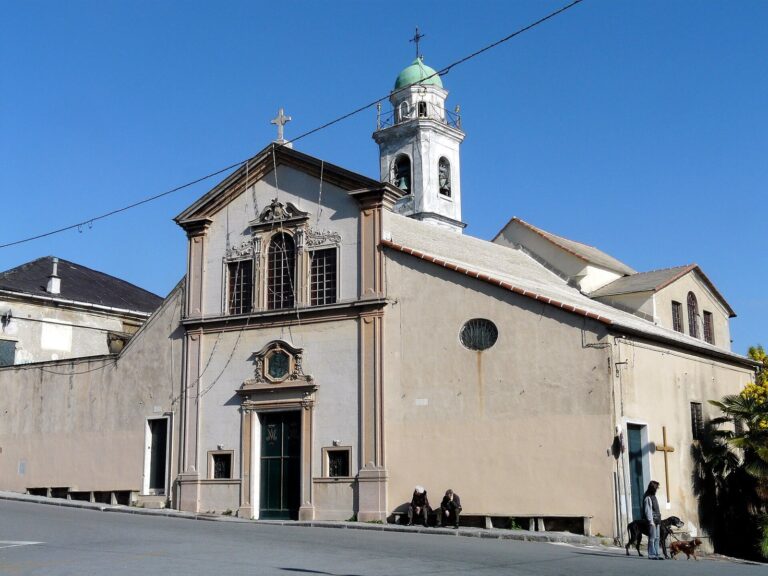
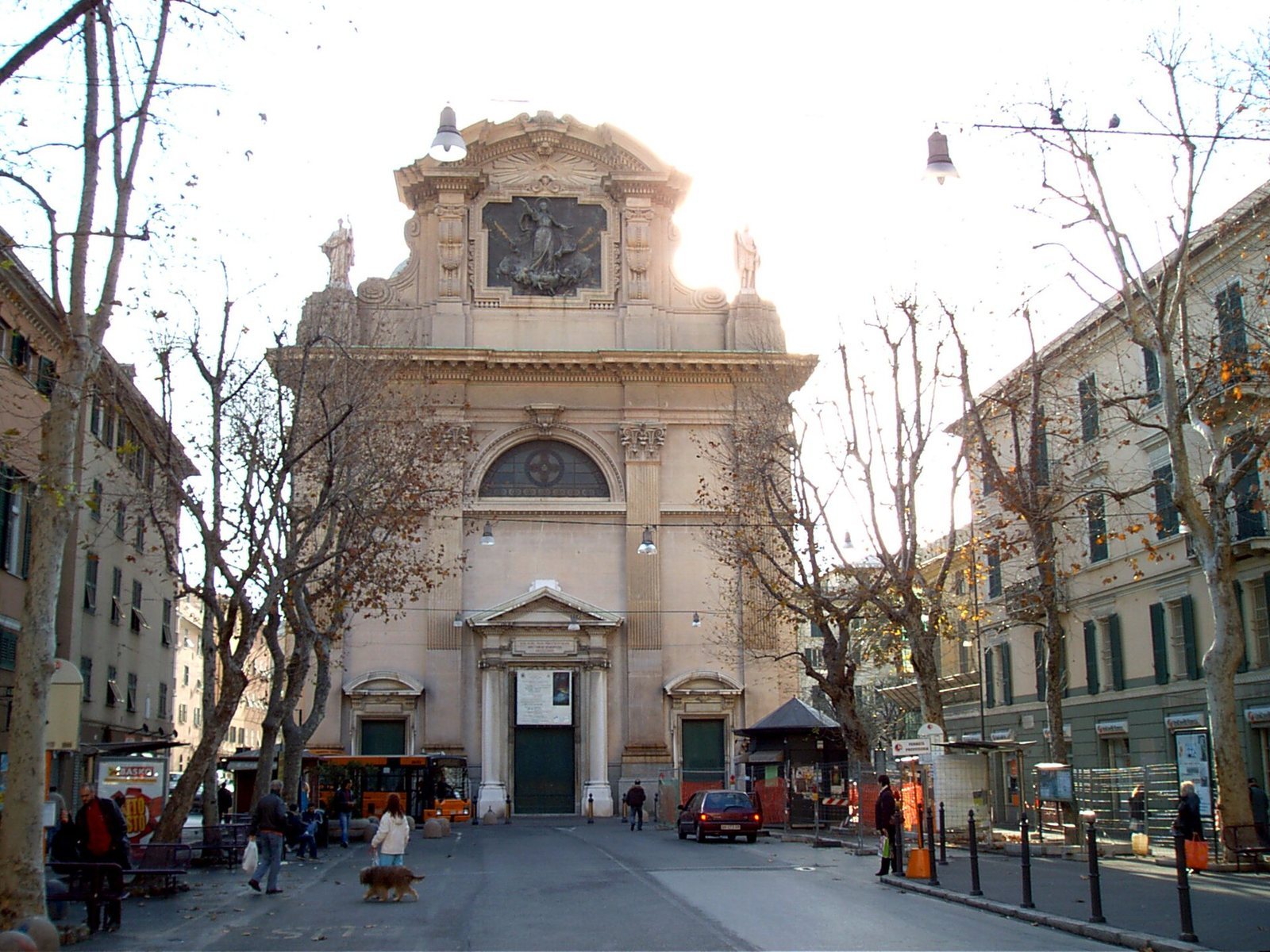
The main entrance faces north onto Piazza Francesco Baracca, named for the Italian aviator who served in the First World War. This side faces away from the port, an arrangement intended to protect the entrance from storm surges. The façade, given its present design in 1932, has two levels. On the lower level, four pilasters, flat rectangular wall supports, have gray-granite bases and Corinthian capitals, leaf-patterned decorative tops. Three portals open into the church, with a large semicircular window above the central entrance. A plain horizontal band and projecting ledge, set about 14 metres up, divide the levels; a rounded, off-centre gable-like form crowns the front. Architect Piero de Barbieri designed the façade, and sculptor Luigi Venzano created its figures: concrete statues of Saint John the Baptist, the preacher who baptized Jesus, and Saint Joseph, traditionally regarded as Jesus’ foster father. A central 6-by-5-metre sculpted image of the Madonna, Mary, the mother of Jesus, is made from a mixture of bronze and cement.
Interior decoration
Frescoes, stucco, and marble decorate the interior. In 1635, Giulio Benso painted the Assumption at the centre of the ceiling vault. Other artists associated with the church’s decoration include Domenico Fiasella, Domenico Piola, Giovanni Andrea Ansaldo, Giovanni Bernardo Carbone, Nicolò Barabino, and Gian Stefano Rossi. From 1869 to 1871, Barabino and three pupils carried out a further decorative campaign.
Altars and furnishings
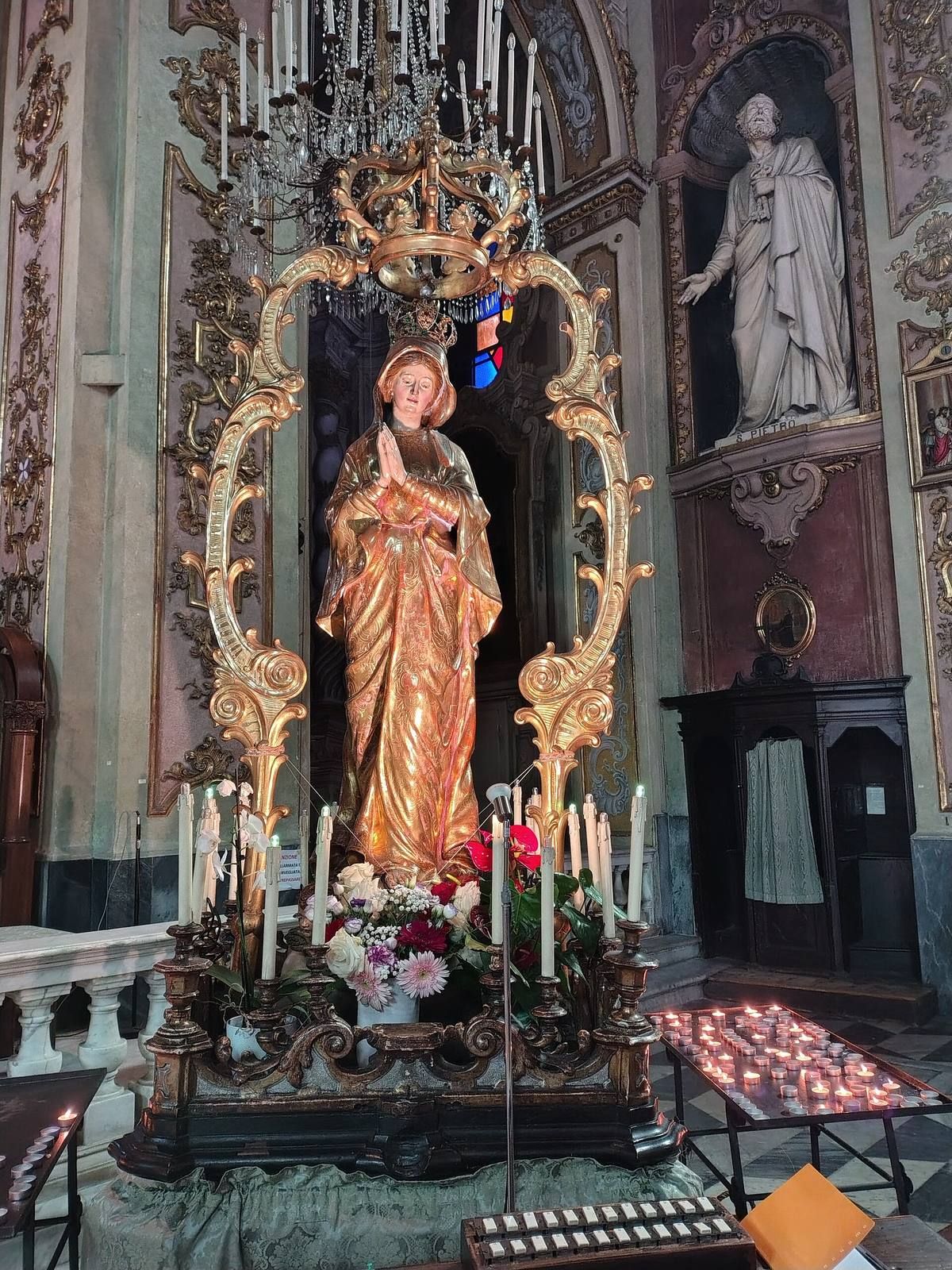
The altars include one dedicated to Our Lady of Health, a title for Mary associated with prayers for health and healing, and a former altar to Saint Francis linked with rope-makers. The altar in the chapel of Saint Peter, one of Jesus’ apostles and traditionally regarded as the first pope, belonged to the sailors’ guild. The high altar and its tabernacle, an enclosure for the Eucharist, are attributed to Rocco Pellone and were originally intended for Genoa’s church of San Lorenzo.