Ballykeel Dolmen and Cairn: A Neolithic Burial Monument in Northern Ireland
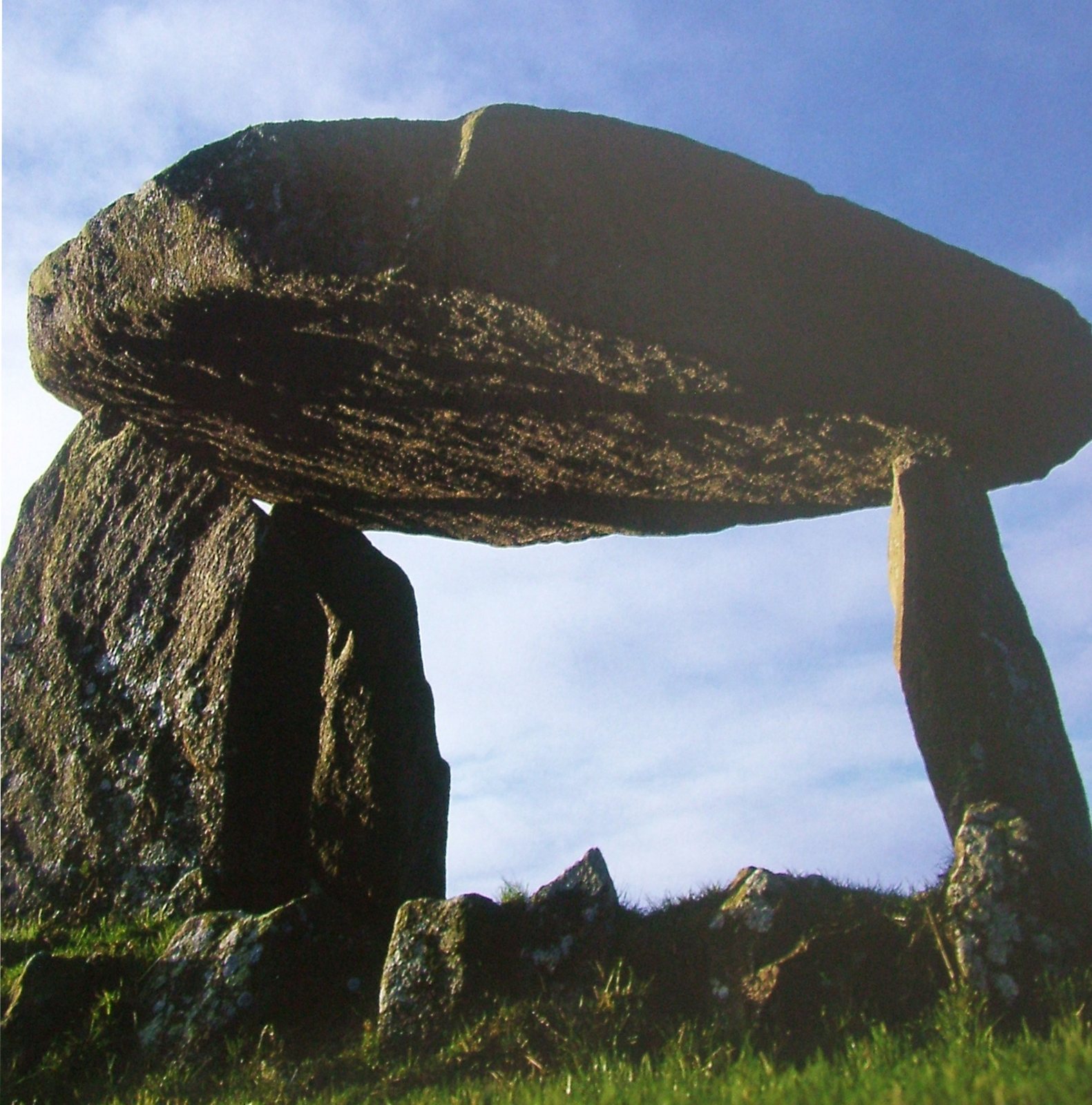
Site at a Glance
- Popularity
- Low
- Country
- United Kingdom
- Primary era
- Stone Age
- Eras represented
- Stone Age
- Civilizations
- Unclassified
- Site type
- Burial
- Remains
- Tomb
On this page6 sections
History
Ballykeel Dolmen and Cairn is a Neolithic funerary site in Ballykeel townland, a traditional small territorial division in Ireland, about 3 km north of Mullaghbawn in County Armagh, Northern Ireland, United Kingdom. The site is dated broadly to 4000–2500 BC, while its portal tomb, a megalithic burial monument, dates to about 3000 BC. The Neolithic was the later part of the Stone Age, associated in many regions with farming and megalithic monuments.
The name Ballykeel comes from the Irish Baile Caol, meaning ‘narrow townland’. Its earliest known reference dates to 1605.
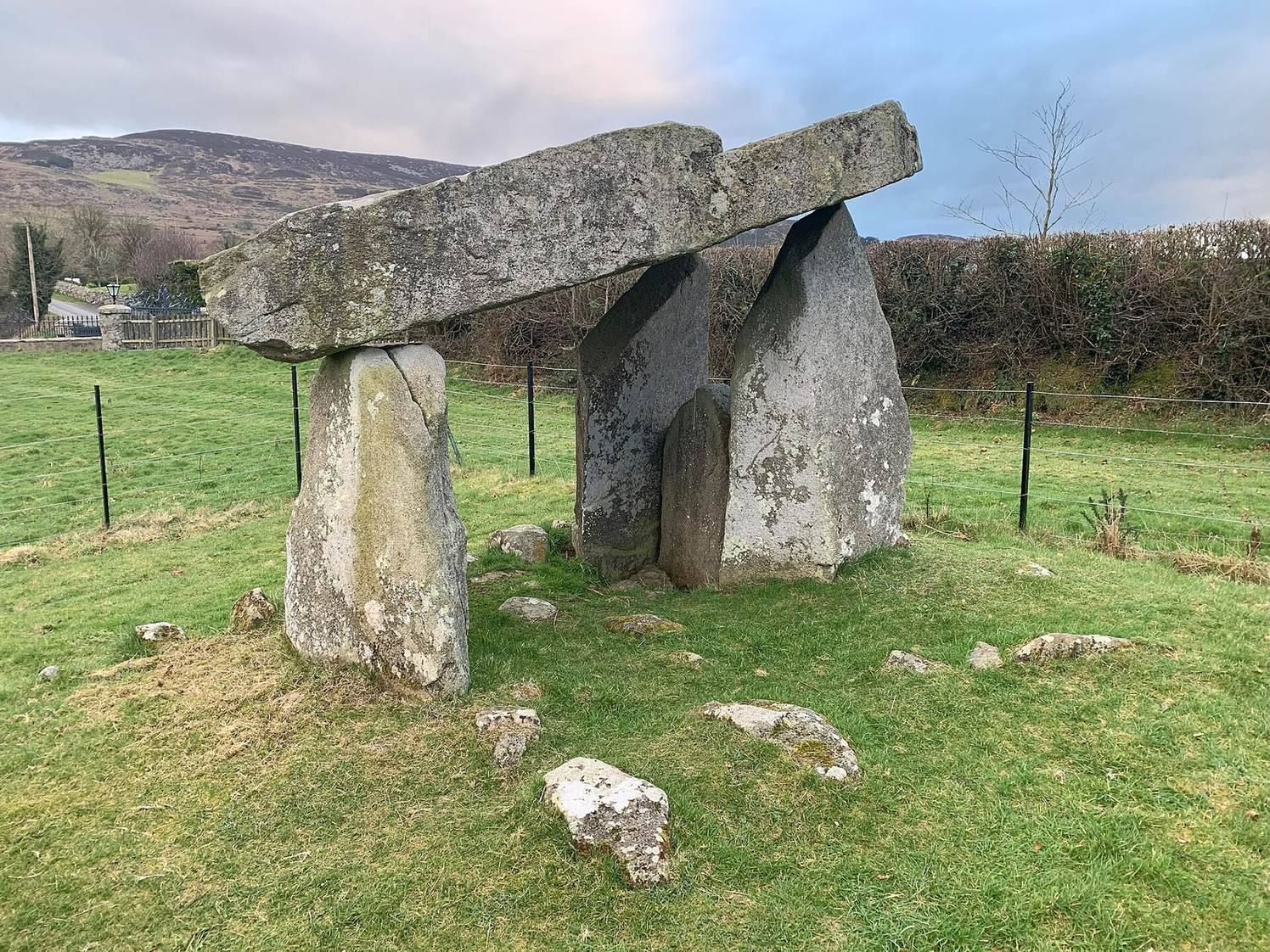
By 1963, the dolmen’s capstone had fallen. During excavation that year, it was reset, and a split rear supporting stone was repaired with cement. The site is protected as a State Care Historic Monument, a historic site held in the care of Northern Ireland’s government.
Remains
The monument stands at the foot of Slieve Gullion’s western slope, on the edge of a river terrace above a tributary of the Forkhill River. Its long cairn is aligned north-northwest to south-southeast, with the portal tomb at its southern end.
Burial structures
Long cairn
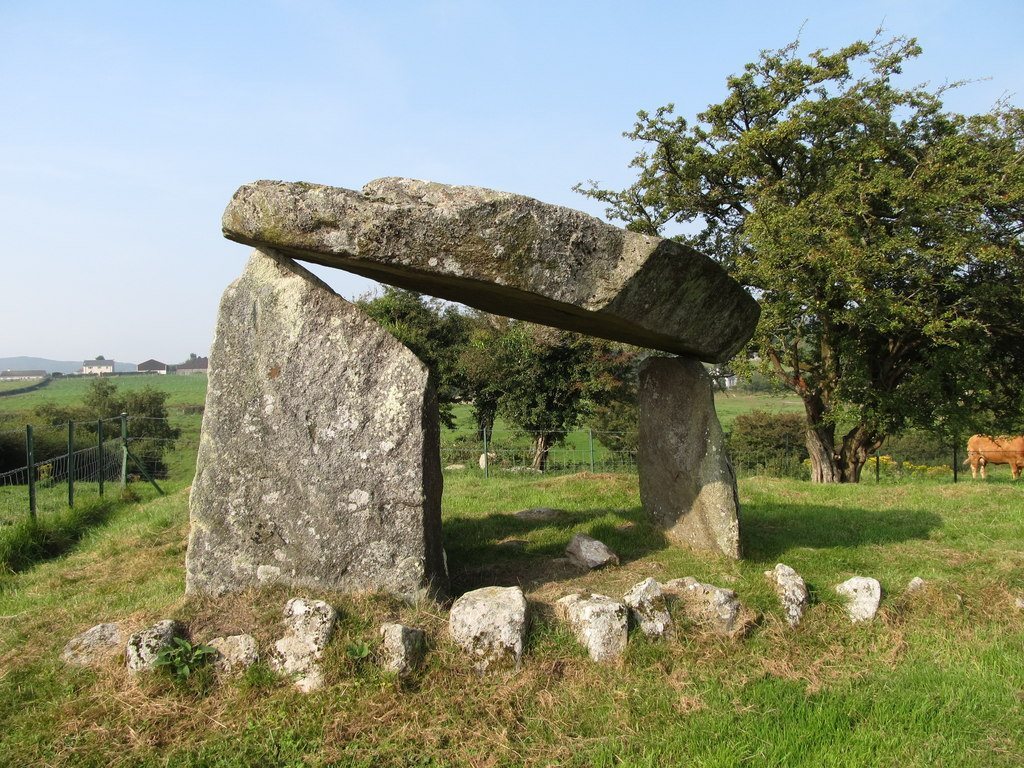
The cairn, a mound of stones, measures about 28.5 m by 9 m and was about 0.75 m high. Two parallel rows of set stones form its visible remains.
Portal tomb
The dolmen is a tripod portal tomb, a form supported by three stones. Three triangular standing stones, each about 2 m high, form its octagonal chamber. A flat granite capstone about 3 m long rests on their tips and has an L-shaped notch of unknown purpose. The entrance faces south, above a small stone between two of the supports. Earth and stones originally covered the tomb.
Excavation of the chamber revealed three richly decorated vessels of Ballyalton-type pottery, a category of Neolithic pottery that includes decorated bowls. High phosphate levels in the chamber floor have been interpreted as evidence of ancient burials.
Northern cist
At the cairn’s northern end, excavation uncovered a stone cist, a stone-lined burial compartment, measuring about 0.9 m square and 0.75 m deep. It contained several hundred sherds of Neolithic pottery, along with tools made of flint or stone, including a projectile point.