Clochafarmore: A Bronze Age Standing Stone in County Louth
Site at a Glance
- Popularity
- High
- Country
- Ireland
- Primary era
- Bronze Age
- Eras represented
- Bronze Age
- Civilizations
- Unclassified
- Site type
- Civic
- Remains
- Megalithic Monument
History
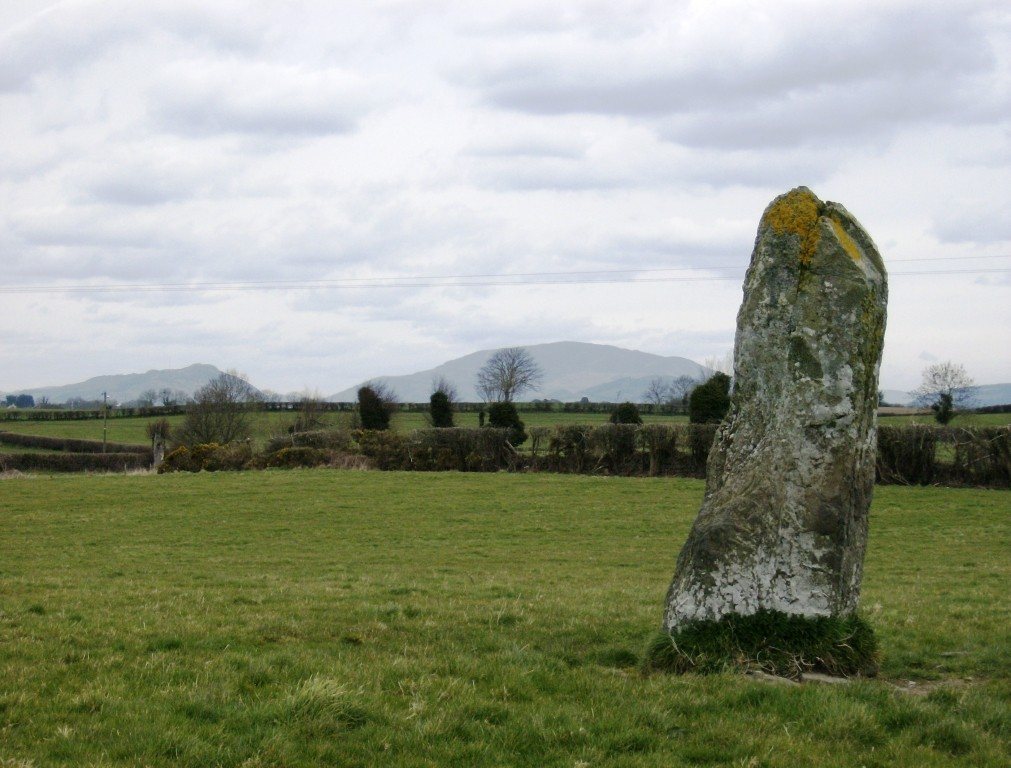
Clochafarmore is a standing stone in Rathiddy, County Louth, Ireland, believed to have been erected around 1450 BC during the Bronze Age, a prehistoric period when bronze was used for tools and weapons. Its original erection place is unknown. Also called Cloch an Fhir Mhóir, meaning “Stone of the Great Man,” and Cú Chulainn’s Stone, it is traditionally associated with the death of the legendary warrior Cú Chulainn.
Cú Chulainn tradition
The story belongs to the Ulster Cycle, a body of Irish heroic tales. In this tradition, the stone had first marked the grave of an earlier great warrior. Cú Chulainn’s enemy, Lugaid mac Con Roí, has three magical spears made, each linked to a prophecy that a king will fall. The first kills Cú Chulainn’s charioteer, Láeg, and the second kills his horse, Liath Macha. The third spear mortally wounds Cú Chulainn, who ties himself to a standing stone identified in the tale as Clochafarmore.
Cú Chulainn continues to fight until a raven, traditionally the form of the war-associated goddess Morrígan, settles on his shoulder. His enemies then believe he is dead. Lugaid beheads him, but a “hero-light” still burns around Cú Chulainn, and his falling sword cuts Lugaid’s hand. In the tale, the light fades only after Cú Chulainn’s right hand is severed.
The stone appeared on an Ordnance Survey map in 1911. A bronze spearhead found in the field during the 1920s led to the suggestion that the area had once been an ancient battlefield. Clochafarmore is designated a National Monument, a formal heritage status in Ireland.
Remains
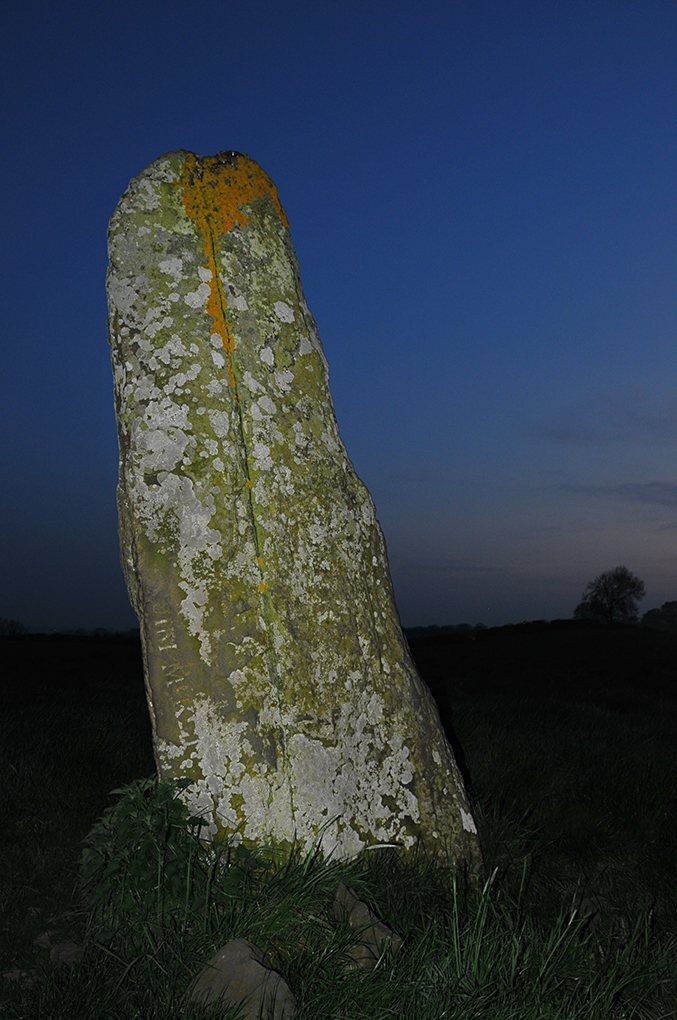
The standing stone is about 3 m high and approximately 4 m in circumference. It stands on the left bank of the River Fane, around 1.4 km east-northeast of Knockbridge, near Dundalk. The surrounding region is called An Breisleach Mór, meaning “The Great Carnage,” and the field containing the stone is known as the Field of Slaughter. An inscription on the stone reads “JIM MCKENNA 1912.”