Ballinskelligs Castle: A Sixteenth-Century Coastal Tower House in Ireland


Site at a Glance
- Rating
- 4.5
- Popularity
- Low
- Country
- Ireland
- Primary era
- Early Modern
- Eras represented
- Early Modern
- Civilizations
- Irish
- Site type
- Military
- Remains
- Castle
On this page8 sections
History
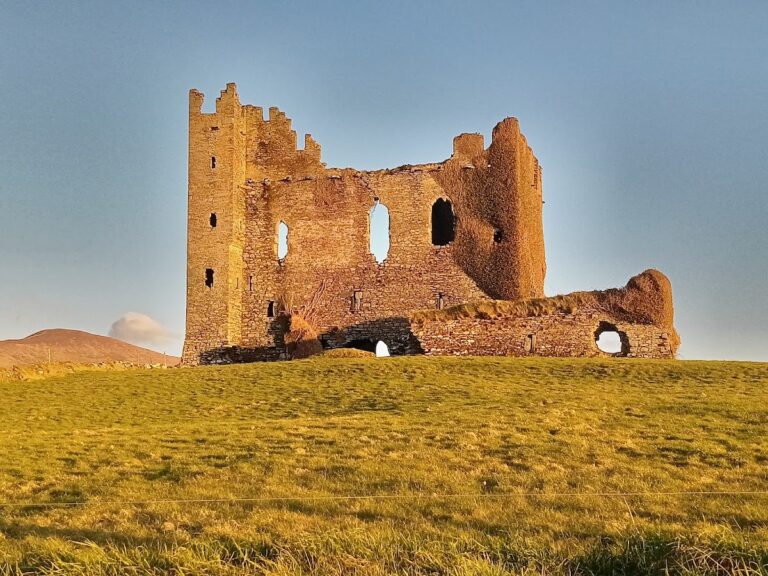
Ballinskelligs Castle is a sixteenth-century coastal tower house in Ballinskelligs, Ireland, built by the MacCarthy Mór clan on the Iveragh Peninsula in County Kerry. The MacCarthy Mórs were a major branch of the MacCarthy Gaelic lordly dynasty in southwest Ireland. The castle protected Ballinskelligs Bay from pirate attacks and may also have been used to collect tariffs from trading vessels entering the bay.
MacCarthy Mór control
The castle formed part of a wider group of coastal strongholds built by the MacCarthy Mórs in territories under their control. Its position on the southern end of Ballinskelligs Bay gave the tower a defensive role connected to the coast, while its possible role in collecting tariffs linked it to maritime movement through the bay.
Seventeenth-century associations
Ballinskelligs Castle may have been the manor associated with the Sigerson clan in the early seventeenth century. The Sigersons were a Gaelic Irish family named in records from that period. Christopher Sigerson is said to have lived at the castle in 1620 after receiving Ballinskelligs Abbey, a nearby religious foundation.
The tower house may have been destroyed around 1651 during the Cromwellian reconquest of Catholic territories in the Irish Confederate Wars. These conflicts, fought in Ireland from 1641 to 1653, involved Irish Catholic Confederates, Royalists, and Parliamentarian forces. The destruction may have been caused by ships of the New Model Army, the Parliamentarian army that carried out the later conquest, operating in Ballinskelligs Bay. A similar action took place at inland Fermoyle Castle, but the cause of Ballinskelligs Castle’s destruction remains uncertain.
Excavation and archaeological protection
The castle is now a ruin. Severe winter storms in 1987 and 1988 caused major damage and led to an emergency excavation in 1988. Further excavation followed in 1991 through a team associated with John Sheehan and the South West Kerry Archaeological Survey. Ireland’s National Monuments Service Historic Environment Viewer identifies the site as a tower house in the national archaeological record.
Remains
Coastal setting and tower
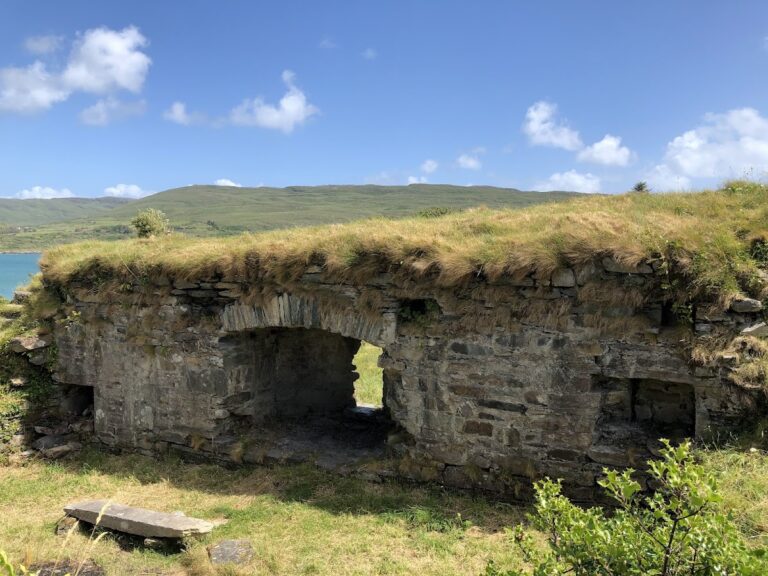
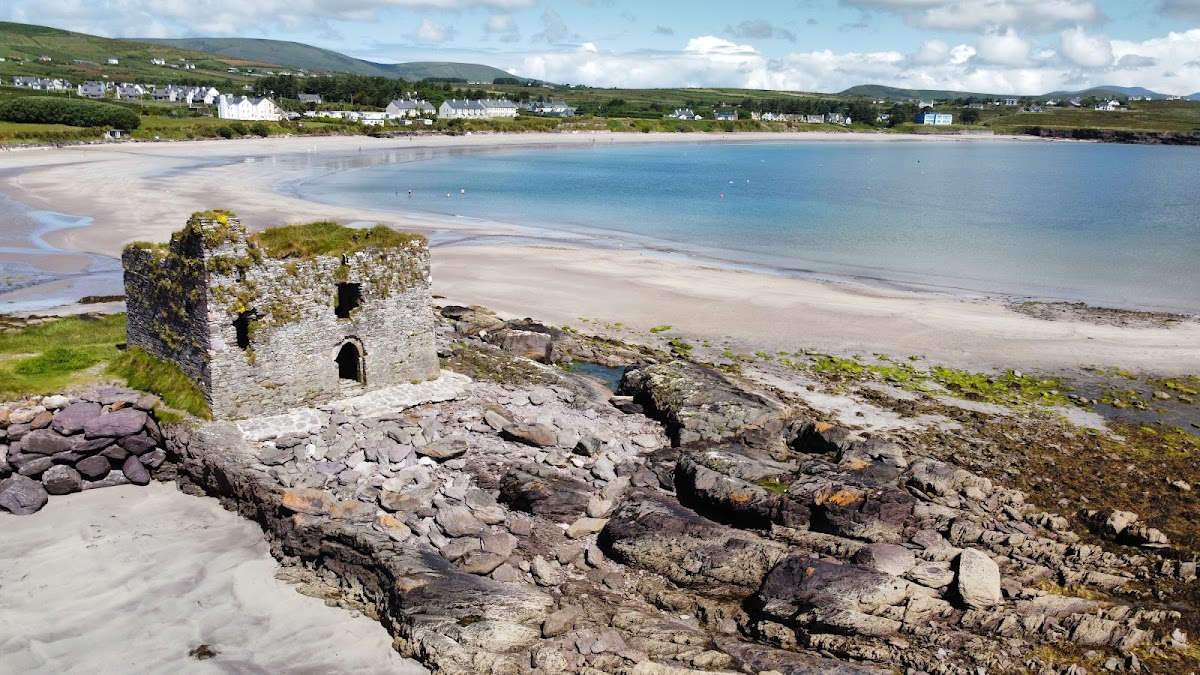
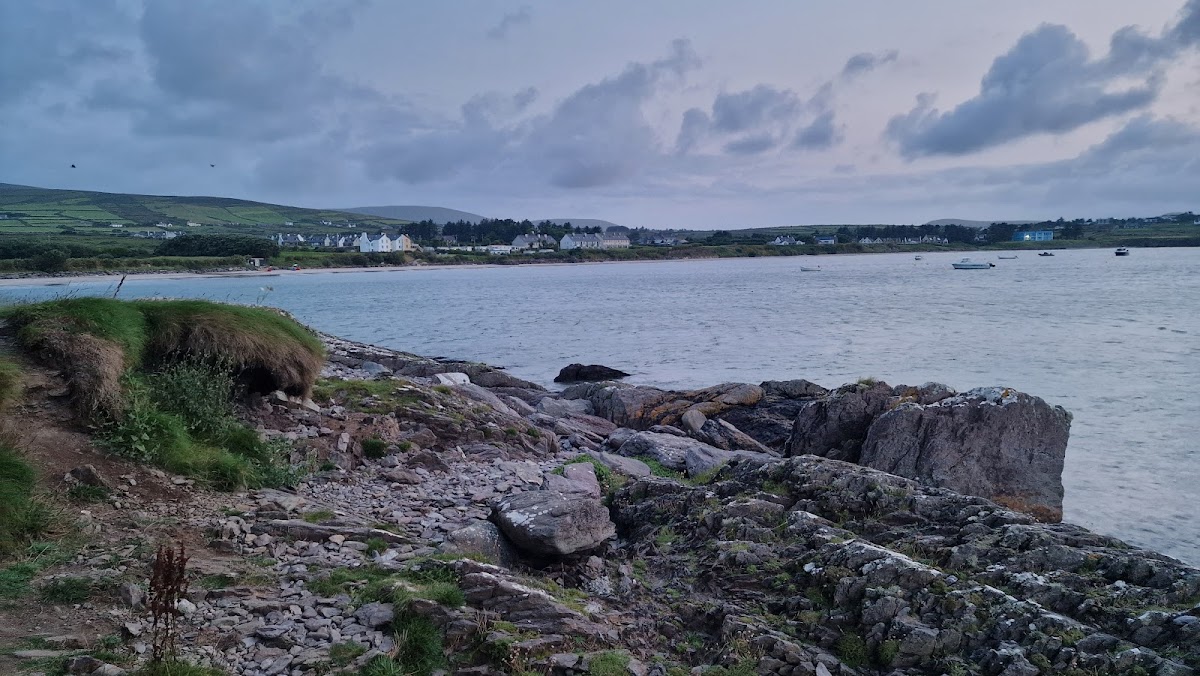
The ruin stands directly on a rocky outcrop at the southern end of Ballinskelligs Bay, on a narrow promontory beside the beach near Ballinskelligs village. Coastal erosion has heavily affected the promontory. The slightly rectangular tower house measures approximately 10 by 7.85 metres and originally rose to up to three storeys. Its ground-floor walls remain about 2 metres thick. The entrance lies on the southeast side, with a chamber built into the wall immediately to its right.
Local bedrock and large coastal boulders form the main construction materials, while carefully dressed sandstone blocks finish the corners. A row of beam holes on the seaward side, between the ground and first floors, may relate to a wall-walk or an external stairway. Loopholes face towards the sea, reinforcing the tower’s coastal defensive function.
Enclosure and eroded ground
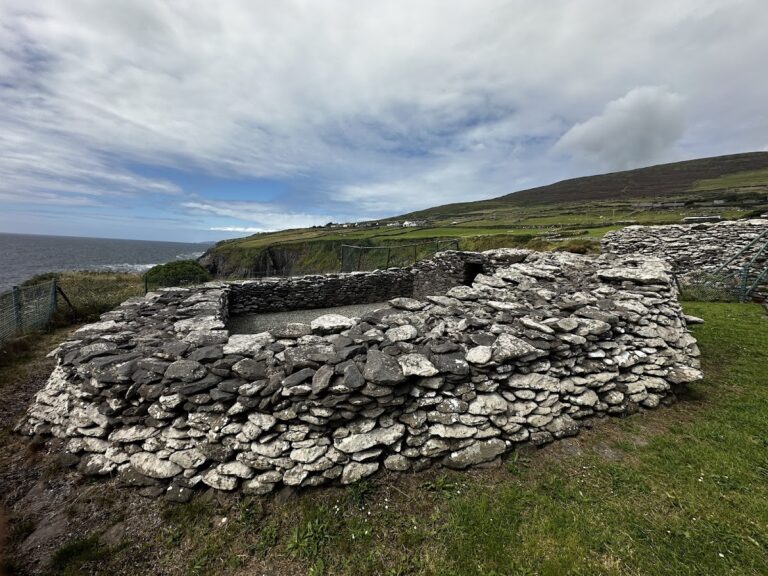
Excavations in 1988 and 1991 revealed the remains of an enclosure around the tower house. The enclosure foundations rest directly on bedrock. Excavated finds date no earlier than the modern period. The castle once stood farther from the shoreline, separated from the sea by approximately 2 acres of intervening ground. Marine erosion has since removed most of that land, and a storm in 1980 may have washed artifacts from the area.
St Michael’s Monastery
The ruins of the early twelfth-century St Michael’s Monastery of Ballinskelligs stand approximately 300 metres south of the castle on another small rocky promontory.