Dunboy Castle: A Gaelic Stronghold and Harbour Defence in Ireland



Site at a Glance
- Rating
- 4.4
- Popularity
- Low
- Country
- Ireland
- Primary era
- Medieval
- External website
- Open
- Eras represented
- Medieval, Early Modern
- Civilizations
- English, Irish
- Site type
- Military
- Remains
- Castle
On this page9 sections
History
Dunboy Castle is a fifteenth-century Irish stronghold in Ireland, near Castletownbere in County Cork, built by the O’Sullivan Bere clan to guard Berehaven Harbour on the Beara Peninsula. The castle protected the harbour and supported the clan’s authority over fishing, taxation, and maritime trade with Ireland and the European mainland.
A harbour stronghold
The castle’s position beside Berehaven Harbour gave the O’Sullivan Bere family control over fishing waters and over vessels seeking shelter there. They collected taxes from Irish and continental European fishing ships, while the settlement also functioned as a centre for imports and exports. Dunboy therefore combined a defensive purpose with a role in the clan’s maritime economy.
Resistance during the Nine Years’ War
Under Donal Cam O’Sullivan Beare, Gaelic leader and Chief of Dunboy, the castle became one of the last centres of resistance during the Nine Years’ War, the conflict fought in Ireland from 1594 to 1603 between Gaelic Irish leaders and the English Crown. Donal Cam opposed English rule, and Dunboy became a principal target during the final phase of the struggle.
In the summer of 1602, Elizabeth I, queen of England from 1558 to 1603, sent about 5,000 soldiers under Sir George Carew to suppress the rebellion. Carew besieged Dunboy after Donal Cam had gone to Ardea near Tuosist to await promised reinforcements and weapons. The castle’s garrison numbered 143 defenders.
The siege lasted two weeks. English artillery battered the walls, and close fighting followed among the damaged masonry. The defenders were eventually overcome, and 58 survivors were captured and executed in the nearby market square. Collins, a priest who had served as a negotiating intermediary rather than as a soldier, was taken to his native Youghal and publicly hanged two days later.
The defeat of the O’Sullivan Bere resistance
When reinforcements, weapons, and other assistance failed to arrive, and Spanish support for the Irish rebels had collapsed, Donal Cam O’Sullivan Beare left Munster with about 1,000 remaining rebels. They began their march on 31 December 1602 and travelled roughly 300 miles toward Leitrim, intending to join the O’Rourke clan leader and continue the struggle with the O’Donnell and O’Neill clans.
The march crossed territory devastated and burned during the war. English forces attacked the fugitives repeatedly after Carew threatened to outlaw anyone who supplied them with food. Dunboy’s destruction and the failure of the wider resistance brought the O’Sullivan Bere stronghold’s military role to an end.
Later use of the site
The castle remained in ruins after the siege until a bastion fort was built on the site in the mid-seventeenth century. A bastion fort used projecting artillery platforms suited to gunpowder warfare, creating a later phase of defence distinct from the medieval castle. The fifteenth-century castle and the later fort were surveyed in the late 1960s by Edward M. Fahy, an arachnologist who also undertook work at the site.
Remains
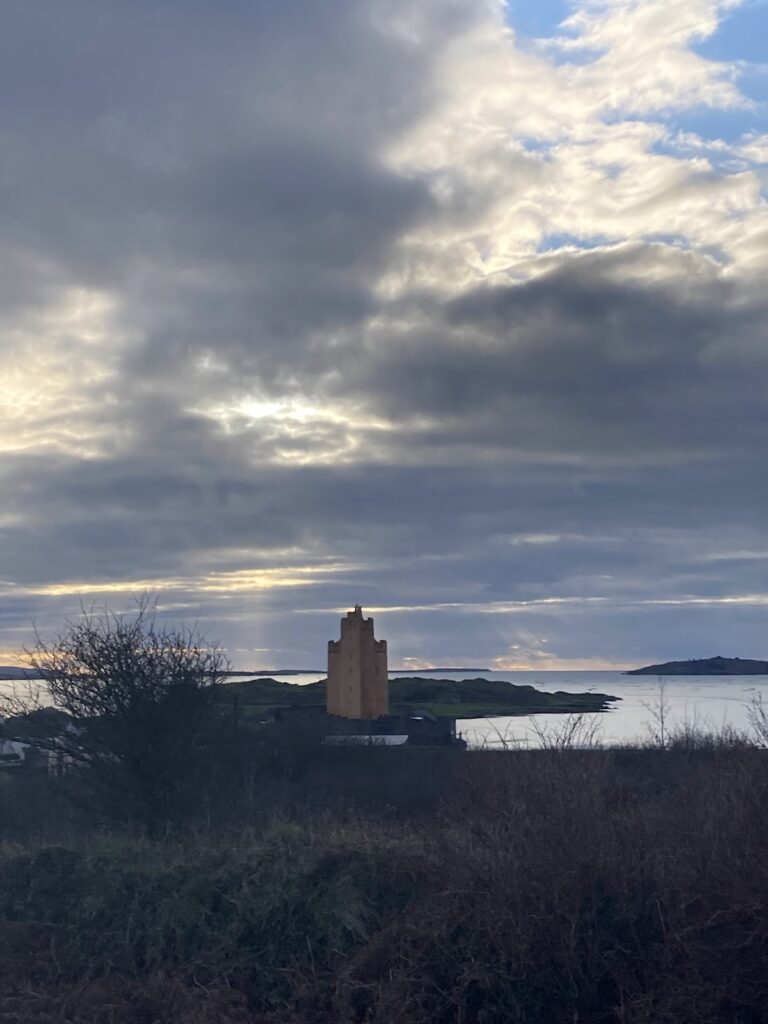
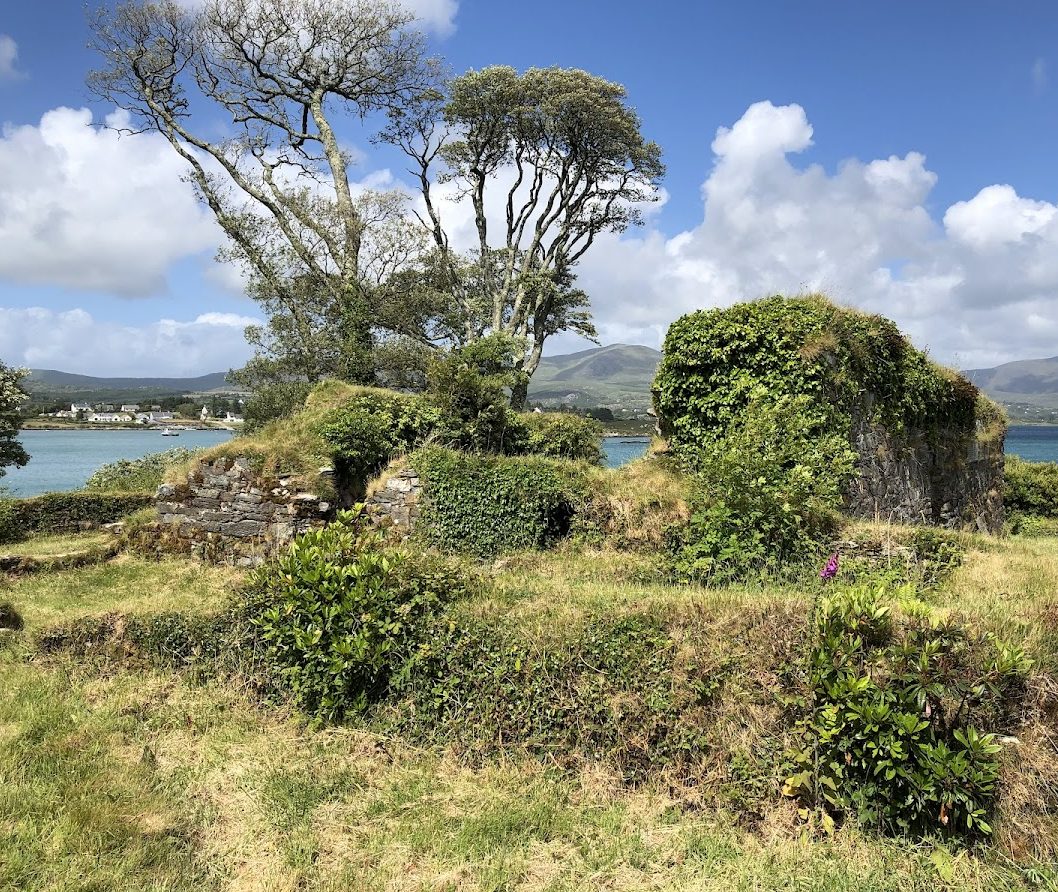
Dunboy’s surviving remains stand beside Berehaven Harbour on the Beara Peninsula. The original complex consisted of a tower house and a bawn, an enclosed defensive area surrounding an Irish tower house. Both were destroyed during the 1602 bombardment and fighting, leaving ruinous remains. The later bastion fort represents a separate fortification phase constructed over the castle site.
The medieval castle
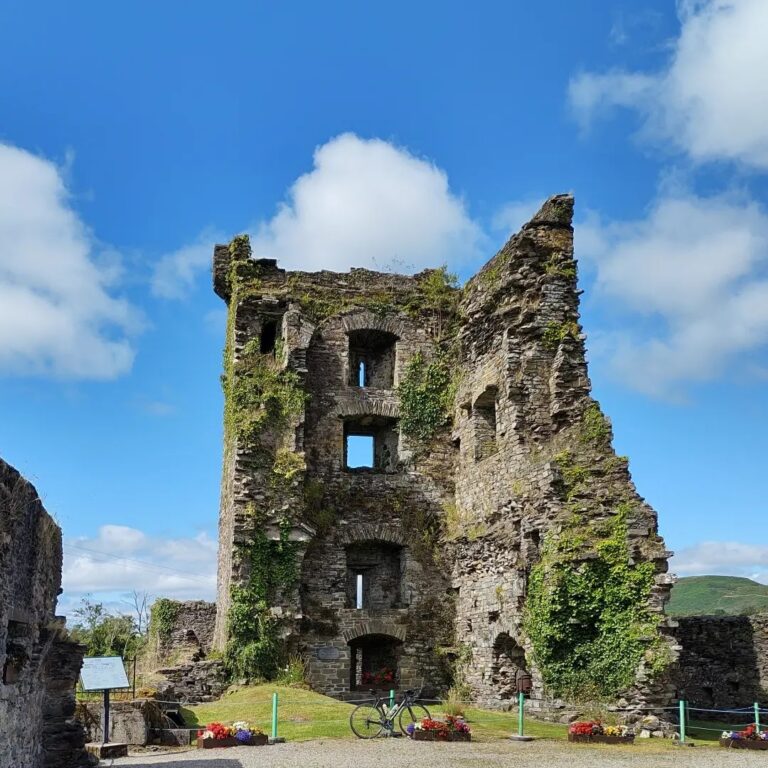
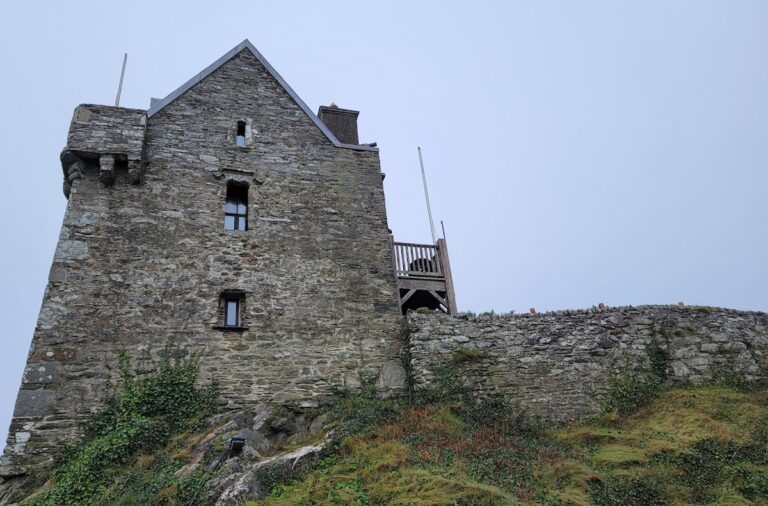
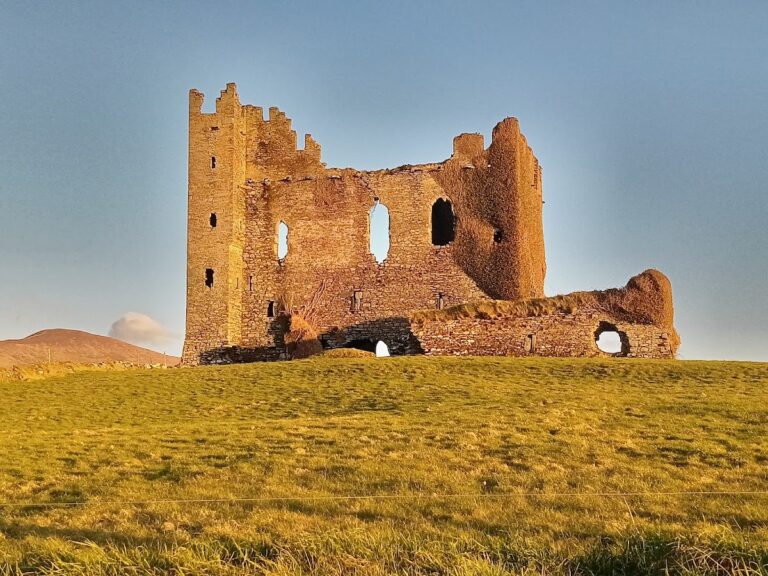
The fifteenth-century castle comprised a tower house and its enclosing bawn. Its position beside the harbour directly supported the stronghold’s defensive function and its control of harbour traffic and maritime fishing. During the siege, artillery smashed the walls, while subsequent combat took place amid the rubble. The surviving castle fabric is consequently ruinous, with much of the original structure destroyed.
The seventeenth-century fort
A bastion fort was erected on the site in the mid-seventeenth century after the castle’s destruction. Its projecting artillery platforms reflect the military requirements of gunpowder warfare and distinguish the fort from the earlier tower-house complex. The fort and castle remains were both surveyed in the late 1960s.
Puxley Mansion
Puxley Mansion is a separate nineteenth-century manor house near the castle ruins. It is also sometimes called Puxley Castle or Dunboy Castle. The Irish Republican Army burned the mansion in 1920 in retaliation for Crown Forces’ destruction of houses that had sheltered IRA members and weapons. Some restoration work took place in the 2000s, but plans to refurbish the building and convert it into a hotel were not completed.