Ąžuolpamūšė Hillfort: A Semigallian Fortified Settlement in Lithuania
Site at a Glance
- Rating
- 4.5
- Popularity
- Very Low
- Country
- Lithuania
- Primary era
- Medieval
- External website
- Open
- Eras represented
- Medieval
- Civilizations
- Unclassified
- Site type
- Military
- Remains
- Castle
On this page4 sections
History
Ąžuolpamūšė Hillfort, also known as Dabužiai Hillfort, is an archaeological site in Lithuania that developed as a fortified hilltop and associated settlement during the ninth to thirteenth centuries. Around the beginning of the second millennium, a Semigallian castle stood here. The Semigallians were a Baltic people whose historical territory included parts of present-day northern Lithuania and southern Latvia.
The site occupies a strategic high point at the meeting of the Tatula and Ūgė rivers. Its archaeological remains include defensive earthworks, settlement layers, and objects that illuminate occupation at the hillfort and in the surrounding settlement area.
In 2001, Gintautas Zabiela investigated the southern edge of the hillfort plateau and the northwestern spur. The work covered 107 square metres and exposed a substantial cultural layer containing structural remains, domestic materials, tools, ornaments, and animal bones.
Ąžuolpamūšė Hillfort was declared a cultural monument of Lithuania by a government resolution dated 19 May 1998. The protected territory covers 1.2 hectares, while the physical-protection subzone covers 21,000 square metres.
Remains
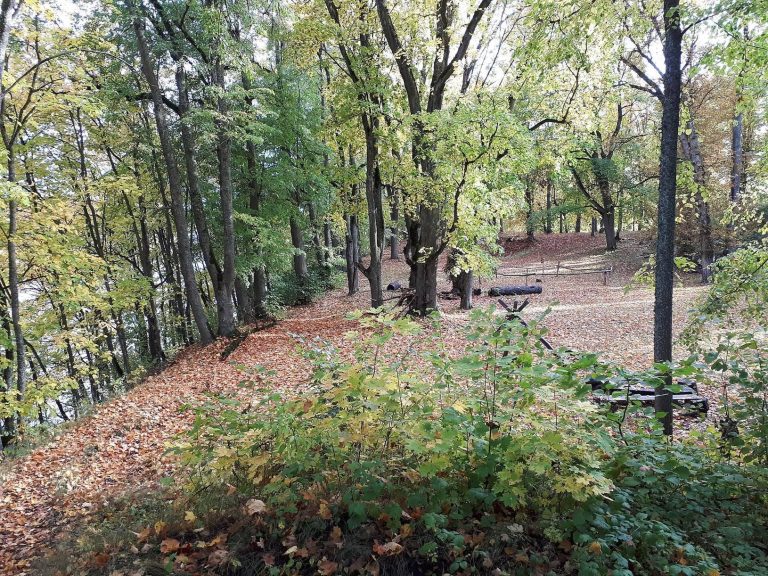
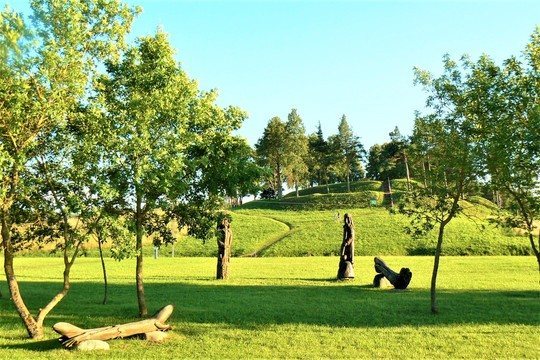
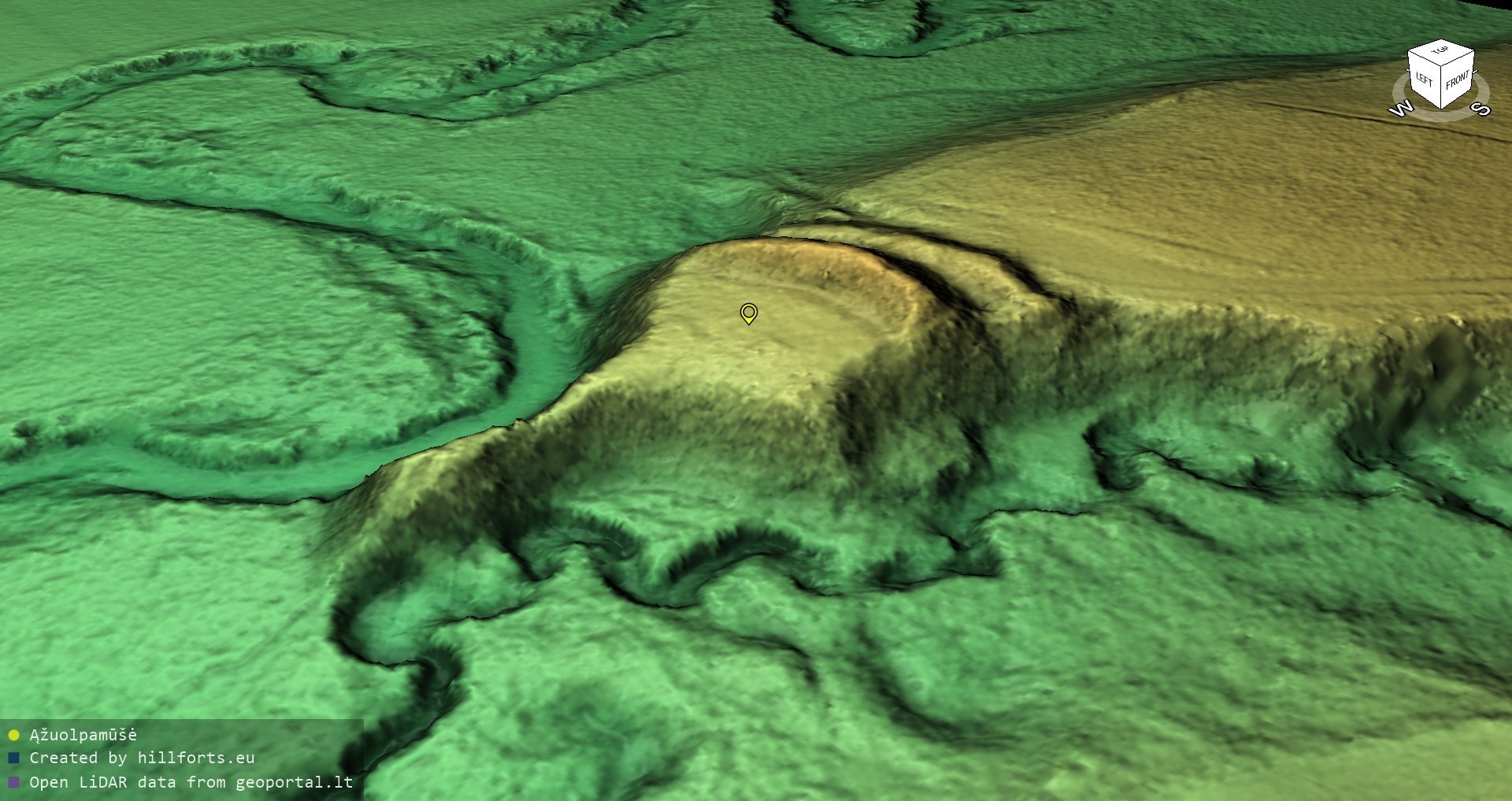
The hillfort stands on a promontory at the confluence of the Tatula and Ūgė rivers. Its elongated plateau runs from east to west and measures 60 by 36 metres. Two ramparts enclose its eastern side, while erosion by the Tatula River has removed the western part of the plateau.
Ramparts and defensive structures
The inner eastern rampart is 45 metres long and 3.5 metres high. Beyond it, the outer rampart extends for 50 metres and rises 1.3 metres. A further rampart was identified along the northwestern edge. Its fortifications used posts about 50 centimetres in diameter, set into the ground and held in place with stones.
Settlement remains and archaeological finds
A settlement lay east of the hillfort, and a foothill settlement extended eastward and southwestward across 0.7 hectares. Finds from this area included handmade pottery with roughened surfaces and burnt stones.
The 2001 investigation revealed a cultural layer between 50 and 130 centimetres thick. It contained the remains of stone-built ovens, a hearth, and postholes, together with part of an iron socketed spearhead. This type of spearhead had a hollow socket for inserting the wooden shaft. Other finds included awls, a bronze pendant, parts of bronze pins, rings, silver wire, smooth and rough-surfaced pottery, and animal bones.