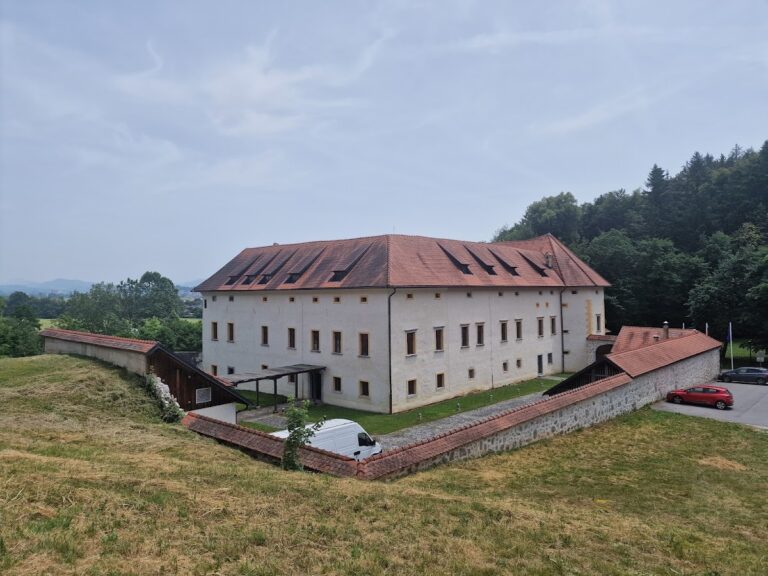
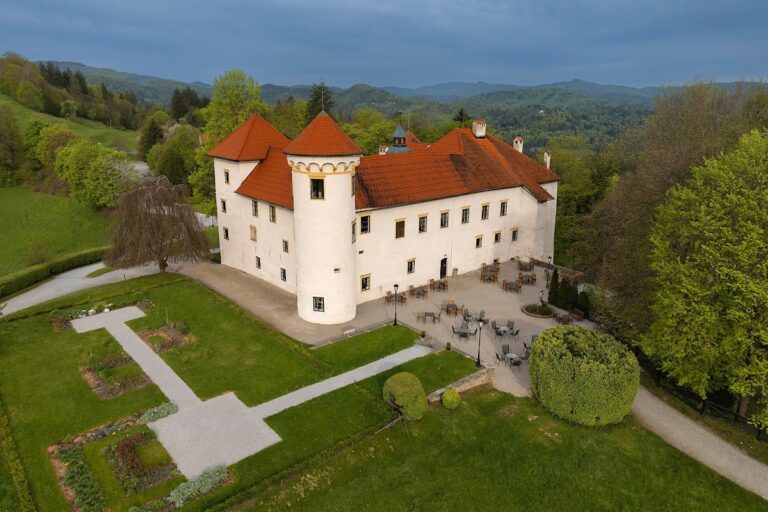
Osterberg Castle: A Medieval Fortress and Gallenberg Lordship in Slovenia
Site at a Glance
- Rating
- 4.1
- Popularity
- Very Low
- Country
- Slovenia
- Primary era
- Medieval
- External website
- Open
- Eras represented
- Medieval, Early Modern
- Civilizations
- Habsburg, Holy Roman Empire
- Site type
- Military
- Remains
- Castle
On this page10 sections
History
Osterberg Castle is a medieval fortress in Slovenia, near Ljubljana, built by the Spanheims in the twelfth century as a tower castle on the eastern edge of their Ljubljana estate. It controlled the meeting point of the Ljubljanica and Sava rivers and the freight route into Zasavje, giving it an important military and administrative position.
Spanheim foundation and medieval administration
The Spanheims, a medieval ruling dynasty with Carinthian possessions around Ljubljana, had established the castle by the middle of the twelfth century. Osterberg was first recorded in 1256 as castrum in Carniola Osterberch. At that time it belonged to Filip Spanheim, Patriarch of Aquileia and Archbishop of Salzburg, who was the brother of Ulrich III, Duke of Carinthia.
The castle and its lordship were managed by the Osterberg knights, Spanheim ministerials. Ministerials were dependent noble administrators and military retainers who served a ruler or major lord. Henry is recorded at Osterberg in 1260. The original tower castle was probably abandoned in the middle of the thirteenth century, when the Spanheims built a new castle somewhat lower, on the site of an earlier defensive tower.
After the Spanheim dynasty died out, Osterberg passed to the Counts of Gorizia-Tyrol in 1279 and to the Habsburgs in 1335. The Counts of Gorizia-Tyrol were a medieval comital dynasty with lands in the eastern Alps, while the Habsburgs were the ruling dynasty that acquired the relevant territorial lordship. Osterberg continued to be administered by ministerials, including Drechsel and Kuno in 1282, Rutlib in 1300, and the brothers Walchil and Zenobius in 1319.
Division of the lordship
By the early fourteenth century, ownership of Osterberg had become divided among several families descended from Spanheim and Gorizia-Tyrol holders, as well as the territorial prince, a ruler exercising sovereign authority over a particular territory. Economic and political difficulties led the co-owners to sell their shares one after another.
In 1338 Ulrich of Hertenberg sold his share to his nephew Nicholas, who also held a portion inherited from his father Otto. Nicholas sold part of his interest to Nicholas Sommerecker the Elder in 1339 and another part to his uncle Nicholas Reynman of Bled in 1342. The territorial prince’s share was granted as a feudal holding to Seifrid of Šentpeter in 1340, while Henry of Gradenik held another share.
In 1348 the various owners sold the castle and estate to Ortolf Poumek of Ljubljana. The castle may have suffered damage in the severe earthquake of that year, or it may have deteriorated because plague and population decline reduced the resources available for its maintenance. In 1360 Poumek sold one-third of the castle to Nicholas Sommerecker the Younger and the other two-thirds to his father-in-law, William Gallenberg. William acquired his brother-in-law’s remaining share in the following year.
The Gallenberg lordship
The Gallenbergs, an influential noble family of Carniola, held the entire lordship from after 1360 until 1567. They descended from the Gall family, ministerials of the Andechs at Gamberk Castle, and had previously settled at Mekinje near Kamnik. The branch at Osterberg adopted the name “Gallenbergs of Osterberg.” During their tenure the castle was spacious and included a chapel dedicated to Saint Jude, a Christian apostle and saint. A second chapel dedicated to Our Lady, a traditional title for the Virgin Mary, was added later.
The succession apparently entered a crisis in the early fifteenth century, and the castle reverted to the Mekinje branch of the family. In 1417 Seifrid’s widow Ana and their son William held the property. They later acquired the lordship of Mala Loka near Ihan and apparently moved there. In 1423 Nicholas Gallenberg sold the vacant castle, together with five farms and two mills, to John Hohenwart, who apparently lived there. After John’s death around 1434, the Gallenbergs appear to have regained the lordship, and Nicholas is recorded as its owner after 1440.
In the early sixteenth century Osterberg was held by William III Gallenberg. After his death before 1518, his son John administered the lordship until his own death in 1535. John’s son Matthias, the family representative at Osterberg, died before 1553, leaving his minor son George under the guardianship of the relatives Raspi and Hagni.
Partition, abandonment, and later change
Alexander Gallenberg reportedly established the Lustthal manor at Dol, across the Sava, in 1540. In his 1548 will he left the manor and his share of Osterberg, which he was said to have held since 1518, to his nephews William and Siegfried, the sons of his sister Ursula Raspi.
George Gallenberg, who had succeeded John at Osterberg, was killed fighting the Turks at Bihać on 1 February 1562. He was unmarried and the last male descendant of his branch. A succession dispute between his sisters Agnes Hagen and Felicita Merklinz and the descendants of Ursula Raspi ended with a partition agreement in 1567. Each party received one-third of the property.
After George’s death, the castle was abandoned and rapidly deteriorated. The Raspi nobles of Dol held it until 1688, after which it passed to the Erbergs of Dol, who retained it until the nineteenth century. By the second half of the seventeenth century, the castle was already described as being in ruins.
In 1789 Jožef Kalasanc Erberg demolished the ruins and built a villa on the site, incorporating part of the former castle into the new building. The property later passed through other hands, including those of Franc Povše and the industrialist couple Kansky of Podgrad. The site consequently acquired later names such as Povše’s Castle and the New Castle. Its remains were registered as a cultural-heritage site in Slovenia and designated a locally important immovable monument on 9 May 2006.
Remains
Ridge-top castle site
The surviving remains stand on the western ridge of Kašelj Hill above the Besnica stream near Podgrad. The site overlooks the Besnica gorge and the confluence of the Ljubljanica and Sava. Only a few ruins survive from the medieval complex. The first castle was a tower castle, while the later Spanheim building stood somewhat lower on the site of an earlier defensive tower.
Old Castle walls
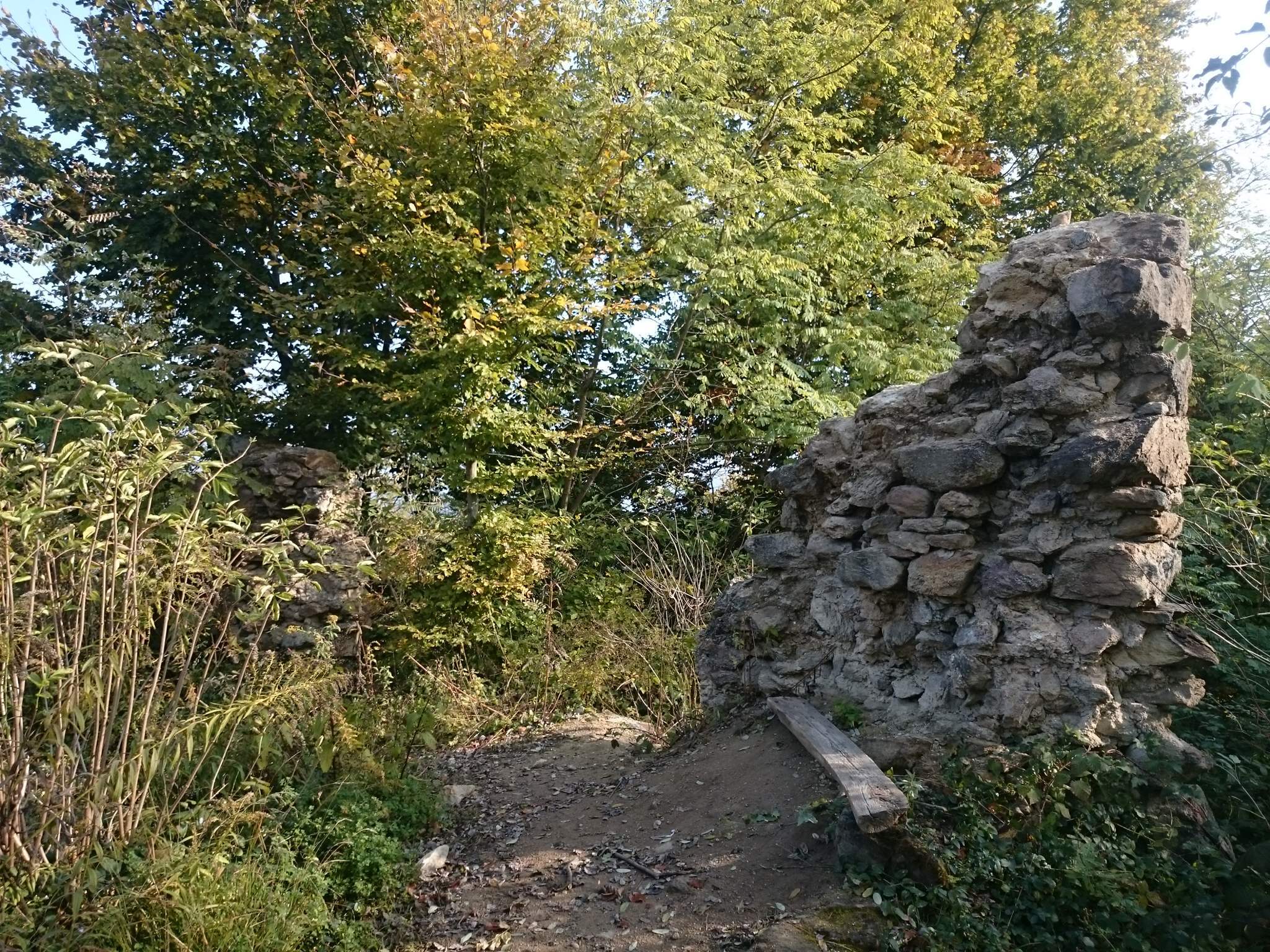
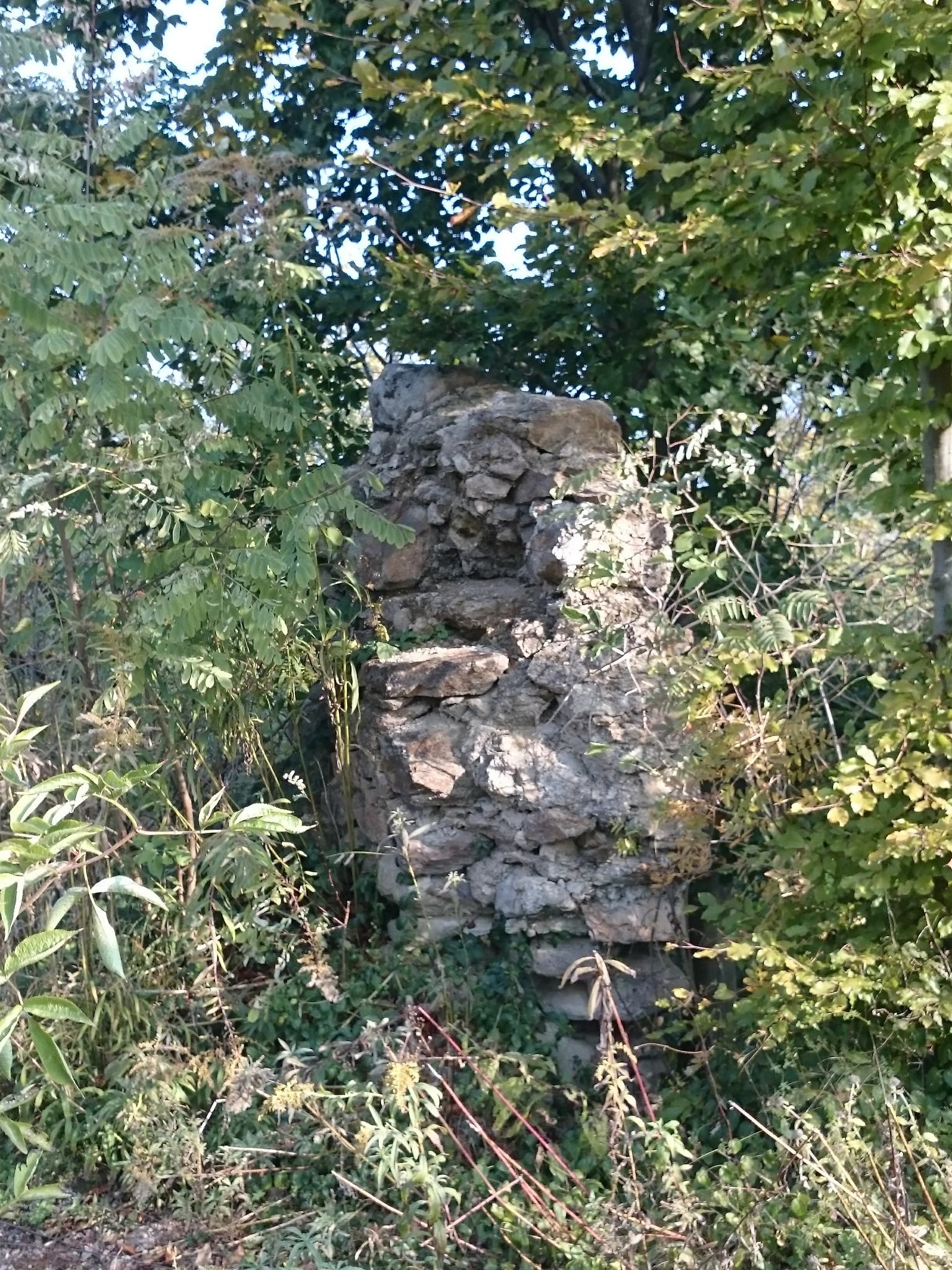
The remaining Old Castle walls rise to approximately 4 metres. They were built from roughly dressed sandstone quarried immediately above the Besnica below the castle. The same quarry was also used to carve millstones. The surviving masonry represents the fragmentary remains of the former castle rather than a complete standing structure.
Red Castle villa
Jožef Kalasanc Erberg retained an eastern outer wall approximately 10 metres high and 10 metres long when he built the later residence. Against this wall he attached a single-storey Renaissance villa, a country residence influenced by Renaissance architectural forms. The ridge of the villa rested against the old castle wall. Its red facade led to the popular name Red Castle.
Chapels and internal use
During the Gallenberg period, the castle contained a chapel dedicated to Saint Jude. A second chapel dedicated to Our Lady was added later. The presence of two chapels has led to the suggestion that two families may have occupied the castle at the same time. These religious features belonged to the period when Osterberg functioned as a substantial noble residence and lordship centre.