Aydos Castle: A Byzantine Frontier Fortress in Türkiye


Site at a Glance
- Rating
- 4.5
- Popularity
- Medium
- Country
- Turkey
- Primary era
- Medieval
- External website
- Open
- Eras represented
- Medieval
- Civilizations
- Byzantine
- Site type
- Military
- Remains
- Castle
On this page9 sections
History
Aydos Castle is a Byzantine fortress in Türkiye, located on Aydos Hill in Istanbul. Built under Eastern Roman rule, it has no certain construction date, but it became more important during the 11th century as Turkish forces approached Constantinople. The fortress served as an administrative centre and monitored the frontier between Constantinople and İzmit, together with the coastal route from Üsküdar through Samandıra to İzmit.
Byzantine frontier stronghold
The castle was formerly called Aetos, the Greek word for “eagle,” a name preserved in slightly altered form by Aydos. Turkish advances in the 11th century increased the fortress’s strategic value, although the beginning of the Crusades contributed to the withdrawal of Turkish forces from the area.
Conflict returned to the region in the late 13th century. After Ottoman forces brought much of the Kocaeli Peninsula under their rule between 1326 and 1328, the frontier between the Byzantine and Ottoman states followed the Aetos–Pentikion line, corresponding approximately to the area of modern Pendik. Aydos stood within this contested zone and administered the territory between present-day Üsküdar and Gebze.
Ottoman capture and decline
The Ottoman historian Âşıkpaşazâde relates that Orhan Gazi, an early Ottoman ruler whose reign brought major expansion in northwestern Anatolia, assigned Abdurrahman Gazi, Akça Koca, and Konur Alp to capture the fortress. After taking Semendra Castle, identified with modern Samandıra, the commanders laid siege to Aydos.
The traditional story says that the castle’s ruler, or tekfur, had a daughter who recognized Abdurrahman Gazi as the hero she had seen in a dream. She arranged the surrender by telling the besiegers to pretend to withdraw. At night, she lowered a rope from the castle, allowing Abdurrahman Gazi to climb inside and open the gate for the Ottoman soldiers.
Later Ottoman and European writers reshaped the episode in different ways. Neşrî presented it as a love story, while Hoca Sâdeddin Efendi, an Ottoman historian and religious scholar, gave it a religious interpretation. Versions were also recorded or adapted by Hadidî, Ibn-i Kemal, Katip Çelebi, Solakzade Mehmet Hemdemi Efendi, Joseph von Hammer-Purgstall, and Alphonse de Lamartine. One form of the tradition says that the castle ruler’s daughter dreamed of Muhammad.
After the conquest, Abdurrahman Gazi settled at Aydos and led raids toward Üsküdar, then known as Scutari. The fortress later lost its administrative and military importance. According to Hoca Sâdeddin Efendi’s account, Orhan Gazi ordered it dismantled after conquering İzmit in 1337, transferring its guards and inhabitants to the newly conquered city.
Archaeological investigation
Aydos Castle and its surrounding area were declared a first-degree archaeological site. Excavations began on 13 September 2010 as the first stage of planned architectural survey, restitution, and restoration work. Sultanbeyli Municipality initiated the project under the direction of Zeynep Kızıltan of the Istanbul Archaeological Museums, with the first phase conducted under the field responsibility of deputy museum director Gülbahar Baran Çelik and ending on 17 February 2011. A second phase continued several years later and ended in December 2022.
Remains
Hilltop fortress
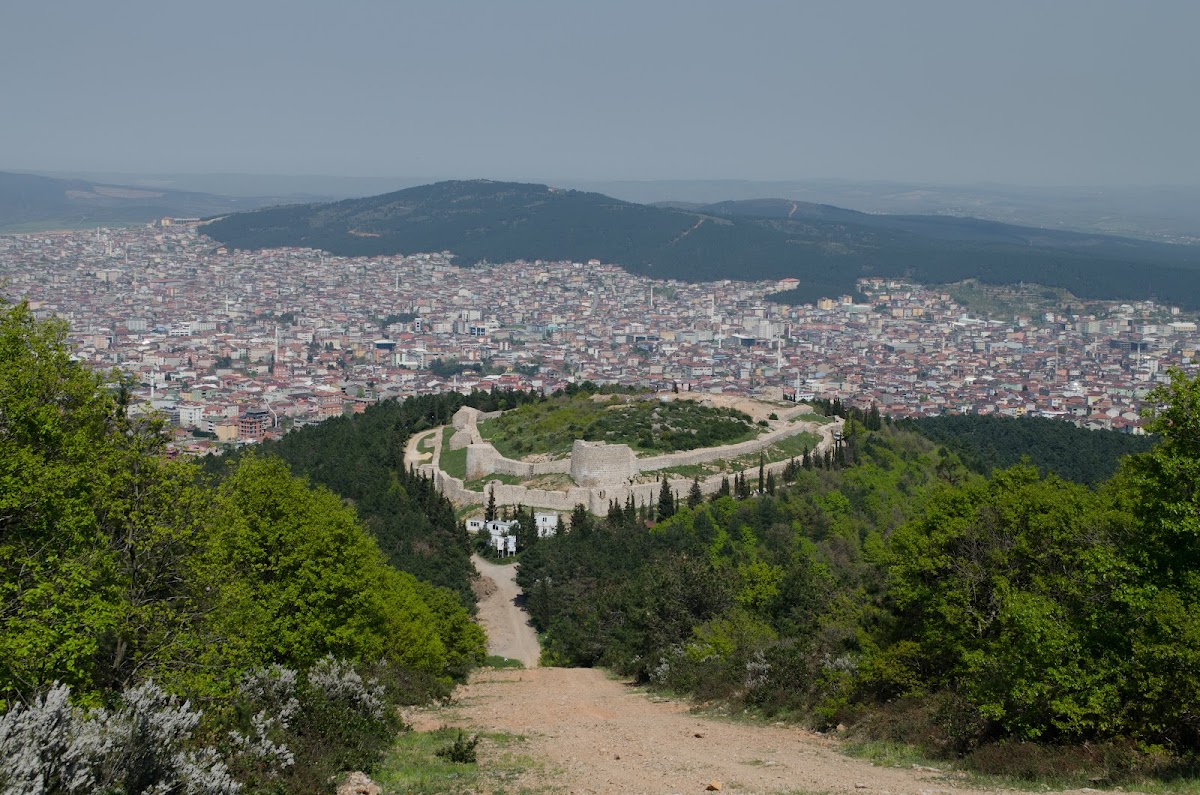
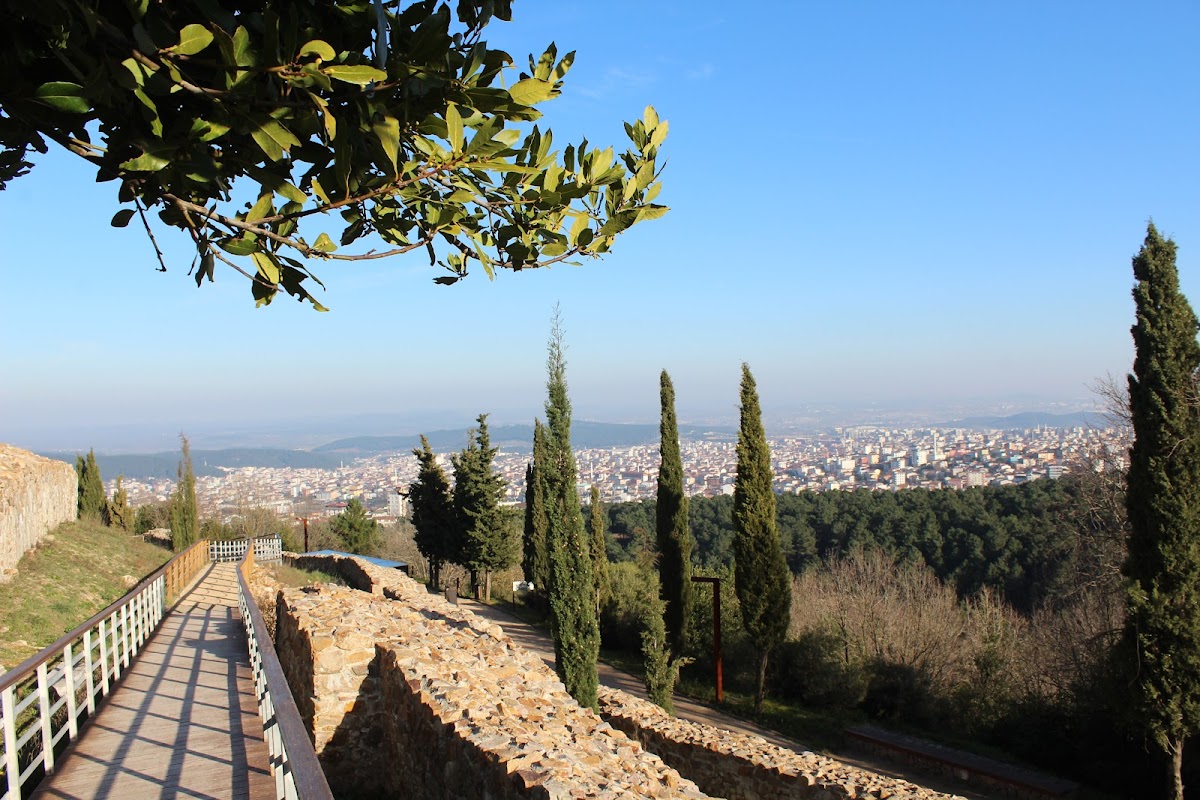
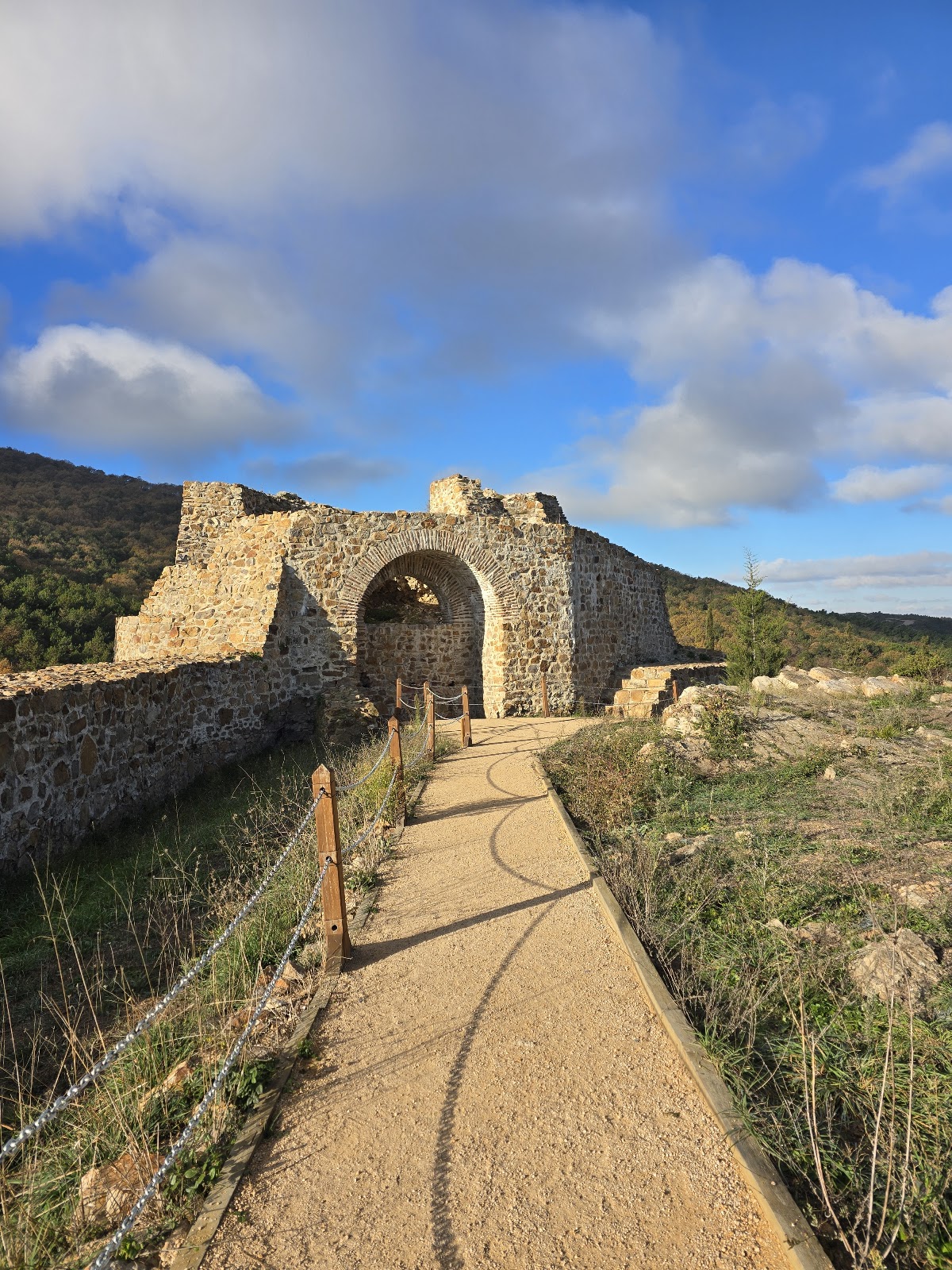
Aydos Castle occupies approximately 26,000 square metres within its outer walls. It stands in a summit position on a 325-metre extension of Aydos Hill, which rises to 537 metres and forms the highest point in Istanbul. The fortress has an elliptical plan approximately 120 metres long and up to 50 metres wide. Its masonry consists mainly of rubble stone and limestone.
Defensive walls and towers
The fortification was arranged with inner and outer defensive walls. Six towers belonged to the inner wall, while seven stood along the outer wall. Earlier major fires severely damaged the castle, and the excavated area may represent only a small part of a larger complex. Six towers survive, together with the entrances and exits of two secret passages on the western side.
Cistern and observation tower
A cistern, an enclosed reservoir for collecting and storing water, measures approximately 12 metres by 7.5 metres within the fortress. The foundation of an observation tower also survives. It is described as having been approximately 100 metres high, giving the remaining structure a place within the castle’s defensive system.
Memory of the conquest
The capture tradition is also represented in a 1558 miniature in Arifî’s Osmannâme. Arifî, an Ottoman miniature painter, depicted the castle ruler’s daughter lowering her long braid from the fortress so that Abdurrahman Gazi could climb into it. The image preserves the story’s place in later Ottoman historical memory, while the surviving walls, towers, passages, cistern, and tower foundation reveal the physical form of the Byzantine stronghold.