Axevalla House: A Medieval Castle Ruin in Sweden
Site at a Glance
- Rating
- 3.9
- Popularity
- Very Low
- Country
- Sweden
- Primary era
- Medieval
- External website
- Open
- Eras represented
- Medieval
- Civilizations
- Swedish
- Site type
- Military
- Remains
- Castle
On this page6 sections
History
Axevalla House is the ruin of a medieval castle in Sweden, in Skärv parish in Skara Municipality, Västergötland. Its first recorded appearance dates to 1278, when the Swedish king Magnus Ladulås was taken prisoner there during a feast by his host, Peter Porse. Later references called it the “new castle in Axavald” in 1315 and the “New House” in 1321, suggesting that it may have replaced an earlier construction. The castle’s position made it an important stronghold during the continuing conflicts among the Nordic kingdoms.
Royal succession and the siege of 1323
After Magnus Ladulås died in 1290, his kingdom was divided among his sons Birger, Erik, and Valdemar. Axevalla was assigned to Duke Erik. When Erik died as a prisoner at Nyköpings House in 1318, his widow, Ingeborg Håkansdotter, received Axevalla as her residence. Ingeborg was the mother of her underage son, King Magnus Eriksson, so her control of the castle was connected to the question of royal authority.
Ingeborg’s contacts with the powerful Danish Porse family alarmed the Swedish Crown. Axevalla was an important military position, and the Crown ordered that it be returned despite her opposition. Peaceful negotiations failed, leading to a siege in 1323. The dispute ended with the Peace of Skara in 1326, when Ingeborg relinquished Axevalla and moved to the estate of Dåvö in Munktorp, Västmanland. The castle was remodelled in the early fourteenth century.
Danish control and the castle’s destruction
In 1367, Axevalla came under the control of King Albrecht of Mecklenburg, a Swedish king from the German House of Mecklenburg. After his defeat at Åsle in 1389, the castle passed to Margaret of Denmark, who ruled Denmark, Sweden, and Norway and established the political union later known as the Kalmar Union. Axevalla then served as a residence for Danish sheriffs, royal officials who administered territory and exercised authority for the crown.
The Swedish rebel leader Engelbrekt Engelbrektsson unsuccessfully tried to capture Axevalla in 1434 during an uprising against Danish-controlled authority in Sweden. A second siege followed in 1436. Although peace negotiations were suspended, the sheriff soon surrendered the castle voluntarily to the Swedes. Axevalla probably formed part of a defensive line against Danish forces. During the conflicts between King Charles VIII of Sweden and King Christian I of Denmark, it was attacked by a peasant uprising and burned to the ground. The castle was never rebuilt.
The ruins were later depicted in Suecia antiqua et hodierna, meaning “Ancient and Modern Sweden,” a seventeenth-century work that documented Swedish places through written descriptions and engravings. This record preserves an early visual account of Axevalla after its destruction.
Remains
Fortifications and lakeside setting
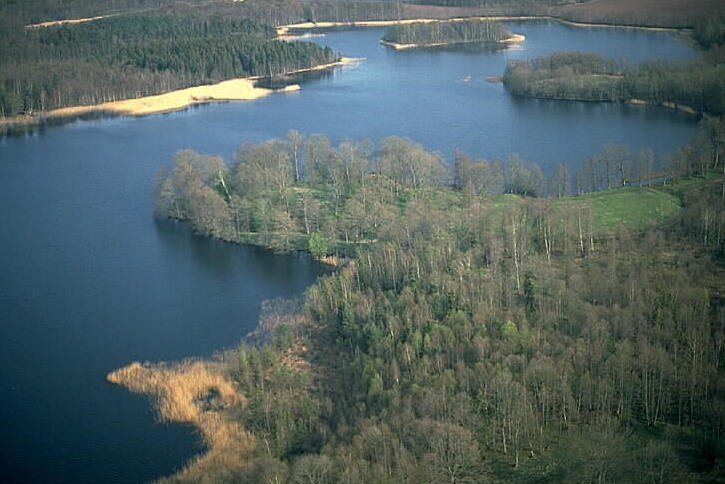
Axevalla House stood on a headland beside Lake Husesjön, east of the Axevalla Hed heathland and approximately halfway between Skara and Skövde. The main fortress measured 52 by 44 metres and was enclosed by fortifications, ramparts, and a moat. Palisades extended into the lake, strengthening the water side of the position. A stone road approached the castle through swamp, which surrounded the route and added to the defensive character of the site.
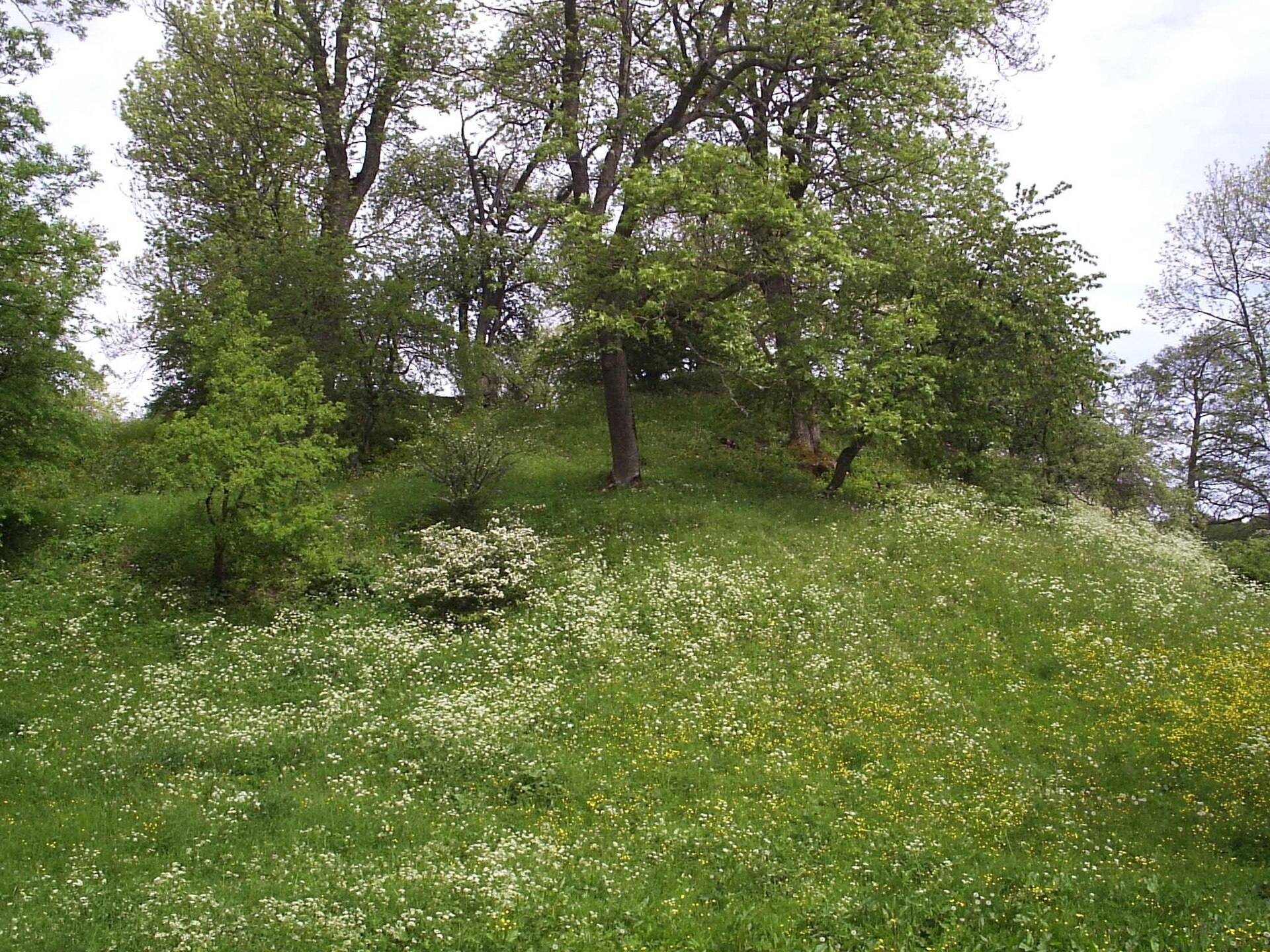
Surviving ruin
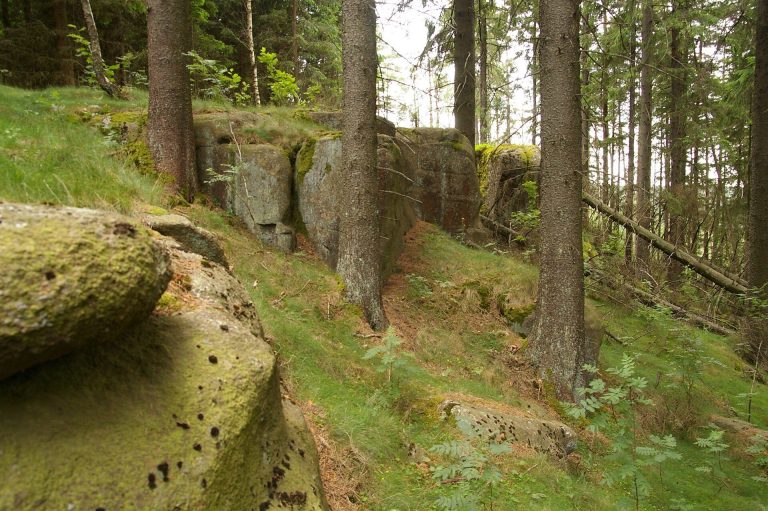
Axevalla House is now a ruin, with hardly any visible remains of the building surviving above ground. The surviving physical evidence is therefore concentrated in the site’s former fortress area and its defensive landscape, including the recorded relationship between the headland, lake, ramparts, moat, palisades, and swampy approach.