Ateret Fortress: A Crusader Stronghold at Jacob’s Ford
Site at a Glance
- Country
- Palestine
- Primary era
- Medieval
- Eras represented
- Medieval, Early Modern
- Civilizations
- Crusader, Kingdom of Jerusalem, Knights Templar, Ottoman
- Site type
- Military
- Remains
- Fort
On this page10 sections
History
Ateret Fortress was a Crusader stronghold on the west bank of the Jordan River in Palestine, begun in 1178 by the Knights Templar and the Kingdom of Jerusalem to secure Jacob’s Ford. The Templars were a Christian military-religious order, while the Kingdom of Jerusalem was a Crusader state in the eastern Mediterranean. The crossing lay on a route between Tiberias and Damascus, and the fortress was intended to protect northern approaches to the kingdom as well as pilgrims and traders. It also strengthened the kingdom’s position against Saladin, the Ayyubid sultan who ruled Egypt and Syria and held power at Damascus.
Fortifying the frontier
A settlement occupied the mound during the Bronze Age, an ancient period when bronze tools and weapons were widely used. The site saw intermittent occupation into the Arab period. Before the fortress was built, Templars based at Safed Fortress guarded the nearby crossing through patrols and temporary camps.
Relations between Christians and Muslims deteriorated during the reign of King Amalric I, Baldwin IV’s father, and the risk of invasion seemed to grow. The Templars asked Baldwin IV to fortify the crossing. He initially resisted, fearing that a frontier stronghold would breach his 1175 treaty with Saladin and provoke an attack. Pressure from the Templars at Safed eventually persuaded him to approve the work.
Construction and the first attack
Construction began in autumn 1178 through a joint effort by the Templars and the Kingdom of Jerusalem. The royal army guarded the builders, and Baldwin visited in October to supervise the project. He reportedly remained nearby for an extended time, expecting a Muslim response. By spring 1179, the main walls and foundations were substantially complete, but work on the fortress had not finished.
The initial garrison included 80 Templar knights and their squires, along with other troops, builders, and craftspeople. A wider encampment held about 1,500 people, including knights, sergeants, hundreds of workers, and Muslim prisoners put to work. Saladin offered first 60,000 and then 100,000 gold coins to halt construction; Baldwin refused both offers. On 27 May 1179, Saladin attacked, but withdrew after a Templar archer killed one of his commanders.
The siege and capture
A relief force sent by Baldwin defeated a raiding party, then faced Saladin’s main army at Marj Ayun, a 1179 battle in which Saladin defeated the Crusader force. About 270 Christian horsemen were captured, including Odo of Saint-Amand, head of the Templars. Baldwin escaped. After this victory, Saladin returned to Ateret on 24 August 1179 and began a siege.
Saladin’s miners dug beneath the defences and set fire to the timbers supporting them. A tower collapsed, leaving a breach through which the fortress was taken in late August. Baldwin had assembled a relief force at Tiberias, but learned of the fall too late to rescue the defenders. The surviving garrison was executed, and the victors seized the armoury, including about 1,000 coats of armour. Around 700 Christians were killed; the number captured is uncertain. The reported release of 1,000 Muslim prisoners is probably exaggerated.
The dead were placed in a pit. Their decay in the August heat may have contributed to an epidemic among Saladin’s troops that killed about ten officers. The relic known as the True Cross, traditionally identified as the wood of Jesus’s cross, had not been brought from Jerusalem before the fall. The defenders had expected the fortress to withstand a long siege. Its loss may have left the kingdom’s northern approaches more exposed.
Destruction, names, and later history
The fortress was demolished to prevent Christian forces from using it again, and construction was never resumed. Muslim troops probably left after the epidemic. Centuries later, Baibars, a 13th-century Mamluk ruler of Egypt and Syria, reused some of its stones to build Bnot Yaakov Bridge in preparation for the siege of Safed. Apart from this removal, the site remained largely unchanged.
The crossing was known as Jacob’s Ford, while the Crusaders called the fortress Chastelet, a French name meaning fortified gatehouse. Arabic names included “Fortress of the House of Sorrows” and “Fortress of Defeat”; the Hebrew name Ateret developed phonetically from the latter. A Crusader tradition placed the biblical Jacob’s crossing of the Jordan on his way to meet Esau here, an identification now considered mistaken. A Muslim tradition associated the crossing with the news of Joseph’s sale reaching his father, Jacob.
A Hebrew University team led by archaeologists Roni Ellenblum and Adrian Boas surveyed and excavated the site in 1994. The fortress was renovated in 2018. In November 2024, a missile launched from Lebanon struck it during the Israel–Hamas war.
Remains
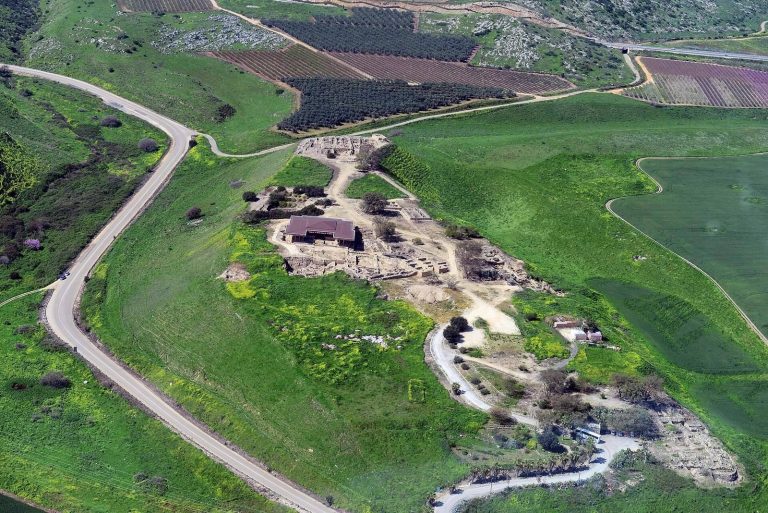
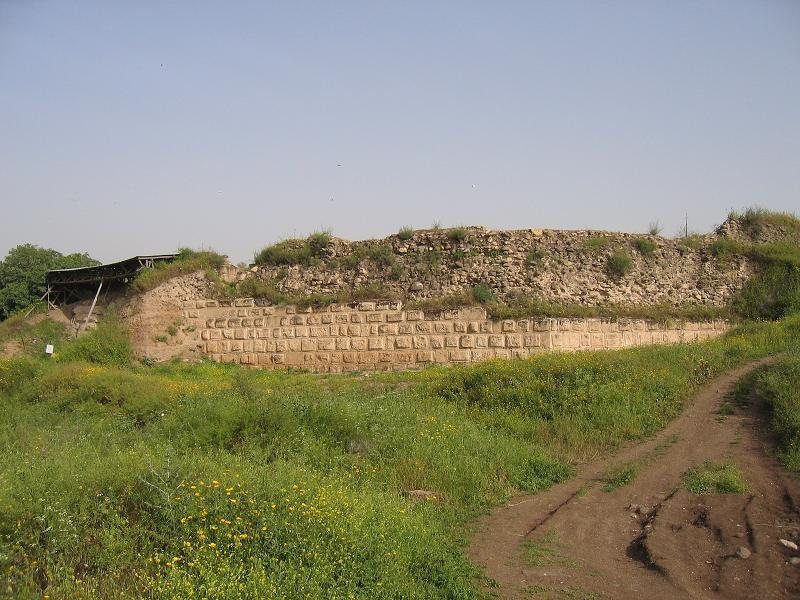
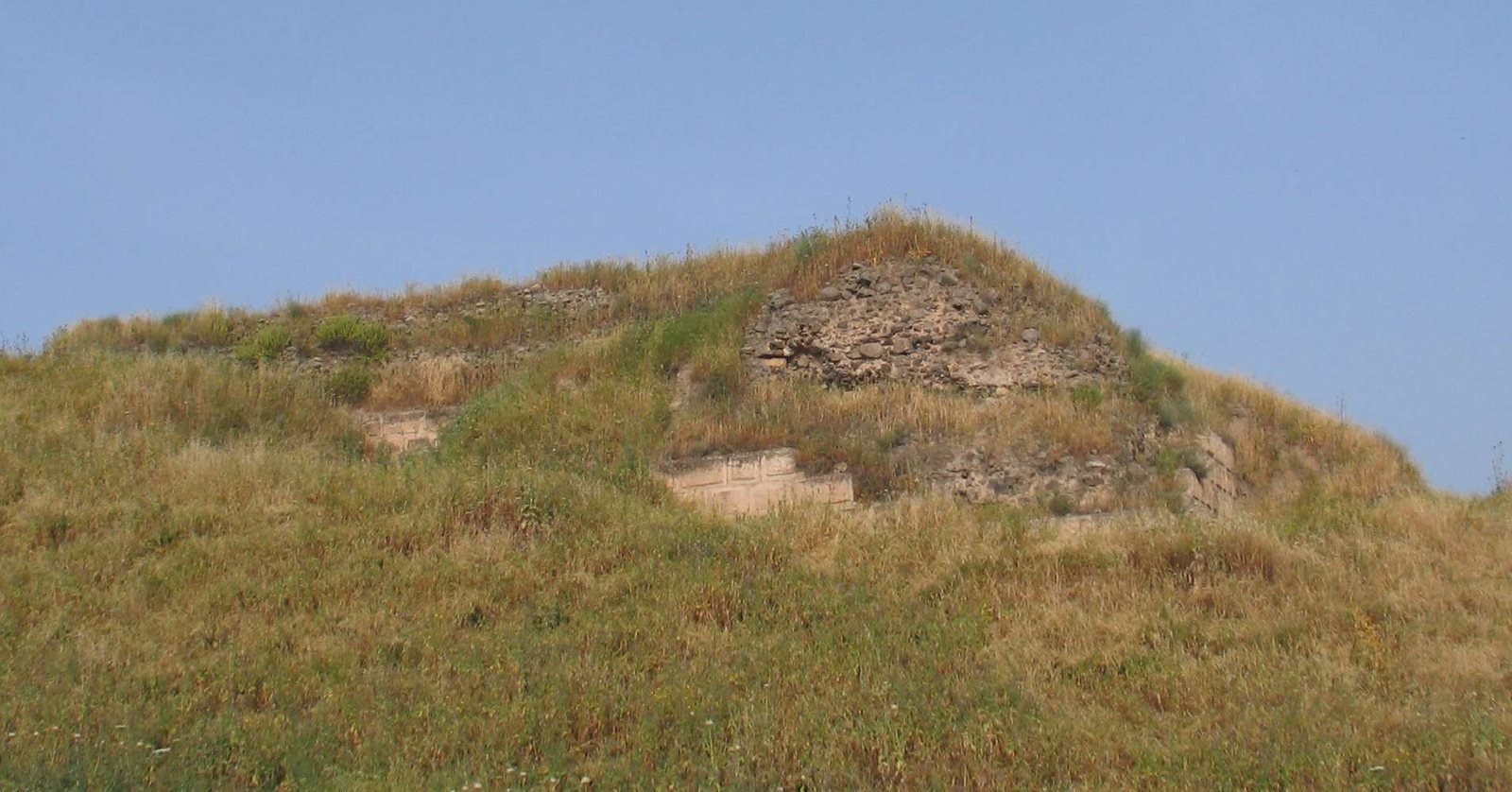
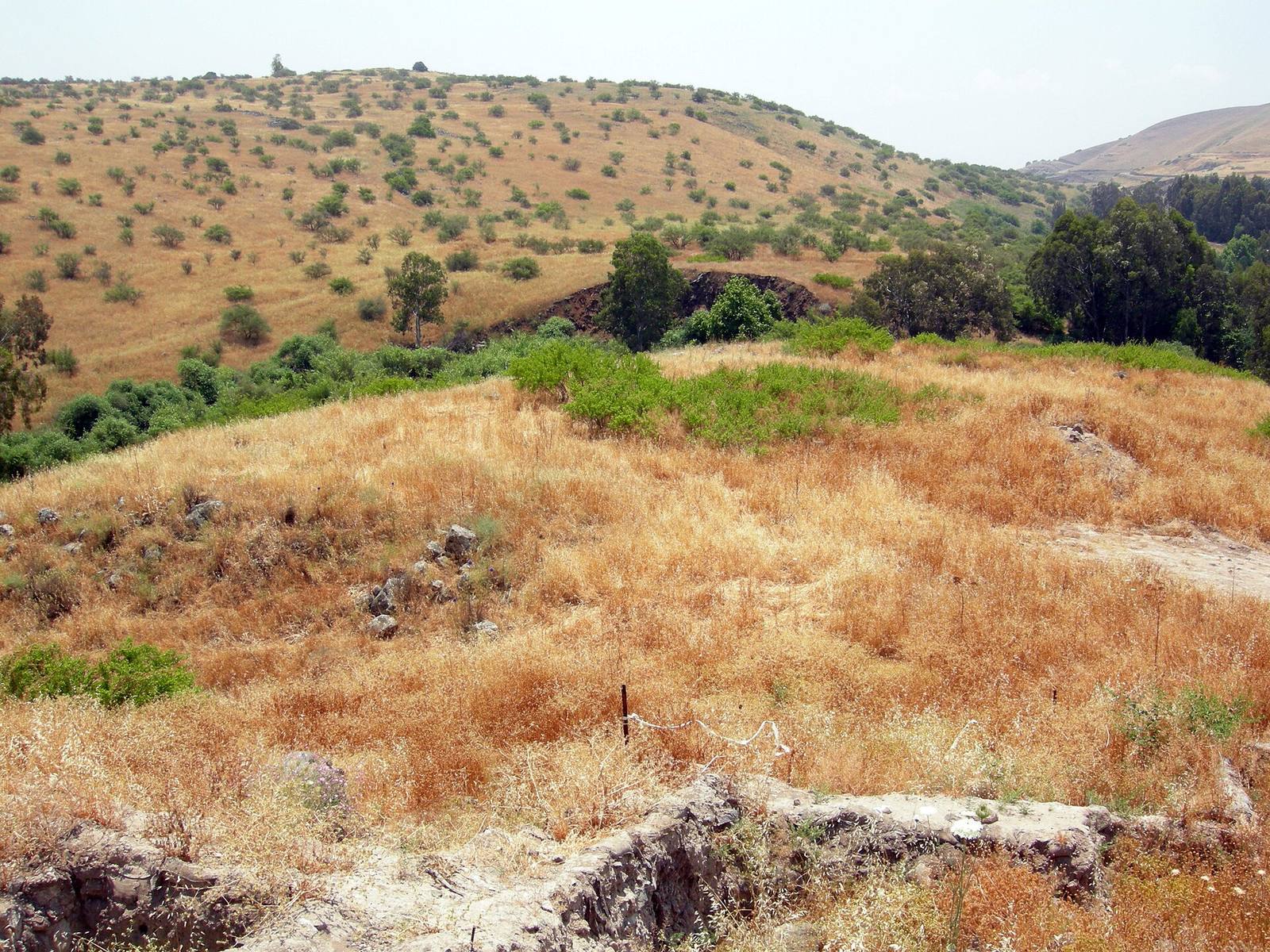
The fortress occupies a mound beside the Jordan River, about 500 metres southwest of Jacob’s Ford. Its rectangular enclosure measured about 140 by 65 metres and had five gates. A square tower stood at each corner, with the southwest tower projecting beyond the wall line. Moats ran along the north, west, and south sides; the eastern moat is especially visible from the wall. The unfinished fortress combined thick masonry walls with earthen construction ramps.
Walls and interior features
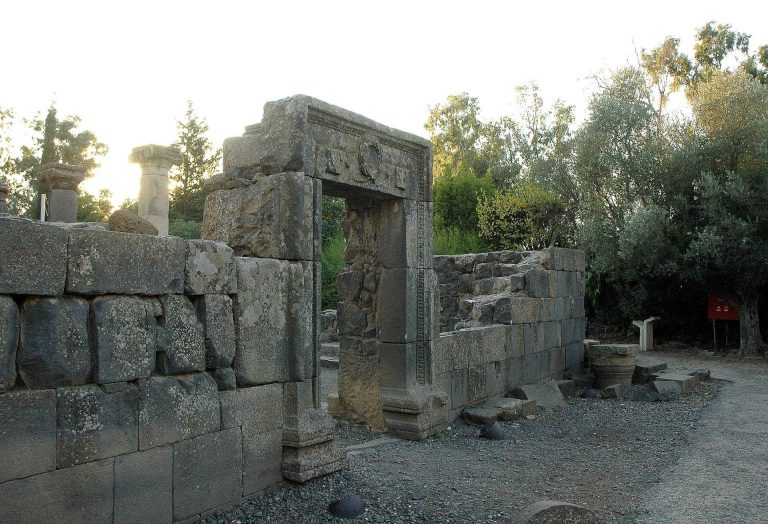
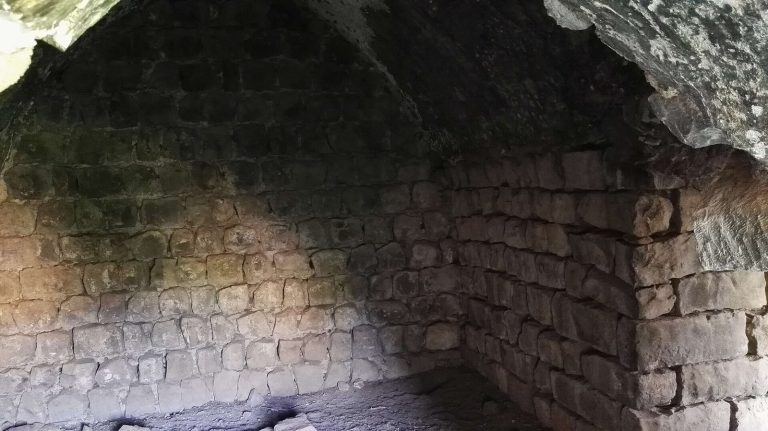
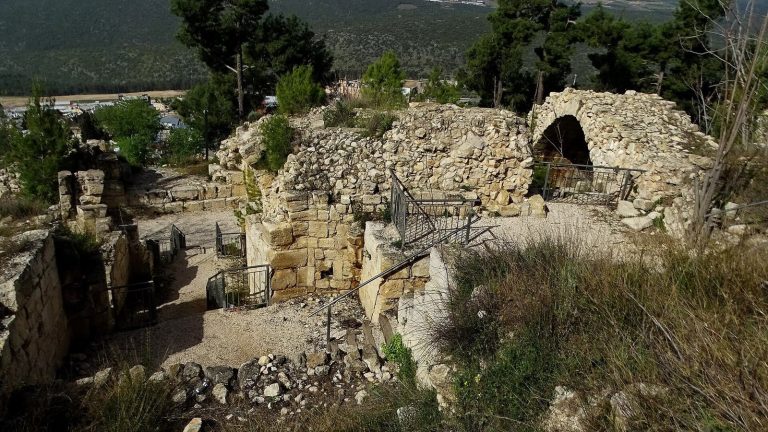
Large, squared limestone blocks formed the wall faces, with basalt rubble packed between them. Inside the enclosure, surviving structures include an arched building and a cistern in the southeast corner. The builders appear to have planned galleries along the walls, covered by tunnel-shaped vaults; the beginnings of vault construction survive in the southeast. Small openings, each no more than a metre wide, occur on the north, west, and east sides. Hinge sockets and channels for crossbeams were cut into the masonry. Their purpose is uncertain: they may have served as entrances to planned towers or as passages toward an intended outer courtyard and additional wall.
Building methods and construction evidence
An earthen ramp beside the outer walls was built up in compacted layers of soil and rubble taken from inside the fortress, then covered with lime. Ox carts carried stone up the incline, and manually operated lifting equipment raised blocks into the walls. The ramp may have been intended to support a permanent defensive slope faced with stone, a method that reduced the need for expensive timber. The quarry immediately west of the fortress supplied the stone; stone troughs were found there and near the walls.
Excavated construction evidence includes unfinished wall sections, scaffolding linked to the vaults, temporary walls, iron tools, and piles of mortar and lime with arrows embedded in them. Hundreds of arrowheads were found near one gate. Ox-cart tracks remain in the earthen ramps. Axes and chisels were used to work stone, while shovels, hoes, and trowels served in earth and mortar work.
Earthquakes and the Ottoman-period mosque
A geological fault, a fracture in the Earth’s crust along which rock has shifted, crosses the centre of the fortress’s north and south walls. The eastern sections of these walls are displaced from the western sections by a total of 2.1 metres. Archaeological analysis attributes 1.6 metres of movement to the 1202 earthquake and the remaining displacement to the earthquake of October 1759. The mound preserves evidence of five earthquake offsets.
On the northern part of the mound, above the fortress, are the remains of an Ottoman-period mosque. Fault movement split the building, displacing one half by about 0.5 metres; this shift is attributed to the 1759 earthquake. The mound lies on the Syrian-African Rift, a major regional fault system, and the displaced walls and mosque provide evidence for studying tectonic movement in the area.
Ovens, coins, and animal remains
Excavations uncovered large bread ovens with two chambers and more than 160 coins of various kinds, providing evidence for coinage in the Crusader period. Skeletal remains of mules, horses, and donkeys were also found. Horseshoes had been cut from the animals for reuse after the fortress fell.