Tel Hazor: A Major Canaanite City in Israel
Site at a Glance
- Popularity
- Very High
- Country
- Israel
- Primary era
- Bronze Age
- Eras represented
- Bronze Age, Iron Age
- Civilizations
- Assyrian, Canaanite, Egyptian, Israelite
- Site type
- City
On this page24 sections
History
Tel Hazor is an ancient city site in Upper Galilee, northern Israel, north of the Sea of Galilee. It became a major Canaanite regional center during the Middle Bronze Age and remained important into the Iron Age. At its height, Hazor was the region’s largest fortified city, connected by northbound routes and trade with kingdoms across the Near East.
Early settlement and Middle Bronze Age growth
Settlement at Hazor is evident in the Early Bronze Age, including around the 28th and 24th centuries BCE, though the community then appears to have been modest. After abandonment beginning around 2500 BCE, a new city took shape around 2300–2200 BCE, drawing on some earlier building patterns. Hazor and Megiddo continued to show settlement and economic activity during a period when much of the wider region was unsettled.
Urban growth returned to the Hula Valley during Middle Bronze IB, around 1910–1820 BCE, when construction began on a palace. In Middle Bronze II, around 1820–1550 BCE, Hazor expanded into a major city. It was a dependent ally of Ishi-Addu, ruler of the Syrian kingdom of Qatna, and later his son Amutpiel II. A letter addressed to Ibni-Addu, king of Hazor around 1770–1765 BCE, provides evidence of the city’s rulers. Trade connected Hazor with Qatna, Mari, and Yamhad, and tin was an important commodity for its bronze industry.
Records from Mari and Egypt also reflect Hazor’s political and commercial reach. Egyptian execration texts, ritual writings that named places and enemies for symbolic condemnation, from the Twelfth or Thirteenth Dynasty identify Hazor and a ruler called Gti. Mari’s records refer to the city during the reigns of Yasmah-Adad and Zimri-Lim and describe diplomatic and commercial connections.
A major fire destroyed Hazor at the end of the Middle Bronze Age, around 1550 BCE, after which the city was rebuilt. The cause of the destruction remains uncertain. An earlier explanation blamed Egyptians pursuing the Hyksos, rulers of Egypt of Levantine origin, but the available evidence does not indicate that Egyptian forces advanced north beyond Sharuhen.
Late Bronze Age and competing destruction accounts
During the Late Bronze Age, Hazor fell within Egypt’s sphere of power. It appears in records from the reign of Thutmose III and in later Egyptian lists. Around 1350 BCE, during the period associated with the Amarna diplomatic letters, King Abdi-Tirshi pledged loyalty to the pharaoh. Two letters describe conflict involving Hazor: the king of Tyre accused its ruler of siding with the Habiru, a social category mentioned in ancient Near Eastern texts that does not identify a single ethnic group, while Hazor’s king appealed to the pharaoh over damage to his city.
Biblical narratives describe Hazor as the seat of King Jabin. In the Book of Joshua, Jabin leads a Canaanite coalition against Joshua, and Hazor is captured and burned. The Book of Judges tells of a later or related conflict in which Deborah and Barak oppose Sisera, Jabin’s commander. These accounts may preserve separate events or different versions of the same events, and their relationship to the archaeological evidence is not settled.
A second severe destruction took place at the end of the Late Bronze Age, in the thirteenth century BCE. Its cause remains disputed. Amnon Ben-Tor argued that the violent burning supports the conquest described in Joshua; Sharon Zuckerman proposed conflict among groups within Hazor. Other explanations include civil strife, attacks by the Sea Peoples, or upheaval during the wider collapse of Late Bronze Age society. Shlomit Bechar has suggested that standing stones from later Israelite levels may preserve a tradition recalling an Israelite conquest, whether or not Israelites caused the city’s destruction.
Iron Age rule and later occupation
After the Late Bronze Age destruction, Hazor was sparsely occupied during Iron I before being rebuilt as an Israelite city. The date and political context of its major Iron Age building works are debated. Yigael Yadin assigned the principal tenth-century BCE construction to Solomon, while Israel Finkelstein associated it with the ninth-century Omride dynasty, an Israelite royal house. Other interpretations place the main phases in the tenth century or across both centuries.
In the latter half of the ninth century BCE, Hazor came under Aram-Damascus, an Aramean kingdom centered on Damascus. A destruction associated with the campaign of its ruler Hazael is dated to around 835 BCE. The city later returned to Israelite control after Assyria defeated the Arameans. Assyrian records say that Joash, king of Israel, paid tribute, and Hazor prospered particularly under Jeroboam II.
Israel’s revolt against Assyrian rule brought the invasion of Tiglath-Pileser III. In 732 BCE, the Assyrians captured Hazor, deported its population, and burned the city. Later occupation was limited: remains include an Assyrian citadel and evidence from the Persian and Hellenistic periods.
Excavation and heritage
Josias Leslie Porter identified the site as biblical Hazor in 1875, and John Garstang carried out initial soundings in 1926. A Hebrew University team led by Yigael Yadin excavated from 1955 to 1958, with another season in 1968. Work resumed in 1990 under Amnon Ben-Tor and has continued since. Excavations have distinguished 22 occupation layers spanning about 3,000 years. Since 2013, campaigns have examined Bronze Age destruction layers, Iron Age fortifications, a standing-stone complex, and a Late Bronze Age administrative palace. In 2005, Hazor became part of the UNESCO World Heritage property Biblical Tells—Megiddo, Hazor, Beer Sheba.
Remains
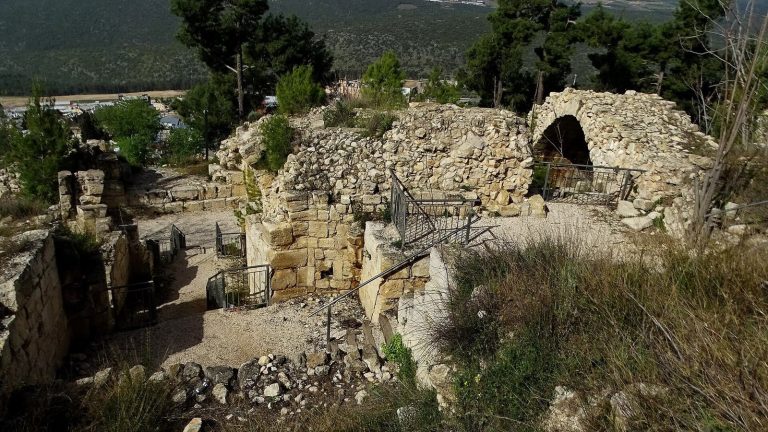
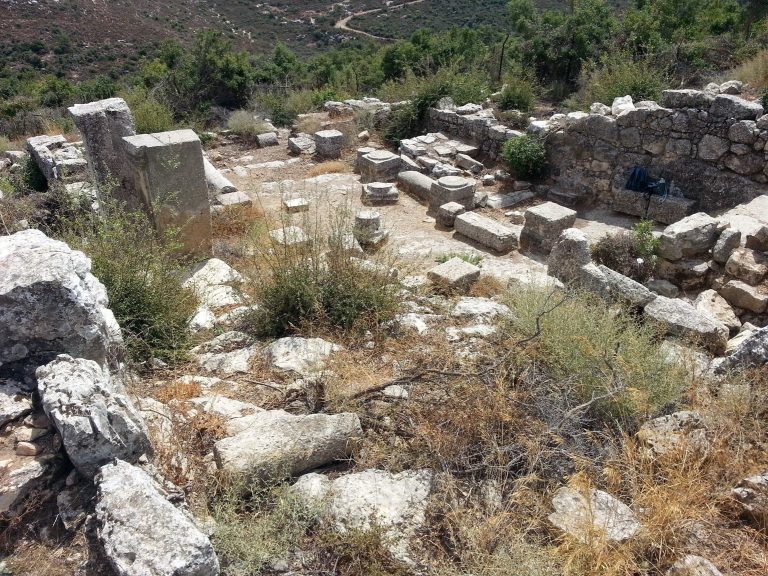
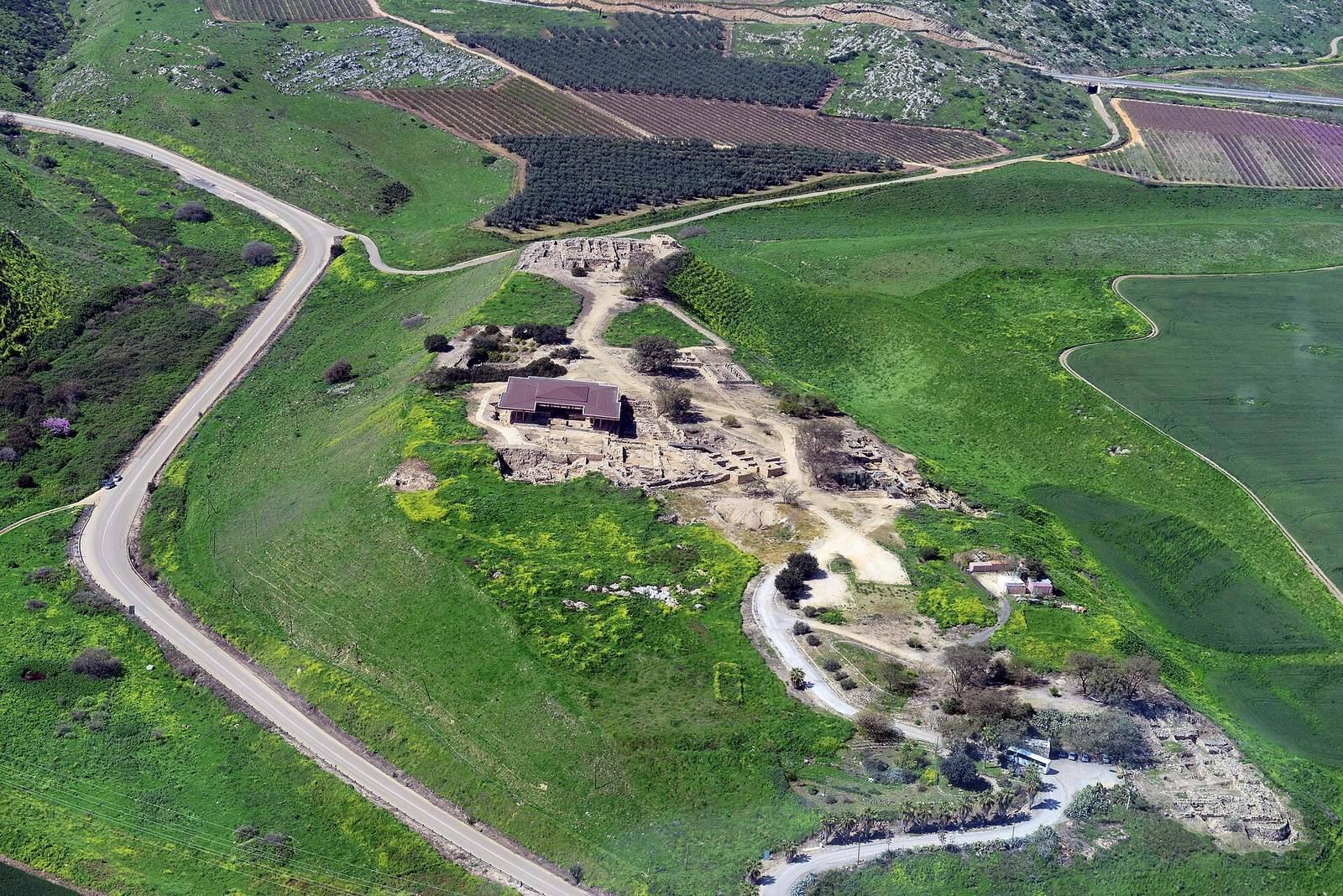
The site forms a two-part settlement mound, or tell, an artificial rise created by successive settlement and rebuilding. Tel Hazor covers about 80 hectares, with some estimates reaching 100. The upper city occupies about 12 hectares and rises roughly 40 metres above the surrounding land; the lower city extends across more than 70 hectares and is separated from it. The upper mound overlooks the Hula Valley and Lake Merom. The surviving buildings and other remains belong to occupation phases from the Early Bronze Age through the Hellenistic period.
Early settlement
Early Bronze Age remains
Early levels in the upper city include a few houses and pottery associated with the Early Bronze Age, including Khirbet Kerak pottery, an archaeological category named after the site where it was identified. Much of it was made from local clay, while other pottery groups used a different local clay, perhaps reflecting separate production choices or workshops. Fifteen impressions made with cylinder seals, small engraved cylinders rolled over clay, came from a limited excavated area. A large structure may also belong to this period, sometime after the twenty-seventh century BCE. If so, its foundations used basalt slabs at an unusually early date in the southern Levant.
Intermediate Bronze Age finds
Intermediate Bronze Age remains include buildings, copper beads, and ingots. The pottery assemblage includes Megiddo Ware, another category named after the site where it was identified. Hazor has yielded the largest assemblage of this pottery type in the southern Levant.
Middle Bronze Age city
Palace and city wall
In the upper city, remains from the early eighteenth century BCE include a large palace and a massive wall enclosing its interior. A jar bearing an Akkadian inscription was also found in this phase. The corresponding settlement in the lower city was built on ground that had not previously been occupied. These remains give physical form to Hazor’s expansion during the Middle Bronze Age.
Temple and lower-city burials
A royal temple was added beside the palace. In the corresponding lower-city phase, jars containing children’s remains were found beneath many houses. Human sacrifice has been proposed as an explanation, while Yadin considered an epidemic a more likely cause of the burials. Scarabs from this level are associated with the Hyksos period.
Late Bronze Age buildings
Acropolis palace and temples
The acropolis contained monumental buildings combining palatial and religious functions. The Ceremonial Palace, also known as the Black Building, had a large throne room and followed a Syrian architectural tradition. Across a central courtyard to its east stood the White Building, whose plan followed a Levantine long-room temple form. Another long-room temple stood immediately north of the palace group, at the top of the acropolis.
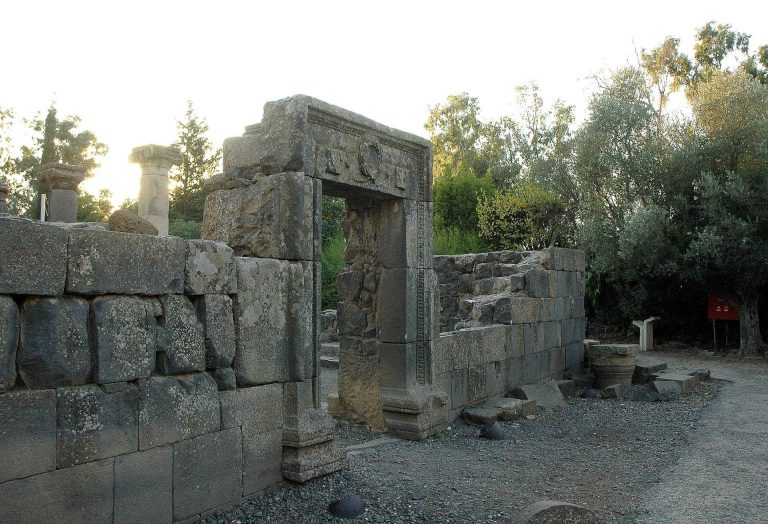
A temple rebuilt after the Middle Bronze Age destruction had imposing upright stone slabs at its entrance. In a later phase, the earlier temple had fallen into ruin and cult installations were established around it. Some older ruins were reused, and houses with raised floors were built nearby.
Administrative palace
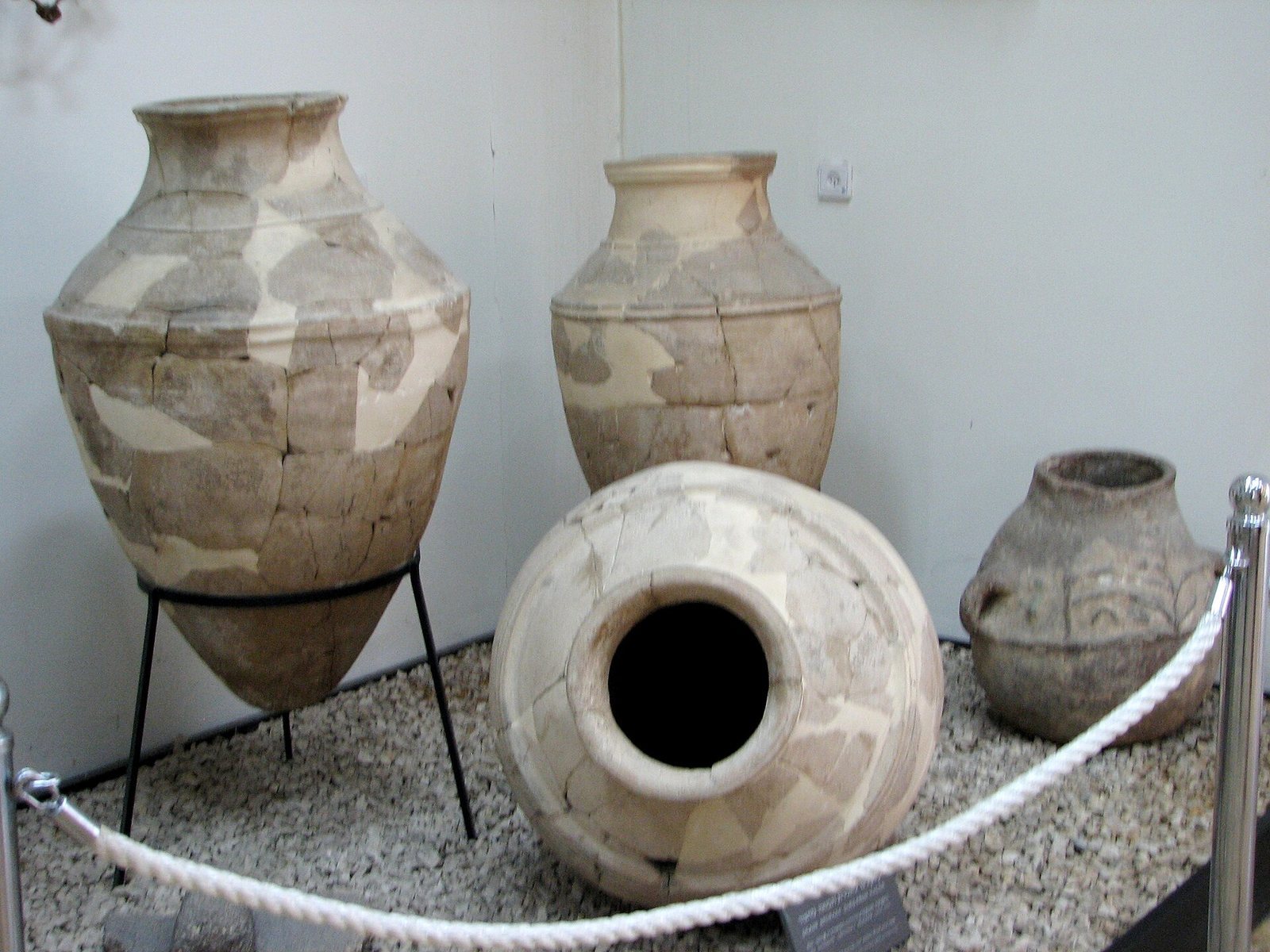
A separate Late Bronze Age administrative palace in area M3 had a monumental basalt entrance stair. Its destruction layer contains extensive burning. Ewers in the palace storerooms held burned crops, linking the building’s storage spaces with the fire damage.
Lower-city workshops and objects
In the lower city, workshops, including two pottery workshops, were associated with a temple. Finds from this area include two masks that may have been used in ceremonies and a bronze standard covered with silver. The standard depicts a goddess with two snakes and a crescent moon.
Houses and Egyptian statues
Egyptian statues were found among houses built over earlier ruins. They may have reached Hazor during a period of Egyptian influence following the campaigns of Seti I. In the destruction layer at the end of the thirteenth century BCE, the statues were defaced and decapitated.
Iron Age defenses and later occupation
Gates and citadels
Early Iron Age remains include silos and foundations for tents, followed by evidence of more permanent Israelite settlement. One major building phase had a double wall joined by cross-walls, creating chambers between its parallel sides, along with a citadel and a monumental six-chambered gate. At this time the city covered about half of the upper city. The gate and administrative buildings have parallels at Megiddo and Gezer.
A later intensive building phase extended across the upper city. It included a new four-chambered gate, administrative buildings, and a citadel built above its predecessor. A large building divided into three rows of pillars may have served as a storehouse or as a place to collect taxes on imports. It remained in use in the following phase, when its floor was raised. Another layer of buildings has comparatively poorer construction.
Defenses and water supply
One phase was destroyed by an earthquake, possibly the event associated with the prophet Amos and dated by Yadin to around the reign of Jeroboam II. The city was rebuilt with an improved citadel and stronger northern defenses, including a projecting wall set back from the line of the wall. Some buildings were cleared to make room for these defenses. Yadin attributed a western citadel to Ahab; it measures 25 by 21 metres, with walls about two metres thick.
Hazor’s water system includes deep rock-cut pits connected by tunnels to a well that reached the water table. Yadin assigned the system to Ahab, but its date, like that of other major Iron Age construction at Hazor, remains disputed.
Assyrian and later remains
Later Iron Age remains include slight constructions associated with Israelites who returned to the site and an Assyrian citadel. The Persian and Hellenistic periods are represented in the final occupation layers.
Texts, sculpture, and other finds
Written records
Hazor has yielded texts in cuneiform, a wedge-shaped writing system used for languages including Akkadian. Middle Bronze Age examples use standard Old Babylonian Akkadian, a form associated with the early second millennium BCE; Late Bronze Age tablets use a local Akkadian dialect associated with Egypt’s New Kingdom. The 95 known texts include administrative records, letters, commemorative inscriptions, school exercises, legal material, a lexical list, a divinatory liver model, and a mathematical text.
An Old Babylonian legal tablet found on the surface of the mound in 1962 concerns ownership of a house and orchard at Hazor and an orchard at Giladima. It records a judgment in favor of a woman. A fragmentary letter excavated in 1996 lists prestige goods, including thousands of ceremonial weapons made from precious metals for delivery to Mari, and mentions the sender’s planned journey to Ekallatum to make sacrifices. Two fragments of a local-clay tablet found near the acropolis palace in 2010 preserve seven laws concerning bodily injury and compensation, including harm to enslaved people. The laws have parallels in the Code of Hammurabi, the Laws of Eshnunna, and Hittite laws.
Statues and ritual objects
A fragment of an Egyptian sphinx, including its forepaws, came from a thirteenth-century BCE destruction layer at the palace entrance. An inscription between the paws names King Menkaure and says that he was beloved by a divine manifestation that granted him eternal life. The statue may have originated at Heliopolis and probably reached Hazor in the second millennium BCE, perhaps during the Hyksos period or Egyptian rule of Canaan. Other finds include Egyptian statue fragments and a stone foot from a statue of an Egyptian official, found in 2016. Excavations in 2014–2015 also recovered unbaked loom weights from Iron Age contexts. Upright stone monuments from Hazor include one carved with two raised hands beneath a crescent moon.