Ås Church on Öland: A Historic Parish Church
Site at a Glance
- Popularity
- Low
- Country
- Sweden
- Primary era
- Medieval
- Eras represented
- Medieval, Early Modern, Modern
- Civilizations
- Swedish
- Site type
- Religious
- Remains
- Church
On this page10 sections
History
Medieval origins
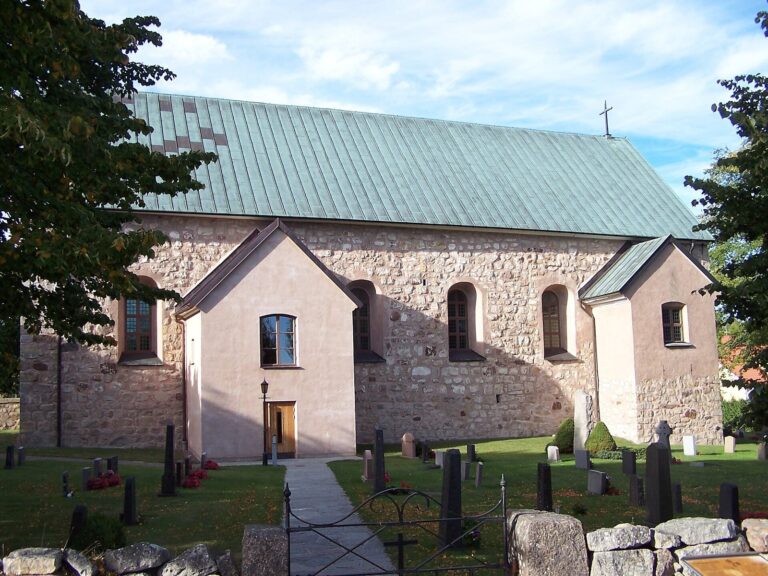
Ås Church is a 12th-century church at Ottenby on the island of Öland in Sweden. For the following two centuries, it served as a religious building belonging to Ottenby.
Rebuilding and parish changes
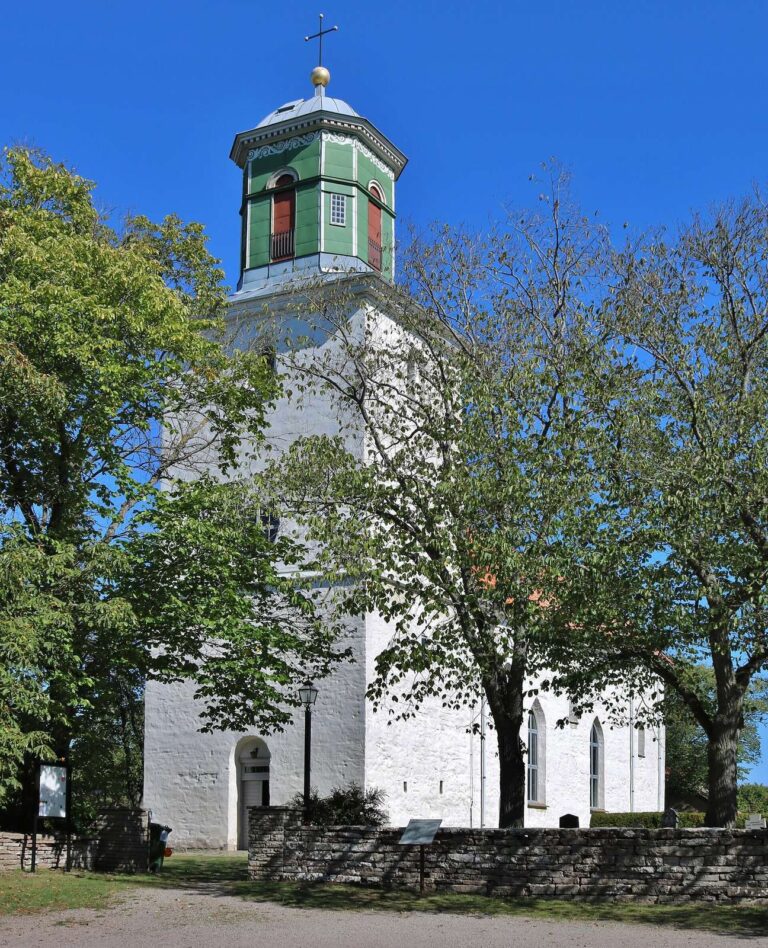
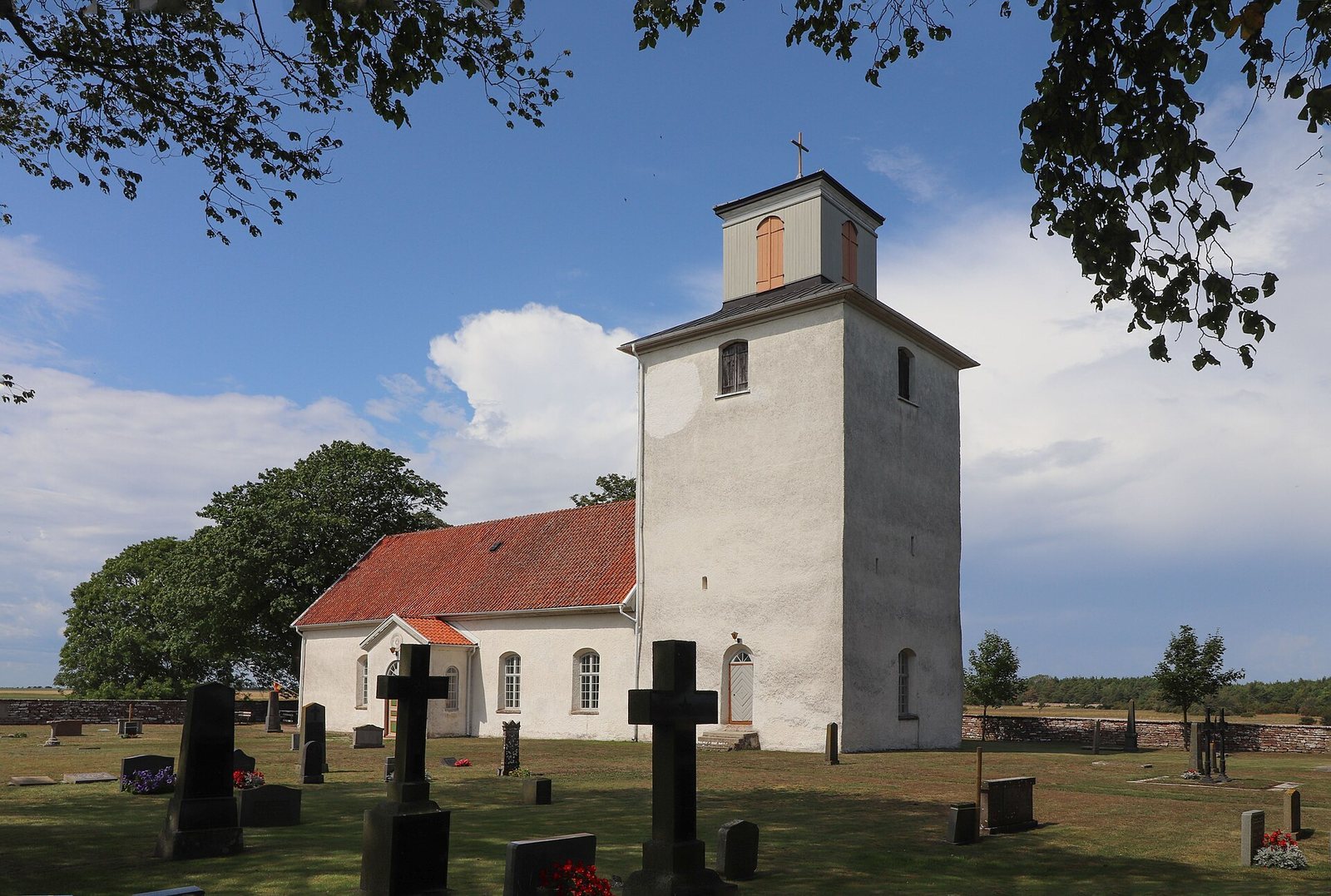
During the 1770s, the church was extended about eight metres to the west and reshaped as a hall church, with its interior arranged as a unified space. In 1820, a lantern was added to the tower and the interior was reorganized.
The church serves Ås parish and belongs to the Church of Sweden, Sweden’s Evangelical Lutheran church, within Växjö Diocese, a regional church jurisdiction. After nearby parishes merged in 2002, it became part of Sydölands parish.
Remains
Church layout and enclosure
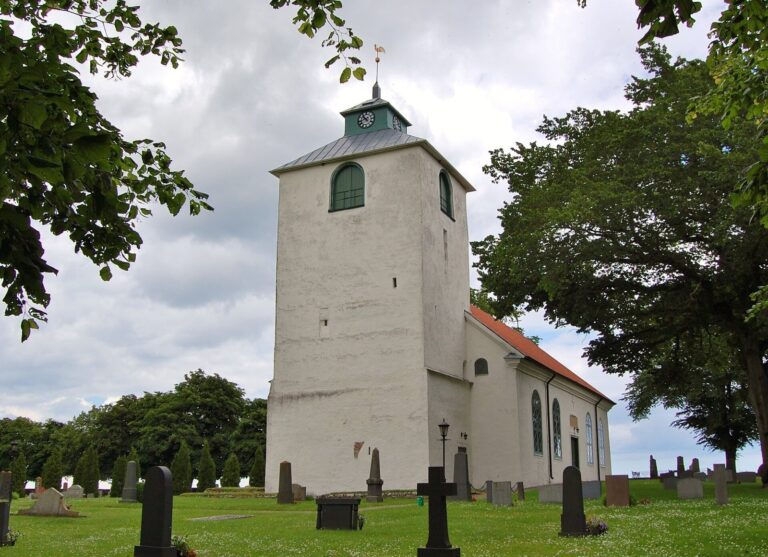
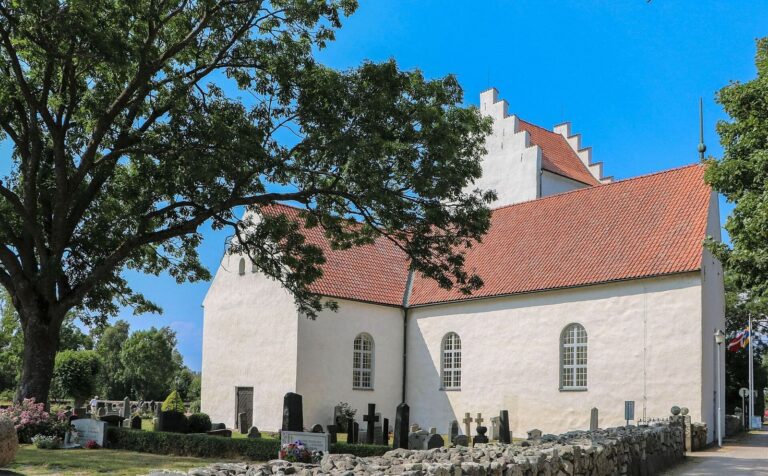
Ås Church stands at Öland’s southern tip and is the island’s southernmost church. It is the only surviving historic church on Öland with a tower at its east end. The building has a rectangular nave, an eastern chancel, and a massive tower that rises above the other parts. The nave and entrance vestibules have gabled roofs, while the windows have shallow curved tops. Portals on the west and south sides are reached through vestibules. The interior is a hall church, and the prevailing style inside and out is Neoclassical, drawing on forms associated with classical antiquity. It is the oldest surviving hall church on Öland. A dry-stone wall encloses the church and churchyard, where a storehouse and an outbuilding also stand.
Interior furnishings and fittings
Chancel and altar pulpit
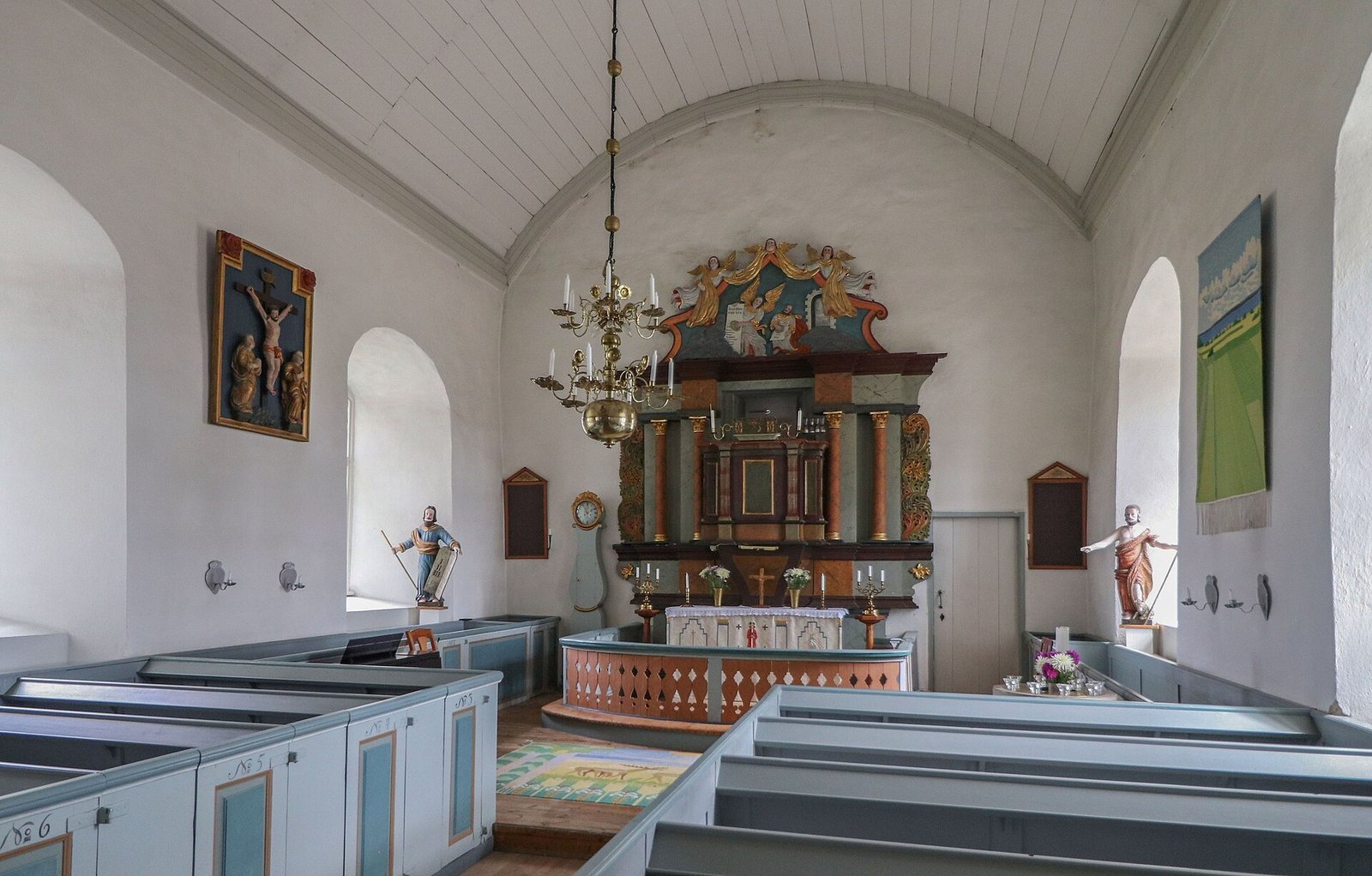
The original chancel occupied the ground floor of the tower. In 1820, a partition wall separated this space, which then accommodated a sacristy, a room for preparing services and storing liturgical items. An altar pulpit, combining an altar and a pulpit, was placed against the new chancel wall. Made in 1820, it incorporates parts of a pulpit and altarpiece created by Anders Dahlström the Elder in 1749. A relief from the altarpiece depicts the crucifixion at Golgotha, traditionally identified as the place of Jesus’ crucifixion.
Sculptures and other furnishings
Interior furnishings include sculptures of Moses holding the tablets of the Ten Commandments and of John the Baptist. Brita Edman’s woven landscape tapestry, View from the Tower of Ås Church, is also in the church. The pews date from 1880–1890, and M. Åkerberg of Grönhögen made the baptismal font in 1938. A three-masted, fully rigged model ship, offered as a devotional object, was donated in 1888 by lighthouse keeper Karl Johan Bolinder. Other furnishings include a wrought-iron candleholder and a floor clock.
Organ
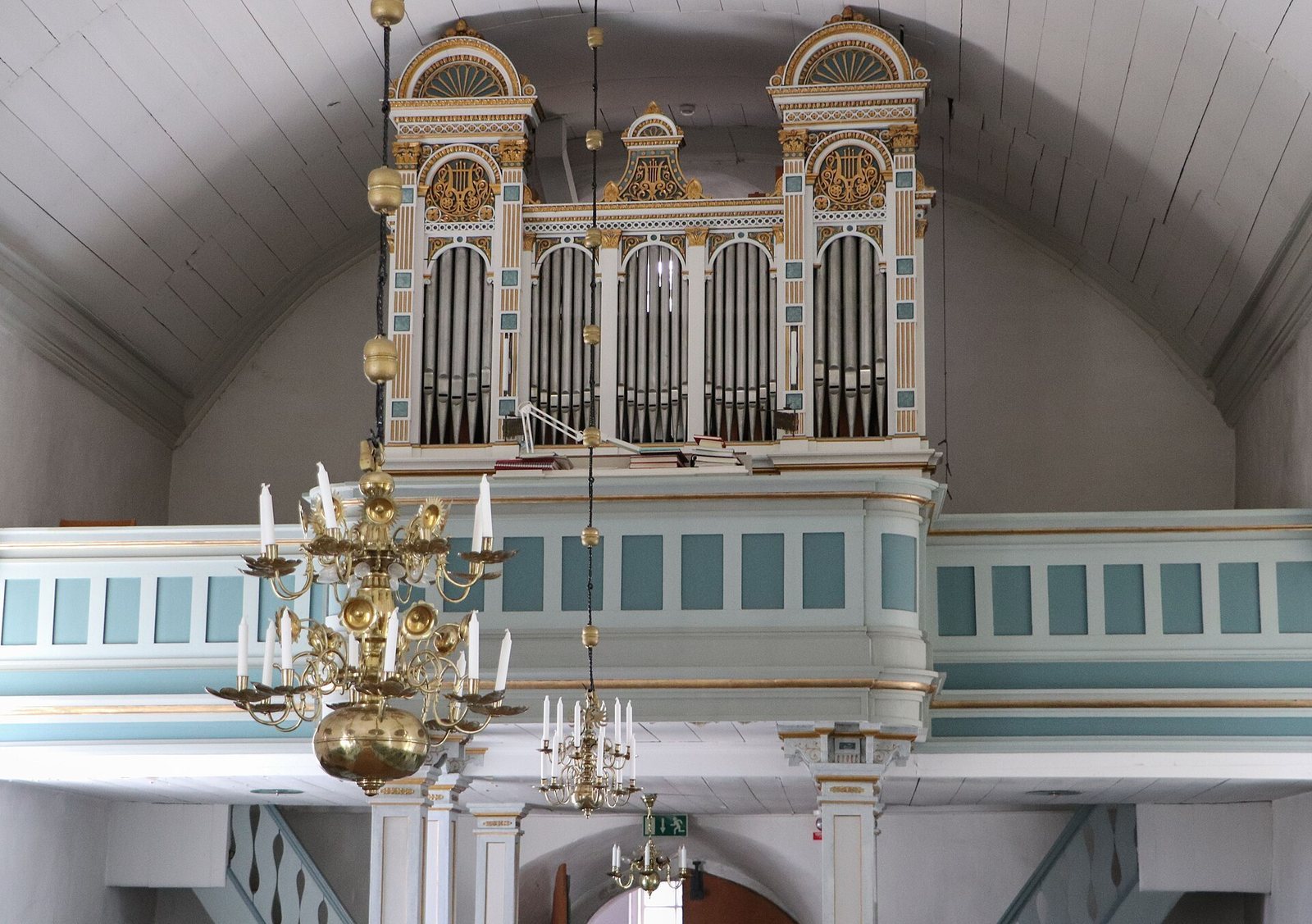
A used organ from the German Church in Karlskrona was installed in 1803. Johan Petter Åberg of Vassmolösa rebuilt it in 1833, and Nils Petter Pettersson repaired it in 1851. The instrument was sold to Södra Möckleby Church in 1884. That year, Åkerman & Lund of Stockholm built its replacement, the present organ. It has ten stops, which control sets of pipes, one hand-played keyboard, and a separate foot-operated pedal. Johan Ludwig Peterson designed its façade.
Einar Berg of Bromma renovated and reconfigured the organ in 1956. The keyboard’s Borduna 16-foot stop was changed to Gedakt 8-foot, the pedal’s Violoncell was replaced by Koralbas, and new zinc pipes replaced the bass pipes of Principal 8-foot. Olof Rydén of Stockholm repaired the instrument in 1964, followed by a further repair from A. Mårtenssons organ factory in 1972.
Bells
The large bell was cast by S. C. Grönwall in 1827. The smaller bell was cast at Johan Meyer’s foundry in 1690.