Ariassos: A Hellenistic City in Pisidia
Site at a Glance
- Popularity
- Very Low
- Country
- Turkey
- Primary era
- Classical
- Eras represented
- Classical, Medieval
- Civilizations
- Byzantine, Roman, Seleucid
- Site type
- City
On this page11 sections
History
Ariassos was a city near modern Yürükbademlisi in Turkey, founded in the 3rd century BC during the Hellenistic period. This era followed Alexander the Great’s conquests and saw the rise of Greek-ruled kingdoms. Ariassos formed part of Pisidia, an ancient region of southwestern Asia Minor.
Hellenistic and Roman rule
The city first belonged to the Seleucid Empire. In 189 BC it came under the Kingdom of Pergamon, then passed to Rome after Pergamon’s last king, Attalus III, bequeathed his kingdom to the Romans in 133 BC. Under Octavian, later known as Augustus and Rome’s first emperor, Ariassos became part of the Roman province of Galatia.
Ancient writers used the name in different periods. Artemidorus of Ephesus called the town Aarassos around 100 BC, and Strabo cited him about a century later. Ptolemy included Ariassos in his 2nd-century AD geography; the town also appears in ecclesiastical lists and in the work of Hierocles.
Late Roman bishopric and later history
In late Roman church administration, Ariassos belonged to the province of Pamphylia Secunda, whose capital was Perge. Its bishopric fell under Perge’s metropolitan bishop. Pammenius attended the First Council of Constantinople, an assembly of Christian bishops, in 381. Theophilus took part in the Council of Chalcedon in 451, and Ioannes joined the province’s bishops in a letter to Eastern Roman emperor Leo I in 458.
The ruins were identified as Ariassos in 1892 after an inscription found there revealed the city’s name. The residential bishopric later ceased to function, but in 1911 Ariassos was restored as a Latin titular see, a diocese retained in name after it no longer had a resident bishop. The Catholic Church lists the see as vacant.
Remains
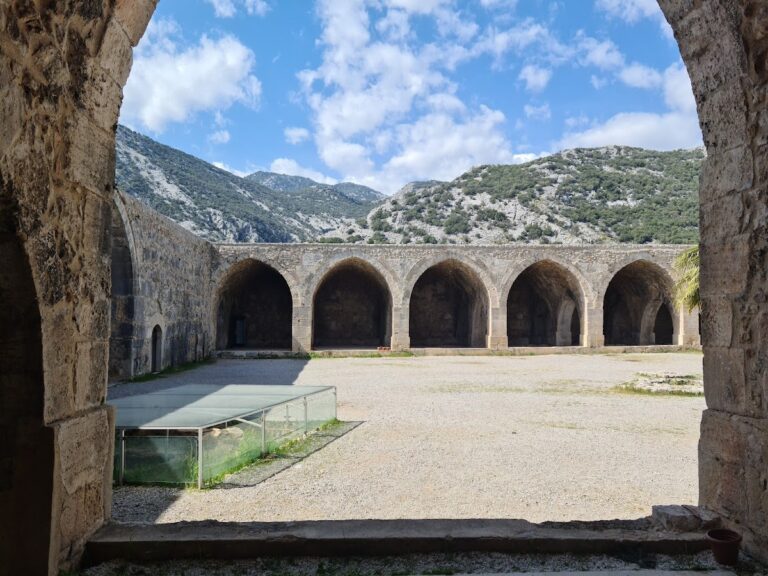
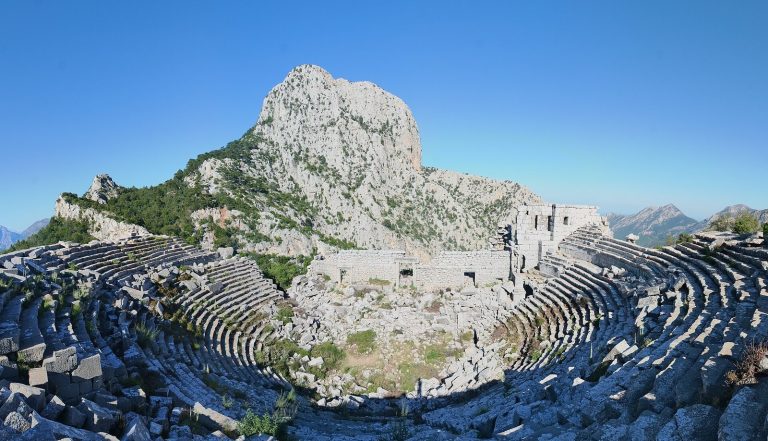
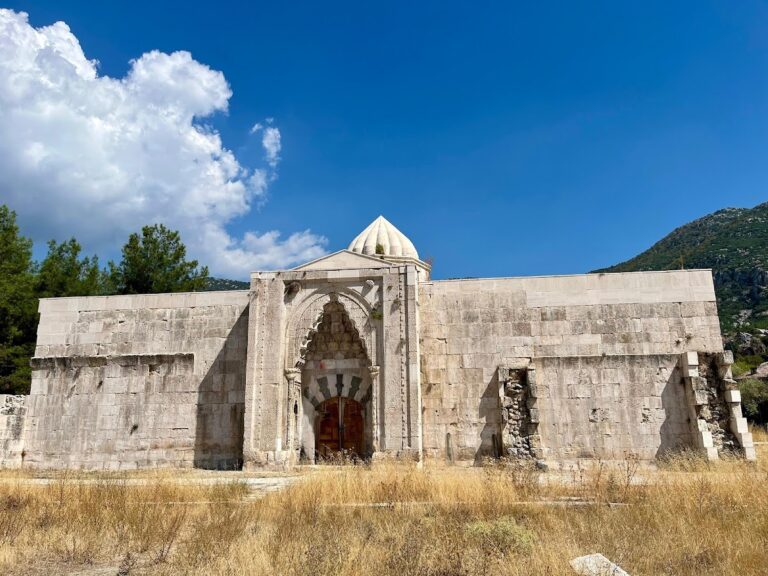
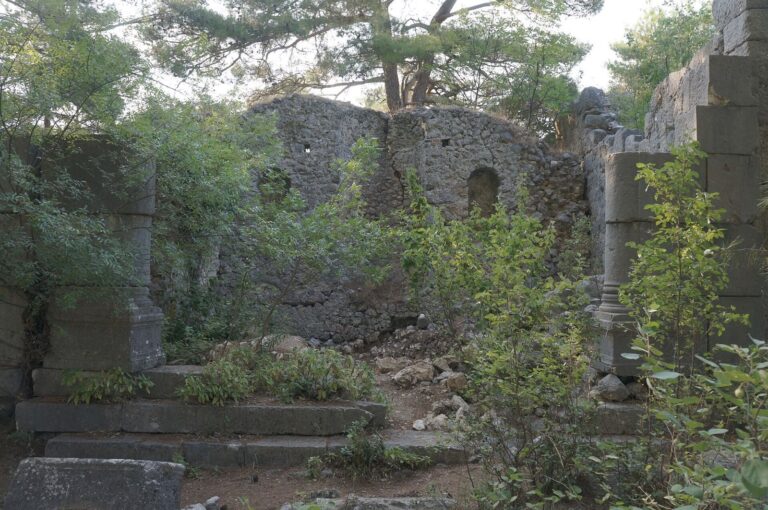
The remains occupy steep ground across two small hills at elevations of about 900 to 1,050 m. They are chiefly Roman and Byzantine in date, with fewer features from the Hellenistic period. The surviving structures include an entrance, public buildings, residential remains, graves, and part of a city wall.
Public and residential remains
Triple-arched entrance
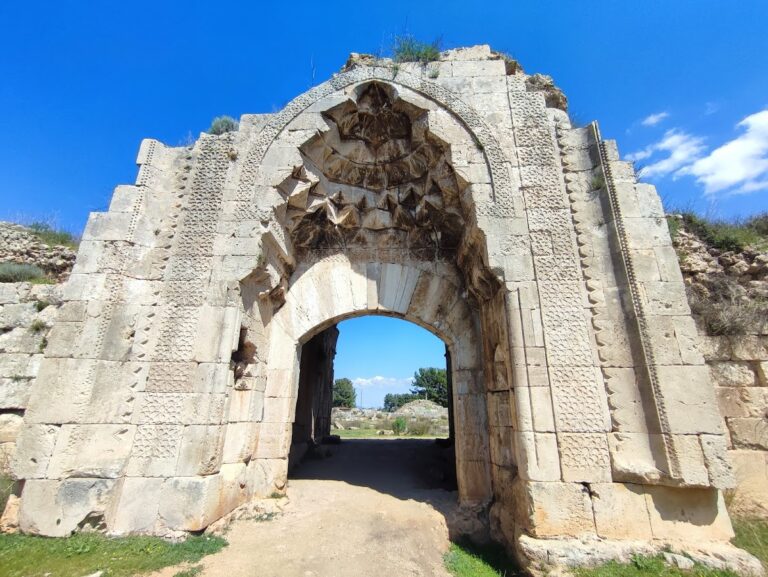
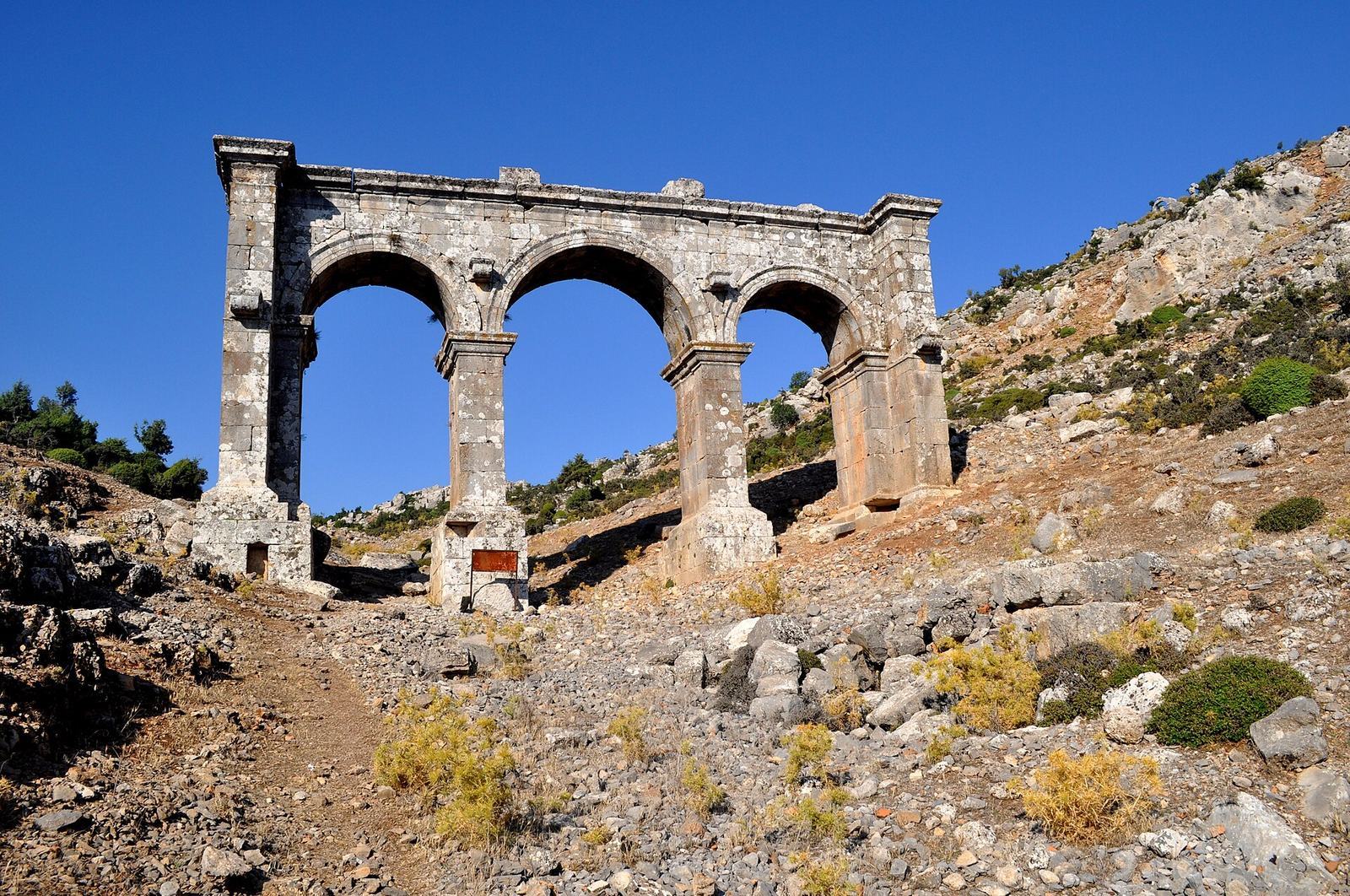
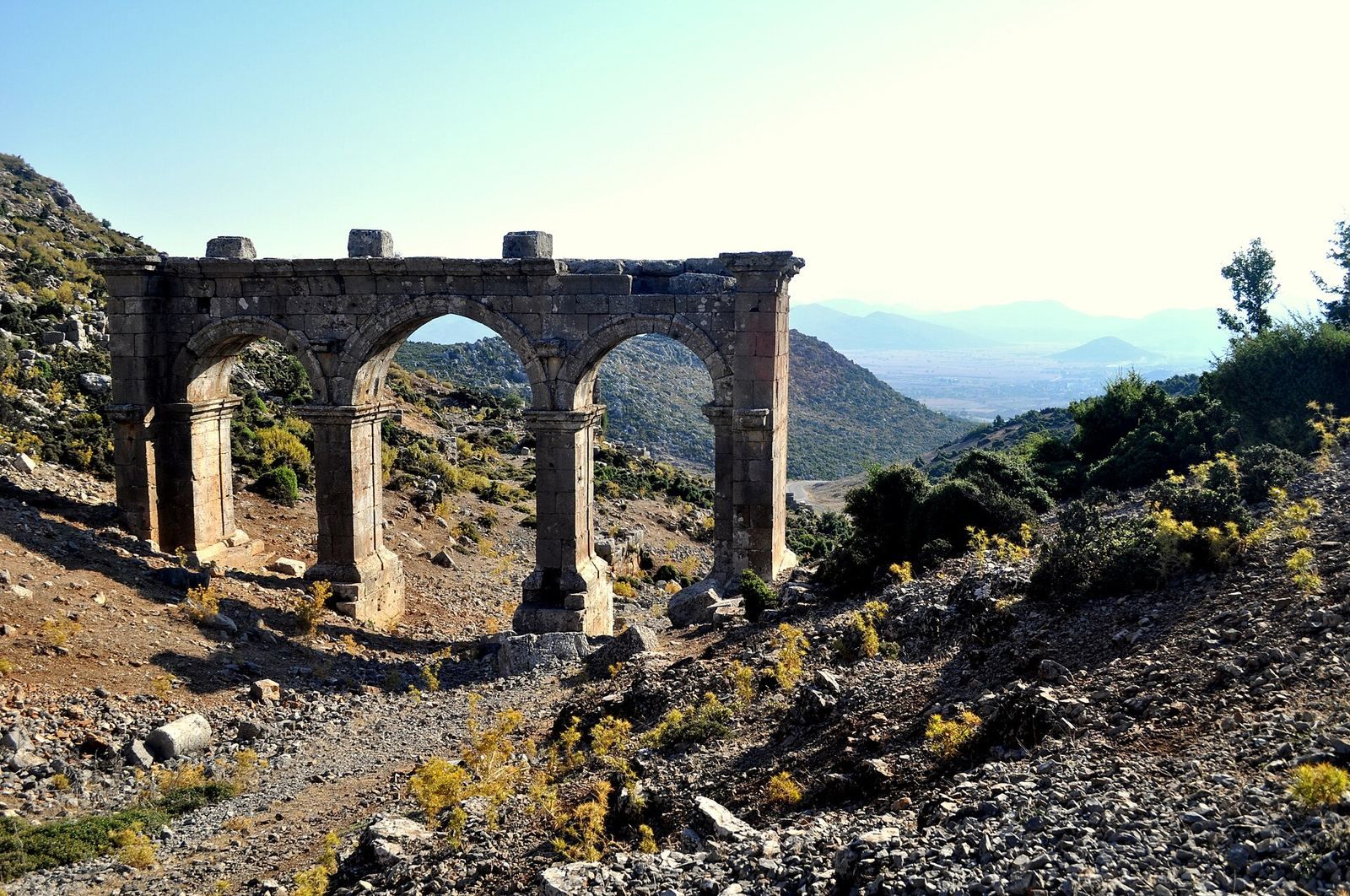
The best-preserved monument is a city entrance with three arches, built in the 3rd century AD. Four statues once stood above it.
Fountain, baths, and housing
Other remains include an extensive nymphaeum, a monumental fountain or water installation, as well as baths and a large residential area.
Burial, fortification, and finds
Funerary monuments
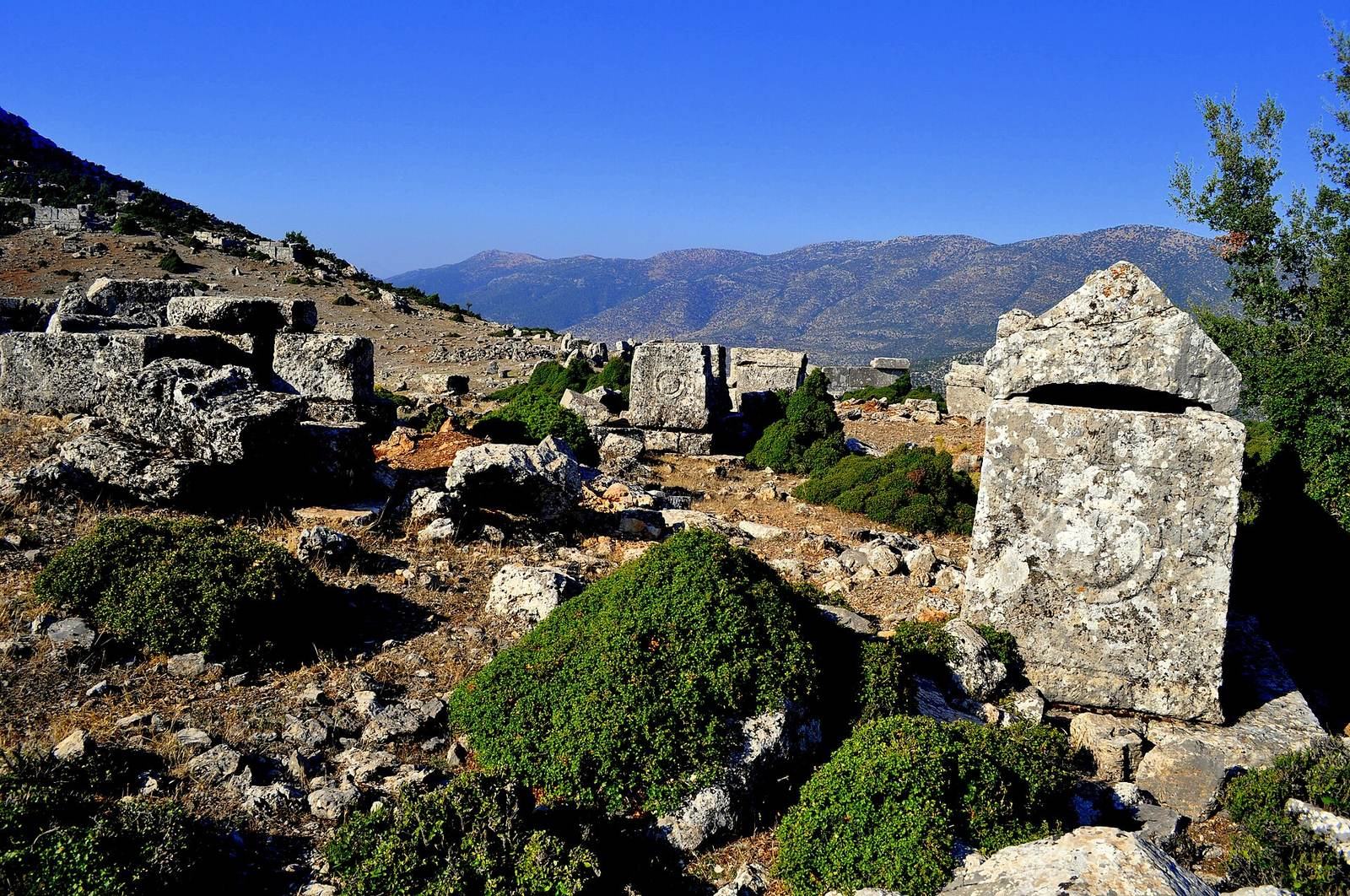
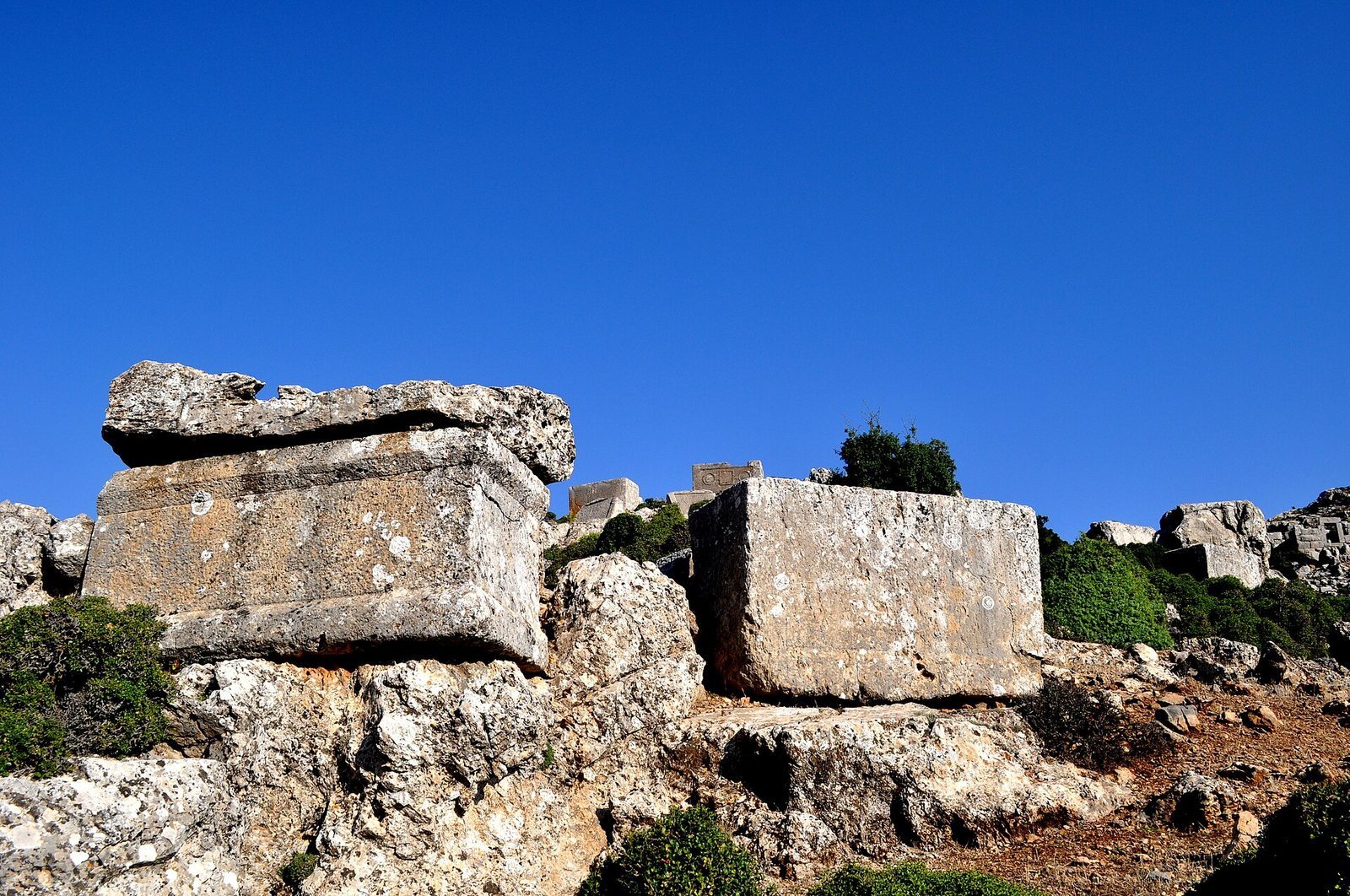
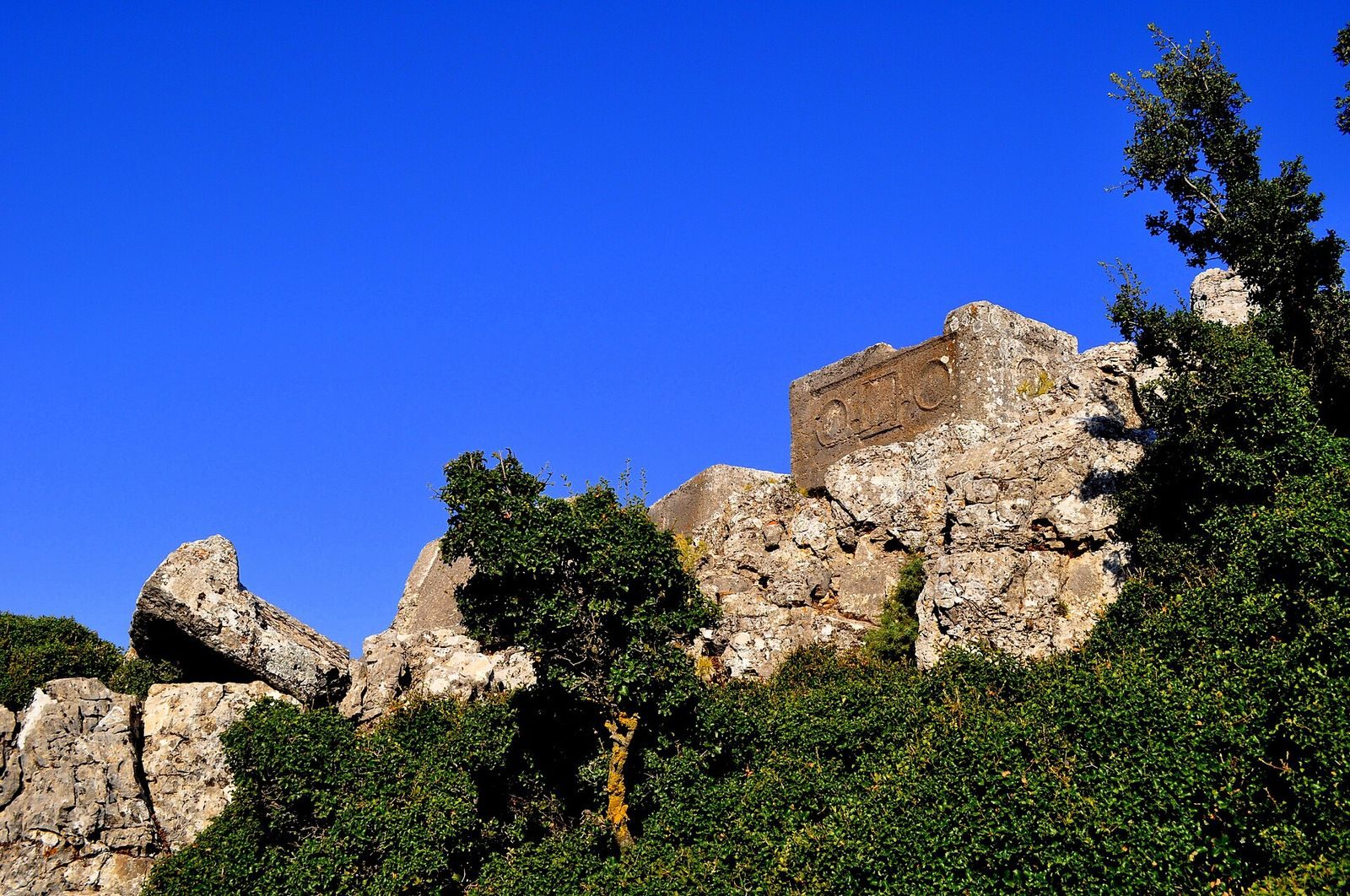
Numerous funerary monuments and graves are spread across both hills, and some of the graves remain well preserved.
City wall and unidentified buildings
A section of the city wall survives on the western hill. Two other buildings are in fairly good condition, though their functions have not been identified.
Coins
Coins minted at Ariassos have been recovered in excavations in the area.