Archäopark Vogelherd: An Archaeological Park Centered on Vogelherd Cave
Site at a Glance
- Popularity
- Medium
- Country
- Germany
- Primary era
- Modern
- Eras represented
- Modern
- Civilizations
- German
- Site type
- Domestic
- Remains
- House
On this page12 sections
History
Archäopark Vogelherd is an archaeological park centered on Vogelherd Cave in Stetten ob Lontal, within Niederstotzingen, Germany. It interprets Ice Age archaeology and the Paleolithic, the earliest major period of human prehistory, characterized by stone-tool use. The park presents the cave alongside other prehistoric sites in the Lone Valley and introduces the public to Paleolithic lifeways.
Discovery and archaeological work
Regional historian and dialectologist Hermann Mohn discovered Vogelherd Cave in May 1931. Gustav Riek, a German archaeologist and prehistorian, explored and excavated the cave that summer. Archaeological work resumed in the 2000s under archaeologist Nicholas J. Conard.
Park planning and opening
Planning for the park began in 2005. After a feasibility study, Niederstotzingen’s municipal council presented the project in August 2006 under the title Stone Age at Vogelherd, and construction plans were developed between December 2006 and March 2007. The municipality approved the project in 2008, with a site selected and government funding approved in 2009.
Cost concerns and local opposition led the municipality to halt the project in January 2011. The plans and budget were then revised. Construction began in January 2012, and Archäopark Vogelherd opened on 1 May 2013.
World Heritage recognition
A nomination effort for prehistoric sites and associated objects in the Swabian Jura began in 2009, followed by review and selection in the early 2010s. In 2017, Vogelherd and the park became part of the UNESCO World Heritage property Caves and Ice Age Art in the Swabian Jura. UNESCO is the United Nations agency for education, science, and culture; its World Heritage List recognizes places considered to have exceptional cultural or natural importance. The property includes six caves and associated portable artworks, meaning art made on objects that can be moved rather than fixed to cave walls.
Remains
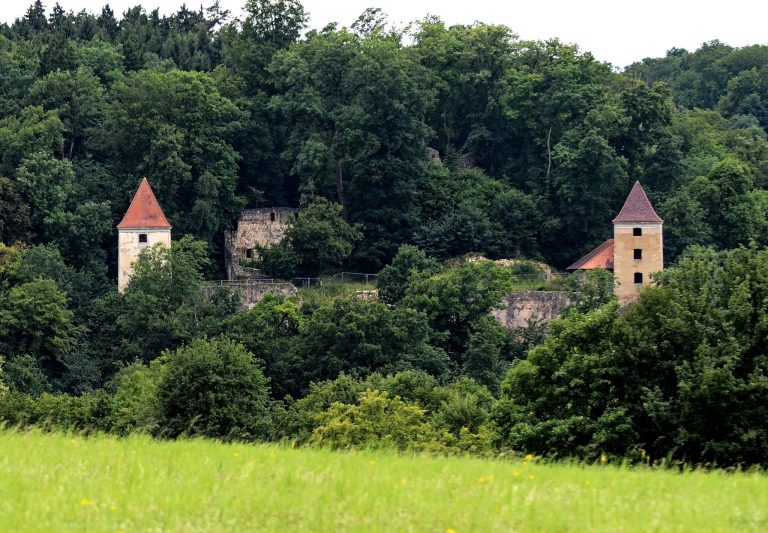
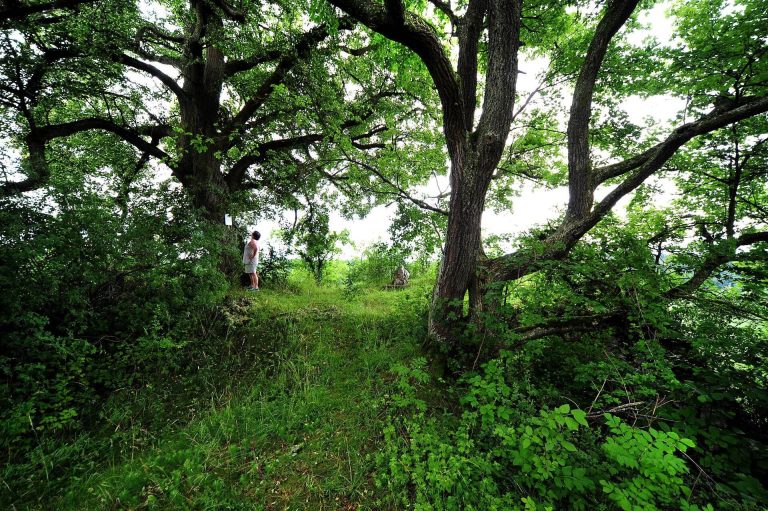
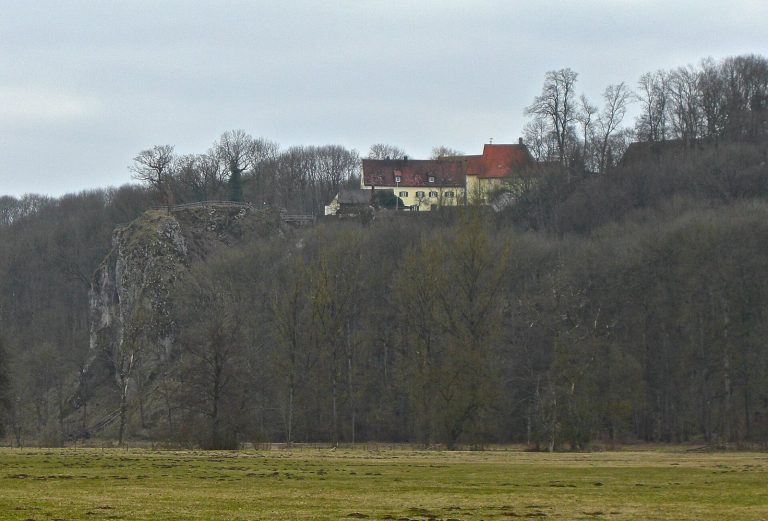
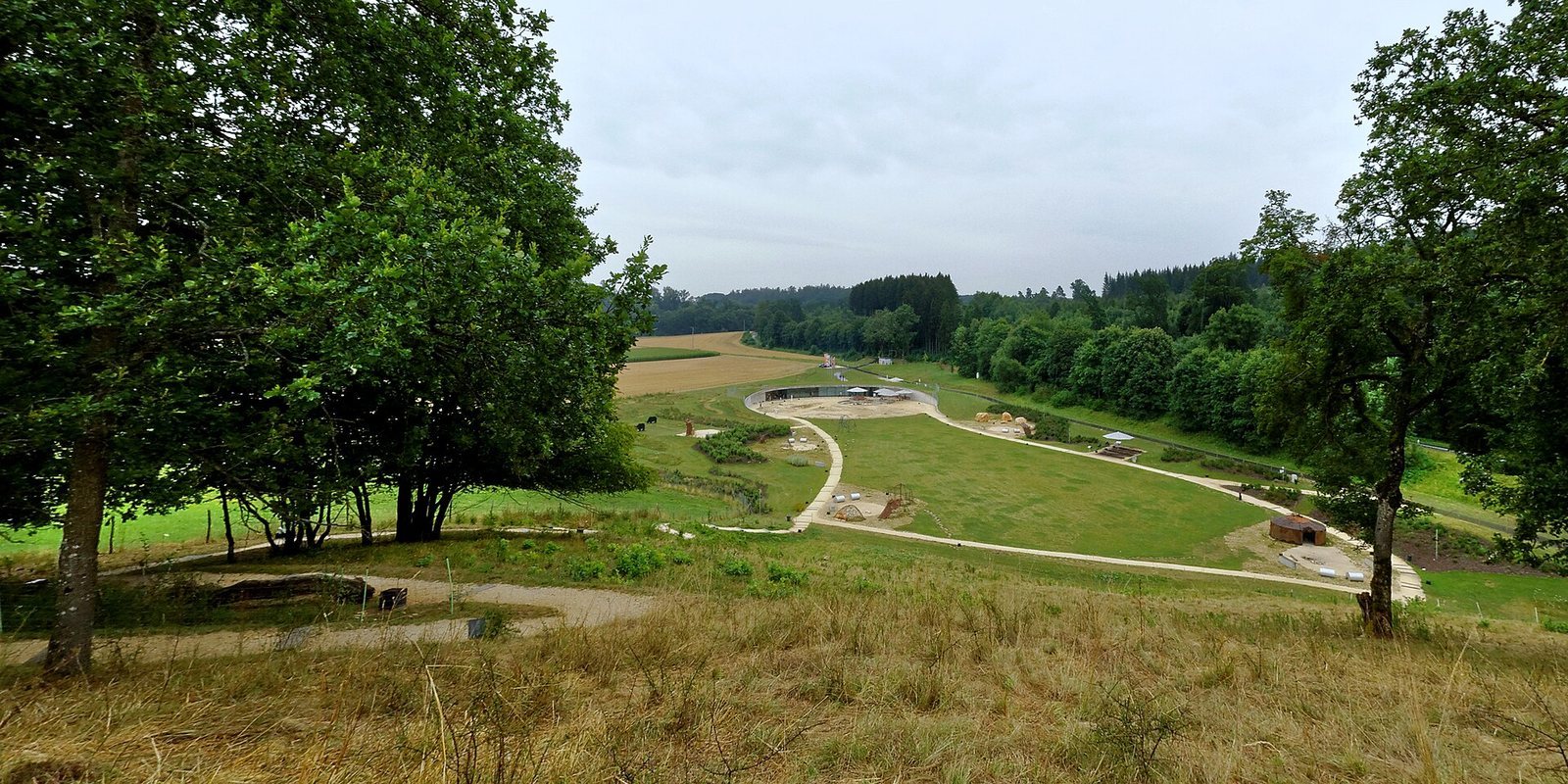
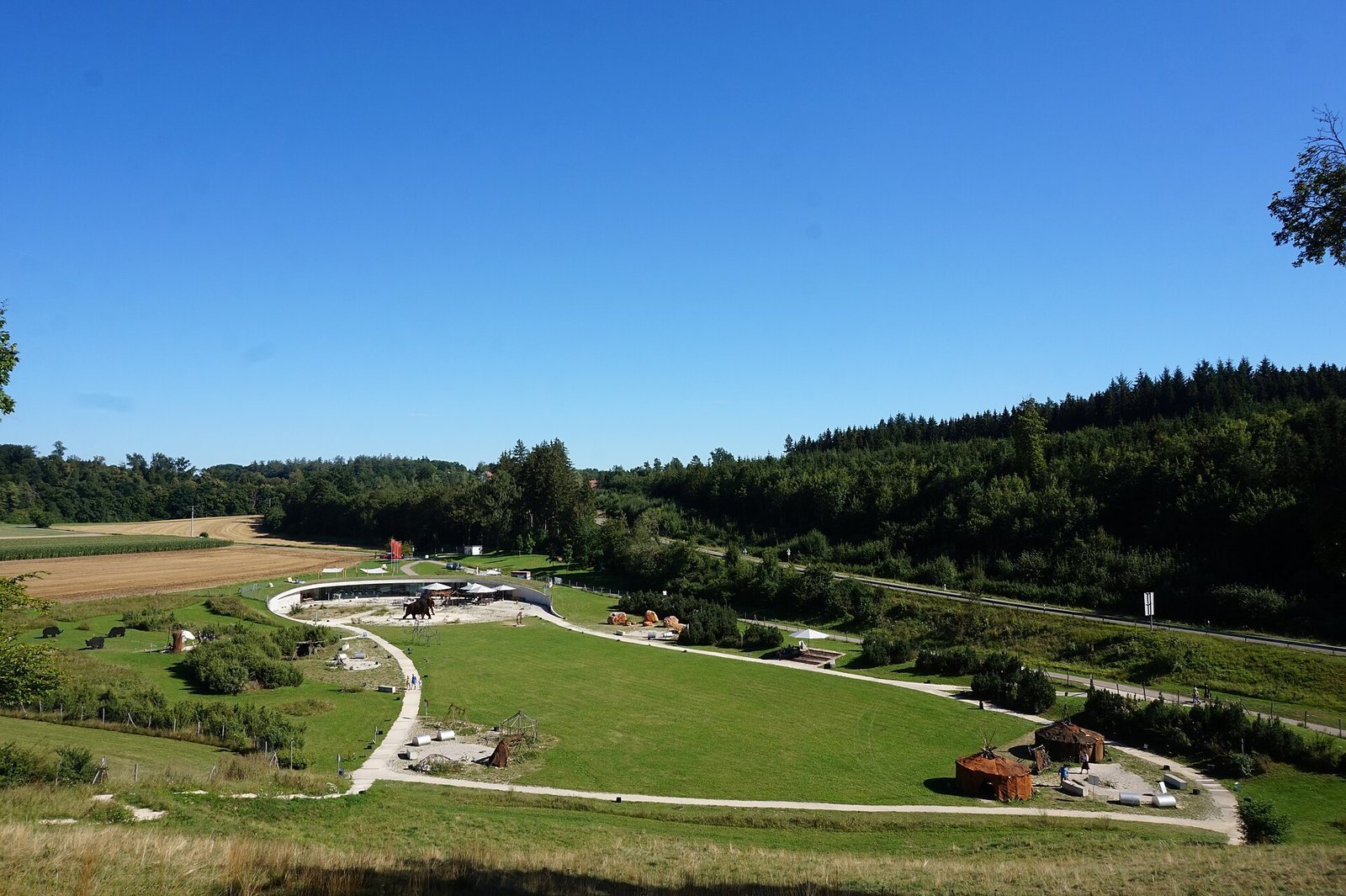
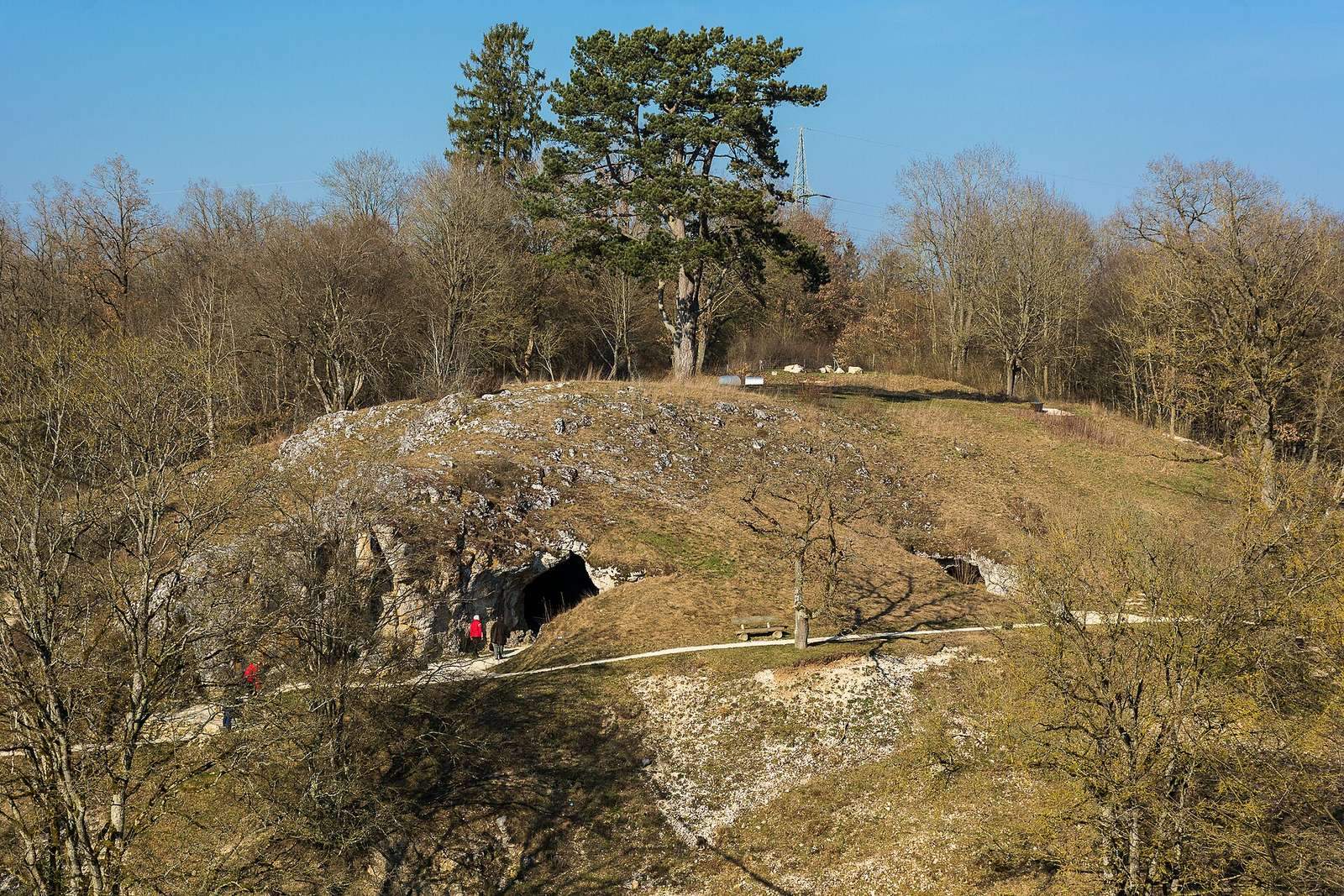
The 3.5-hectare park brings together the natural cave, a visitor and information center, and a reconstruction of a mammoth-hunters’ camp. It lies about 1 km northwest of the Lone River, in the rural Lone Valley of the eastern Swabian Jura. Cultivated land occupies the valley floor, while wooded slopes rise around it.
Vogelherd Cave
The cave has a Y-shaped plan and covers about 170 m², with its main axis running northwest to southeast. Three galleries meet in a central area. Each is 15–25 m long and 2–7 m wide, with ceilings 2–3 m high; the main chamber extends for about 50 m. Three connected entrances open at the southeast, north, and southwest ends.
Visitor and information center
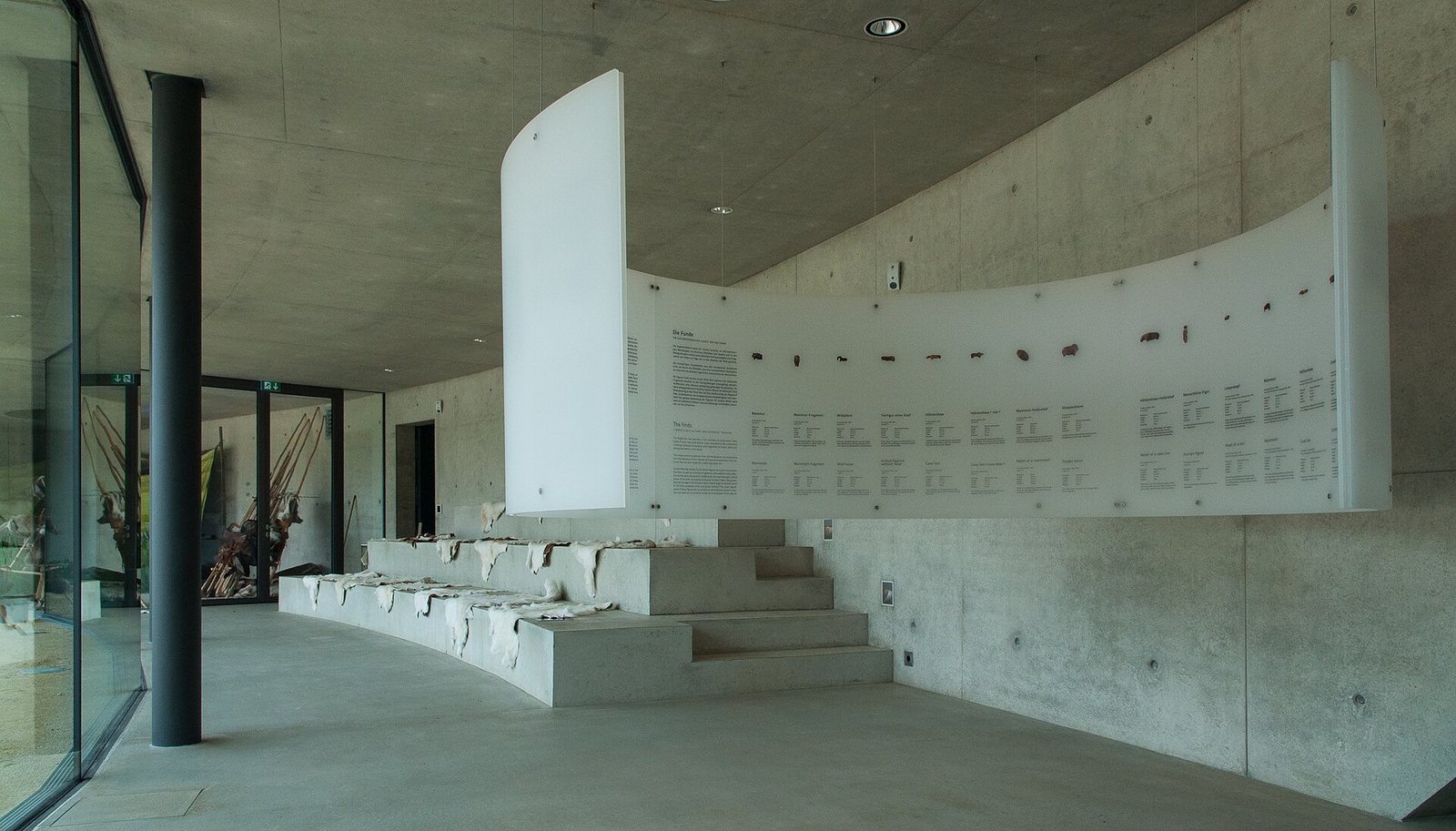
Built about 200 m southeast of the cave, the center is integrated into the slope. Its crescent-shaped form combines reinforced concrete and glass, with grass covering the eastern side. Slightly curved, lime-bound concrete panels in a lime-colored finish cover the structure and its supports. Each panel measures 2.5 by 1.25 m and is fixed to the reinforced-concrete frame with screws. The site has a gross floor area of 544 m² and a net floor area of 377 m²; its buildings have a total volume of 1,900 m³.
Auditorium
The auditorium is arranged as a semicircular gathering space. Its concrete-slab steps are exposed to light, and a fully glazed west-facing wall is oriented toward the cave. Two transparent plastic panels hang from the lobby ceiling, and a replica of a human figure is displayed in the auditorium.
Exhibition room
The exhibition room has a cave-like interior. Artifacts are displayed in its center behind protective armored glass, while a screen on the wall shows documentaries about the site and its history.
Outdoor interpretation and finds
Mammoth-hunters’ camp
A reconstruction of a mammoth-hunters’ camp stands within the park. Two life-size wooden mammoth replicas were installed there in September 2018.
Ivory figurines
Two figurines recovered during excavations carried out between 2005 and 2012 are permanently displayed in the information center. One is an ivory mammoth measuring 3.7 cm and weighing about 7.5 g, identified as the oldest miniature artwork known to survive entirely in its original state. The other is a 5.6 cm ivory torso of a cave lion, about 35,000 years old.