Archaeological Museum in Split: A Centre for Dalmatian Archaeology


Site at a Glance
- Rating
- 4.3
- Popularity
- Low
- Country
- Croatia
- Primary era
- Classical
- External website
- Open
- Eras represented
- Stone Age, Bronze Age, Iron Age, Classical, Medieval, Early Modern, Modern
- Civilizations
- Ancient Greek, Roman
- Site type
- Museum
On this page11 sections
History
The Archaeological Museum in Split is an archaeological museum in Split, Croatia, founded in 1820 to study and preserve the antiquities of Dalmatia. Its creation followed Emperor Francis I’s visit to Split, Diocletian’s Palace, and the Roman remains at Salona in 1818. His interest, reinforced by the advice of his advisers, helped generate the political and intellectual support for the institution. The physician and archaeologist Carlo Lanza became its first director, and the museum initially concentrated on Salona, the principal city of the Roman province of Dalmatia and an important centre of Early Christianity.
Foundation and early buildings
The museum began excavating Salona in October 1821. Its collections were first kept in rented warehouses, but a purpose-built museum was completed in 1836 outside the eastern wall of Diocletian’s Palace. Growing holdings soon created pressure for more space. The museum returned to the building beside the Palace wall in 1868 and later rented four additional storage locations.
Excavation at Salona was ordered to stop in 1838, then resumed in 1846 under Francesco Carrara, who also worked at Gardun. Activity declined after Carrara left the directorship in 1853 and expanded considerably after Mihovil Glavinić became director in 1872. Don Frane Bulić, who took the directorship in 1884, became the decisive figure in the museum’s development for several decades. During his tenure, Salona excavation intensified, investigations extended across Dalmatia, and the museum inventory, including the library, was organized in 13 catalogues arranged by material.
The present institution
Inadequate storage and exhibition conditions led Bulić to seek imperial backing for a new museum. After years of discussion and approved funding, construction began in March 1912 and ended in June 1914. The First World War and its aftermath delayed furnishing and the transfer of the collections, so the building opened to the public in 1922. The earlier museum building beside Diocletian’s Palace was demolished in 1928.
The museum’s research expanded through the twentieth century. By the middle of the century, its work had reached the principal archaeological areas of Salona, including Manastirine, Marusinac, the Episcopal Complex, Kapljuč, the Theatre, the Forum, the Amphitheatre, and Hortus Metrodori. Later projects included collaboration with the Smithsonian Institution between 1969 and 1972, excavations along the Split bypass in 1986 and 1987, and research in the south-eastern part of Diocletian’s Palace in 1992.
Research across Dalmatia
The museum investigated Issa, an ancient Greek settlement on the island of Vis, including the Greco-Roman burial grounds of Martvilo in 1926, 1976, 1979, and 1980 and Vlaška njiva in 1983. Work at Narona, an important Roman-period settlement near modern Vid, focused especially on the Augusteum in 1995 and 1996. Excavations at Palagruža have continued since 1992, and the museum also took part in work at the medieval churches of Gospin otok in Solin in 1972.
Prehistoric research included the Dugiš stilt-house settlement near Sinj in 1955 and 1956, Škarin Samograd Cave from 1958 to 1960, and burial mounds around the source of the Cetina River in 1953, 1954, and 1958. Further tumuli were investigated around Vid in 1977 and Bogomolje on Hvar in 1981. Underwater work examined shipwrecks near Cape St. John at Viganj in 1971 and 1972 and in Vela Svitnja Bay on Vis in 1972, 1973, and 1977.
The museum established Tusculum at Salona in 1898 as a base for archaeologists working in the field and as accommodation for visitors. Its ground-floor memorial room to Bulić was furnished in 1984. In 2008 the facility was renovated, its original wall decoration was restored, and the memorial room was remodelled. Research at Issa and Narona also led to branch collections. The Vid collection became an independent museum, opened on May 18, 2007, while the Issa collection was established in 1983.
Collections, scholarship, and public displays
The holdings grew chiefly through the museum’s own excavations and purchases from private collectors. Acquisitions included the collections of Ante Lukanović in 1926 and 1927, the Lučić-Roki family and Robert Graf between 1927 and 1930, Asserian antiquities held by Mića Novaković between 1929 and 1930, and prehistoric objects held by Drago Stojsavljević in 1939. Coin collections associated with Karl Stockert, Jerolim Machiedo, and the Kalogjera family also entered the museum. After the Dojmi family antiquities collection was devastated in 1944, the museum recovered its remains. During Mihovil Abramić’s directorship from 1926 to 1941, purchases made up a comparatively larger part of the acquisitions, while incomplete inventory records left some objects without dependable information about their procurement.
The permanent exhibition was revised for the museum’s 130th anniversary in 1951. A new presentation based on architect Ante Svarčić’s concept opened on October 15, 1970. Exhibits were removed in July and August 1991 during the Croatian Homeland War, the 1991–1995 war of independence in Croatia. The need for a modernized display led to a further installation designed by Vinko Peračić and Sandra Mateljan, inaugurated on December 18, 2000.
The library began in 1845 through purchases, donations, and exchanges connected with the museum’s archaeological journal. It now contains approximately 60,000 volumes, including eight incunabula, which are books printed in Europe before 1501, and about 170 books from the sixteenth century. Its holdings also include old maps, prints, and archival bequests relating to Dalmatian history and archaeological research.
In 1878, Mihovil Glavinić and Josip Alačević founded the journal Bullettino di archeologia e storia dalmata. It was renamed Vjesnik za arheologiju i istoriju dalmatinsku in 1920 and published research on archaeology, history, art history, monument preservation, restoration, and related subjects from northern Dalmatia to the Bay of Kotor, covering the period from prehistory to the nineteenth century. The museum also hosted the First International Congress of Early Christian Archaeology in 1894, the Disputationes Salonitanae meetings in 1970, 1979, 1984, and 1992, and the Thirteenth International Congress of Early Christian Archaeology in Split and Poreč in 1994. Excavation results appeared in series and monographs including Forschungen in Salona, Recherches à Salone, and Salona.
The museum worked closely with the Dalmatian Provincial Conservation Office and the Bihać Historical Research Association. Bulić served as a conservator from 1883 and headed the Provincial Conservation Office after its creation in 1913. The office was housed in the museum until it became independent in 1945. Most of the Bihać collection was transferred to the Museum of Croatian Archaeological Monuments between 1953 and 1957.
Remains
Main building and lapidarium
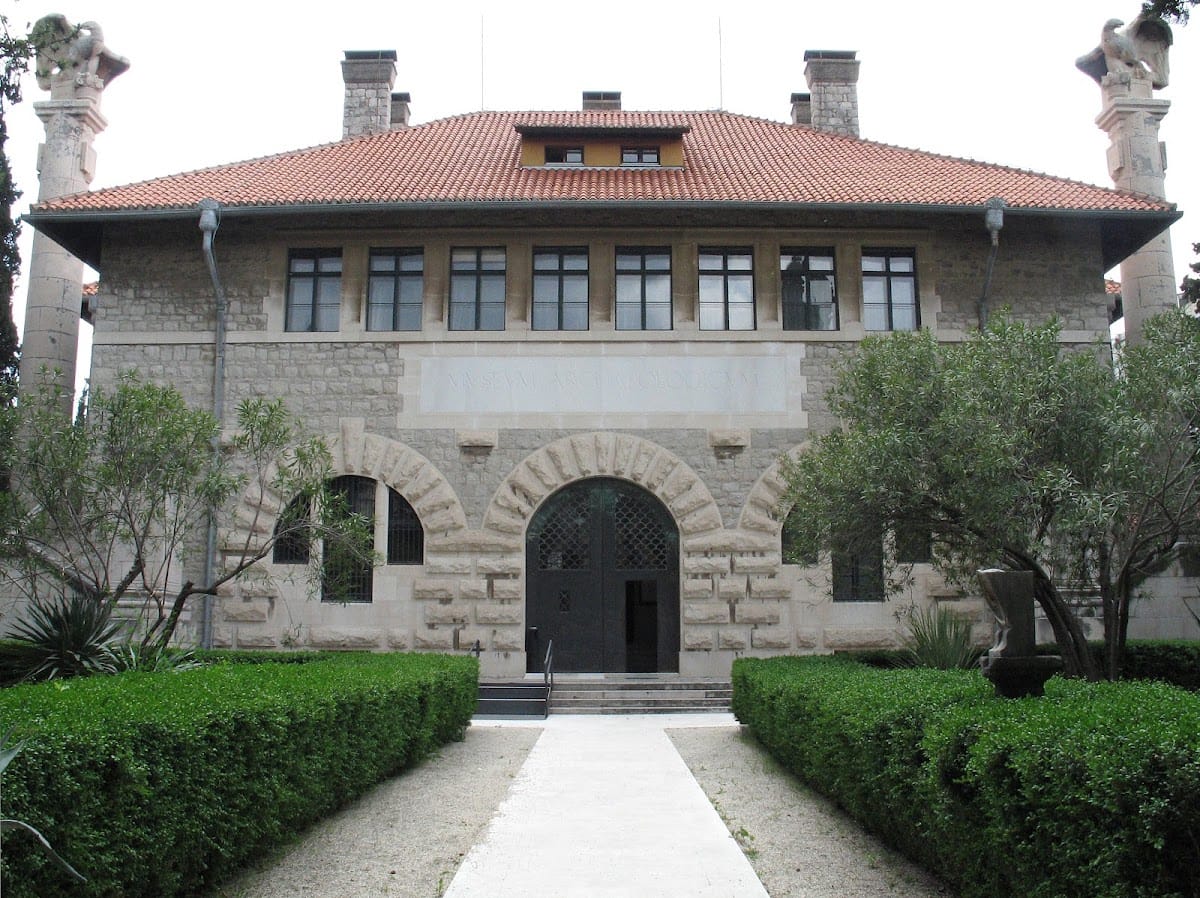
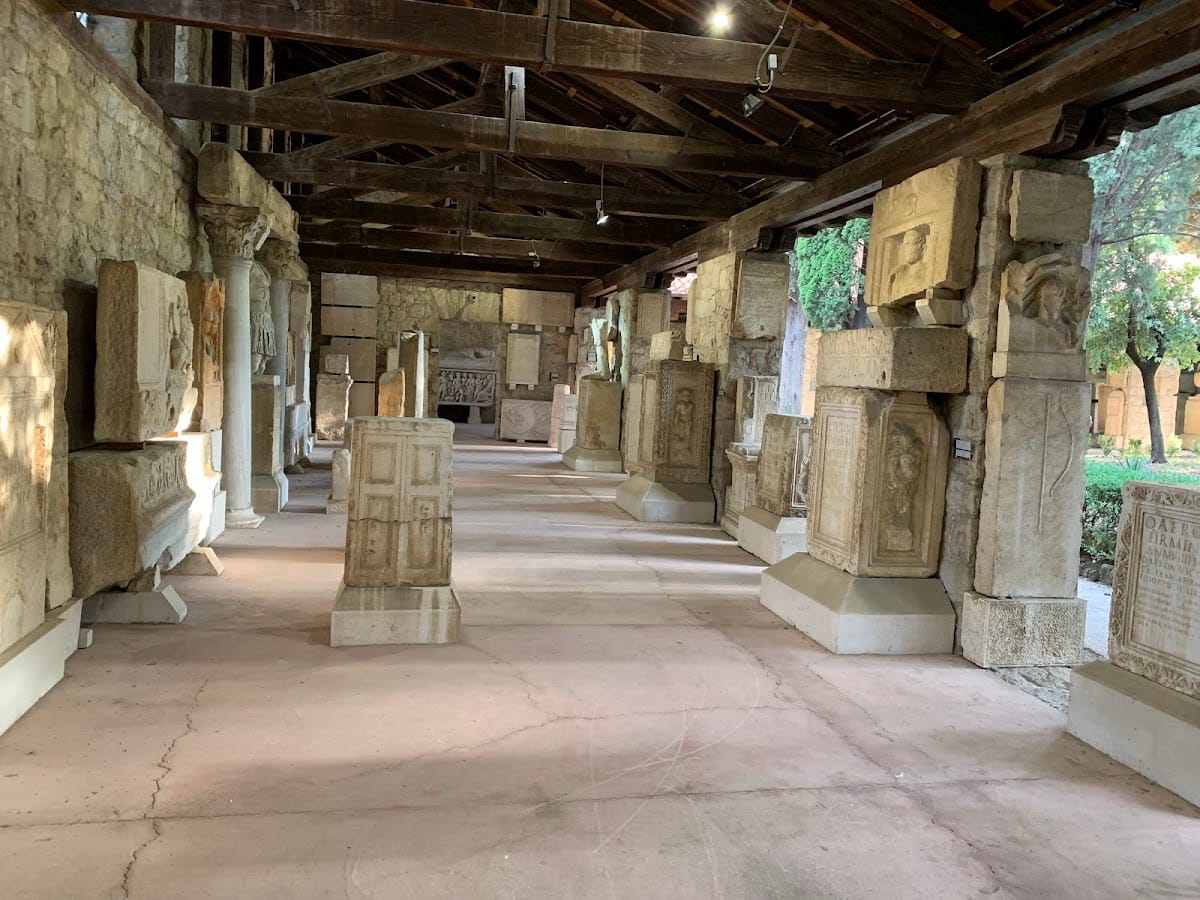
The present complex consists of a two-storey museum building, a garden, and a lapidarium, an architectural space for displaying stone monuments, arranged in arcades around the main structure. Exhibition halls occupy the ground floor, while the upper floor contains the library and study rooms. Storage areas and working spaces form part of the complex. Designed by the Viennese architects August Kirstein and Friedrich Ohmann, the building was constructed between 1912 and 1914. It includes a large hall for smaller objects, a garden lapidarium, and a cellar originally intended for storage. A planned extension into the rear garden in the 1960s was never built. Later alterations converted the attic into offices, added two smaller ground-floor exhibition halls, and partly constructed storage depots in the cellar. These works were completed in 1998.
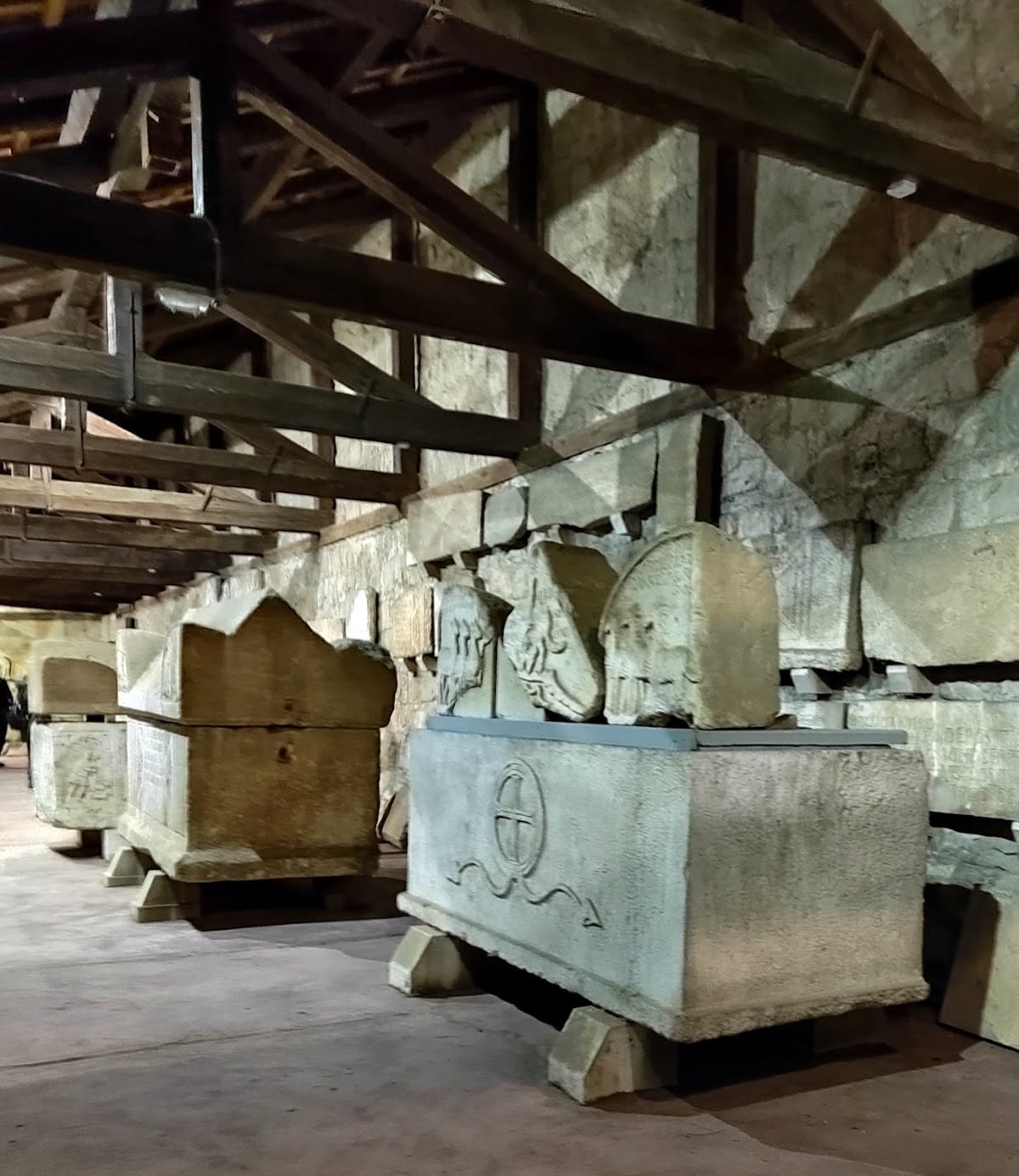
The lapidarium contains stone monuments ranging from the Hellenistic period to the Middle Ages. Its displays include ancient inscriptions, funerary monuments, sarcophagi, architectural fragments, and mosaics. Among the notable sarcophagi are scenes of the Calydonian boar hunt, Hippolytus and Phaedra, and erotes gathering grapes. Ancient mosaics from the Governor’s Palace at Salona depict Apollo, Orpheus, and Triton.
Early Christian and medieval monuments
Early Christian material includes a sarcophagus showing the Israelites crossing the Red Sea, the Good Shepherd sarcophagus from Manastirine, and part of the funerary slab of Domnius, a Christian martyr. A medieval sarcophagus made for Archbishop Ivan in the tenth century was found in the south-eastern part of Diocletian’s Palace and is displayed among the later stone monuments.
Archaeological collections
The museum holds approximately 150,000 archaeological objects divided among prehistoric, Greco-Hellenistic, Roman Provincial, Late Antique, medieval, epigraphic, numismatic, underwater archaeology, art and artistic crafts, early modern, and modern-era collections. The epigraphic holdings include about 6,000 stone inscriptions from Salona, while the coin collections contain more than 70,000 ancient and medieval examples. Other materials include Greek-Hellenistic ceramics, Roman glass, clay lamps, bone and metal objects, gems, sculptures, reliefs, mosaics, funerary monuments, and underwater archaeological finds.
The prehistoric collection extends from the earliest evidence of human activity in the Palaeolithic to the beginning of the Common Era. Greco-Hellenistic objects include pottery from Issa, terracotta figures, gold jewellery, marble reliefs, and a fourth-century BC funerary stele of Kallias. Roman displays contain everyday objects, glass, lamps, bronze figures of deities, gold and silver jewellery, sculptures, and portraits. Notable works include a signed relief of Diana, a Venus with Priapus from Nin, and reliefs of Silvanus.
Late Antique objects, from the later Roman and early post-Roman centuries, particularly illustrate the spread of Christianity through clay lamps decorated with Christian symbols. Material associated with the medieval period of Croatian national rulers includes an altar-screen fragment bearing the name of Duke Trpimir from Rižinice near Solin, late-eighth-century gold jewellery from Trilj, ninth- and tenth-century earrings, and swords of Carolingian type.
Salona branch and Tusculum
The Salona branch includes Tusculum, built at Manastirine beside the remains of an Early Christian basilica. Its facade incorporates reused architectural and sculptural elements, known as spolia, including capitals, inscriptions, and sculptures from Salona and from the former bell tower of Split Cathedral. Bulić’s memorial room on the ground floor contains furniture, personal belongings, and photographs.
The branch is associated with the remains of Salona, including the city walls, the Caesarean Gate, the Forum, temples, theatre, baths, and amphitheatre. Its Early Christian areas include the Cathedral Complex, Manastirine, Marusinac, and Kapljuč.
Issa collection
The Issa archaeological collection occupies Gospina Baterija, an Austrian fortress on Vis built in 1842. Its displays contain prehistoric finds from the island, Greek and Hellenistic vases, material from the Vela Svitnja shipwreck, a fourth-century BC bronze head of Artemis, objects from Hellenistic tombs, jewellery, coins, mosaic remains, altars, figurines, and theatre masks.