Saint Francis Monastery and Church: A Franciscan Religious Complex in Split, Croatia


Site at a Glance
- Rating
- 4.8
- Popularity
- Low
- Country
- Croatia
- Primary era
- Medieval
- External website
- Open
- Eras represented
- Medieval, Modern
- Civilizations
- Hungarian, Kingdom of Croatia
- Site type
- Religious
- Remains
- Monastery
On this page9 sections
History
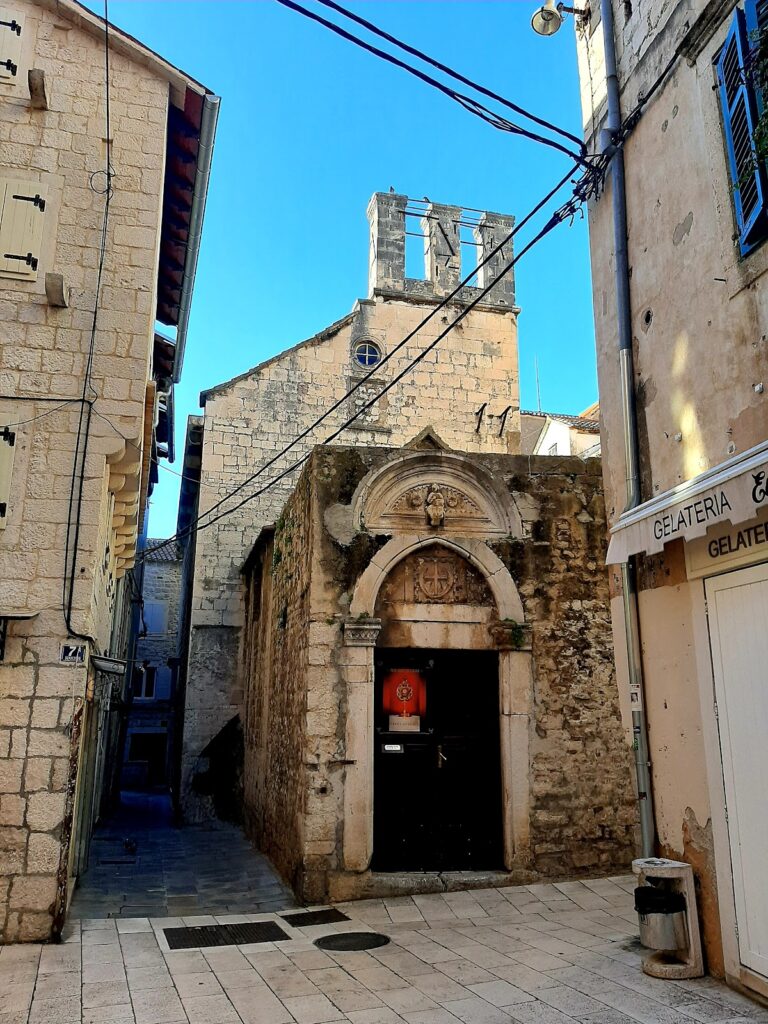
Saint Francis Monastery and Church is a Roman Catholic Franciscan complex in Split, Croatia, developed on the site of an early Christian church dedicated to Saint Felix. The church originated in the fourth or fifth century, while the Franciscan monastery and a new church were established after 1240.
The Early Christian Church
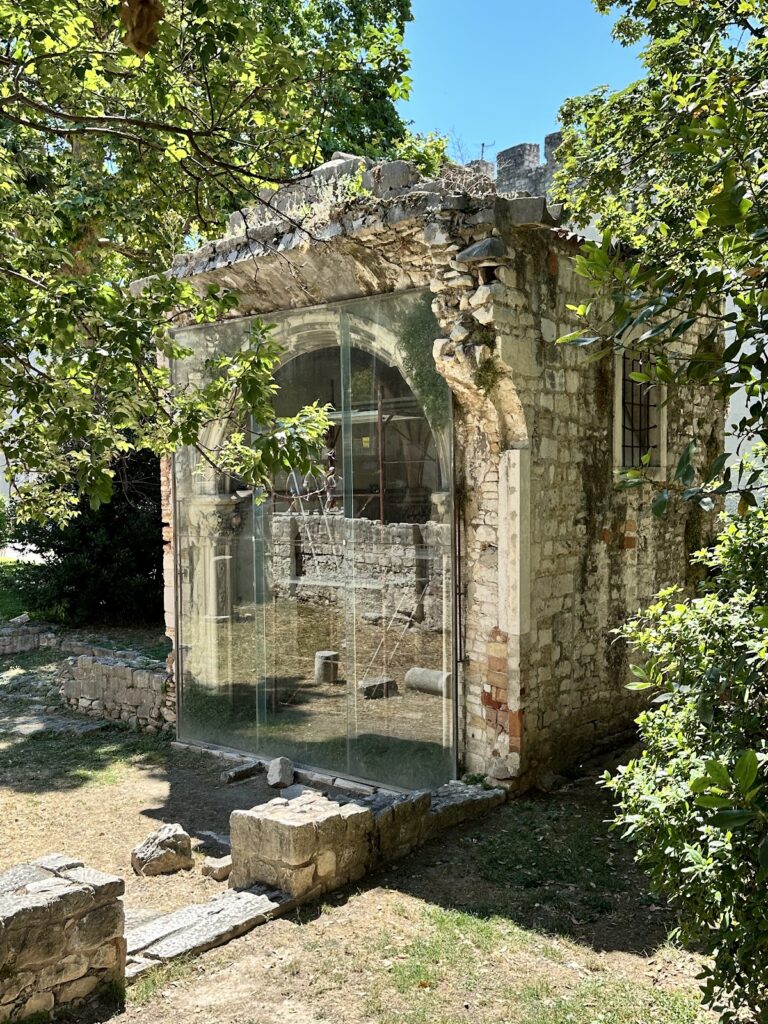
The first church on the site was dedicated to Saint Felix, a Christian martyr who died at Salona in AD 304 during the persecutions under the Roman emperor Diocletian. The church was formerly known as the Church of Saint Felix. The medieval chronicler and Split archdeacon Thomas recorded its reconstruction in the eleventh century.
The Franciscan Foundation
Tradition attributes the monastery’s foundation to Saint Francis of Assisi, the thirteenth-century founder of the Franciscan movement, a Roman Catholic tradition centered on poverty, preaching, and service. Franciscan Conventual friars, a branch of the order, arrived in Split in 1237 and took charge of the earlier church and its tomb. After 1240, they established the monastery and a new church in its place.
War, Reconstruction, and Renewal
During the Cretan, or Candian, War of 1645–1669, the monastery was partly demolished. Its building material was reused in Split’s defensive walls against the Ottoman Empire. The old monastery was demolished toward the end of the nineteenth century, followed by extensive changes to both the church and monastery during the late nineteenth and early twentieth centuries. The monastery was rebuilt in 1908 in its present external form, and the facade was reconstructed again in 1995.
A Place of Croatian Memory
The monastery bears the honorary title “Little Pantheon of the Croatian People” because prominent Croatian figures were buried there. They include Thomas the Archdeacon, author of Historia Salonitana; the writer Marko Marulić, a foundational figure in Croatian literature; the Baroque composer Ivan Lukačić; the poet Jeronim Kavanjin; and the politician and Split mayor Dr. Ante Trumbić. The complex is associated with the Order of Friars Minor Conventuals and the Split-Makarska Archdiocese, and is dedicated to Saint Francis of Assisi. It is protected as an individually designated immovable cultural property under registration number Z-4687.
Remains
Church and Bell Tower
The church is a single-nave building with a rectangular apse, the terminating part of a church that projects beyond its main body. Its fabric incorporates Gothic, Renaissance, and Baroque elements. The bell tower, built in 1902, belongs to the complex’s later architectural development, while the monastery’s external form from 1908 is neo-Romanesque.
Gothic Cloister
The surviving cloister dates from the beginning of the fourteenth century. A cloister is a covered walkway arranged around an open courtyard within a monastery. Here, the veranda is supported by Gothic columns, each individually distinctive, and a well stands at the center of the courtyard.
Altars, Relics, and Tombs
Saint Felix’s relics are kept at the main altar, which dates from the beginning of the twentieth century. Four side altars carry painted altar cloths by prominent artists. The church also preserves a painted crucifix by Blaž Jurjev Trogiranin, dated to 1450, and a Roman-era sarcophagus decorated with a representation of the Crossing of the Red Sea.
Tombs associated with Thomas the Archdeacon, Marko Marulić, Jeronim Kavanjin, and Ivan Lukačić are located in the church. In the cloister stands the sarcophagus of Ante Trumbić, made by the Croatian sculptor Ivan Meštrović.