Twin Gate Pula: A Roman City Gateway in Croatia
Site at a Glance
- Rating
- 4.6
- Popularity
- Low
- Country
- Croatia
- Primary era
- Classical
- External website
- Open
- Eras represented
- Classical
- Civilizations
- Roman
- Site type
- Military
- Remains
- Gate
On this page6 sections
History
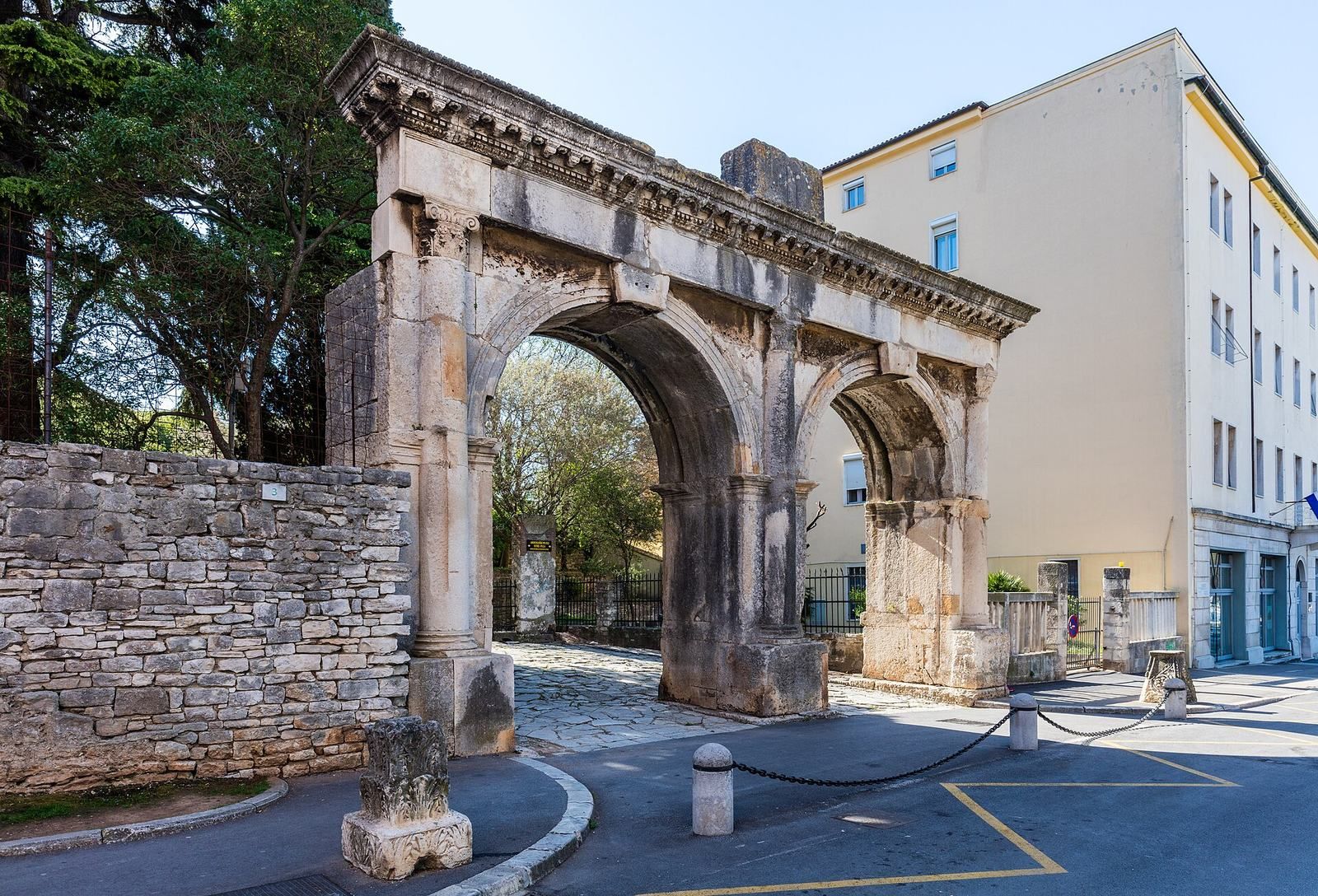
Twin Gate Pula, also known as Porta Gemina, is a Roman city gate in Pula, Croatia. Its two openings were probably built in the late second or early third century AD over an earlier city gate, forming part of a defensive circuit that included approximately ten entrances.
Roman and Medieval Phases
Pula remained enclosed by fortifications from Antiquity into the modern period. A nearby plaque names Lucius Menacius Priscus, a Roman municipal councillor and senator who personally financed one of the city’s water-supply networks. The plaque was found beside the gate rather than as part of its original construction.
During the Middle Ages, the gateway was buried underground as part of efforts to strengthen the town’s defenses. This burial helped preserve the structure until it was excavated and conserved in modern times.
Survival and Later Interpretation
Much of Pula’s fortification system was demolished in the modern period as the urban center expanded. Twin Gate and part of the wall extending toward Giardin Square survived. The plaque naming Priscus was installed on the monument in the late nineteenth century, occupying a position that does not reflect its original setting.
The gate stands opposite the modern citadel, which occupies the site of the ancient capitol, a principal temple or civic-religious center. Its location also places it among the ancient structures associated with the Archaeological Museum of Pula, the Castle, and the Small Roman Theatre.
Remains
The Gateway and City Wall
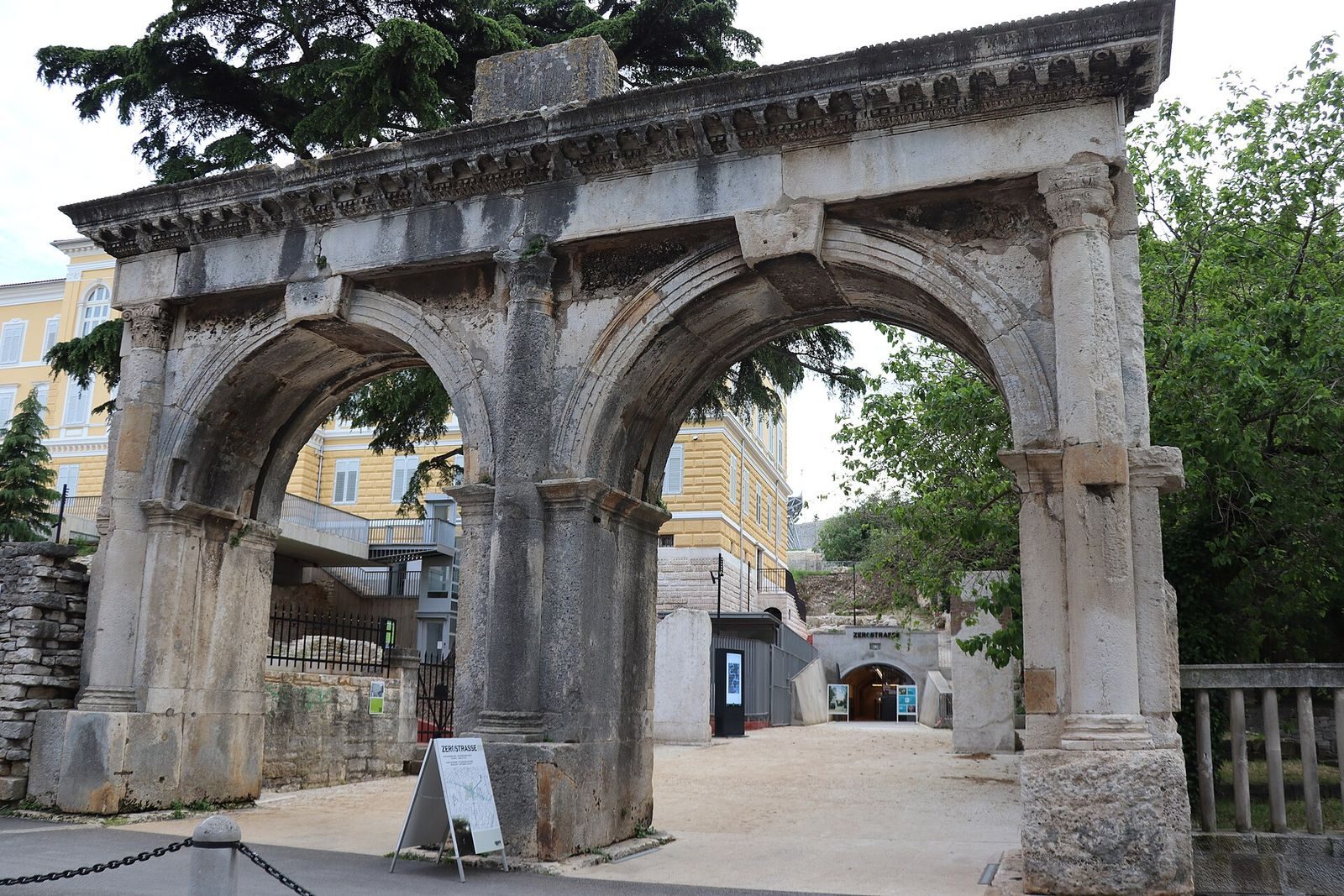
Twin Gate is a double-arched gateway named for its two semicircular openings leading into the town. It may originally have contained three arched openings. Three pilasters, flat wall-attached supports resembling columns, stand between and beside the arches. Their composite capitals combine elements associated with the Ionic and Corinthian orders.
The pilasters support an entablature, the horizontal architectural assembly above them, with a frieze and cornice. The architrave is missing. A relief wreath above the arches unites these elements into a single composition. Openings connected with the former lowering mechanisms for the gate’s grilles or lattices remain visible in the arches, and the monument is relatively well preserved.
The plaque bearing the name of Lucius Menacius Priscus occupies the upper central part of the gate. It was found beside the monument and added during the late nineteenth century. A surviving section of the former city wall remains connected to the gateway toward Giardin Square.
Octagonal Mausoleum
In front of the gate are remains of a partially reconstructed octagonal mausoleum, a substantial funerary monument or tomb. It dates to the second or third century AD and forms a separate archaeological feature within the surviving setting of the Roman gateway.