Royal Walls of Ceuta: A Historic Defensive System
Site at a Glance
- Country
- Spain
- Primary era
- Medieval
- Eras represented
- Medieval, Early Modern
- Civilizations
- Marinid, Portuguese, Spanish, Umayyad
- Site type
- Military
- Remains
- Wall
On this page12 sections
History
The Royal Walls are a land fortification across the isthmus of Ceuta, Spain, whose earliest surviving sections date to the tenth century. First built under Umayyad rule and expanded by later powers, they played a major part in the city’s defense, especially during the sieges that began in 1694.
Early fortifications and Umayyad construction
Ceuta served as a naval base in Carthaginian and Roman times. The city had fortifications by at least the fifth century BCE, and they may have existed earlier. In 957, Abd al-Rahman III, an Umayyad ruler of al-Andalus, the Muslim-ruled parts of the Iberian Peninsula, began new walls on the site of Roman fortifications at the Almina Peninsula isthmus. Al-Hakam II, a later Umayyad ruler, completed them in 962.
Marinid and Portuguese expansion
The Marinids, a medieval Muslim dynasty that ruled Morocco, continued the construction during the thirteenth and fourteenth centuries. After Portugal conquered Ceuta in 1415, it further strengthened the defenses and completed the Marinid walls by about the 1540s.
Spanish rule and the sieges
Ceuta became part of the Kingdom of Spain in 1669, following the dissolution of the Iberian Union, when the Portuguese and Spanish crowns had shared a monarch. A storm in 1674 badly damaged the walls at the southern end, but repairs followed quickly, and additional defenses were built outside the main line.
The walls were central to the sieges of Ceuta, which began in 1694. Spanish forces added defenses during pauses in the fighting. A relief force arrived in 1720, ending the siege, and the outer works were rebuilt at that time. Ceuta was besieged again in 1721, and the final Moorish attempt to capture the city ended in 1734.
Later military use and preservation
Further changes to the fortifications took place in the 1730s. An attack during the siege of 1790–1791 was repelled. During the Napoleonic Wars, British troops allied with Spain garrisoned Ceuta.
The walls lost their defensive purpose during the nineteenth century. Sections, particularly the outer defenses, were demolished to make way for urban expansion, while surviving parts have been restored in recent years. On 3 July 1985, the complex was designated a Spanish Property of Cultural Interest as the Historic-Artistic Ensemble of the Royal Walls and San Felipe Moat.
Remains
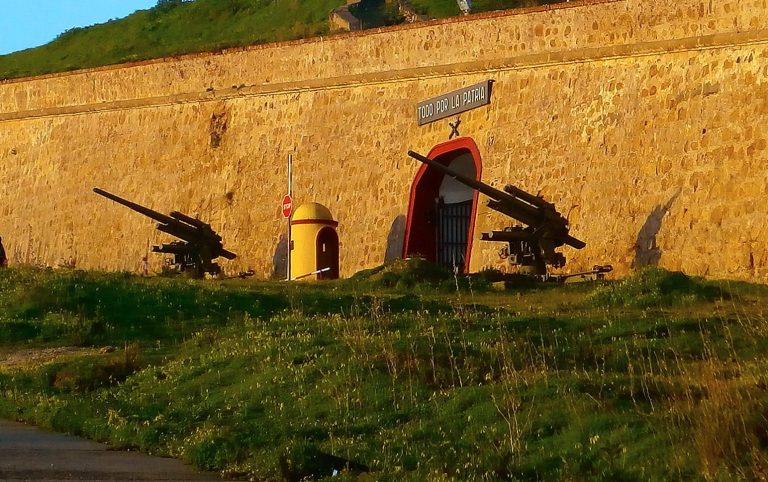
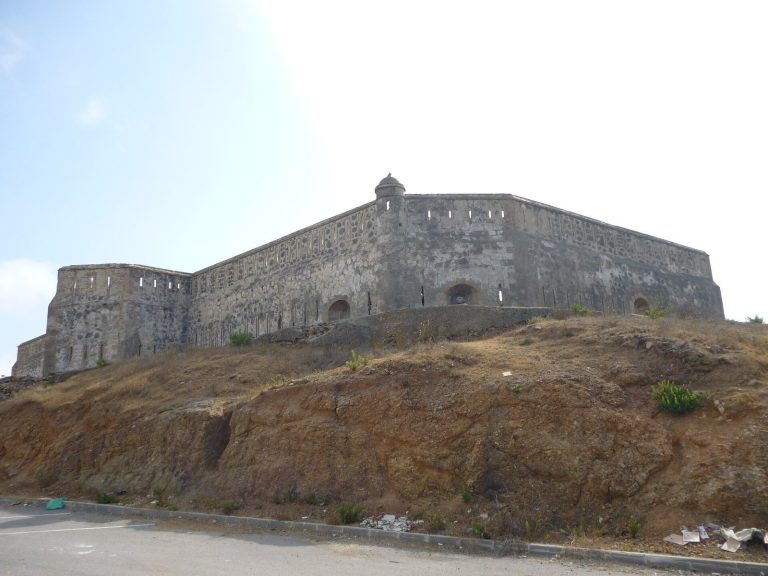
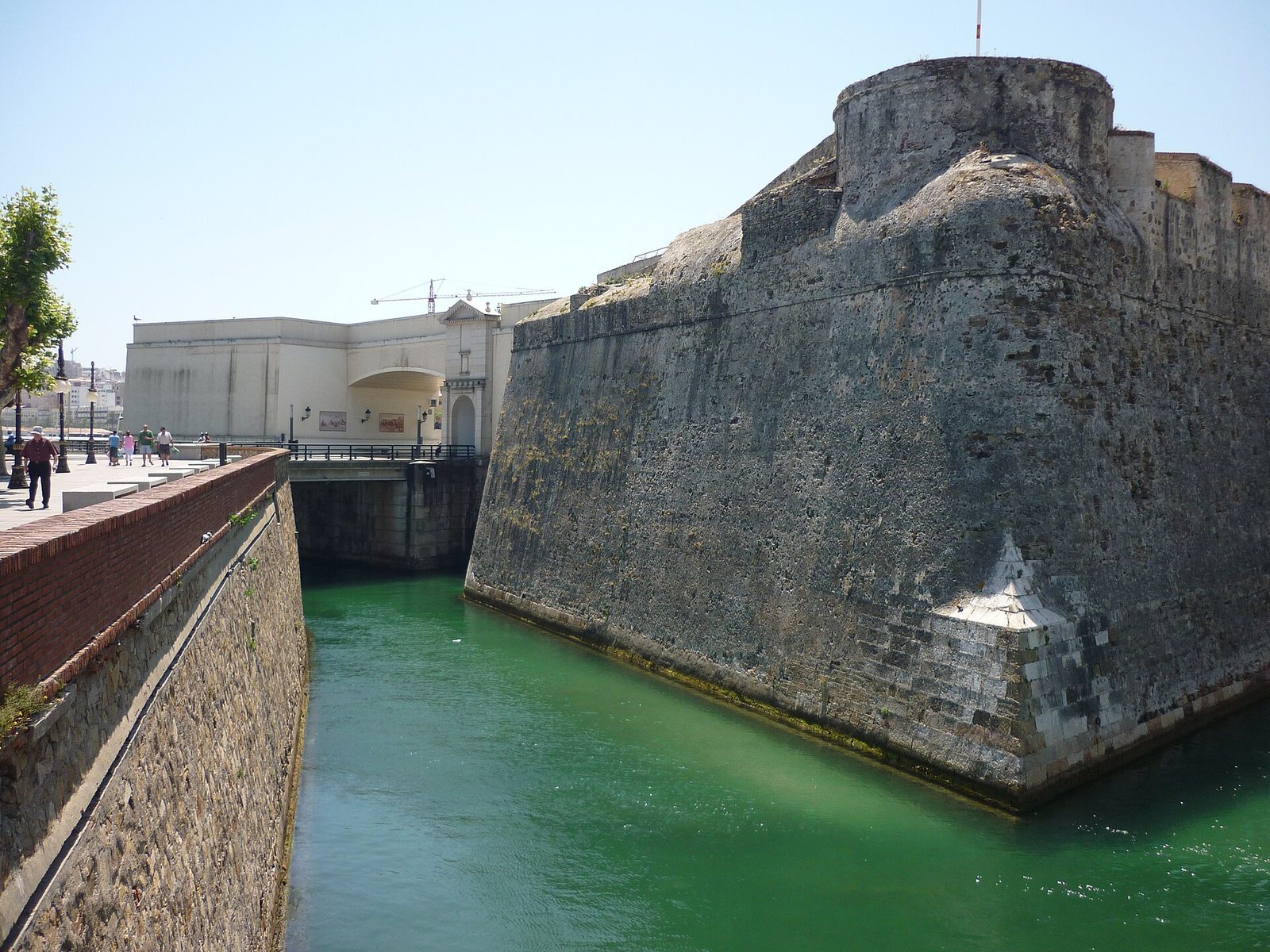
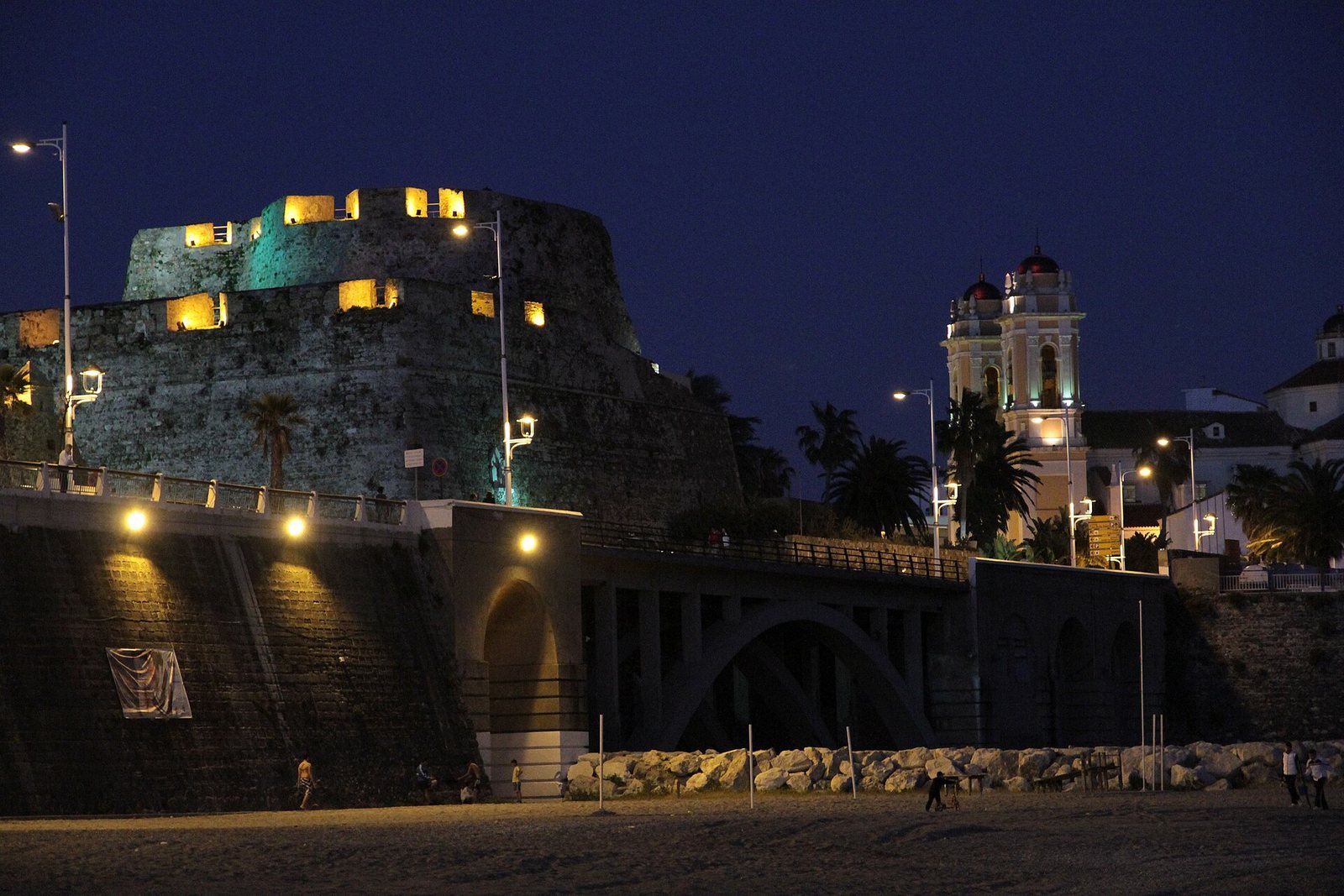
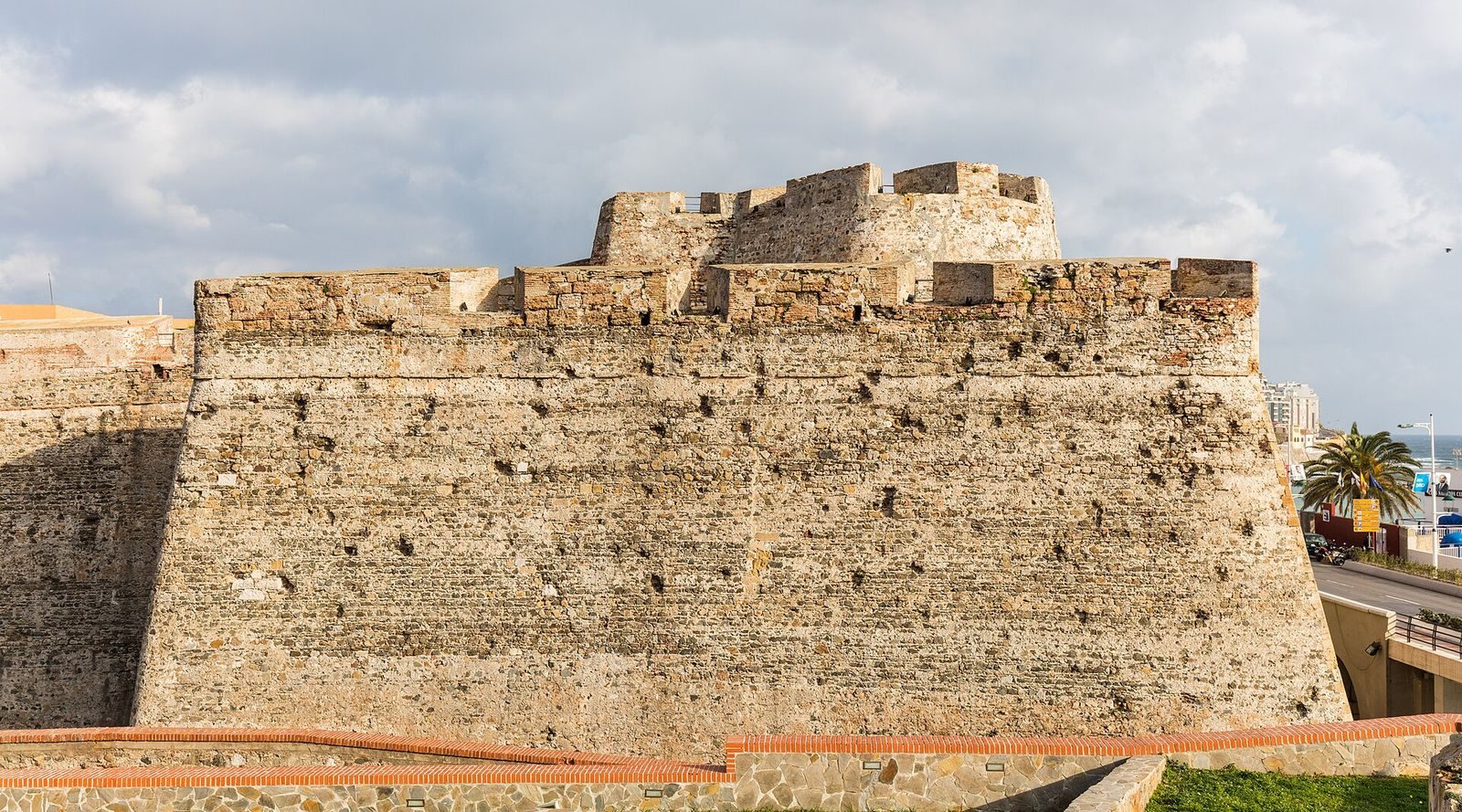
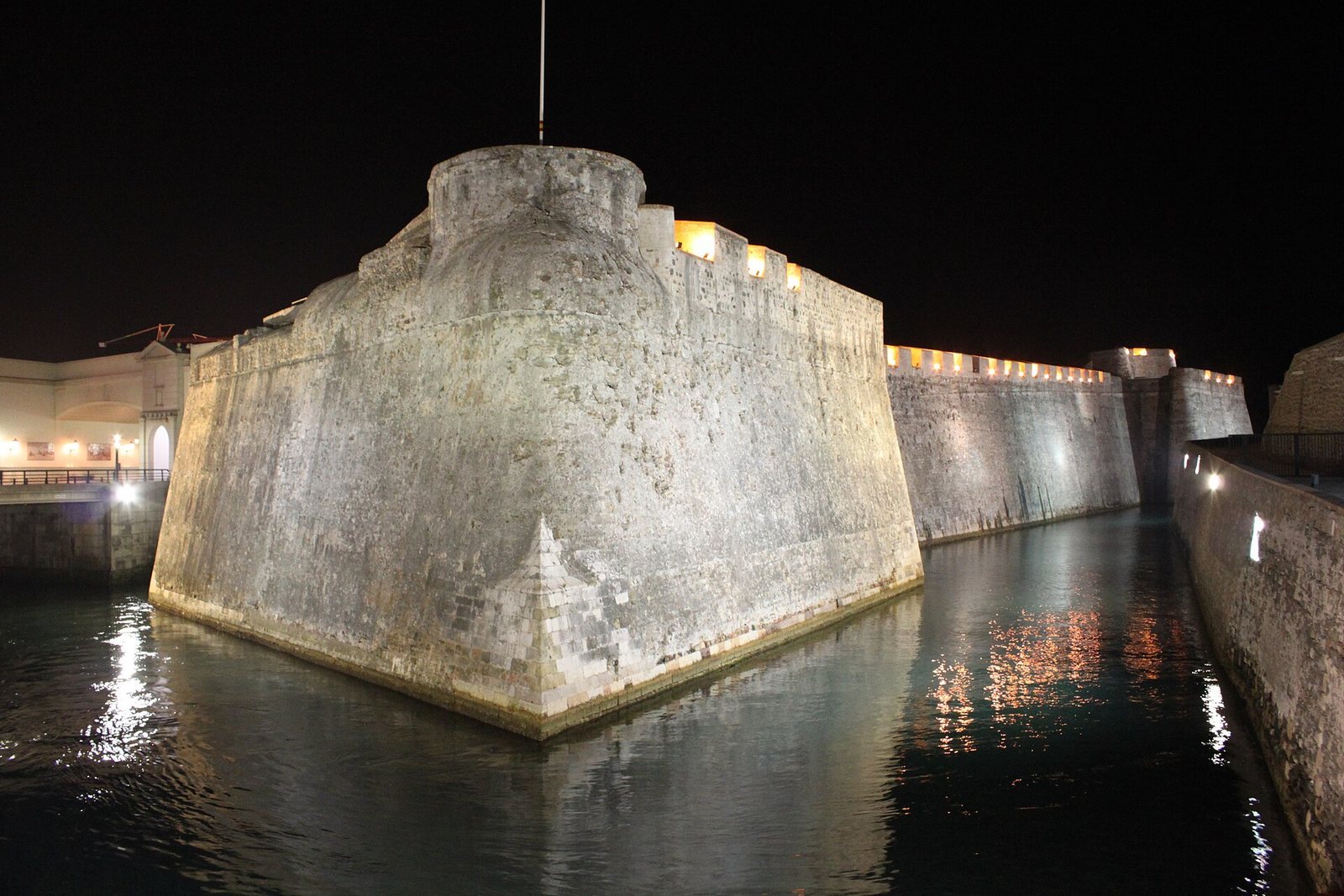
The fortification crosses the isthmus, with a main wall, a seawater-filled ditch, and defenses beyond the wall. The oldest parts date to 962, while the most recent sections date to the eighteenth century. The main wall and ditch remain intact, although some outer defenses have been lost.
Main defensive line
Main wall and bastions
The main wall has a large bastion, a projecting defensive work, at each end: the Bastion of the Coraza and the Flag Bastion. A smaller bastion stands on the northern flank. Surviving examples include the High Coraza Bastion, the Flag Bastion, and the Bastion of the Mallorcans.
Royal Moat and breakwaters
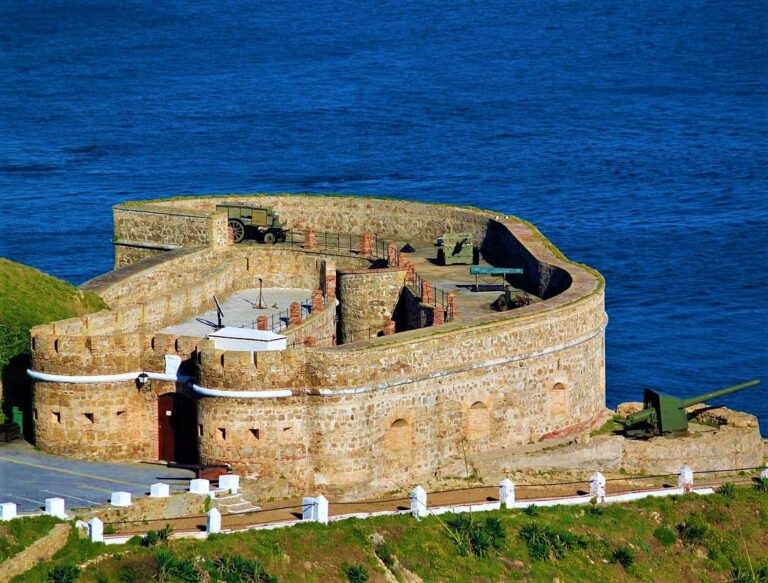
The Royal Moat is a navigable ditch filled with seawater, and a drawbridge formed part of the defenses. Gun positions were built on the breakwaters on both sides of the walls.
Outer defenses and associated works
Outworks
Defenses positioned beyond the main wall, known as outworks, include hornworks (outer defensive works), ravelins (outer works protecting a wall or gate), and counterguards (outer works shielding a bastion). The first line remains intact, while other sections were demolished over time.
Eastern defenses and other structures
Two additional small bastions fortify Ceuta’s eastern side. The complex also includes the partial bastion of San Pedro, the Ravelin of San Ignacio, the Ravelin at the Angle of San Pablo, the Gate of La Ribera, the Bastion of Santa Ana, the Counterguard of San Francisco Javier, and the Hornwork of the Valencian Front. Other components are the Arms Square, an assembly area within a fortification, Madraba Tower, the secondary gate of Rui de Sousa, and the Gate of Fernão d’Afonso.