Anykščiai Manor: A Historic Manor Complex in Lithuania


Site at a Glance
- Rating
- 4.6
- Popularity
- Very Low
- Country
- Lithuania
- Primary era
- Early Modern
- External website
- Open
- Eras represented
- Early Modern, Modern
- Civilizations
- Grand Duchy of Lithuania, Russian
- Site type
- Domestic
- Remains
- Manor House
On this page6 sections
History
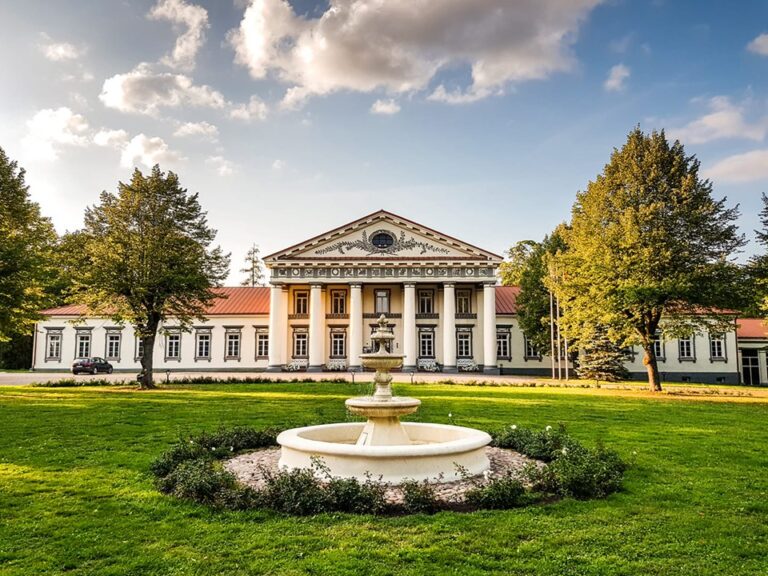
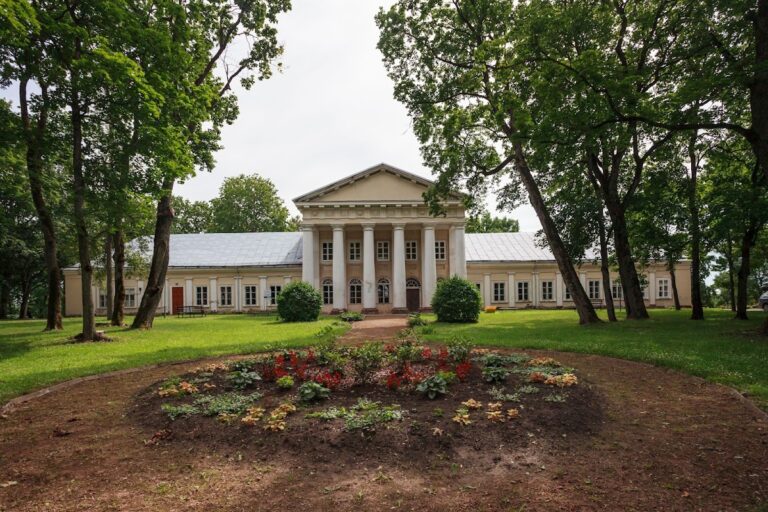
Anykščiai manor is a historic manor complex in Anykščiai, Lithuania, first mentioned in 1440. That year, Casimir IV, the fifteenth-century grand duke of Lithuania and king of Poland, issued a note confirming the manor’s transfer to Radziwill Ostikovich, a Lithuanian nobleman. The reference is also the earliest known historical mention of Anykščiai and is regarded as the town’s foundation year.
Noble Administration and Development
After its transfer to Ostikovich, the manor was leased to the Ostrovichs, the Glebovichs, and other noble families. Archaeological finds place the present complex between the sixteenth and eighteenth centuries, while the earliest surviving manor inventories date from 1773.
Imperial Rule and Institutional Use
Following the 1830 uprising, the manor came under the direct control of the Russian Empire. A brick Orthodox church, belonging to the Eastern Orthodox Christian tradition, was built on the grounds between 1864 and 1874. By the end of the nineteenth century, the manor buildings had fallen into disrepair.
Educational use continued on the grounds for much longer. An Anykščiai primary school operated in the manor buildings from 1806 and became a secondary school in 1920. Its pupils and staff included the future Lithuanian literary classic Antanas Vienuolis-Žukauskas, the writer Jonas Biliūnas, and the archaeologist and professor Petras Tarasenka.
Remains
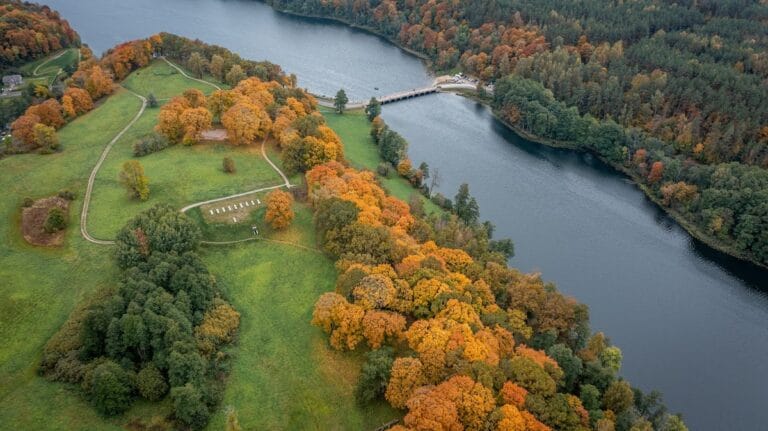
The former manor occupies land east of the confluence of the Šventoji and Anykšta rivers, near the approach to the historic narrow-gauge railway, whose tracks are narrower than standard railway tracks. The grounds lie close to the railway bridge over the Šventoji, the riverbank at the confluence, the railway line, and the church. Old maple and linden trees survive as elements of the former manor landscape.
School Buildings
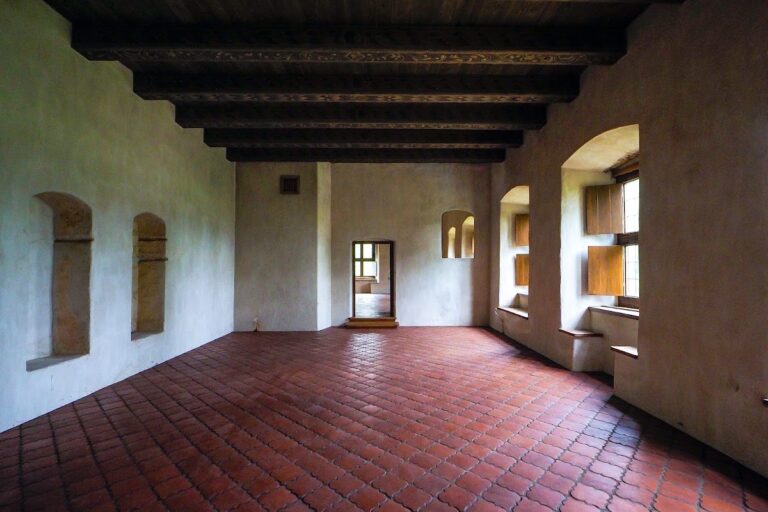
Surviving school buildings form part of the former manor complex. They have been transferred to municipal use and adapted for public and community purposes. Their current functions include accommodating the directorate of Anykščiai Regional Park and an art workshop.
Orthodox Church
The former manor grounds contain a functioning Orthodox church. It is a brick building constructed between 1864 and 1874, during the period when the manor was under direct Russian imperial control.
Nearby sites